
Choosing the right tennis bag is a critical decision for any player, especially when balancing the need to protect expensive frames with the practicalities of carrying court essentials. While a tennis bag’s advertised capacity tells you how many rackets it can hold in theory, the real-world capacity depends heavily on how much extra gear you pack. For players in the Philippines, where tropical humidity and intense heat demand extra hydration, towels, and changes of clothing, a bag’s actual racket capacity often drops significantly to accommodate these daily essentials.
Understanding how to translate marketing labels into usable space ensures you do not end up with a bag that is either cramped or unnecessarily bulky. By evaluating your typical gear loadout and matching it to the right bag category, you can find a storage solution that keeps your equipment organized, protected, and easy to transport to and from the courts.
Understanding Head Tennis Bag Capacity Categories
Tennis bag manufacturers, including Head, classify their bags using standard racket capacity labels, typically ranging from 3-racket models up to massive 15-racket tournament bags. These numbers serve as a primary classification system, allowing players to quickly gauge the overall size and tier of a bag. However, these labels can be misleading for players who expect to carry a mix of rackets and personal items in a single bag.
Products mentioned in this guide
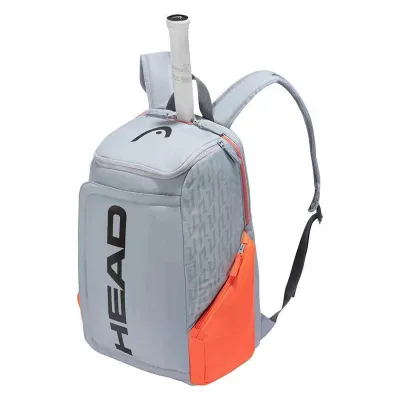
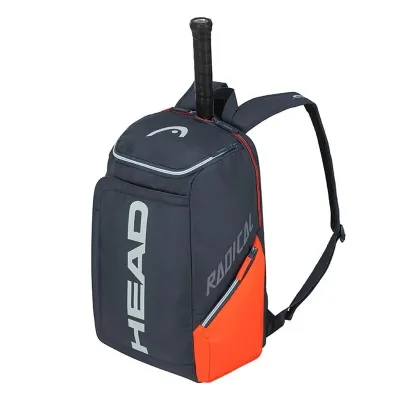

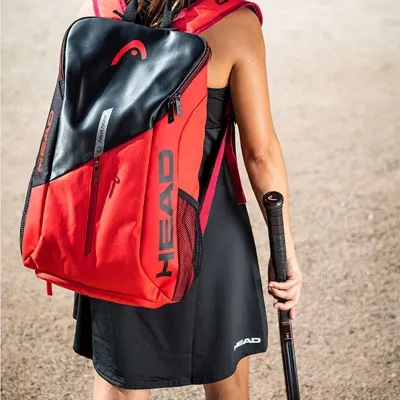
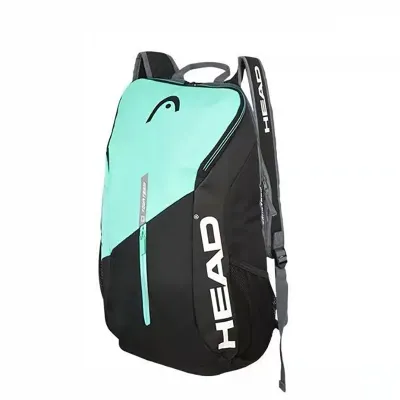
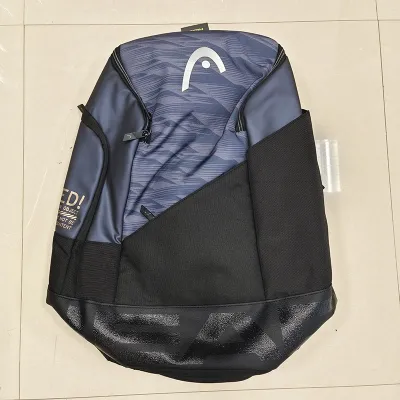
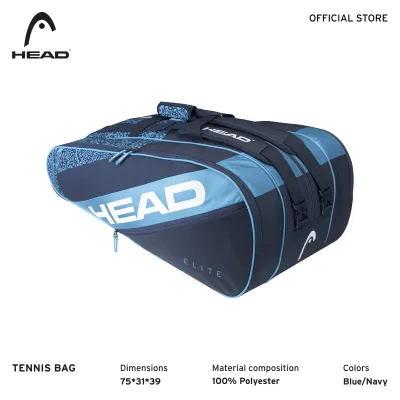
Prices are valid at publication and may change. Please refer to the product page for the latest price.
The advertised racket capacity assumes that the main compartments are filled exclusively with rackets, packed head-to-handle in alternating directions. For example, a standard 6-racket bag is designed to hold three rackets in one main compartment and three in another, with no room left for anything else. If you plan to use your bag solely as a racket carrier while keeping your shoes, apparel, and water bottles in a separate duffel, these marketing numbers will align closely with your experience.
In practice, most club players and recreational enthusiasts use their tennis bags as all-in-one gear carriers. The moment you introduce bulky items like a pair of court shoes, a change of clothes, or a large insulated water bottle into the main compartments, the actual space available for rackets decreases dramatically. A 6-racket bag might only comfortably hold two or three rackets once you pack your court essentials, making it crucial to understand this trade-off before making a purchase.
How to Calculate Your Required Racket and Gear Space
To determine the ideal bag size for your routine, start by counting the exact number of rackets you need to carry regularly. Casual players may only need one or two rackets for a standard hitting session. However, competitive players, tournament participants, and those who play long sessions often carry three or more rackets to account for different string tensions or to serve as immediate backups in case a string breaks mid-match.

Next, list the essential tennis accessories that must live in your bag. This includes items like replacement overgrips, vibration dampeners, wristbands, and cans of tennis balls. While these accessories are relatively small, they can quickly clutter a bag if there are no dedicated pockets, forcing you to store them in the main compartments where they can scratch your racket frames.
Finally, account for personal comfort items, which are especially important when playing in tropical climates. In the Philippines, the intense heat and high humidity mean you will likely need to pack a large water bottle, electrolyte drinks, a cooling towel, and at least one full change of clothes for after your match. If you head straight to the court from work or school, you may also need space for your casual shoes, toiletries, and personal electronics, all of which consume valuable volume inside the bag.
Matching Your Needs to the Right Head Bag Size
Once you have a clear picture of your daily gear loadout, you can match your requirements to one of the three primary capacity categories.
Light Load (1-3 Rackets)
This category is ideal for casual players, beginners, or those who participate in quick practice sessions. A 3-racket bag or a dedicated tennis backpack typically fits one to two rackets comfortably, leaving just enough room for a small accessory pouch, a wallet, keys, and a standard water bottle. Because these bags are compact and lightweight, they are highly portable and easy to carry on a motorcycle or public transit, though they offer virtually no space for extra shoes or bulky apparel.
Medium Load (4-6 Rackets)
Suited for regular club players and weekend warriors, the 6-racket bag is often considered the most versatile size. It provides two main compartments, allowing you to dedicate one side entirely to two or three rackets, while using the other side for a pair of tennis shoes, a towel, and a fresh shirt. This size strikes an excellent balance between storage capacity and portability, making it a popular choice for players who want a single bag for all their court needs without feeling weighed down.
Heavy Load (9-12+ Rackets)
Designed for tournament players, advanced competitors, and coaches, these large-capacity bags feature three or more main compartments. They are built to accommodate a comprehensive setup, including four to six rackets, multiple pairs of shoes, extensive stringing and grip kits, training aids, and full changes of clothing. While these bags offer maximum storage, they are physically large and can be heavy to carry when fully loaded, making them best suited for players who travel by car or spend entire days at tournament venues.
When comparing different models within these categories, it is highly recommended to check the specific product’s liter (L) volume and internal compartment layout. Physical dimensions and space distribution vary significantly across different Head model series, such as the Radical, Gravity, or Tour lines. Some series prioritize wider compartments for rackets, while others offer more flexible, modular storage options that can be customized using internal dividers.
Key Features to Check Beyond Racket Capacity
While raw capacity is important, the way a bag organizes its space can make a significant difference in how usable that capacity actually is.
Compartment Layout
Look for bags that feature separate, ventilated shoe tunnels and dedicated exterior accessory pockets. A shoe tunnel keeps dirty, damp court shoes isolated from your clean rackets and apparel, preventing dirt and odor transfer. Dedicated accessory pockets allow you to store keys, phones, and extra grips securely, ensuring they do not get lost at the bottom of a deep main compartment or scratch your racket frames during transport.
Thermal Protection
Many premium tennis bags feature specialized climate control technology in at least one racket compartment. This thermal lining helps protect your rackets and strings from extreme temperature fluctuations, which is particularly beneficial in hot, humid environments where high temperatures can cause string tension to drop rapidly. However, keep in mind that these insulated compartments are often rigid, which can slightly reduce the flexible packing space compared to standard, unlined compartments.
Carry Options
Evaluate the carrying system of the bag, especially if you plan to travel long distances to the court. Larger bags often come with dual backpack straps that distribute weight evenly across both shoulders, reducing fatigue and strain on your back. Smaller bags may only feature a single shoulder strap or basic carry handles. Ensure the straps are well-padded and adjustable to maintain comfort when the bag is packed to its maximum capacity.
Frequently Asked Questions (FAQ)
Can I fit a tennis shoe box inside a standard 6-racket bag?
While it is physically possible to squeeze a standard shoe box into one of the main compartments of a 6-racket bag, doing so is not recommended. Shoe boxes are rigid and consume a massive amount of volume, which will severely limit the remaining space for your rackets and other gear. To maximize your bag’s efficiency, it is best to remove your shoes from the box and place them directly into the bag’s dedicated shoe compartment or a lightweight shoe sack.
Does the liter (L) rating matter more than the racket count?
The racket count is a standardized marketing metric that helps players quickly identify the general size class of a tennis bag, whereas the liter rating indicates the total raw volume of the bag’s interior. Both metrics are valuable and should be checked together. A bag with a high liter rating but poor compartment division might feel less organized than a slightly smaller bag with smart, dedicated pockets that allow you to utilize every cubic inch of space efficiently.
Community discussion
Share your experience or ask a question. Comments are reviewed before publication.