
Selecting a heavy-duty carabiner for rock climbing requires balancing structural strength with practical usability. While it is tempting to simply look for the highest load rating, safety in climbing depends on matching the correct gate mechanism and shape to your specific task. No piece of equipment can replace proper safety training, sound judgment, and regular gear checks. In tropical climbing environments where high humidity and salt air can affect metal gear, understanding how to verify and maintain your carabiners is essential for safe ascents.
Decoding Load Ratings and Strength Standards
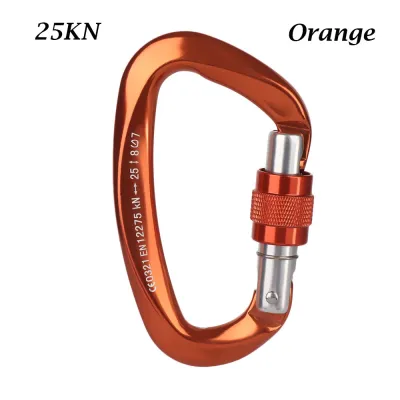
Every climbing carabiner features ratings stamped onto its spine, measured in kilonewtons (kN). One kN represents approximately 225 pounds of static force. The markings indicate three distinct strength profiles: the major axis (when the load is aligned along the spine with the gate closed), the minor axis (cross-loading across the gate), and the open-gate strength. For heavy-duty climbing applications, a major-axis rating of at least 20 kN is standard, while minor-axis and open-gate ratings are significantly lower, often around 7 to 9 kN.
Before purchasing or using any carabiner, verify that it carries the UIAA (International Climbing and Mountaineering Federation) or CE (Conformité Européenne) certification marks. These stamps prove the gear has passed rigorous independent safety testing. It is a common misconception that a higher kN rating automatically makes a carabiner safer for standard climbing. Standard certified ratings are already designed to handle forces far exceeding those generated in typical dynamic climbing falls, where the rope and belay device stretch to absorb the impact energy.
Products mentioned in this guide
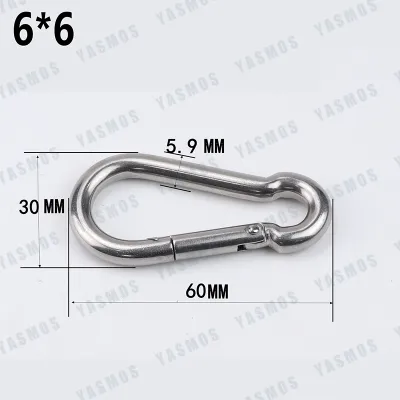
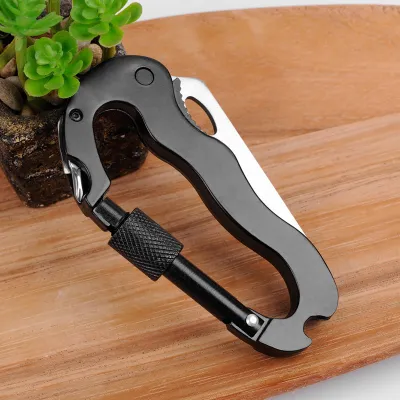
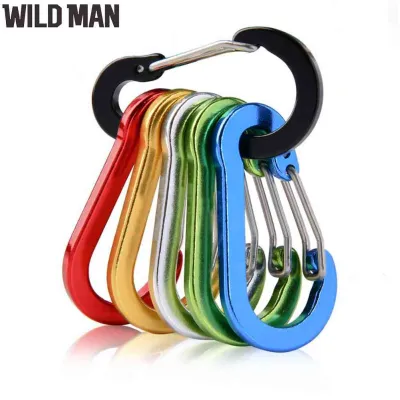
Prices are valid at publication and may change. Please refer to the product page for the latest price.
Selecting the Right Gate Type and Mechanism
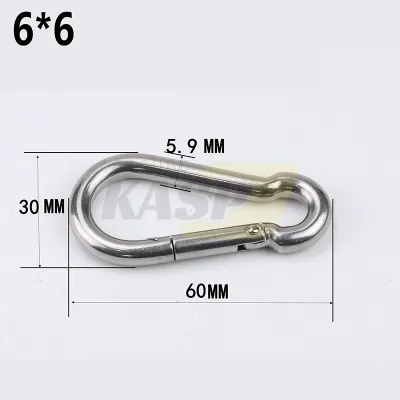
Carabiners are broadly categorized into locking and non-locking designs, each serving distinct roles on the rock. Locking carabiners feature a sleeve that secures the gate in a closed position, making them mandatory for critical safety links such as belaying, building anchors, or attaching to a personal anchor system. Non-locking carabiners are designed for quick, efficient clipping and are primarily used on quickdraws or for carrying gear.

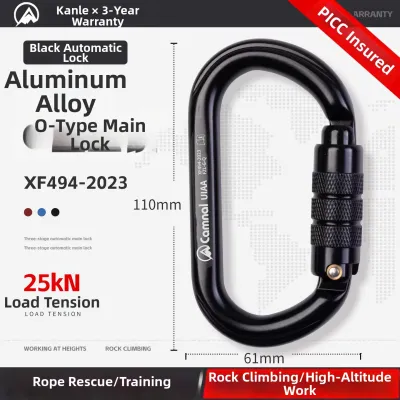
Within the locking category, you must choose between manual screwgates and auto-locking mechanisms. Screwgates require you to manually spin a threaded sleeve to lock the gate, offering simplicity and reliable performance in dusty or wet conditions. Auto-locking gates use a spring-loaded sleeve that automatically twists and locks upon closing. While auto-lockers reduce the risk of human error, they require diligent maintenance in humid climates to prevent the internal spring mechanism from sticking.
Non-locking gates come in straight, bent, or wire gate designs. Straight gates are highly stable and commonly used on the bolt-end of quickdraws to prevent accidental unclipping. Bent gates curve inward to guide the rope smoothly during a clip, making them ideal for the rope-end of a quickdraw. Wire gates utilize a stainless steel loop instead of a solid bar, which significantly reduces weight and minimizes “gate flutter”—a dangerous phenomenon where inertia from a sudden impact causes a solid gate to momentarily swing open during a fall.
Shape and Material Specs for Heavy-Duty Use
The physical shape of a carabiner dictates how it distributes loads and accommodates gear. D-shape and asymmetrical D-shape carabiners are the most common for heavy-duty climbing because they naturally direct the force along the strong, solid spine. Asymmetrical Ds feature a wider top opening, which increases gate clearance and makes clipping thick ropes or multiple slings much easier. Oval carabiners distribute loads evenly on both sides, making them highly useful for pulley systems and aid climbing, though they are generally heavier and weaker than D-shapes.
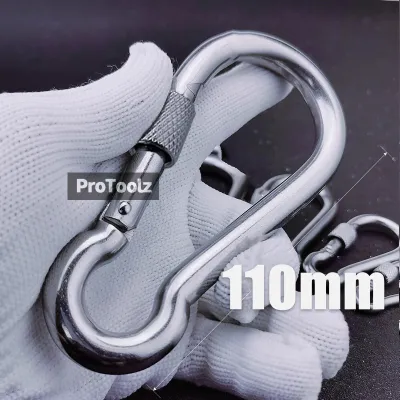
Material choice involves a trade-off between weight and wear resistance. Aluminum alloy is the standard for active climbing because of its excellent strength-to-weight ratio, allowing you to carry a full rack without excessive fatigue. Steel carabiners are much heavier but offer exceptional resistance to abrasion. In heavy-duty scenarios, such as fixed top-rope anchors at a busy crag or rescue rigging, steel is often preferred because it can withstand constant rope friction without wearing down.
For most climbers, “heavy-duty” does not mean seeking a massive static strength rating. Instead, it refers to high wear resistance. If you frequently climb in abrasive environments or set up top-rope anchors, look for aluminum carabiners with reinforced baskets or steel inserts designed to handle high friction without adding the weight of a full steel frame.
Pre-Climb Inspection and Retirement Criteria
Climbing is an inherently high-risk activity, and your gear is your lifeline. Regular inspections are vital to ensure your carabiners remain safe for use. Before every climb, perform a visual and tactile check of each carabiner on your rack. Feel the metal for sharp burrs, deep rope grooves, or any signs of hairline micro-cracks.
Establish clear stop conditions for your gear. If a carabiner has a groove worn deeper than the manufacturer’s recommended limit (typically 1 millimeter), or if the gate fails to snap shut instantly when released, retire it immediately. Pay close attention to the locking sleeve; if it sticks or fails to lock smoothly, clean it according to the manufacturer’s instructions or replace it.
Never use a carabiner with an unknown history, such as found gear or secondhand items with unverified origins. Always consult the manufacturer’s specific guidelines for cleaning, lubrication, and retirement criteria to maintain a safe climbing system.
Frequently Asked Questions (FAQ)
Can I use a heavy-duty steel carabiner for all rock climbing tasks?
While steel carabiners offer exceptional durability and abrasion resistance, they are impractical for standard rock climbing due to their weight. Carrying a full set of steel quickdraws and locking carabiners would quickly exhaust you, increasing your risk of fatigue-related errors. Certified aluminum carabiners provide more than enough strength for standard climbing falls while keeping your rack light and manageable. Save steel carabiners for fixed anchors or heavy hauling systems.
What does the kN rating actually mean in real-world climbing falls?
The kilonewton (kN) rating stamped on a carabiner measures static force tolerance under laboratory conditions. In a real-world climbing fall, the system is dynamic. Your climbing rope stretches, and your belayer’s movement absorbs a significant amount of the impact energy. As a result, a typical climbing fall rarely generates forces exceeding 5 to 8 kN, meaning a standard certified 20 kN carabiner provides a massive safety margin.
Community discussion
Share your experience or ask a question. Comments are reviewed before publication.