
Finding a treadmill that can withstand daily, high-frequency workouts and comfortably support heavier users requires looking beyond basic retail descriptions. In the Philippines, where high humidity, warm temperatures, and occasional power fluctuations place extra stress on electrical motors, selecting a true heavy-duty electric treadmill is essential for safety, longevity, and performance. A proper purchasing decision hinges on verifying structural integrity, motor ratings, and local service support rather than relying on generic marketing claims.
Investing in a high-capacity treadmill ensures that the machine operates well within its mechanical limits, reducing wear and tear on critical components. When a treadmill is pushed to its maximum weight or usage capacity daily, the motor runs hotter, the belt experiences higher friction, and the frame is subjected to excessive vibration. By understanding how to evaluate technical specifications and structural designs, you can select a machine that delivers a safe, stable, and durable workout experience at home.
Essential Motor and Belt Specifications for Heavier Users
The motor is the heart of any electric treadmill, and its performance directly dictates how smoothly the machine runs under load. When evaluating motors, it is vital to distinguish between Continuous Horsepower (CHP) and Peak Horsepower (PHP). Peak horsepower represents the maximum power a motor can produce for a brief moment, such as during sudden acceleration, but it cannot sustain this output. Continuous Horsepower, on the other hand, measures the motor’s ability to deliver constant power during prolonged workouts. For heavier users and high-frequency household training, a motor rated at 3.0 CHP or higher is highly recommended to prevent overheating and sluggish belt movement.
Products mentioned in this guide
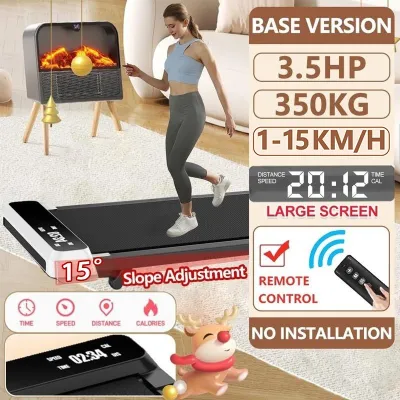
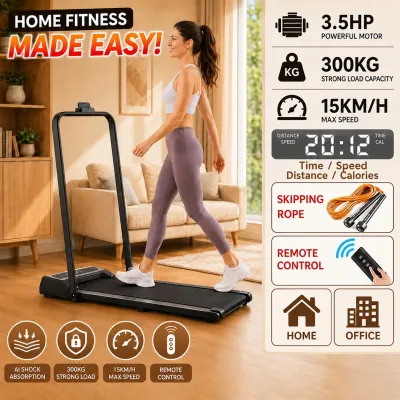
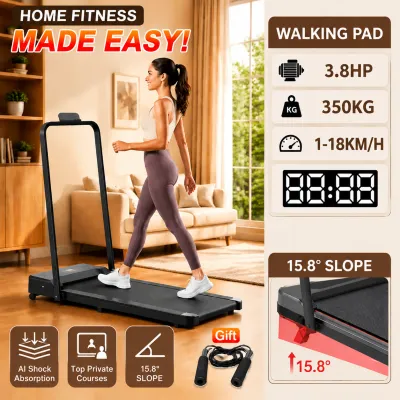
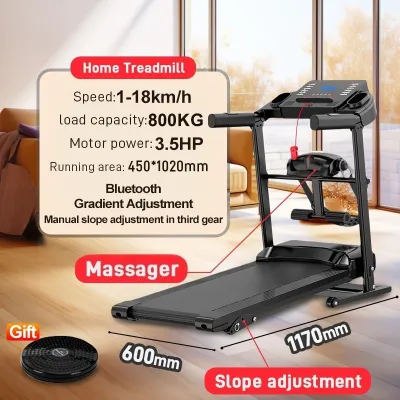
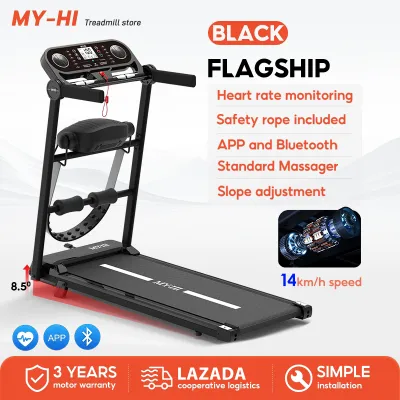
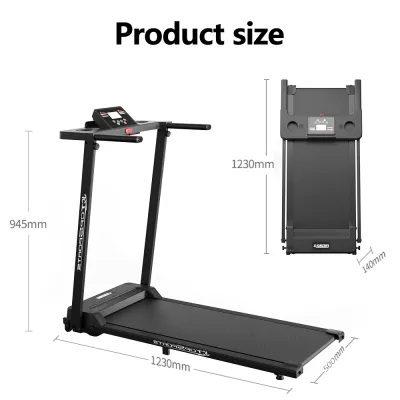
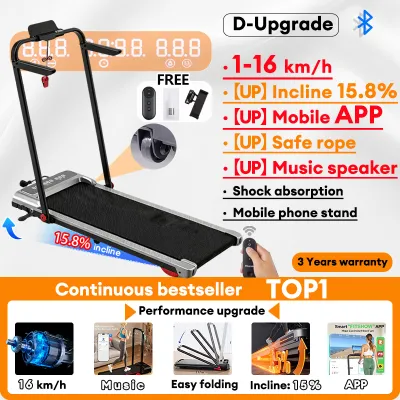
Prices are valid at publication and may change. Please refer to the product page for the latest price.
To verify the motor’s true rating, do not rely solely on the promotional text on retail websites. Instead, request the official technical specification sheet from the distributor or inspect the physical certification sticker located directly on the motor casing under the hood. A high-quality heavy-duty motor will often feature Class F insulation, which is designed to withstand higher operating temperatures, a crucial factor in the warm Philippine climate where ambient room temperatures can accelerate motor heat buildup.
Weight capacity ratings require a conservative approach to ensure user safety and machine longevity. Manufacturers establish maximum weight limits under controlled, static conditions, but dynamic forces—such as the impact of a user running or jogging—exert significantly more stress on the deck and motor. To account for these dynamic forces, select a treadmill with a rated weight capacity that exceeds the heaviest user’s weight by at least 15 to 20 kilograms. This safety margin prevents the motor from straining to pull the belt under heavy footfalls, ensuring a consistent speed and preventing premature belt wear.
The dimensions of the running surface are equally critical for safety and comfort. A belt that is too narrow or too short forces you to constantly monitor your positioning, which can disrupt your natural stride and increase the risk of stepping onto the side rails. For heavier users or those with longer strides, the running belt should measure at least 50 centimeters wide and 140 centimeters long. This spacious surface allows for natural lateral movement and comfortable stride extension during high-speed running or high-intensity interval training.
Evaluating Frame Stability and Joint Protection
A heavy-duty treadmill must possess a rock-solid foundation to handle the impact of daily, high-frequency workouts. The frame construction is the primary indicator of overall stability. Look for frames constructed from heavy-gauge, welded steel rather than bolted aluminum components. Welded steel frames minimize flex and prevent the machine from shaking or swaying when you run at high speeds. Consequently, a heavier overall machine weight—often exceeding 80 to 100 kilograms—is a positive attribute, as it anchors the treadmill firmly to the floor and dampens vibrations.

Joint protection is another critical factor, particularly for heavier runners who experience greater impact forces with every step. High-quality heavy-duty treadmills utilize advanced deck cushioning systems to absorb shock and protect the knees, hips, and ankles. These systems typically feature elastomer dampers positioned beneath the deck. When evaluating cushioning, look for multi-zone systems that offer a softer landing zone at the front of the deck where your foot strikes, and a firmer, more stable push-off zone at the rear to support your stride transition. Avoid decks that feel excessively bouncy, as a lack of firm support can cause ankle instability and strain joints.
The durability of the incline and speed mechanisms must also be verified. Heavy-duty treadmills use a separate, dedicated lift motor to adjust the deck’s incline. This lift motor must be robust enough to raise and lower the deck smoothly while carrying the user’s full weight. Additionally, pay close attention to the roller size; rollers are the metal cylinders that guide and tension the running belt. Larger rollers, ideally 5 centimeters or more in diameter, provide more surface contact with the belt, which reduces tension, prevents belt slippage, and extends the lifespan of both the belt and the drive motor.
Checking Warranties and Local Service Availability
Because a heavy-duty treadmill is a significant financial investment, securing a comprehensive warranty is essential for long-term peace of mind. Standard home treadmills often come with limited, short-term warranties, but heavy-duty models should offer substantial coverage. Look for manufacturers that provide a lifetime warranty on the frame, at least 5 to 10 years of coverage on the motor, and 1 to 2 years on parts and labor. A short warranty period of six months or less is a strong indicator that the machine may not be built with commercial-grade components.
In the Philippines, local service availability is a critical factor that is often overlooked until a repair is needed. Importing replacement parts can lead to months of downtime if the local distributor does not maintain a well-stocked inventory. Before finalizing your purchase, ask the retailer detailed questions about their post-sales support. Confirm whether they have authorized, in-house technicians who can perform on-site repairs, and ask about the typical lead time for sourcing common replacement parts like console circuit boards, running belts, and deck lubricants.
Regular maintenance is mandatory to keep your treadmill running smoothly and to preserve your warranty coverage. Sweat contains salt, which can quickly corrode steel frames and damage sensitive console electronics in humid tropical environments. To prevent this, wipe down the machine with a damp cloth after every workout. Additionally, you must periodically apply 100% silicone lubricant beneath the running belt to reduce friction between the belt and the deck. Check the belt alignment weekly and adjust the tension bolts at the rear of the machine if you notice the belt drifting to one side.
Managing Space, Power, and Installation Requirements
Heavy-duty treadmills have specific electrical and spatial requirements that must be planned for before the machine arrives at your home. Because these powerful motors draw a significant amount of electrical current, they should always be plugged directly into a dedicated wall outlet. Sharing an outlet or using a standard household extension cord can cause voltage drops, leading to motor strain, console resets, or tripped circuit breakers. Given the frequent voltage fluctuations and power surges common in many parts of the Philippines, using a high-quality surge protector or a dedicated voltage regulator rated for the treadmill’s wattage is highly recommended to safeguard the sensitive electronics.
Physical space planning involves measuring both the footprint of the machine and the surrounding clearance zones. Heavy-duty treadmills are large, bulky, and often do not fold as compactly as budget models. Ensure you have a flat, level floor surface that can accommodate the machine’s dimensions. For safety, maintain a clear, unobstructed space of at least 2 meters behind the treadmill and 1 meter on either side. This clearance is vital in case you lose your balance or need to dismount quickly during a workout. Do not forget to calculate vertical clearance as well; add the height of the treadmill deck at its maximum incline to your own height, and ensure there is still ample head clearance below your ceiling.
Finally, plan for the logistics of delivery and assembly. Due to their heavy steel frames and robust motors, these machines are shipped in massive, heavy crates that often weigh well over 100 kilograms. Navigating these crates through narrow doorways, tight hallways, or up multi-story stairwells can be incredibly challenging and potentially dangerous. It is highly advisable to opt for professional delivery and installation services. Trained technicians have the tools and experience to transport the heavy components safely, assemble the frame precisely, align and tension the belt correctly, and verify that all electrical connections are secure before your first workout.
Frequently Asked Questions (FAQ)
Can a standard home treadmill handle daily high-intensity interval training?
Standard home treadmills are generally designed for light jogging or walking and are not built to withstand the rapid speed transitions and heavy footfalls associated with daily high-intensity interval training (HIIT). Their motors typically lack the advanced cooling systems found in heavy-duty models, which can lead to rapid heat buildup and thermal overload during intense workouts. Additionally, the lighter frames and thinner belts of standard models are prone to slipping, shaking, and premature wear when subjected to the sudden, forceful impacts of sprinting intervals.
How do I know if my floor can support a heavy-duty treadmill and user?
Most modern residential floors, including concrete slabs and reinforced wooden joists, are fully capable of supporting the combined static and dynamic weight of a heavy-duty treadmill and a user, which typically ranges from 180 to 300 kilograms. However, to protect your flooring from cosmetic damage, scratches, and indentations, you should always place a high-density, non-slip equipment mat beneath the machine. This mat helps distribute the weight more evenly across the floor surface, dampens operational noise, and absorbs the vibrations generated during high-impact running sessions.

Community discussion
Share your experience or ask a question. Comments are reviewed before publication.