
Selecting the right resistance level for heavy-duty exercise bands can be confusing because a “50-pound” band does not feel like a 50-pound dumbbell. When integrating rubber bands heavy duty options into your home or gym routine, understanding how these ratings translate to real-world force is key to avoiding injury and maximizing muscle growth. Unlike free weights, which provide a constant gravitational pull, elastic bands deliver variable resistance that changes throughout the range of motion.
To choose the right weight, you must match the band’s progressive tension curve to your current strength level, your specific exercise goals, and the mechanics of the movement. Whether you want to build muscle, assist your pull-ups, or rehabilitate an injury, decoding these numbers will help you select the perfect tension for your needs.
Decoding the Weight Ratings of Rubber Bands Heavy Duty Training Tools
When you look at heavy-duty elastic bands, you will notice weight ranges printed on them, such as 20 to 150 lbs (approximately 9 to 68 kg). These numbers do not represent a static weight that you lift against gravity. Instead, they measure the amount of force required to stretch the band to a specific percentage of its resting length, which is typically between 200% and 300% elongation.
Products mentioned in this guide

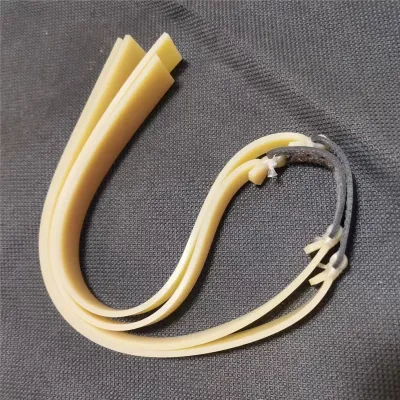
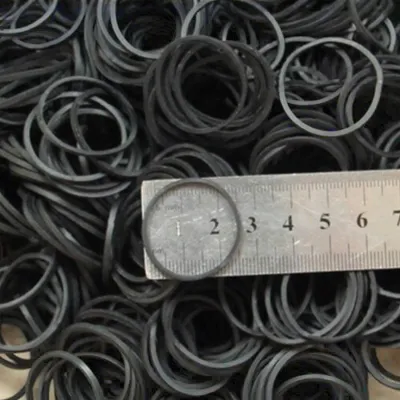
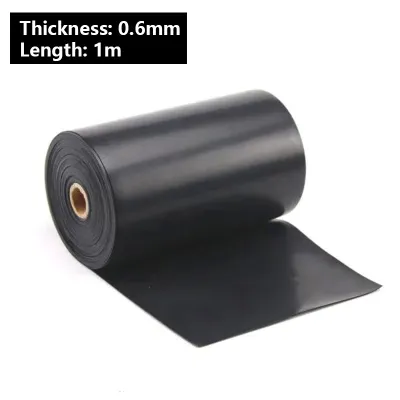
Prices are valid at publication and may change. Please refer to the product page for the latest price.
This mechanical difference creates a progressive tension curve. At the beginning of a movement, when the band is slack or only slightly stretched, the resistance is at its lowest. As you perform the exercise and stretch the band further, the tension increases exponentially, reaching its maximum rated weight only at the very end of the movement.
Understanding this stretch-to-weight ratio is critical when selecting your gear. A band rated at 50 lbs will only provide that full 50 lbs of resistance when it is stretched to its limit. If you are only stretching it slightly during a bicep curl or lateral raise, you might only be working against 15 to 20 lbs of actual tension.
How to Select the Right Tension for Your Fitness Goals
Choosing the correct resistance level requires matching the band’s thickness and tension to your specific physical capabilities and training objectives. Because heavy-duty bands are designed to withstand high forces, even the lighter options in this category offer substantial durability.

For Beginners and Rehabilitation
If you are recovering from an injury, focusing on mobility, or learning new movement patterns, look for lighter bands rated between 10 and 35 lbs (5 to 15 kg). In these scenarios, the term “heavy-duty” refers to the high-quality, layered rubber construction that resists snapping, rather than an overwhelming level of resistance.
These lighter options are excellent for high-repetition endurance work, rotator cuff activation, and dynamic stretching. They allow you to practice proper form without overloading sensitive joints or compromising your posture.
For Muscle Building and Strength Training
For hypertrophy and progressive overload, mid-to-heavy resistance levels ranging from 35 to 85 lbs (15 to 40 kg) are generally most effective. These bands provide enough tension to stimulate muscle growth by challenging your fibers at the peak of contraction.
You can use these mid-range bands to add accommodating resistance to bodyweight exercises, such as wrapping them around your back for push-ups, or as standalone tools for squats, overhead presses, and rows. They are highly effective at creating the muscle fatigue necessary for growth without the need for bulky iron plates.
For Powerlifting and Advanced Assistance
Advanced lifters and powerlifters typically require extra-heavy bands rated from 85 to over 150 lbs (40 to 70+ kg). These thick bands are designed to handle immense force and are rarely used for simple isolation exercises.
Instead, their primary application is providing significant assistance during bodyweight movements like pull-ups and dips, or adding heavy accommodating resistance to barbell lifts. For example, anchoring these bands to the bottom of a squat rack and wrapping them around a barbell increases the load at the top of the squat, helping lifters build explosive power.
Adjusting Resistance Levels for Different Exercises
Your ideal band weight will vary dramatically depending on the specific exercise you are performing and the muscle groups involved. A single band is rarely sufficient for a full-body workout.
Lower Body vs. Upper Body Larger muscle groups like your glutes, quadriceps, and hamstrings are naturally much stronger than your upper-body muscles. For lower-body movements like squats, deadlifts, and hip thrusts, you will need significantly higher resistance levels to trigger adaptation. Conversely, smaller upper-body muscles like the shoulders, biceps, and triceps require lighter, more controllable bands to prevent joint strain and maintain proper alignment.
Assisted vs. Resisted Movements There is an inverse relationship between band thickness and exercise difficulty when switching between assisted and resisted movements. For pull-up assistance, a heavier, thicker band provides more upward force, making the exercise easier for beginners. However, if you are adding resistance to a movement like a bench press or push-up, a heavier band makes the exercise much harder, meaning you should opt for a moderate or light band to avoid overwhelming your joints.
Band Stacking Strategy Instead of relying on a single, ultra-thick band, consider the strategy of band stacking. Combining two lighter bands—such as two 30 lb bands—to achieve 60 lbs of resistance offers several practical advantages. It creates a smoother tension curve, allows for micro-progressions by removing one band, and provides a safer failure point. If one band suffers a sudden tear during a high-tension movement, the second band acts as a backup, reducing the risk of a dangerous snap-back.
Essential Safety and Maintenance Checks for High-Tension Bands
High-tension rubber bands store a massive amount of kinetic energy, making safety and regular maintenance paramount. In tropical environments like the Philippines, high humidity and ambient heat can accelerate the degradation of natural rubber and latex, making routine inspections even more critical.
Pre-Workout Inspection Before every training session, perform a thorough visual and physical check of your bands. Inspect the entire length for micro-tears, small nicks, white stress marks, or signs of dry rot. Gently stretch the band to reveal hidden cracks near the edges; if you spot any imperfections, discard the band immediately to prevent a sudden snap during use.
Proper Anchoring Protocols Never anchor heavy-duty bands to sharp edges, fragile furniture, standard door hinges, or unstable poles. The extreme tension can easily pull down heavy objects or cause the band to slip and snap back toward your face. Always check your equipment’s manufacturer instructions to verify that your anchor points, pull-up bars, or door attachments are rated to handle the intense lateral and vertical forces generated by high-tension bands.
Elongation Limits To preserve the structural integrity of the rubber, never stretch a band beyond its recommended maximum elongation, which is typically 250% to 300% of its resting length. Over-stretching causes permanent deformation, weakens the molecular bonds of the rubber, and significantly increases the risk of catastrophic failure.
Frequently Asked Questions (FAQ)
Can I use heavy-duty resistance bands instead of free weights?
Yes, they are highly effective for travel, home workouts, and joint-friendly training, but they do not fully replace free weights. Because bands lack constant tension throughout the entire movement and offer reduced resistance at the starting position (the eccentric phase), combining them with free weights yields the best overall strength results.
Does the color of the resistance band indicate its weight level?
No, color coding is not standardized across the fitness industry. While many brands use a progression from red and yellow to green, blue, and black, these systems vary widely. Always check the printed weight rating in pounds or kilograms and verify the physical thickness of the band rather than relying on color alone.
Community discussion
Share your experience or ask a question. Comments are reviewed before publication.