
When preparing for a rock climbing adventure in the Philippines, selecting the right hardware is a matter of life and death. While searching for “heavy-duty snap hooks” might lead you to various industrial, marine, or utility clips, a critical distinction must be made immediately: standard heavy-duty snap hooks are not designed, tested, or certified for rock climbing or any life-support application. For securing yourself, your partner, or your climbing rope, you must exclusively use certified climbing carabiners. Heavy-duty snap hooks, however, serve an excellent secondary role as utility organizers for your non-load-bearing gear, such as chalk bags, water bottles, and approach shoes.
Understanding how to separate life-support gear from utility hardware is essential for anyone climbing the limestone cliffs of Cantabaco, the crags of Wawa Gorge, or indoor climbing gyms across the country. Tropical environments introduce unique challenges, including high humidity, rainfall, and coastal salt air, which demand careful material selection and rigorous maintenance. This guide clarifies the safety boundaries between utility snap hooks and climbing carabiners, outlines how to choose certified life-support hardware, and provides a practical framework for managing your gear safely in Philippine climbing conditions.
Crucial Safety Distinction: Snap Hooks vs. Climbing Carabiners
To understand why standard heavy-duty snap hooks are dangerous for climbing, one must look at their structural engineering and intended use. General-purpose snap hooks are designed for static, predictable loads, such as securing a dog leash, holding a gate closed, or rigging light marine sails. They are typically manufactured using cast metals, zinc alloys, or low-grade stainless steel, which can contain internal air bubbles or structural imperfections. These manufacturing methods are sufficient for holding steady weight but are highly susceptible to sudden, catastrophic failure when subjected to dynamic forces.
Products mentioned in this guide
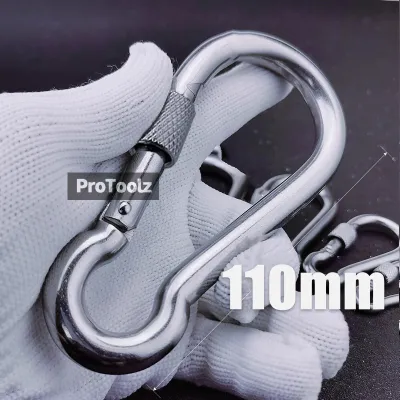
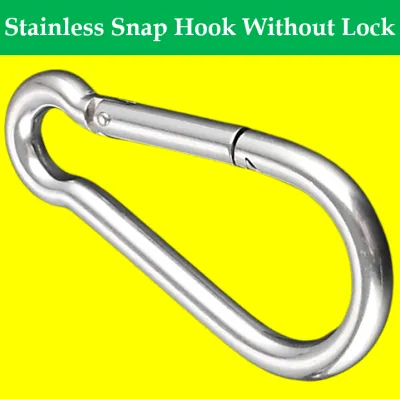
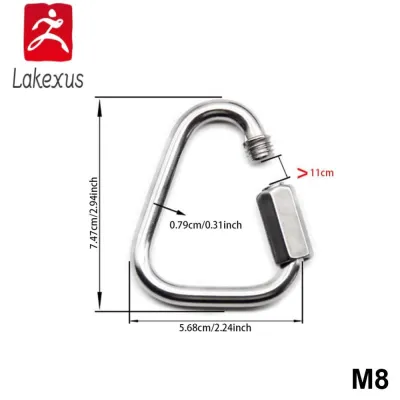
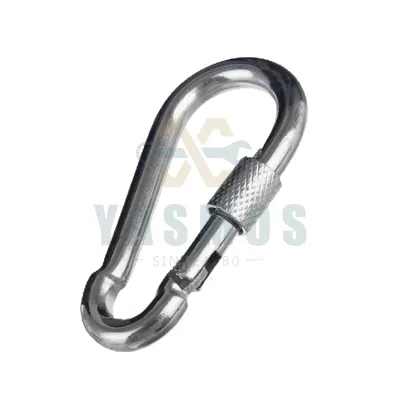
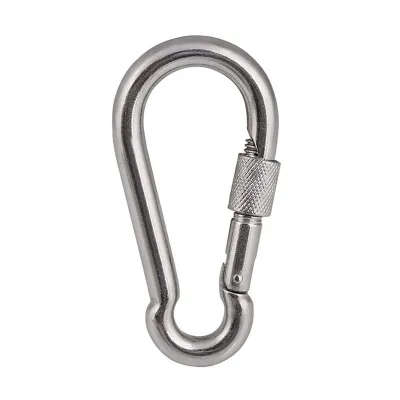
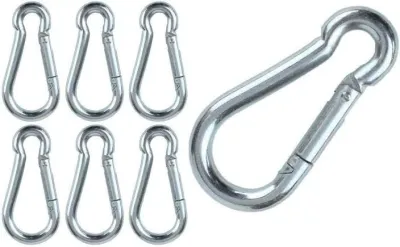
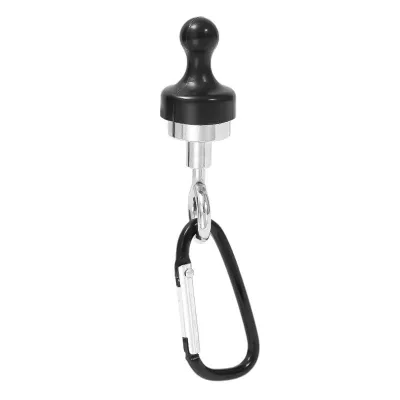
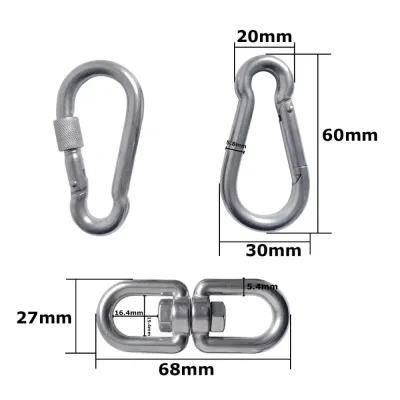
Prices are valid at publication and may change. Please refer to the product page for the latest price.
In contrast, certified climbing carabiners are engineered specifically to withstand the extreme shock loads generated during a climbing fall. When a climber falls, the force exerted on the safety system can easily exceed several kilonewtons (kN), which translates to thousands of kilograms of instantaneous force. Climbing carabiners are constructed from hot-forged aircraft-grade aluminum or high-strength alloy steel, undergoing rigorous heat treatment to ensure the metal can stretch and absorb energy without snapping.
The gate mechanism of a standard snap hook also lacks the security required for climbing. Most utility snap hooks rely on a simple spring-loaded lever or a sliding bolt that can easily be forced open if it rubs against a rock face, a rope, or another piece of gear. Climbing carabiners feature sophisticated gate designs, including locking sleeves that screw shut or lock automatically, preventing accidental opening during movement. Furthermore, the spine of a climbing carabiner is specifically shaped to direct the load along its strongest axis, whereas a utility snap hook may allow the rope or webbing to shift, causing dangerous cross-loading.
Using a non-certified snap hook for any part of a life-support system—such as belaying, anchoring, or connecting to a harness—violates fundamental safety protocols. Even if a utility hook is labeled “heavy-duty” or boasts a high static weight rating, it has not undergone the dynamic drop testing required for climbing gear. A single fall on a non-certified hook can result in immediate structural failure, leading to severe injury or death. Therefore, the absolute rule of climbing safety is to reserve utility snap hooks strictly for carrying gear and to use only certified carabiners for life support.
How to Choose Certified Carabiners for Life-Support Systems
Selecting climbing carabiners requires a clear understanding of international safety standards and certification markings. When inspecting a carabiner for life-support use, the first step is to look at the spine for engraved certification stamps. The most widely recognized standards are those set by the Union Internationale des Associations d’Alpinisme (UIAA) and the European Committee for Standardization (CE). A genuine climbing carabiner will feature markings such as “CE” followed by a four-digit laboratory code, “UIAA,” and the European standard “EN 12275.”

In addition to certification marks, the spine of a certified carabiner must display its rated strength in kilonewtons (kN) across three distinct loading scenarios. You will see markings indicating the major axis strength (typically 20 kN or higher when the gate is closed), the minor axis or cross-loaded strength (usually around 7 to 10 kN), and the open-gate strength (typically 7 to 9 kN). These ratings serve as a guarantee that the hardware has been batch-tested to withstand the violent forces of lead falls and anchor systems. If a piece of hardware lacks these specific engravings, it must never be used for climbing.
Gate types play a crucial role in matching a carabiner to its specific climbing application. Screwgate carabiners require the climber to manually spin a threaded sleeve over the gate to lock it, making them highly reliable for anchors and belay setups where they will not be frequently opened and closed. Twist-lock and auto-locking carabiners utilize spring-loaded sleeves that automatically lock when the gate snaps shut, reducing the risk of human error but requiring careful monitoring in dusty or muddy environments. For quickdraws used to clip the rope into protection while leading, non-locking wiregate or solid-gate carabiners are preferred for their ease of clipping and resistance to gate flutter.
Material selection is another critical factor, especially when climbing in the hot and humid climate of the Philippines. Aluminum carabiners are the standard choice for most climbers because they are lightweight, reducing the overall burden on your harness during long approaches and steep climbs. However, steel carabiners, while significantly heavier, offer superior durability against wear and abrasion. Steel is often preferred for fixed anchor points, top-rope setups, and indoor climbing gyms where the gear experiences constant friction from sandy ropes.
The shape of the carabiner also dictates its suitability for different tasks. Asymmetrical D-shape carabiners are the most common, as they naturally guide the rope or webbing toward the stronger, non-gate side of the spine, maximizing strength-to-weight efficiency. Pear-shaped or HMS carabiners feature a wider top basket, making them ideal for belaying with a Munter hitch or accommodating multiple knots at an anchor. Oval carabiners distribute weight evenly and are excellent for aid climbing or organizing gear, though they generally have lower strength ratings than D-shaped designs.
Safe Non-Load-Bearing Uses for Heavy-Duty Snap Hooks
While heavy-duty snap hooks have no place in your life-support system, they are incredibly useful tools for gear management and organization. Climbing trips require carrying a vast array of auxiliary equipment, and keeping these items accessible yet secure is vital for a smooth day on the crag. A standard stainless steel or aluminum snap hook is perfect for clipping your chalk bag to your harness, ensuring it stays upright and within reach without wasting a certified climbing carabiner on a non-safety task.
You can also use utility snap hooks to organize gear slings or attach extra items to the exterior of your backpack during the approach hike. For instance, clipping your approach shoes, water bottle, or a lightweight rain jacket to your pack keeps the interior organized and allows wet gear to air dry in the tropical heat. When hiking through dense jungle trails to reach remote climbing spots, securing these items with a reliable snap hook prevents them from snagging on branches and falling unnoticed into the undergrowth.
At the base camp or the foot of the cliff, heavy-duty snap hooks help keep your gear off the damp ground. The tropical climate of the Philippines means the forest floor is often muddy, humid, and home to various insects. By using utility hooks to hang your backpack, rope bag, and clean clothes from tree branches or gear loops, you protect your equipment from moisture and dirt. This simple practice extends the lifespan of your climbing gear and keeps your staging area organized.
When choosing utility snap hooks for these tasks, it is important to balance weight, durability, and corrosion resistance. Stainless steel snap hooks offer exceptional resistance to rust, making them ideal for humid coastal environments, but they can add significant weight to your pack. Lightweight aluminum utility clips are much easier to carry in bulk but may wear out faster under heavy use. Always clearly mark your utility snap hooks—perhaps with colored tape or a specific paint pen—to ensure they are never accidentally mixed up with your certified climbing carabiners during a hectic gear setup.
Buying and Inspection Checklist for Climbing Hardware
Ensuring the safety of your climbing gear requires a disciplined approach to purchasing and regular maintenance. Because counterfeit and uncertified hardware can easily find its way onto online marketplaces and unauthorized retail shops, you must follow a strict verification process before trusting any equipment with your life. Use the following checklist to evaluate your hardware before purchasing and before every single climb.
- Verify the Source: Only purchase climbing carabiners from authorized outdoor specialty retailers or directly from reputable manufacturers. Avoid buying unbranded hardware from general ecommerce platforms, even if the listing claims the item is "heavy-duty" or "climbing-safe." If a carabiner is priced suspiciously low—such as unbranded options sold for ₱100 to ₱200—it is highly likely to be a dangerous counterfeit.
- Check for Certifications: Physically inspect the spine of the carabiner for clear, crisp engravings of the CE and UIAA logos, along with the EN 12275 standard and the rated strength in kilonewtons (major axis, minor axis, and open gate). Be wary of laser-etched markings that look blurry, uneven, or easily scratch off, as these can indicate counterfeit labeling.
- Inspect the Gate Action: Open and close the gate multiple times to ensure it moves smoothly and snaps shut completely under its own spring tension. For locking carabiners, verify that the screw sleeve or auto-locking mechanism operates without sticking or catching. In the humid Philippine climate, salt air and sweat can cause mineral buildup; if the gate does not close instantly on its own, the carabiner must be cleaned or retired.
- Examine for Physical Damage: Run your fingers along the entire body of the hardware to check for sharp edges, deep grooves, cracks, or significant dents. Pay close attention to the areas where the rope runs, as constant friction can wear deep channels into the metal. Any carabiner with a groove deeper than one millimeter, or any visible hairline cracks, must be retired immediately.
- Assess Play and Alignment: Check the gate rivet and hinge for excessive lateral movement or play. The gate should align perfectly with the nose of the carabiner when closed. If the gate is bent, misaligned, or wobbles significantly when open, it can fail to lock correctly under load, drastically reducing its strength.
- Monitor for Corrosion: Inspect all metal surfaces for signs of chemical corrosion, rust, or oxidation. While aluminum does not rust like iron, it can develop a white, powdery oxidation that weakens the metal over time. Stainless steel utility hooks can also rust if exposed to salt water without proper rinsing. If you notice deep pitting or stubborn rust that cannot be wiped away, retire the hardware.
- Establish Retirement Rules: Develop a strict retirement policy for all hardware. Any climbing carabiner that has survived a severe dynamic fall, been dropped from a significant height onto a hard surface, or shows signs of excessive wear must be permanently taken out of service. To prevent accidental reuse, physically destroy retired gear by cutting it with a hacksaw or bending the gate before throwing it away.
Frequently Asked Questions (FAQ)
Can I use a heavy-duty snap hook to build a climbing anchor?
No, you must never use a standard heavy-duty snap hook to build a climbing anchor. Anchors are the single most critical component of a climbing safety system, as they support the entire weight of the climber and belayer and must withstand potential fall forces. A standard snap hook lacks the certified strength ratings, dynamic impact resistance, and locking mechanisms required to secure an anchor safely. To build a reliable climbing anchor, you must exclusively use certified locking carabiners (such as screwgate or auto-locking models) rated to at least 20 kN, combined with certified climbing slings, static ropes, or specialized anchor chains.
How do I verify if a carabiner is genuinely certified for climbing?
To verify if a carabiner is genuinely certified, start by checking the physical markings on its spine, which must include the CE mark with a four-digit testing laboratory number, the UIAA logo, and the EN 12275 standard. Next, cross-reference the manufacturer’s name and the specific model number with the official UIAA certified equipment database online. Reputable manufacturers also publish detailed technical manuals and declarations of conformity for every batch of gear they produce. If you cannot find the manufacturer’s official documentation or if the markings on the spine are missing, incomplete, or poorly engraved, treat the hardware as uncertified and do not use it for climbing.
Community discussion
Share your experience or ask a question. Comments are reviewed before publication.