
Yes, a heavy duty treadmill exercise machine can fit in a modern condominium unit, but it is far from a simple “plug-and-play” purchase. Unlike lightweight, folding walking pads designed for casual pacing, a true heavy-duty treadmill is a substantial piece of commercial-grade machinery. Successfully integrating one into your high-rise home requires verifying three critical pillars: structural floor load capacity, vertical ceiling clearance, and physical delivery logistics.
Because heavy-duty models feature larger motors, wider running decks, and robust steel frames, they are significantly heavier and bulkier than standard residential alternatives. Before finalizing a purchase, you must treat this acquisition as a major spatial and structural planning task. Skipping these calculations can lead to structural floor damage, severe safety hazards, noise complaints from neighbors, or a massive delivery box stuck permanently in your building’s lobby.
Measuring Floor Space and Safety Clearances
When planning your condo gym layout, the most common error is equating the treadmill’s physical footprint with the space required to operate it safely. A heavy duty treadmill exercise machine typically has a static footprint of about 1.8 to 2.2 meters in length and 0.8 to 1.0 meters in width. However, the actual operational space required is significantly larger.
Products mentioned in this guide
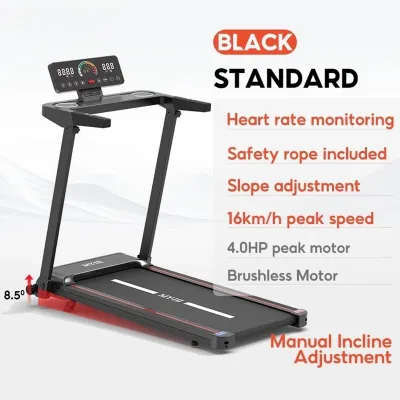
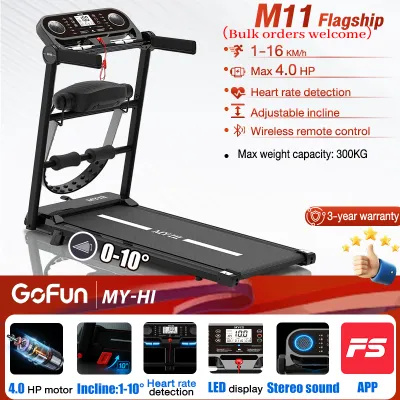
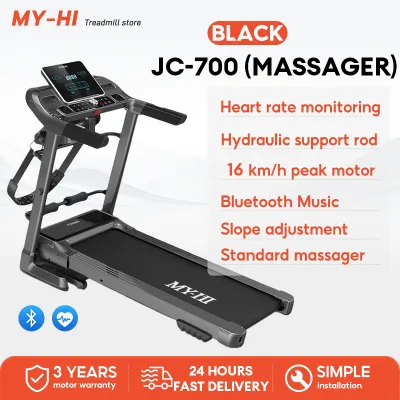
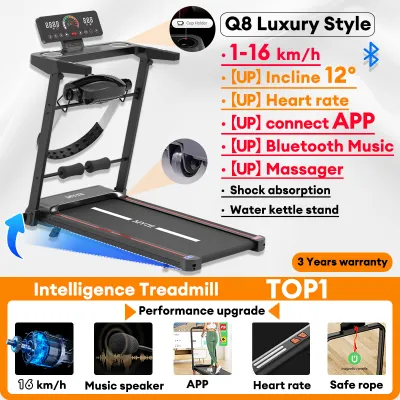
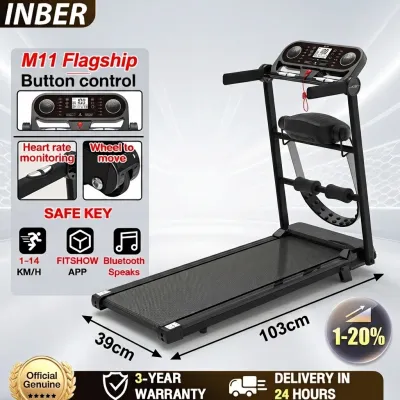
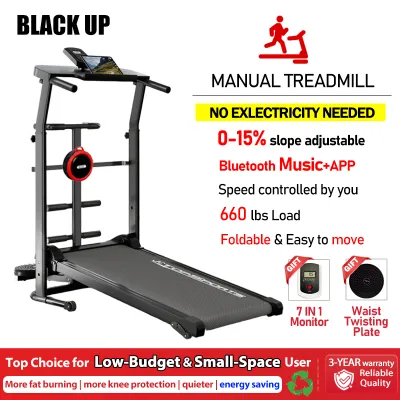
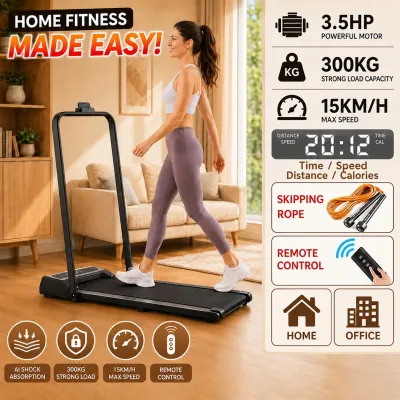
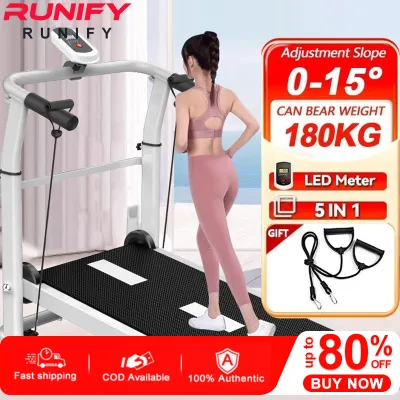
Prices are valid at publication and may change. Please refer to the product page for the latest price.
Safety guidelines dictate that you must maintain a clear, unobstructed zone around the machine to prevent severe injury. The most critical area is the rear safety clearance. You must leave at least 2 meters (approximately 6.5 feet) of open space behind the treadmill belt. If you lose your footing while running at high speeds, this rear clearance ensures you are safely ejected onto the floor rather than being pinned and friction-burned between a spinning belt and a solid concrete wall. Always attach the safety stop key to your clothing before starting any workout.
Side clearances are equally vital for safe mounting and dismounting. Maintain at least 0.6 meters (2 feet) of open space on both sides of the machine. This allows for natural arm swings, easy access to the power switch, and comfortable folding or maintenance maneuvers.
In a compact Philippine condo, mapping these dimensions requires careful coordination. Ensure the designated area does not block emergency exit paths, sliding balcony doors, or high-traffic walkways. Furthermore, consider the tropical climate. High humidity levels mean your treadmill’s motor will generate substantial heat. Avoid cramming the machine into tight, unventilated alcoves; instead, position it in an open area with active cross-ventilation or direct access to air conditioning to prevent the electronics from overheating.
Checking Ceiling Height and Incline Clearance
A heavy-duty treadmill doesn’t just occupy floor space—it also demands substantial vertical clearance. Standard residential ceilings in Philippine condos typically range from 2.4 to 2.7 meters (about 7.8 to 9 feet). In some loft-style units or older developments, ceilings can be even lower.

To avoid painful head injuries, you must calculate your maximum head clearance using a precise formula:
Required Ceiling Height = Treadmill Deck Height + Tallest User’s Height + Maximum Incline Elevation + Safety Buffer
Unlike lightweight models that sit close to the floor, heavy-duty treadmills feature a high “step-up height” (or deck elevation). Because they house larger, commercial-grade drive motors and heavy-duty shock absorption systems, the running deck itself often sits 20 to 30 centimeters (8 to 12 inches) off the ground before any incline is applied.
When you activate the incline feature—which can raise the deck by an additional 10 to 15 percent—the front of the treadmill rises significantly. If your tallest family member is 1.8 meters (5 feet 11 inches) tall, and the treadmill deck has a 25-centimeter step-up height plus a 15-centimeter peak incline lift, their head will reach 2.2 meters high while running. This leaves very little margin under a standard 2.4-meter ceiling.
Before buying, use this checklist to verify your vertical space:
- Measure the exact ceiling height at the precise spot where the treadmill will be placed. Do not rely on general building plans.
- Identify overhead obstructions such as low-hanging ceiling fans, recessed light fixtures, fire sprinkler heads, or decorative dropped gypsum ceilings.
- Consult the manufacturer's manual for the exact step-up height and the maximum height reached at full incline.
- Add a safety buffer of at least 15 to 20 centimeters (6 to 8 inches) to account for the vertical oscillation (bounce) of a runner's body during high-impact sprints.
Evaluating Floor Weight Capacity and Dynamic Load
Placing a heavy-duty machine on an elevated concrete slab requires a clear understanding of structural engineering limits. A heavy duty treadmill exercise machine is built with heavy steel framing and a large motor, often weighing between 100 and 150 kilograms (220 to 330+ pounds) on its own.
To determine if your floor can support this, you must calculate the total dynamic load, not just the static weight of the machine:
Total Load = Machine Weight + User Weight + Dynamic Impact Force
While a person’s static weight is straightforward, running introduces dynamic impact force. When you run, the downward force exerted as your foot strikes the deck can multiply your effective weight by 2.5 to 3 times. This sudden, concentrated force is transferred directly through the treadmill’s small leveling feet into your condo’s floor slab.
In the Philippines, modern high-rise residential buildings are constructed under the National Structural Code of the Philippines (NSCP), which generally designs residential floor slabs to support a uniform live load of 1.9 kiloNewtons per square meter (kPa), roughly equivalent to 190 kilograms per square meter. While a concrete slab can easily support a heavy treadmill spread out over its entire footprint, the concentrated point loads at the leveling feet can stress delicate floor finishes like ceramic tiles, vinyl planks, or engineered wood.
Before proceeding, take these essential steps:
- Contact your Property Management Office (PMO): Request the structural load limits for your specific unit floor, especially if you live in an older building or a low-rise development with thinner floor slabs.
- Check the building's guidelines: Some condo associations have strict rules regarding the maximum weight of individual appliances or fitness equipment allowed in residential units.
- Use a high-density equipment mat: Never place a heavy-duty treadmill directly onto bare tile or wood flooring. A thick, commercial-grade, high-density rubber mat is essential. It distributes the concentrated point loads from the treadmill's feet across a much larger surface area, preventing cracked tiles or dented floorboards while offering crucial sound insulation.
Navigating Delivery Access and Condo Vibration
Purchasing the perfect treadmill is meaningless if the delivery crew cannot physically transport it into your condo unit. Heavy-duty fitness equipment is shipped in massive, rigid wooden crates or reinforced cardboard boxes that often weigh well over 120 kilograms.
Before finalizing your order, walk the entire delivery pathway with a measuring tape:
- Service Elevator: Measure the elevator door width, interior cabin height, depth, and maximum weight capacity. Many residential elevators in compact condo buildings are too shallow to fit a two-meter-long treadmill box horizontally.
- Stairwells and Hallways: If the machine does not fit in the elevator, identify if the delivery team can use the stairs. Check for tight 90-degree turns, low pipes, or narrow emergency doors.
- Unit Entrance: Measure your front door width and any interior hallway corners. Heavy-duty frames often do not fold flat enough to navigate tight, right-angle turns inside small condo foyers.
Beyond physical access, you must plan for operational vibration. Low-frequency impact noise—the deep “thud-thud” of running—travels effortlessly through solid concrete floor slabs. This structure-borne noise can easily telegraph into the apartment directly below you, leading to immediate friction with your neighbors.
To mitigate vibration and maintain neighborly peace, install specialized isolation pads. Place heavy-duty, industrial anti-vibration rubber pads under the treadmill’s contact feet, on top of your main equipment mat. Additionally, position the treadmill as close as possible to structural load-bearing columns, shear walls, or external concrete beams. The floor slab is most rigid at these structural points, minimizing floor deflection and reducing the drum-like amplification of your footfalls. Avoid placing the machine in the middle of a wide, unsupported floor span directly over a neighbor’s bedroom or living room.
Common Space and Weight Planning Mistakes
Avoiding these frequent oversights will save you from costly return shipping fees or building administration penalties:
- Ignoring the safety envelope: Relying solely on the manufacturer's listed dimensions and failing to leave the mandatory 2-meter rear safety zone.
- Overlooking vertical clearance: Forgetting to add the deck step-up height and maximum incline elevation to the runner's height, resulting in a machine that cannot be safely used at an incline.
- Neglecting structural verification: Assuming that because your floor can support a heavy wardrobe, it can handle the intense, repetitive dynamic impact of a sprinting adult on a 130-kilogram machine.
- Skipping the PMO clearance: Failing to consult your building's administration beforehand, only to have security turn away the delivery truck at the gate due to weight or move-in permit violations.
- Inadequate vibration dampening: Using a thin yoga mat instead of a dedicated, high-density commercial equipment mat, leading to noise complaints within the first five minutes of your workout.
Frequently Asked Questions (FAQ)
Are folding heavy-duty treadmills a good space-saving option for condos?
Yes, some heavy-duty treadmills feature folding decks, but they come with significant trade-offs. While a folding mechanism allows you to reclaim valuable floor space when the machine is not in use, it does not reduce the operational footprint required while running. You still need the exact same rear and side safety clearances during your workout.
Furthermore, heavy-duty folding models remain exceptionally heavy—often weighing over 100 kilograms. Even with hydraulic assist systems, folding and unfolding a massive deck requires noticeable physical effort. You must also verify the folded dimensions carefully: when folded vertically, the deck can stand over 1.8 meters tall, which may block windows, light fixtures, or exceed the height limits of your designated storage alcove. Always prioritize a robust latching mechanism to ensure the heavy deck remains securely locked in its upright position.
Community discussion
Share your experience or ask a question. Comments are reviewed before publication.