
Deciding between a heavy-duty walking pad and a regular treadmill is a choice that directly impacts your daily fitness routine, home space, and safety. A heavy-duty walking pad offers a compact, low-profile design that fits easily under a desk or bed, making it an excellent option for low-impact walking during work hours or light daily movement. In contrast, a regular treadmill provides a robust frame, a larger running surface, and a more powerful motor designed to handle high-speed running, intense interval training, and steep incline workouts. Because the term “heavy-duty” is frequently used as a marketing label rather than a standardized technical rating, finding the right machine requires looking past promotional titles. You must verify the manufacturer’s exact weight limits, continuous motor horsepower, and physical footprint to ensure the equipment can safely support your body weight and fitness goals.
In tropical environments where indoor humidity can be high, choosing the correct machine also involves considering how well the internal components handle heat and moisture. A machine that is constantly pushed to its absolute limit will degrade quickly, leading to costly repairs or premature failure. By understanding the structural and mechanical differences between these two popular cardio machines, you can make an informed investment that keeps you active and safe in your own home.
Defining "Heavy-Duty" for Your Fitness Needs
When browsing fitness equipment on an online marketplace, the label “heavy-duty” is often applied generously to attract buyers looking for durable gear. However, a true heavy-duty rating is not determined by a product title; it is defined by verifiable engineering specifications. For a piece of cardio equipment, heavy-duty status refers to its ability to withstand high levels of mechanical stress over extended periods without structural deformation or motor failure. This durability is especially critical for users with higher body weights or those who plan to use the machine for multiple hours every day.
Products mentioned in this guide
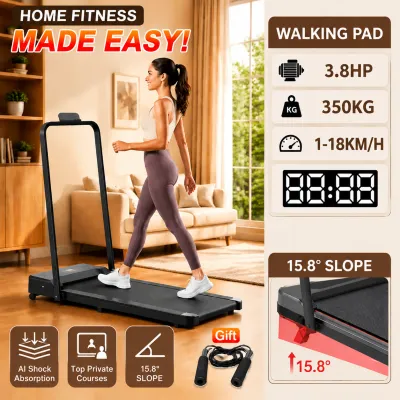
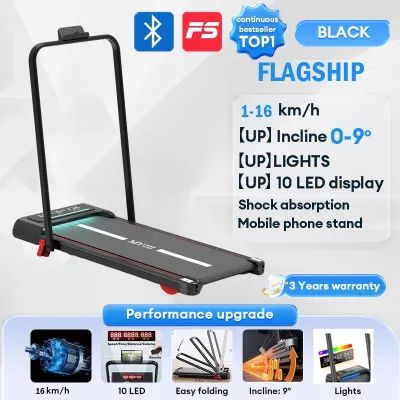
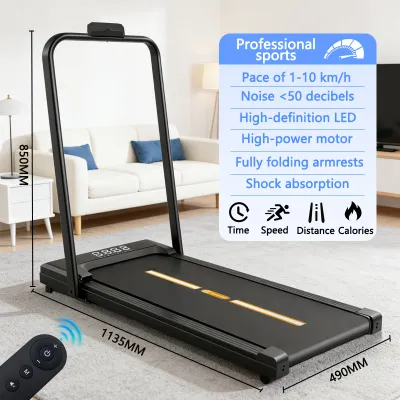
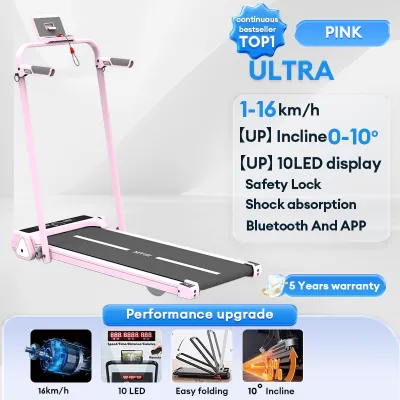
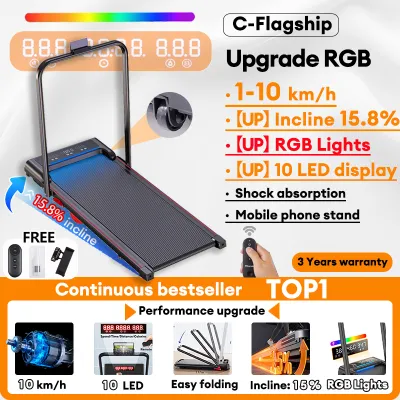
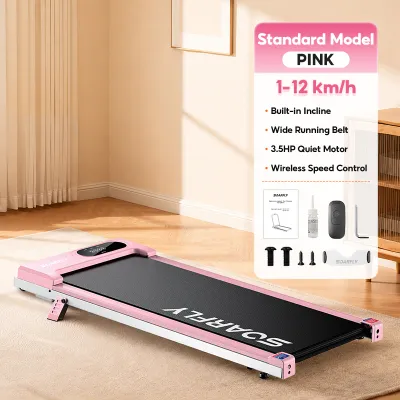
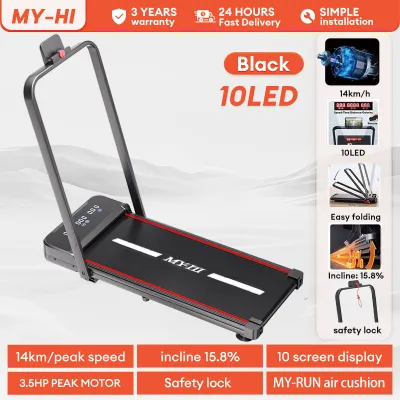
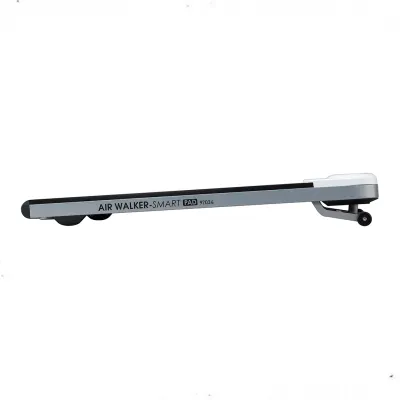
Prices are valid at publication and may change. Please refer to the product page for the latest price.
To understand what level of durability you require, you must first calculate the dynamic force your workouts will generate. When you walk, your feet exert a force roughly equal to your body weight on the deck. However, when you transition to a jog or a run, the impact force can increase to more than double your body weight. This means a user weighing 90 kilograms will exert a significantly higher dynamic load on the frame and motor while running than while walking. If a machine is rated for a maximum user weight of 100 kilograms but is only designed for walking, attempting to run on it can quickly overwhelm the shock absorption system and strain the motor.
To avoid purchasing a machine that cannot handle your workouts, always bypass the promotional descriptions and locate the official user manual or the physical product label. Look for the certified maximum weight capacity and compare it to your current weight, leaving a safety margin of at least 10 to 15 percent. This buffer ensures that the motor and frame are not constantly operating at their absolute limits, which extends the lifespan of the machine and provides a much more stable, squeak-free exercise experience.
Space and Setup: Footprint vs. Performance
The physical size of your fitness equipment dictates not only where you can store it but also how safely you can use it. Walking pads are celebrated for their minimalist, space-saving designs. Many models feature foldable frames or ultra-thin profiles that allow them to be rolled under a sofa or stood upright against a wall when not in use. This makes them highly attractive for compact apartments or shared living spaces where a permanent fitness setup is not feasible. However, this portability comes with a trade-off: walking pads have shorter and narrower decks, which limits your stride length and restricts your movement to walking speeds.

A regular treadmill, even a folding model, requires a permanent or semi-permanent footprint in your home. These machines feature large, heavy steel frames and upright consoles that do not fold completely flat. Even when the deck is folded upward to save floor space, the machine still occupies a significant amount of vertical and horizontal room. The benefit of this larger footprint is a much more spacious running belt, allowing you to take long, natural strides without fear of stepping off the edge of the deck.
Before purchasing either option, you must carefully measure your intended workout area. Safe operation requires a clear zone of at least 1 to 2 meters behind the machine and 0.5 meters on each side to prevent injury in the event of a slip or fall. Additionally, you must consider your ceiling height. Regular treadmills have a deck height that sits significantly higher off the floor than a walking pad, and this height increases further when using an incline feature. To calculate your clearance, add your height to the deck’s maximum height, plus an extra 30 centimeters of safety clearance, to ensure you do not hit your head against the ceiling during an intense workout.
Weight Capacity and Frame Stability Checks
Ensuring your safety during a workout requires a close inspection of the machine’s frame construction and overall stability. A high-quality, heavy-duty machine should feel solid and grounded, with no noticeable shaking, swaying, or creaking when you step onto the deck. To verify this, look for frames constructed from high-tensile steel rather than lightweight aluminum or plastic composites. While steel makes the machine much heavier and harder to move, it provides the structural rigidity necessary to absorb high-impact forces safely.
The overall weight of the machine itself is a reliable indicator of its stability. A walking pad that weighs only 20 kilograms may be easy to lift, but it is highly likely to slide or wobble under a heavier user or at higher speeds. A regular treadmill, often weighing 60 kilograms or more, anchors itself firmly to the floor, reducing vibrations and protecting your joints by providing a more consistent shock-absorption response. If you live in a multi-story home or apartment, a heavier, more stable machine also helps minimize the noise and vibrations transmitted through the floor to your neighbors.
Safety features are another critical point of comparison. Regular treadmills are equipped with sturdy handrails, wide side rails for safe mounting and dismounting, and a physical safety key that clips to your clothing to stop the belt instantly if you fall. Many walking pads, particularly those designed for under-desk use, lack handrails entirely or feature a single, basic bar that offers minimal support. If you have balance concerns, are recovering from an injury, or plan to walk at faster speeds, the presence of robust handrails and a wide deck is a non-negotiable safety requirement.
Motor Power and Belt Size for Daily Use
The motor is the heart of any treadmill or walking pad, and its power rating determines how smoothly the belt moves under your feet. When evaluating motor specifications, it is vital to distinguish between peak horsepower (PHP) and continuous horsepower (CHP). Peak horsepower represents the maximum power the motor can produce for a brief moment, such as during a sudden acceleration. Continuous horsepower, on the other hand, is the amount of power the motor can maintain continuously during a long workout. For heavy-duty use, you should always base your decision on the CHP rating.
A motor with insufficient CHP will struggle to pull the belt under the weight of a user, causing a jerky, stuttering motion that can ruin your stride and damage the motor over time. For dedicated walking, a motor with 1.5 to 2.0 CHP is generally sufficient. However, if you plan to jog or run, or if your body weight is close to the machine’s maximum limit, you should look for a regular treadmill equipped with a motor rated at 2.5 to 4.0 CHP. A stronger motor runs cooler, quieter, and more efficiently, which is particularly important in warm, tropical climates where ambient temperatures can cause motors to overheat quickly.
Belt dimensions are equally important for comfort and safety. The standard belt size on a compact walking pad is typically around 100 centimeters long and 40 centimeters wide, which is perfectly adequate for short, slow walking strides. However, running requires a much larger surface area to accommodate your natural forward lean and wider lateral movements. A regular treadmill designed for running usually offers a belt that is at least 130 to 150 centimeters long and 45 to 55 centimeters wide. Choosing a belt that is too small for your stride can lead to accidental missteps, increasing the risk of trips and falls.
Decision Framework: Which Option Should You Choose?
To finalize your decision, evaluate your specific living situation, physical requirements, and fitness goals against this practical framework:
Choose a heavy-duty walking pad if:
- Your primary goal is to increase your daily step count through low-impact walking while working at a standing desk or watching television.
- You live in a small apartment or have limited floor space, requiring a machine that can be folded flat and stored under a bed or sofa.
- Your body weight falls well within the verified weight capacity of the walking pad, and you do not require handrails for balance.
Choose a regular treadmill if:
- You plan to incorporate jogging, running, or high-intensity interval training (HIIT) into your fitness routine.
- You want to use motorized incline features to simulate outdoor terrain and increase your cardiovascular challenge.
- You have a dedicated workout space or a large room that can permanently accommodate a heavy, robust machine.
- You require maximum frame stability, wide running belts, and sturdy handrails for safety and balance.
Verify first if:
- The manufacturer's official specification sheet confirms a maximum weight limit that safely exceeds your body weight.
- Your ceiling height provides enough clearance when standing on the machine's deck, especially at maximum incline.
- The product warranty covers the motor, frame, and parts, and there is a reliable local service center available to handle maintenance or repairs.
Frequently Asked Questions (FAQ)
Can a walking pad support the same weight as a regular treadmill?
In general, standard walking pads do not support the same maximum weight as regular treadmills. Because walking pads are designed to be lightweight, portable, and compact, they utilize smaller frames, thinner decks, and less powerful motors, which typically limits their weight capacity to between 90 and 110 kilograms. Regular treadmills, built with heavy-duty steel frames and larger motors, frequently support weights ranging from 120 to 150 kilograms or more. However, you must always check the specific manufacturer’s product label or user manual, as some specialized heavy-duty walking pads are engineered with reinforced frames to support higher weight capacities.
Do heavy-duty walking pads offer incline features?
Most heavy-duty walking pads are designed to lie completely flat to facilitate easy storage under furniture, meaning they do not offer the motorized incline features commonly found on regular treadmills. A few select walking pad models may include small, manual fold-out legs that allow for a fixed, slight incline, but these cannot be adjusted during your workout. If your fitness goals require dynamic, motorized incline or decline adjustments to vary your workout intensity, a regular treadmill is the more suitable option, as it allows you to change the deck angle at the press of a button while moving.
Community discussion
Share your experience or ask a question. Comments are reviewed before publication.