
The choice between hex and round dumbbells fundamentally shapes how you perform exercises, organize your workout space, and protect your home environment. While both designs serve the core purpose of resistance training, their structural differences dictate which one is better suited for your specific home gym setup and routine. For many home fitness enthusiasts, especially those working out in multi-purpose spaces or on tiled floors, the anti-roll safety of hex dumbbells makes them a highly practical starting point. However, round dumbbells offer a classic, balanced feel that excels in traditional isolation lifts. Understanding how these shapes interact with your floor, your hands, and your training style is essential before making an investment.
Key Design Differences That Impact Your Training
The most obvious distinction lies in the geometry of the dumbbell heads. Hexagonal dumbbells feature six or eight flat sides, creating a stable, multi-sided profile. In contrast, round dumbbells utilize a perfectly spherical or cylindrical head design. This geometric variance directly influences how the weights behave when placed on a flat surface. A round dumbbell will roll freely with the slightest nudge or floor incline, whereas a hex dumbbell remains firmly anchored where you set it down.
Beyond rolling behavior, the shape of the head subtly alters weight distribution and grip mechanics. Hexagonal heads distribute their mass across a slightly wider profile due to their angular corners. This can create a different center of gravity during rapid, multi-joint movements. Round dumbbells concentrate their mass symmetrically around the handle, offering a highly balanced feel that many lifters find more intuitive during rotational exercises. Additionally, while both styles can feature straight or contoured handles, the physical clearance of a round dumbbell is entirely uniform, meaning there are no corners to catch on your clothing or body during tight, close-to-body paths.
Products mentioned in this guide
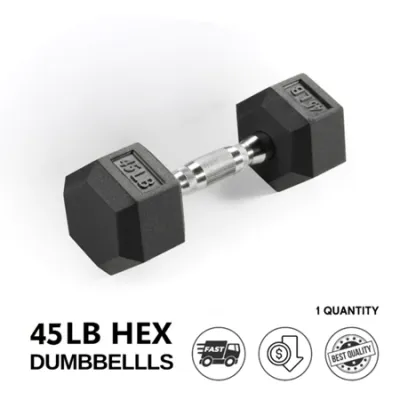
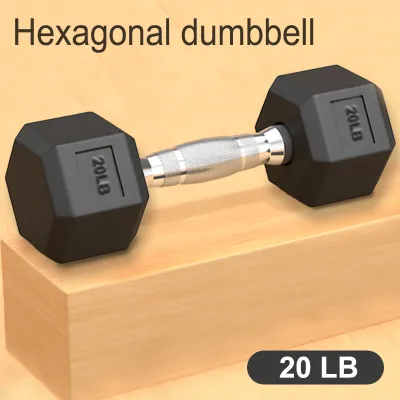
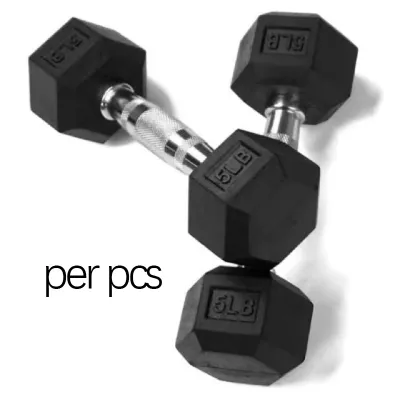
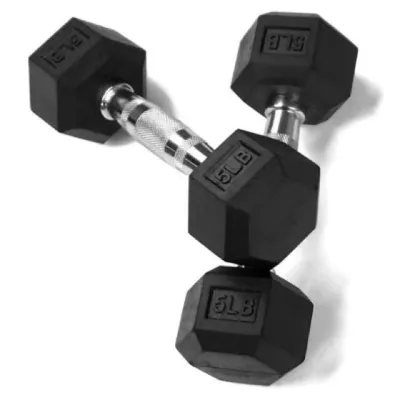
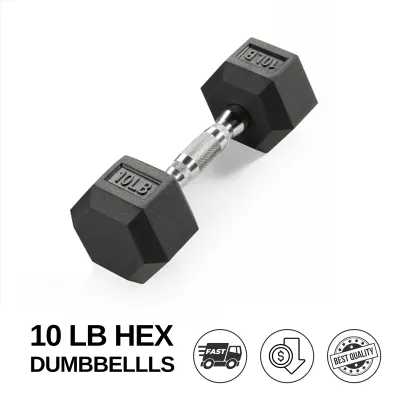
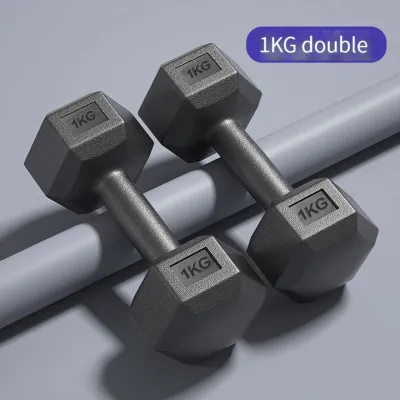
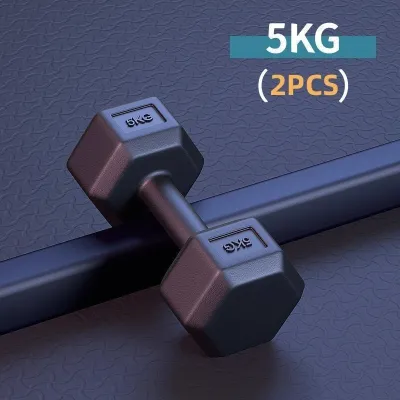
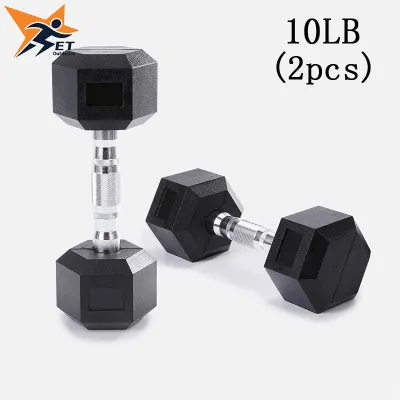
Prices are valid at publication and may change. Please refer to the product page for the latest price.
Matching the Dumbbell Shape to Your Exercise Routine
Your training style and the specific movements in your weekly program should dictate which dumbbell shape you choose. Different exercises interact uniquely with flat and curved surfaces.

When to Choose Hex Dumbbells for Specific Movements
Hex dumbbells provide a distinct mechanical advantage for floor-based, weight-bearing exercises. Movements like renegade rows, dumbbell push-ups, and floor presses require you to place your full body weight onto the dumbbells while they rest on the ground. The flat edges of a hex dumbbell create a stable, non-slip foundation that prevents the weights from rolling outward. Performing a renegade row with round dumbbells is highly unstable and introduces a significant risk of wrist hyperextension or sudden slips if the weight rolls under pressure.
Furthermore, hex dumbbells are highly beneficial for fast-paced circuit training or high-intensity interval training (HIIT). When transitioning quickly between exercises, you need to be able to drop or place your weights down without worrying about them rolling away. The anti-roll design ensures the dumbbells stay exactly where you leave them, eliminating tripping hazards in tight home workout spaces and allowing you to focus entirely on your pacing and form.
When Round Dumbbells Offer a Better Experience
Round dumbbells excel in traditional strength training and bodybuilding routines that focus heavily on isolation movements. Exercises such as bicep curls, lateral raises, shoulder presses, and tricep extensions benefit from the symmetrical weight distribution of a round head. Because the mass is perfectly balanced around the axis of the handle, the dumbbell rotates smoothly in your hand without any shifting center of gravity.
This symmetrical balance is particularly comfortable during high-volume sets where fluid joint tracking is essential. The absence of sharp corners also makes round dumbbells more forgiving during dynamic movements like dumbbell cleans, snatches, or thrusters. During these exercises, the weight must transition quickly past your shins, knees, and shoulders. A round dumbbell glides smoothly without the risk of an angular corner scraping against your body, providing a more comfortable and seamless lifting experience.
Space, Storage, and Home Gym Logistics
Managing a home gym requires careful consideration of physical space, storage solutions, and household safety. In many residential settings, dedicated gym space is limited, meaning equipment must be stored in bedrooms, living rooms, or balconies. Hex dumbbells are exceptionally easy to store because they can be stacked directly on top of one another or lined up neatly against a wall without rolling. They do not require a specialized rack to remain stationary, making them highly convenient for minimalist setups.
Round dumbbells, on the other hand, demand dedicated storage solutions. To prevent them from rolling freely across the room, they must be stored on a rack equipped with curved trays or individual cradles. If you do not have the space or budget for a sturdy dumbbell rack, round dumbbells can quickly become a safety hazard.
This is especially true in households with children or pets. A heavy, rolling object can easily cause painful toe injuries, pinch fingers, or damage delicate household furniture. In tropical climates like the Philippines, where residential floors are frequently finished with smooth ceramic tiles or polished concrete, a rolling dumbbell can travel surprisingly fast and far. Choosing an anti-roll design or investing in proper storage is a critical safety step to protect both your family and your home.
Durability, Materials, and Floor Protection
The materials used to coat and construct your dumbbells play a major role in their longevity and how well they protect your floors. Common options include bare cast iron, rubber-coated iron, and urethane-coated steel. In high-humidity environments, bare cast iron is highly susceptible to rust and corrosion from sweat and moisture. Therefore, coated dumbbells are generally preferred for home use.
Rubber-coated hex dumbbells are highly popular because the rubber dampens noise and cushions the impact when the weights are set down. However, low-grade rubber can sometimes emit a strong, pungent chemical odor that persists in unventilated rooms. If you are sensitive to smells or work out in a small, enclosed space, you may want to look for high-quality, low-odor rubber or premium urethane. Urethane is virtually odorless, highly resistant to tearing, and does not degrade easily under heat or sunlight, though it carries a higher price tag.
The shape of the dumbbell also affects how impact forces are distributed on your floor. When a hex dumbbell is placed down firmly, the flat face distributes the weight across a larger surface area. A round dumbbell concentrates the impact force at a single point of contact. On ceramic tiles or wooden floors, this concentrated force is much more likely to cause cracks, dents, or scratches. To protect your home, always verify the quality of your flooring protection, use high-density rubber gym mats, and inspect the dumbbells before purchase. Ensure the heads are securely welded or pinned to the handle, and check that the handle knurling provides a secure, non-slip grip without being overly sharp.
Budgeting and Value Assessment
When shopping for home gym equipment, establishing a clear budget and understanding value metrics will help you avoid overpaying. Dumbbells are typically priced by weight, and in the local market, you will often see prices calculated per kilogram. Cast iron hex dumbbells are generally the most cost-effective option, followed by rubber-coated hex dumbbells. Round dumbbells, particularly those coated in urethane, are usually positioned as premium products and carry a higher price tag.
When comparing options, look at the total cost in ₱ and calculate the price per kilogram to determine the true value. For example, a pair of rubber hex dumbbells might offer a much lower cost per kilogram than a round urethane set of the same weight. However, you must also factor in shipping logistics. Because dumbbells are exceptionally heavy, shipping fees from online marketplaces to different provinces in the Philippines can add a substantial amount to your total expense.
Before finalizing any purchase, always verify the seller’s shipping rates, return policies, and warranty terms. A lower upfront price on an online marketplace can quickly be offset by high shipping costs. Additionally, ensure the manufacturer offers a clear warranty against head separation, as a loose dumbbell head is a major safety hazard that renders the equipment unusable.
Final Decision Framework: Which Shape Fits Your Home Gym?
To make your final decision, evaluate your training style, storage capacity, and budget against these practical guidelines:
Choose hex dumbbells if:
- Your workouts frequently include floor-based movements like renegade rows, push-ups, or plank transfers.
- You plan to store your dumbbells directly on the floor, under a bed, or on a flat shelf without a dedicated rack.
- You have children or pets in the house and need to eliminate any potential rolling hazards.
- You want a highly durable, cost-effective option that maximizes your budget in ₱.
Choose round dumbbells if:
- Your routine consists almost entirely of traditional bodybuilding isolation lifts, curls, and overhead presses.
- You prefer a perfectly symmetrical weight distribution and a smooth, corner-free profile that won't catch on your clothing.
- You already own or plan to purchase a dedicated saddle-style dumbbell rack to store your weights safely.
Consider adjustable dumbbells if:
- Your floor space is extremely limited, and you want to avoid the clutter of multiple pairs of fixed dumbbells.
- Your budget allows for a single, compact system that can adjust to various weight increments, replacing an entire rack of traditional weights.
Frequently Asked Questions (FAQ)
Can I mix hex and round dumbbells in the same home gym?
Yes, mixing shapes is a highly practical approach for many home lifters. You can use hex dumbbells for lighter weights where floor-based movements and high-intensity circuits are common, and round dumbbells for heavier weights used strictly for bench presses or standing lifts. However, keep in mind that storing a mixed set can be challenging. Standard multi-tier racks designed for hex dumbbells may not securely hold round dumbbells, and saddle-style racks will not accommodate hexagonal heads properly.
Do hex dumbbells hurt your hands more than round ones?
No, the shape of the dumbbell head does not dictate hand comfort. Grip comfort is determined by the handle’s design, including its diameter, contour, and the aggressiveness of the knurling. To prevent hand fatigue and calluses during high-volume workouts—especially in humid tropical conditions where sweat can make handles slippery—look for dumbbells with a moderate, consistent knurling pattern and consider using gym chalk or lifting gloves to maintain a secure grip.
Community discussion
Share your experience or ask a question. Comments are reviewed before publication.