
Choosing between a Hikaflow treadmill and competing brands in the Philippines depends on matching specific build quality metrics, feature sets, and after-sales support to your fitness goals and space constraints. Because specifications vary significantly by model, you must verify key parameters rather than relying on general brand reputation alone. In the tropical climate of the Philippines, where high humidity and ambient temperatures can affect electrical components and mechanical parts, making an informed decision requires looking closely at the technical details of each machine.
Before investing in any home cardio equipment, you must assess your primary use case. A treadmill designed solely for walking will not withstand the impact and motor strain of daily long-distance running. By comparing the physical limits, motor capacities, and structural designs of Hikaflow models against other options available on the local market, you can select a machine that remains safe, stable, and functional for years to come.
Core Specifications to Verify Before Comparing
The motor is the heart of any treadmill, and understanding how its power is rated is crucial for long-term durability. When comparing Hikaflow to other brands, always look for the Continuous Horsepower (CHP) rating rather than the Peak Horsepower (PHP). Continuous Horsepower indicates the power the motor can reliably deliver during sustained use, whereas peak horsepower only represents short bursts of energy. For walking or light jogging, a motor with 1.5 to 2.0 CHP is generally sufficient. If you or other members of your household plan to run regularly, prioritize machines with a motor rating of 2.5 CHP or higher to prevent overheating and premature motor failure.
Products mentioned in this guide
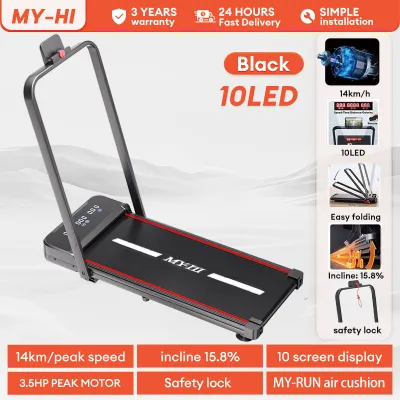
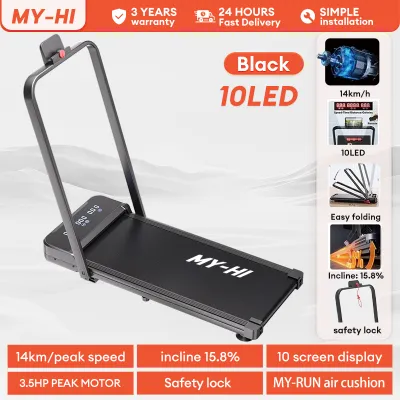
Prices are valid at publication and may change. Please refer to the product page for the latest price.
Running deck dimensions directly impact your safety and comfort during exercise. A belt that is too short or too narrow can cause you to shorten your stride or step off the moving surface accidentally. For walking, a belt width of 16 to 18 inches and a length of 45 inches may suffice. However, active running requires a wider and longer deck, ideally at least 20 inches wide and 50 to 55 inches long, to accommodate a natural running stride. Measure the belt dimensions on the product specification sheet rather than relying on promotional images, which can sometimes make the running surface appear larger than it is.
Frame stability and maximum weight capacity are critical indicators of build quality. A sturdy treadmill should not shake, wobble, or flex excessively when you are moving at high speeds. Check the manufacturer’s specified maximum user weight and choose a model that offers a safety margin of at least 10 to 15 kilograms above the weight of the heaviest user in your home. Heavy-duty steel frames provide the best stability but also make the machine much heavier to move.
Because many residential spaces in the Philippines, such as condominiums and townhouses, have limited floor areas, folding mechanisms are highly valued. Verify whether the treadmill features a hydraulic folding assist system, often referred to as a soft-drop mechanism. This feature allows the heavy deck to lower slowly and safely to the floor without manual lifting or sudden drops. Always measure your available floor space both when the treadmill is fully extended for use and when it is folded for storage.
Feature Set and User Experience
The console interface and connectivity options vary widely among home treadmills. Basic models feature simple LCD screens that display essential metrics such as speed, time, distance, and estimated calories burned. Mid-range and premium models may offer touchscreen displays, built-in workout programs, and Bluetooth connectivity to sync with external fitness applications. When evaluating these features, check if the treadmill requires a paid subscription to access its smart programs or if it can operate fully in manual mode without an active internet connection.

Shock absorption is another vital factor that separates high-quality treadmills from budget alternatives. Running on a hard, unyielding surface can place excessive stress on your knees, ankles, and lower back. Look for models equipped with elastomer cushions, spring systems, or deck flexing technologies designed to absorb impact forces. You can often verify the effectiveness of the cushioning by checking for visible rubber dampeners beneath the running deck or by testing the machine in person to observe how much the deck deflects under weight.
Incline capabilities allow you to increase workout intensity without increasing speed, which is excellent for cardiovascular training and muscle engagement. Treadmills typically offer either manual or automatic incline systems. Manual incline requires you to stop your workout, step off the machine, and manually adjust physical pins or legs on the rear of the deck. Automatic incline allows you to adjust the slope seamlessly using console buttons or built-in programs while you are running. If hill training is a priority for your fitness routine, verify the maximum incline percentage and ensure the motor can handle the extra load.
Safety features should never be overlooked. Ensure any treadmill you consider has a physical safety key with a clip that attaches to your clothing. If you slip or fall, the key pulls out of the console and immediately stops the running belt. Additionally, check for easily accessible emergency stop buttons and sturdy handrails that provide a secure grip without obstructing your natural arm swing.
Value, Warranty, and Local After-Sales Support
Evaluating the true value of a treadmill goes beyond comparing the initial purchase price in Philippine Pesos (₱). You must weigh the upfront cost against the comprehensiveness of the warranty. A reliable manufacturer’s warranty should offer separate coverage periods for the frame, the motor, and wear-and-tear parts. For example, a high-quality machine might offer a multi-year warranty on the frame and motor, with one to two years of coverage for electronic components and labor. Be cautious of extremely low-priced models that offer only a generic three-month or six-month warranty, as these often indicate lower-grade components.
Local after-sales support is a critical consideration for heavy fitness equipment in the Philippines. Shipping a treadmill back to a seller for repairs is logistically difficult and highly expensive. Before finalizing your purchase, research whether the brand has authorized service centers or mobile technicians who can perform on-site repairs in your region, whether you live in Metro Manila, Luzon, the Visayas, or Mindanao. Ask the seller directly about the availability of common replacement parts, such as replacement running belts, motor brushes, and control boards, to ensure your machine does not become unusable due to a minor part failure.
Delivery and assembly logistics require careful planning. Treadmills are heavy, bulky items that often arrive in large wooden crates or heavy cardboard boxes. Confirm whether the retailer offers professional delivery and assembly services to your specific location. Self-assembly can be complicated and may void the warranty if the machine is put together incorrectly. Additionally, review the seller’s return policy regarding defective units, paying close attention to who covers the cost of return shipping for oversized items.
Finally, consider the electrical requirements of the machine. Most residential outlets in the Philippines supply 220V power. Verify that the treadmill’s electrical specifications match this standard without requiring an external transformer. Using a high-draw motorized appliance on an unstable power source or with incorrect voltage can damage the control board and void your warranty. Using a dedicated surge protector is highly recommended to shield the treadmill’s electronics from local power fluctuations.
Decision Framework: When to Choose Hikaflow vs. Alternatives
To make your final decision, apply a structured framework based on your space, budget, and fitness requirements. Choosing a Hikaflow treadmill is highly appropriate if you find a specific model that fits comfortably within your designated home workout space, matches your budget, and offers a verified continuous horsepower rating that aligns with your primary exercise habits. It is a practical choice for users seeking a straightforward, functional machine for walking, jogging, or light family use, provided that local warranty support and replacement parts are readily accessible through the seller.
Conversely, you should look toward established alternative brands if your fitness routine demands highly specialized training. If you are training for competitive long-distance running, require advanced biomechanical deck cushioning to protect sensitive joints, or want deep integration with global interactive training platforms, investing in a premium brand with a long-standing reputation in commercial gyms may be more suitable. These established brands often feature more extensive networks of local technicians and a proven track record of durability under heavy daily use.
Before making any purchase on an online marketplace or from a local showroom, always perform a final verification step. Download the user manual or request the official technical specification sheet for the exact model you are considering. Verify that the continuous motor power, running belt dimensions, and maximum weight capacity meet your physical requirements. Never rely solely on marketing terms like “heavy-duty” or “professional grade” without checking the actual numerical specifications first.
Frequently Asked Questions (FAQ)
Is a Hikaflow treadmill suitable for heavy running?
To determine if a specific Hikaflow treadmill can handle heavy running, you must check the Continuous Horsepower (CHP) rating and the running belt dimensions on the product label. Dedicated running requires a motor with at least 2.5 to 3.0 CHP and a running surface that is at least 50 inches long and 20 inches wide to accommodate a natural running stride. Walking or light jogging models with lower CHP ratings may overheat or experience premature wear if subjected to high-speed, high-impact running sessions.
How do I verify the warranty validity when buying online?
When purchasing a treadmill through online marketplaces in the Philippines, always buy from official brand stores or authorized distributor channels that display verified seller badges. Upon delivery, inspect the packaging to ensure it contains an official warranty card with clear terms, serial numbers, and contact information for local service centers. Keep your official receipt or sales invoice in a safe place, as authorized technicians will require proof of purchase to honor any warranty claims or perform free repairs.
Community discussion
Share your experience or ask a question. Comments are reviewed before publication.