
Choosing the right tennis bag capacity is not as simple as matching the number of rackets you own to the number on the label. While tennis bags are marketed by racket capacity—ranging from compact 3-pack options to massive 15-pack tournament bags—these numbers represent the absolute maximum limit when the bag is completely empty of other gear. To find your ideal size, you must balance your racket count with the shoes, apparel, water bottles, and accessories you need to carry to the court.
Assess Your Gear to Determine Your True Capacity Needs
Before browsing online marketplaces or local sports shops, take a moment to lay out all the gear you routinely bring to the court. The number of rackets you carry is your starting baseline. Recreational players often carry one or two rackets, while competitive players usually bring three or more to ensure they have a backup in case a string breaks mid-match. If you play with multiple string setups or tensions, your baseline racket count will naturally be higher.
Next, gather your essential on-court accessories. This includes smaller items like overgrips, vibration dampeners, lead tape, and cans of tennis balls. While these items are relatively small, they can quickly clutter a bag if there are no dedicated pockets to keep them organized. Having a clear count of these accessories helps you identify whether you need a bag with multiple small utility pockets.
Products mentioned in this guide
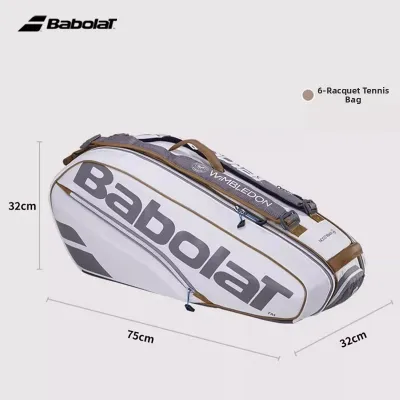
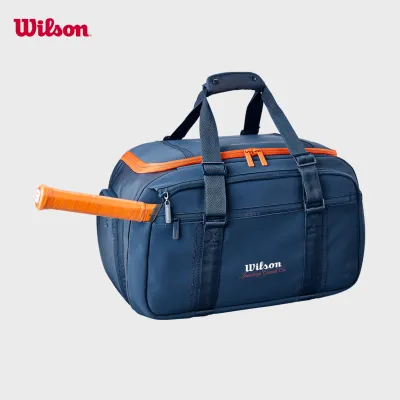

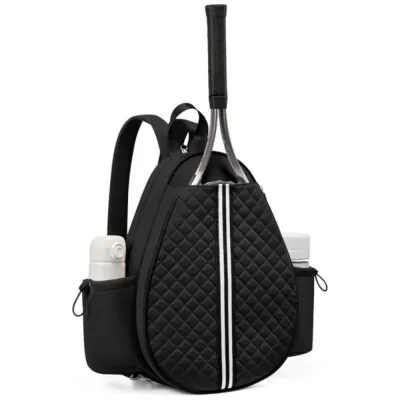
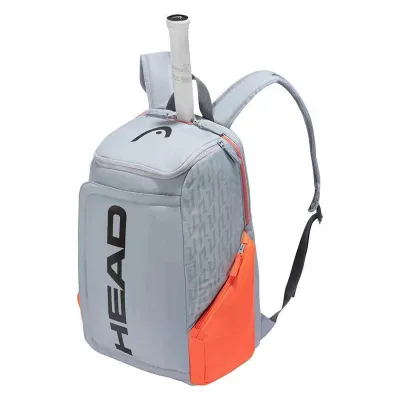
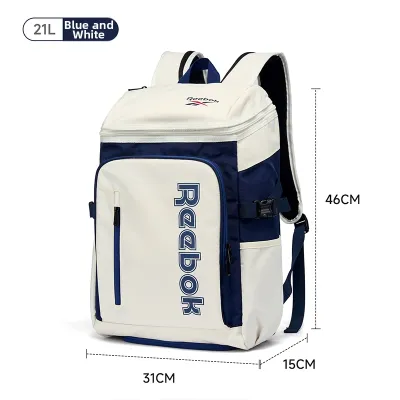
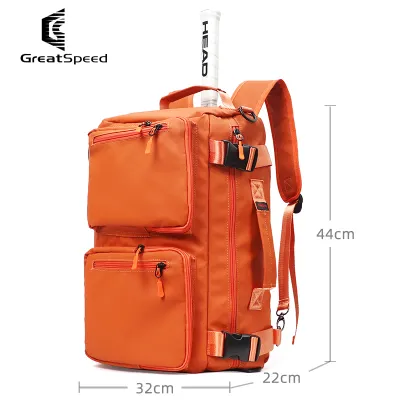
Prices are valid at publication and may change. Please refer to the product page for the latest price.
Finally, account for your off-court and personal items, which often take up the most physical volume. In tropical climates with high humidity, carrying a fresh change of clothes, a dedicated sports towel, and a large insulated water bottle is a necessity rather than a luxury. You also need to factor in your tennis shoes, shower toiletries, and personal electronics like your phone, keys, and wallet. Once you see the physical volume of your collective gear, you will have a much clearer picture of the space you actually require.
Understanding Standard Tennis Bag Sizes and Racket Counts
The tennis industry categorizes bags using a standard racket-count system, but these ratings require some translation for practical daily use.

3-Racket Bags: These are the most compact traditional tennis bags available. They are designed primarily for beginners, casual weekend players, or minimalists who only carry one or two rackets. A 3-racket bag typically features a single main compartment. If you place two rackets inside, you will have just enough remaining room for a can of balls, a small towel, and your keys. There is generally no room for extra shoes or a bulky change of clothes.
6-Racket Bags: Often considered the most versatile middle ground, 6-racket bags feature two main compartments. This size is highly popular among regular club players. It allows you to comfortably carry two to three rackets in one compartment, leaving the second compartment entirely free for your tennis shoes, a clean shirt, and a towel. It strikes an excellent balance between storage capacity and portability.
9-Racket to 15-Racket Bags: These larger bags are engineered for competitive tournament players, coaches, and advanced enthusiasts. They feature three or more main compartments. If you carry four to six rackets, these bags provide ample leftover space for multiple changes of clothing, training aids, warm-up gear, and recovery tools. However, they are physically large and can become heavy when fully loaded.
Tennis Backpacks and Totes: If you commute by bicycle, ride public transit, or prefer a more casual look, a tennis backpack or tote is an excellent alternative. These designs typically feature a specific rear compartment that holds one or two rackets with the handles pointing upward and outward. The main body of the backpack is then left entirely free for your shoes, clothes, and personal items, making them highly practical for daily commuting or quick practice sessions.
Beyond Rackets: Checking Compartments and Specialized Storage
When evaluating different tennis bags, the overall volume is only part of the equation; how that volume is divided matters just as much.
First, check for dedicated thermal-lined compartments. High temperatures and intense humidity can cause racket strings to lose tension rapidly and can even damage the structural integrity of composite frames over time. Thermal technology helps regulate the internal temperature of the racket compartment, shielding your equipment from extreme weather when walking to the court or traveling.
Second, verify the presence of a ventilated shoe compartment. Keeping your dirty, clay-covered, or sweaty tennis shoes isolated from your clean clothes and towels is essential for hygiene. A ventilated pocket allows moisture to escape, preventing unpleasant odors from building up inside the main sections of your bag.
Third, look for external or fleece-lined accessory pockets. Having quick-access pockets prevents you from having to dig through deep compartments to find small valuables like your phone, keys, sunglasses, or wallet. Some bags also feature specialized interior mesh pockets to keep extra overgrips and dampeners neatly organized and easy to locate during a quick changeover.
Common Capacity Mistakes to Avoid When Buying
One of the most common mistakes players make is overestimating their actual capacity needs. Purchasing a massive 12-racket bag when you only own two rackets often results in carrying unnecessary bulk and weight. Large bags can be awkward to carry, take up too much space on the court bench, and leave your gear sliding around loosely inside empty compartments.
Conversely, ignoring accessory bulk is another frequent pitfall. Many buyers assume a 6-racket bag will easily hold six rackets along with all their personal gear. In reality, if you pack six rackets into a 6-racket bag, you will have virtually no room left for shoes, apparel, or water bottles. Always look at the racket rating as a measure of total volume, not as a literal guide to how many rackets you should pack alongside your other gear.
Finally, do not forget your daily transport constraints. A massive tournament bag might fit easily into a large car trunk, but it can become highly impractical if you commute via public transit, ride a motorcycle, or travel in a compact vehicle. Consider how you get to the courts and choose a bag shape and carrying system—such as backpack straps or duffel handles—that matches your lifestyle.
Frequently Asked Questions (FAQ)
Can I use a regular backpack instead of a dedicated tennis bag?
Yes, you can use a regular backpack for casual play, but it comes with notable trade-offs. Standard backpacks lack dedicated racket compartments, meaning your rackets may shift around, rub against other items, and suffer frame scratches. Additionally, regular backpacks do not offer thermal protection to safeguard your strings from heat, and the handles will often stick out at awkward angles, making the bag unbalanced. For regular players, investing in a dedicated tennis backpack or bag is highly recommended to protect your equipment.
Do tennis bag capacities refer to the exact number of rackets I can fit?
The advertised capacity of a tennis bag refers to the maximum number of rackets the bag can hold if you pack absolutely nothing else. For example, a 6-racket bag can physically fit six rackets, but only if all compartments are dedicated solely to rackets. To determine the practical capacity, a good rule of thumb is to subtract two rackets from the advertised rating. This adjustment ensures you have enough remaining space for shoes, a towel, water bottles, and other essential court accessories.
Community discussion
Share your experience or ask a question. Comments are reviewed before publication.