
Choosing the right tennis bag capacity is a balance between protecting your rackets and carrying your daily gear. For most recreational and club players, a bag rated for 3 to 6 rackets is the ideal choice. While a bag’s capacity is designated by the number of rackets it can hold, this rating actually dictates how much space is left over for shoes, towels, extra apparel, and hydration. If you carry only one or two rackets, choosing a slightly larger bag ensures you have enough room for your off-court essentials without crushing your equipment.
In tropical climates like the Philippines, where high humidity and intense heat are constant factors, your gear requirements change significantly. You will likely need to pack extra shirts, a large towel, and substantial hydration flasks to stay comfortable during a long session. Understanding how to match your playing habits with the right bag size will prevent you from carrying an unnecessarily bulky bag or, conversely, squeezing your expensive gear into a space that is too small.
Assessing Your Regular Gear Loadout
Before looking at bag sizes, you must inventory what you actually bring to the court. Your gear can be divided into core essentials and secondary items. Core essentials include your rackets, tennis balls, and spare grip tape. Secondary items encompass your tennis shoes, a change of clothes, a towel, toiletries, and your hydration setup. If you play on outdoor clay or shell courts, your shoes will accumulate dirt that you must keep separate from your clean apparel and rackets.
Products mentioned in this guide
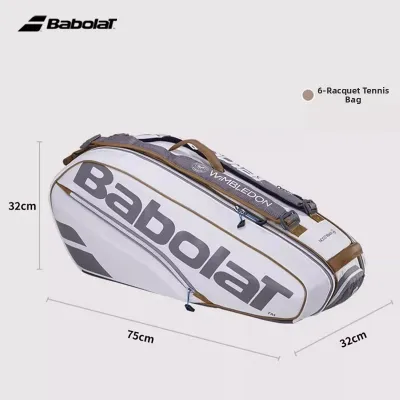
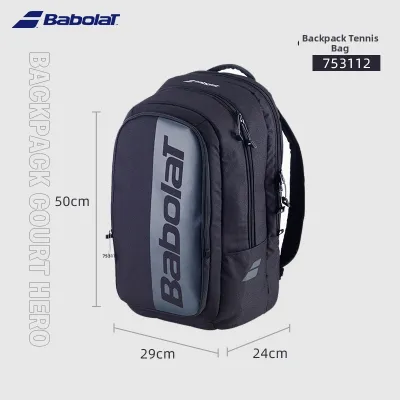
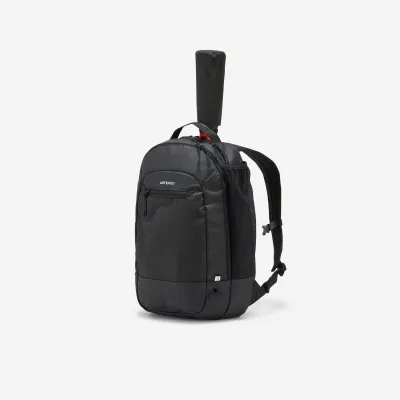
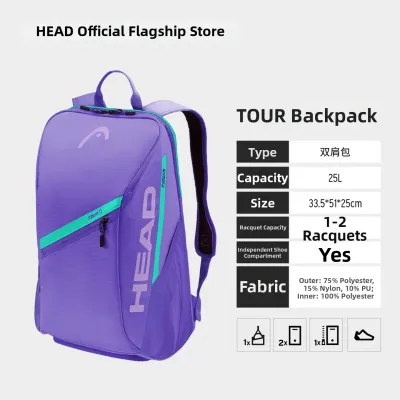
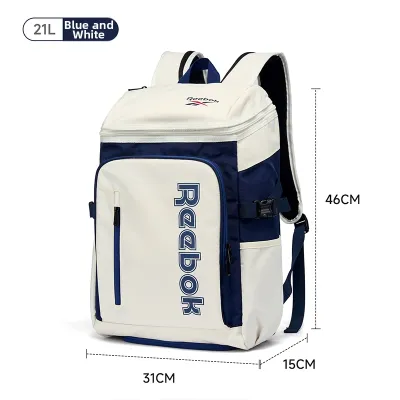
Prices are valid at publication and may change. Please refer to the product page for the latest price.
The local climate plays a massive role in determining your storage needs. Playing in high humidity means you will likely sweat through your shirt within the first set. Carrying two or three dry shirts, a dedicated towel, and a large insulated water bottle is standard practice for local players. These items take up considerable physical volume, often requiring more space than the rackets themselves.
Your daily schedule also dictates your bag choice. If you travel directly from your office to the tennis club, your bag needs to accommodate more than just sports gear. You might need extra compartments for a laptop, work documents, or a packed meal. Conversely, if you always travel straight from home, a minimalist setup might serve you perfectly.
Matching Racket Count to Bag Capacity
When shopping for a tennis bag for men, you will notice they are categorized by racket capacity, such as 3-pack, 6-pack, or 12-pack. It is crucial to understand that these numbers represent the absolute maximum number of rackets that can fit into the compartments if you pack nothing else. If you buy a 3-pack bag and put three rackets inside, you will have virtually no room left for shoes, balls, or a change of clothes.

Selecting the right size requires balancing compact mobility with storage flexibility. A smaller bag is easier to carry on a motorcycle, public transit, or a crowded sidewalk, but it limits what you can bring. A larger bag offers dedicated compartments for organized storage but can become heavy and cumbersome during your daily commute.
1 to 3 Rackets: Backpacks and Small Totes
A 3-pack bag or a dedicated tennis backpack is the standard entry point for casual players and beginners. These bags are designed to hold one or two rackets comfortably, leaving a small amount of space for a can of balls, keys, and a phone. They are highly mobile, making them excellent for players who commute by motorcycle or use active transport to reach the court.
However, these smaller options have distinct limitations. Most entry-level backpacks and small totes lack dedicated, ventilated shoe compartments, meaning you must mix your dirty court shoes with your clean clothes. They also rarely feature thermal insulation, leaving your racket strings exposed to the intense tropical heat, which can cause tension loss over time.
4 to 6 Rackets: Mid-Size Duffels and Backpacks
For the regular club player who hits the court multiple times a week, a 6-pack bag or a mid-size duffel is often the most practical choice. This size category is highly versatile because it allows you to carry two or three rackets in one compartment while utilizing the second compartment entirely for your shoes, clean clothes, and accessories.
These bags strike an excellent balance between storage capacity and daily portability. They are large enough to feature dedicated shoe pockets and wet-dry separators, yet they remain compact enough to carry comfortably on your shoulder. If you commute via ride-hailing services or public transit, a 6-pack bag fits easily in a car trunk or beside you on a seat without causing an obstruction.
7+ Rackets: Tour and Pro-Level Bags
Bags rated for 9 to 15 rackets are designed for competitive players, tournament travelers, coaches, and stringers who need to carry an extensive arsenal. These bags feature multiple large compartments, allowing you to carry four or more rackets alongside multiple pairs of shoes, warm-up gear, and stringing accessories.
While these tour-level bags offer maximum protection and organization, they require careful logistical consideration. Their physical footprint is substantial, meaning they can be difficult to fit into smaller car trunks or navigate through crowded clubhouses. If you plan to travel for regional tournaments, you must verify airline carry-on dimensions, as these large bags often exceed standard overhead bin limits and must be checked.
Beyond Rackets: Factoring in Shoes, Clothes, and Accessories
A common mistake when choosing a tennis bag for men is focusing solely on the rackets and ignoring the bulk of secondary gear. Tennis shoes are bulky and often covered in court dust, clay, or sand after a match. Keeping them in a dedicated, ventilated compartment is essential to prevent dirt and odors from transferring to your clean shirts and racket grips.
Post-match hygiene is another major consideration in warm climates. Saturated, sweaty clothing needs to be isolated immediately. Look for bags that feature wet-dry compartments or waterproof linings that prevent moisture from seeping into other sections of the bag. This isolation helps protect your racket frames and strings from moisture damage, which can degrade synthetic gut or natural gut strings quickly.
Additionally, secure accessory pockets are vital for organizing smaller items. You need quick, secure access to your keys, wallet, smartphone, and spare overgrips. Having dedicated zippered pockets on the exterior of the bag prevents you from having to dig through dirty clothes or racket compartments to find your valuables after a tiring session.
Fit, Comfort, and Carrying Styles for Men
The way you carry your bag affects your comfort and physical energy before you even step onto the court. Tennis bags generally come with three main carrying styles: backpack straps, single shoulder straps, and traditional duffel handles. For larger bags, backpack straps are highly recommended because they distribute the weight evenly across both shoulders, reducing strain on your back.
When evaluating a tennis bag for men, check for thick, adjustable padding on the shoulder straps. The straps should be positioned to prevent the bag from bouncing against your lower back or thighs as you walk. If you commute on foot or use public transit, a bag that sits high and tight on your back will make navigating stairs and narrow train aisles much easier.
The physical footprint of the bag also matters when storing it at the venue. Many local clubs have limited locker space or small benches. A bag with a structured, upright design can be stood on its end, saving valuable floor space in crowded clubhouses or beside the court fence.
Common Capacity Mistakes to Avoid
One of the most frequent errors is overestimating how many rackets you actually need to carry. While professional players carry six identical rackets to a match, most recreational players only need two. Carrying excess rackets simply adds unnecessary weight and reduces the space available for items that improve your comfort, such as extra hydration or dry towels.
Another mistake is failing to measure the bag against your daily storage spaces. Before purchasing a large 9-pack or 12-pack bag, verify that it will fit inside your home closet, your car trunk, or the lockers at your local sports club. A bag that is too large to store conveniently often ends up being left behind in favor of a less protective alternative.
Finally, avoid the temptation to overstuff a smaller bag. Squeezing shoes, water bottles, and multiple rackets into a tight space puts immense pressure on the zippers and seams. More importantly, it can bend your racket frames, compress the protective grommets, and scratch the paint, leading to premature equipment failure.
Frequently Asked Questions (FAQ)
Can I use a regular gym bag instead of a dedicated tennis bag?
While a standard gym bag can hold your clothes and shoes, it lacks the structural design required to protect tennis rackets. Dedicated tennis bags feature shaped compartments that keep racket frames secure and prevent them from shifting and colliding during transport. Furthermore, standard gym bags do not have thermal lining, leaving your strings vulnerable to extreme temperature fluctuations that can ruin string tension.
How do I clean and maintain a large tennis bag?
To maintain your bag, always check the manufacturer’s care label for specific washing instructions before using any liquids. For general maintenance, spot clean the exterior with a damp cloth and mild soap, avoiding harsh chemical detergents that can strip water-resistant coatings. Ensure you regularly open all compartments to air out moisture, especially after playing in humid conditions, to prevent mold and unpleasant odors from developing.
Community discussion
Share your experience or ask a question. Comments are reviewed before publication.