
For most recreational and club tennis players, a tennis tote should comfortably hold one to two rackets, while active tournament players and coaches often require a capacity of three or more. Choosing the correct capacity is not merely a matter of counting frames; it directly impacts how you organize your gear, protect your expensive equipment from tropical heat, and maintain physical comfort during transit. A tote that is too small forces you to cram items together, risking damage to your rackets, while an oversized tote can become an ergonomic burden on your shoulder.
To find your ideal bag size, you must balance your playing frequency, the specific weather conditions of your local courts, and the volume of non-racket gear you carry. This guide breaks down standard capacity measurements, matches them to distinct player profiles, and highlights the crucial organizational features you need to consider before making a purchase.
Understanding Tennis Tote Capacity Standards
Tennis bag capacity is universally measured by the maximum number of standard racket frames the main compartments can physically hold. Manufacturers typically categorize bags into classes of 2, 3, 6, 9, or 12 rackets. However, these numbers can be highly misleading for everyday players. The advertised racket count represents a volume measurement based on bare frames stacked tightly together, without any protective covers, overgrips, or additional gear inside the bag.
Products mentioned in this guide
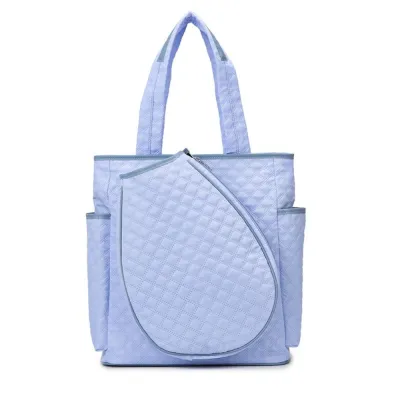
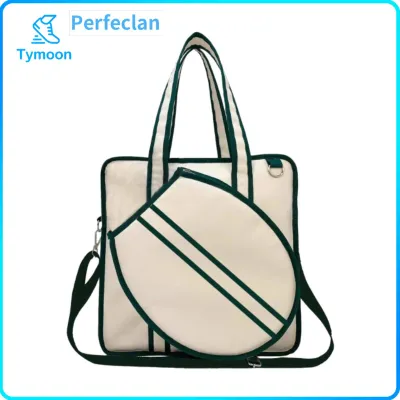
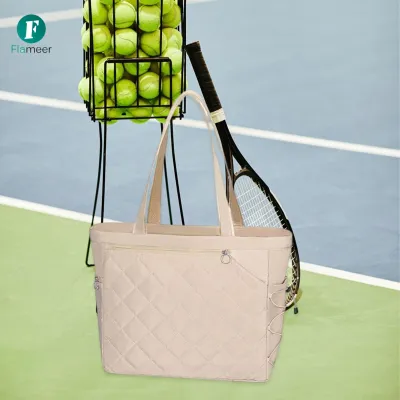
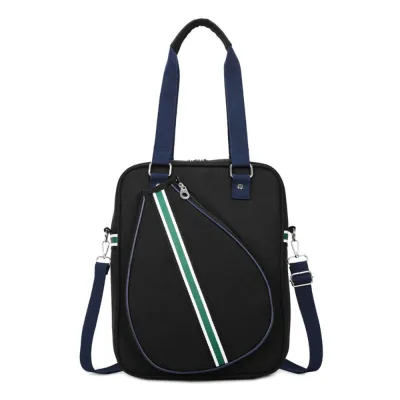
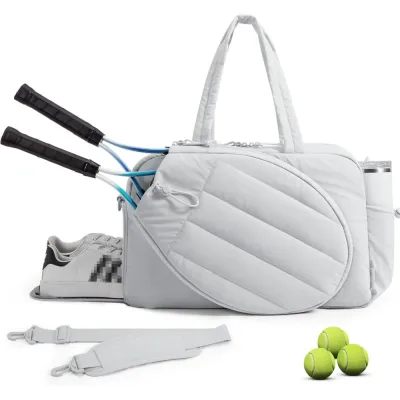
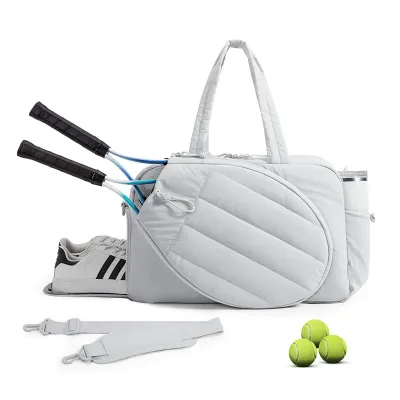
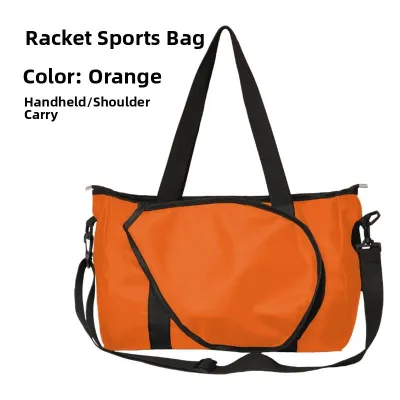
Prices are valid at publication and may change. Please refer to the product page for the latest price.
A tennis tote differs significantly from traditional tennis backpacks or large, rectangular duffels. Totes are designed with a focus on style, top-access convenience, and lifestyle versatility. They feature a sleeker, more vertical silhouette that allows you to transition smoothly from the court to work, social gatherings, or errands. Because of this design focus, totes generally top out at a practical capacity of two to three rackets, prioritizing compact organization over massive bulk.
When a bag is labeled as a “3-racket” tennis tote, it is best to view this as a total volume indicator rather than a literal instruction to pack three rackets. If you actually place three rackets inside, you will have almost no room left for shoes, clean clothes, or a water bottle. In practice, a three-racket tote is highly functional when used to carry one or two rackets, leaving the remaining internal volume free for your essential court accessories.
Before purchasing any tennis tote, always perform a physical verification check. Measure your racket’s length—standard adult rackets are 27 inches long, but some extended frames can reach 27.5 or 28 inches—and compare these measurements against the tote’s physical dimensions. Check the manufacturer’s product specifications for the actual volume in liters, as this provides a much more accurate representation of the bag’s true carrying capacity than the nominal racket count.
Matching Capacity to Your Player Profile
Casual and Social Players (1-2 Rackets)
If you play tennis recreationally, take occasional lessons, or meet friends for a casual weekend hit, a compact tennis tote designed for one to two rackets is your most practical option. This size provides just enough space for the essentials without adding unnecessary weight or bulk to your journey.

A typical loadout for this capacity includes your primary racket, a fresh can of tennis balls, a small court towel, your keys, a smartphone, and a standard water bottle. This layout keeps your gear organized and prevents smaller items from sliding around at the bottom of a half-empty bag.
The primary benefit of a smaller tote is its lightweight, highly portable design. It is easy to carry on public transit, fits comfortably on a passenger seat, and does not look out of place in a cafe or office setting. It provides a streamlined experience for players who do not need to carry extensive backup equipment.
However, many one-to-two racket totes feature an external racket pocket where the handle remains exposed to the elements. While this design allows for quick access, you must exercise caution when traveling through crowded areas or commuting in unpredictable weather, as exposed grips can easily collect dirt or absorb moisture.
Club and Regular Players (3-4 Rackets)
Intermediate players who step onto the court multiple times a week for league matches or club ladders generally benefit from a three-to-four racket capacity tote. At this level of play, having access to backup equipment and specialized gear becomes increasingly important for consistent performance.
Regular play requires carrying at least two identical rackets. In the highly humid and warm climate of the Philippines, string tension can drop rapidly during a long session, and sweat can quickly degrade your grip tape. Having a secondary racket strung at a slightly different tension allows you to adapt to changing court conditions, while a third slot provides space for a dedicated backup in case you break a string mid-match.
This capacity tier offers superior internal organization compared to smaller casual bags. You will typically find dedicated internal pockets designed specifically to hold spare overgrips, vibration dampeners, sweatbands, and medical tape, ensuring you can locate these small items instantly during a quick changeover.
When evaluating a tote in this size range, always verify that the racket compartment features padded internal dividers. Without these dividers, your graphite frames will constantly rub and clash against one another during transit, which can lead to unsightly paint chips and microscopic structural damage over time.
Competitive Players and Coaches (6+ Rackets)
Tournament competitors, advanced club players, and professional coaches require a massive amount of gear on a daily basis, making a six-racket or oversized tote a potential consideration. However, carrying this volume of equipment in a tote style presents unique challenges that you must carefully evaluate.
For competitive players, protecting equipment from extreme environmental conditions is a top priority. In tropical regions, high heat and intense humidity are major hazards for tennis strings, particularly polyester and natural gut, which can lose their elasticity and tension when exposed to high temperatures. If you require a large-capacity bag, look for models featuring thermal-lined compartments—often marketed as climate control technology—to safeguard your strings from the midday sun.
Carrying six or more rackets, multiple cans of balls, extra shoes, and large quantities of water in a single-shoulder bag creates an asymmetrical load on your body. This uneven weight distribution can lead to acute shoulder fatigue, neck strain, and muscle imbalances over time. If you suspect your physical limits or existing shoulder issues might make single-strap carrying painful, a specialized tennis backpack or a dual-strap duffel bag is a much safer, more ergonomic choice.
If you highly prefer the aesthetic of a large tote for your heavy loadout, you must prioritize structural support. Ensure the bag features wide, heavily padded shoulder straps, a detachable cross-body strap for alternative carrying, and a reinforced, rigid base panel that prevents the tote from sagging and dragging on the ground.
Beyond Rackets: Factoring in Accessories and Gear
To determine the actual size of the tennis tote you need, you must look beyond the racket compartment and calculate the physical volume of the secondary gear you plan to carry. Non-racket accessories often consume more space than the rackets themselves, quickly turning a spacious bag into an overstuffed mess.
- Footwear: Court shoes are bulky and carry clay, hard-court dust, and sweat. If your tote lacks a dedicated, ventilated shoe compartment, your dirty shoes will have to sit in the main compartment, exposing your clean clothes and towels to dirt. If the bag does not have this feature, you will need to use a separate shoe sack, which occupies a massive amount of the tote's internal volume.
- Hydration and Nutrition: Playing in humid, tropical conditions requires constant fluid replacement. You will need space for a large insulated water bottle (typically 32 to 40 ounces) or an electrolyte flask. Look for external, insulated side pockets that keep your drinks cool and prevent condensation from soaking the interior of your bag.
- Apparel: A complete tennis session often requires a change of clothes, especially if you plan to head out after your match. You will need unstructured space for a fresh shirt, shorts or a skirt, clean socks, and a lightweight jacket. A dedicated "wet pocket" lined with waterproof material is highly useful for isolating sweat-soaked apparel from the rest of your gear.
- Small Item Organization: Because totes are naturally deep, they can easily become disorganized. Without dedicated internal zippered pockets, slip pouches, and key clips, small essentials like sunscreen, wallets, keys, and spare dampeners will inevitably settle at the bottom, forcing you to empty the entire bag just to find one item.
Before making a final choice, perform a mental packing check of your typical match-day setup. If you plan to carry a pair of court shoes, a change of clothes, and a large water bottle, you should automatically subtract two rackets from the bag’s advertised capacity. Therefore, if you want to carry two rackets alongside these essentials, you will need to purchase a tote rated for at least three to four rackets.
Common Capacity Mistakes to Avoid
One of the most frequent errors players make is buying an oversized tote “just in case” they need the extra space. A large, six-racket tote that only contains one racket and a few light items lacks the internal volume to stay upright. The fabric will sag, the bag will lose its aesthetic shape, and your racket will slide around inside, potentially damaging the frame as it strikes hard surfaces.
Conversely, buying a tote that is too small and overstuffing it is equally damaging. Forcing shoes, towels, and multiple rackets into a slim, two-racket tote puts immense pressure on the seams and zipper teeth. Over time, this stress can cause the zippers to split, the stitching to unravel, and can even warp the delicate graphite frames of your rackets.
Many players also overlook the physical reality of single-shoulder carrying. A large tote fully loaded with three rackets, shoes, and a full liter of water can easily weigh over five kilograms. Carrying this weight on one side of your body over long distances causes muscle fatigue. Always check the strap width and padding, and look for options that include a removable, adjustable shoulder strap to help distribute the load.
Finally, never assume that all advertised compartments are designed to hold rackets. Some manufacturers label a bag as a “3-racket” tote by counting external utility pockets that are actually too small, unpadded, or lacked the structural support to hold a full-sized frame. Always read the product description carefully to confirm which compartments are specifically padded and shaped for racket storage.
Frequently Asked Questions (FAQ)
Can I use a regular everyday tote bag for tennis?
While you can physically fit a racket into a standard fashion or canvas shopping tote, doing so carries significant risks for your equipment. Regular totes lack the specialized padding required to protect graphite frames from impacts, do not feature handle-stabilizing straps to keep the racket from shifting, and lack thermal linings to protect your strings from heat. Additionally, the thin straps of standard totes are not designed to support the concentrated weight of sports gear, which can lead to shoulder discomfort or torn seams. A dedicated tennis tote is highly recommended for regular play to ensure your gear remains secure and undamaged.
How do I protect my rackets in a tote without a thermal compartment?
If your tennis tote does not feature a dedicated thermal-lined compartment, you can protect your rackets by using individual thermal racket sleeves or padded head covers before placing them inside the bag. Always avoid leaving your tennis bag in direct sunlight on the court; instead, place it in shaded areas under a bench or court umbrella. Never leave your tennis tote inside the trunk or cabin of a parked car, as internal vehicle temperatures can rapidly rise to levels that will permanently stretch your strings and damage the structural integrity of your racket frame. When storing your bag at home, keep it in a cool, dry, climate-controlled room to preserve the life of your strings and grip tape.
Community discussion
Share your experience or ask a question. Comments are reviewed before publication.