
Setting up a smart music boxing machine at home requires more than just finding an empty patch of wall or a spare corner. To train safely and perform at your best, you need a dedicated workout zone of at least 6 feet by 6 feet (approximately 1.8 meters by 1.8 meters), with 8 feet by 8 feet (2.4 meters by 2.4 meters) being the ideal standard for unrestricted movement. While the physical device itself might have a compact profile, boxing is a dynamic, high-velocity sport that involves constant footwork, head movement, and full-body rotation. Ensuring you have adequate clearance around your training station is essential to prevent painful collisions with walls, furniture, or household fixtures, allowing you to focus entirely on hitting the illuminated targets to the beat.
Equipment cannot replace proper training, physical conditioning, and situational awareness. Before initiating any high-intensity workout, ensure you are physically prepared and that your training environment is completely free of hazards. If you experience dizziness, pain, or shortness of breath at any point during your session, stop training immediately. Always check the manufacturer’s instructions for weight limits, mounting requirements, and safety warnings before assembling or using your equipment.
Understanding the Base Footprint of Smart Boxing Machines
Before taking out your measuring tape, you must understand the two primary configurations of these machines: wall-mounted smart targets and freestanding smart heavy bags. Each type has a vastly different physical footprint and structural requirement that dictates where it can be placed in your home.
Products mentioned in this guide
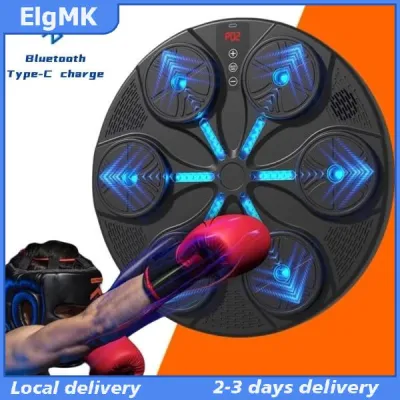
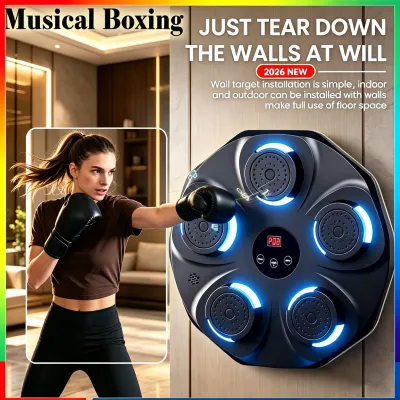
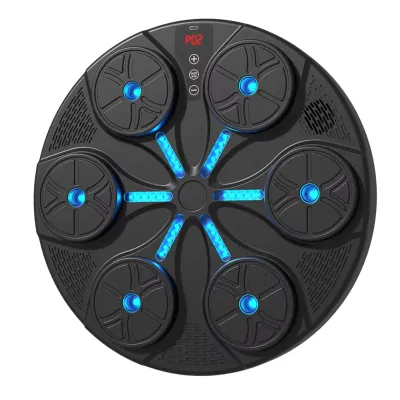

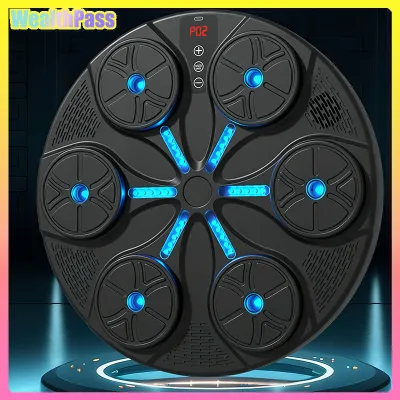
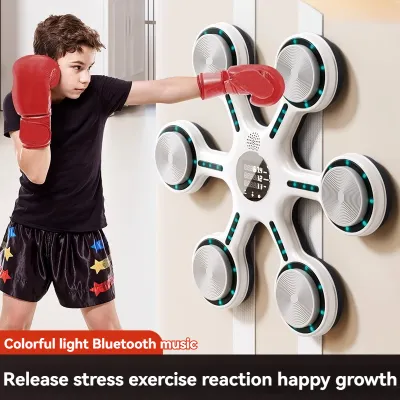
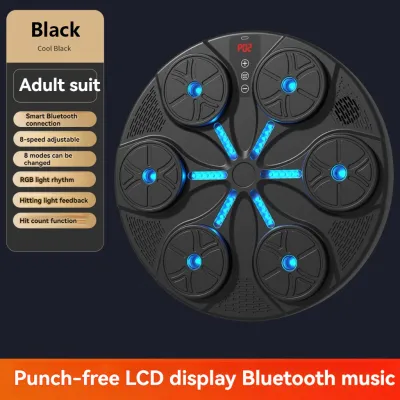

Prices are valid at publication and may change. Please refer to the product page for the latest price.
Wall-mounted smart targets are highly popular for their space-saving designs. These units typically mount flat against a wall or a sturdy pillar, resembling a large electronic shield. While their width and height are relatively modest—often ranging from 15 to 24 inches (38 to 60 cm) square—they do protrude from the wall. Most wall-mounted models have a depth profile of 4 to 8 inches (10 to 20 cm). It is critical to check the manufacturer’s exact specifications for your chosen model, as this depth directly reduces the available clearance in front of the unit.
Freestanding smart heavy bags, on the other hand, do not require wall installation but take up significant floor space. These models feature a vertical punching column attached to a wide, heavy base. To prevent the unit from tipping over during intense training sessions, these bases are designed to be filled with water or sand. A typical freestanding base has a diameter of 1.5 to 2.5 feet (45 to 76 cm) and stands about 5 to 6 feet tall. Because the base must absorb the kinetic energy of your punches, it cannot be placed flush against a wall; it requires a buffer zone on all sides to allow for slight swaying and movement.
Understanding these physical dimensions is only your starting point. The machine’s physical footprint represents the static space the equipment occupies when idle. To determine the actual space you need, you must calculate the dynamic zone required by your body as you train.
Calculating Your Minimum Clearance and Movement Zone
Calculating your dynamic movement zone is the most critical step in planning your home boxing corner. This zone is the actual usable space required to throw full-extension punches, execute defensive slips, and maintain proper footwork without restriction.

To establish your personal movement zone, begin by measuring your maximum arm reach. Stand comfortably in your boxing stance and extend your arm fully in a straight punch, such as a jab or cross. Measure the distance from the back of your shoulder to the tip of your knuckles. To this measurement, you must add a safety buffer of at least one to two feet (30 to 60 cm). This buffer accounts for the natural forward momentum of your body when you step into a punch, as well as the extension of your shoulders and torso rotation. If your arm reach is 2.5 feet, your minimum forward clearance from the face of the boxing machine should be at least 3.5 to 4.5 feet.
Lateral clearance is equally vital. Boxing is not a linear sport; effective training requires lateral movement, pivoting, and dodging. When you slip a punch or roll under an imaginary hook, your upper body shifts significantly to the left or right. You must ensure you have at least 3 feet (90 cm) of clear space on both the left and right sides of your central training stance. Without this lateral clearance, you risk striking your elbows or shoulders against adjacent walls, bookshelves, or cabinets during fast-paced combinations.
Always calculate these clearances from the outermost face of the machine, not from the wall itself. For a wall-mounted unit, this means measuring from the front pad of the target. For a freestanding unit, measure from the outer edge of the punching column.
Finally, do not forget to look up. A proper vertical clearance check is essential to prevent head or hand injuries. Throwing high-guard blocks, performing overhead stretches, or jumping during warm-ups requires ample ceiling height. In residential spaces, ensure the area directly above and around your training zone is completely clear of low-hanging light fixtures, chandeliers, exposed beams, and ceiling fans. A minimum ceiling height of 8 feet (2.4 meters) is highly recommended to ensure your hands never make contact with overhead hazards.
Environmental and Layout Considerations for Safe Installation
Beyond physical dimensions, several environmental and layout factors dictate whether a space is safe and practical for a smart music boxing machine.
First, consider the floor’s load-bearing capacity and surface protection. This is particularly important for freestanding models. When filled with water or sand, a freestanding base can easily weigh between 100 to 150 kilograms (220 to 330 pounds). This concentrated weight, combined with the dynamic impact of your punches, can cause significant stress to residential flooring. To protect your floors from scratches, dents, or structural wear, always place a high-density, shock-absorbing rubber mat beneath the unit. This mat also serves a secondary, crucial purpose: absorbing vibrations and dampening the thudding noise of your workouts, which is especially important if you live in a multi-story home or a condominium.
Proper ventilation and airflow are also essential, particularly in humid, tropical climates like the Philippines. Boxing is an intense cardiovascular activity that generates substantial body heat and sweat. Training in a stagnant, poorly ventilated room can lead to rapid fatigue and dehydration. Furthermore, high humidity and excessive sweat can pose a threat to the machine’s internal electronics and sensory pads. Ensure your training corner is positioned near an open window, an air conditioning unit, or a high-velocity electric fan to maintain comfortable air circulation. Always follow the manufacturer’s care instructions, which typically recommend wiping down the striking pads with a dry, clean microfiber cloth immediately after each session to prevent moisture from seeping into the electronic components.
Lastly, plan your layout around power accessibility and network connectivity. Smart music boxing machines rely on stable Wi-Fi to stream music, sync with mobile apps, and track your performance metrics. Position your machine in an area with strong wireless signal strength to avoid frustrating lag or disconnected sessions. Additionally, if your model requires a continuous power connection, ensure it is installed close to a wall outlet. Avoid running long, daisy-chained extension cords across the floor of your training zone. Active footwork and loose cords are a dangerous combination, creating a severe tripping hazard that can lead to falls and injuries mid-workout.
Space-Saving Strategies for Compact Living Areas
If you are working with limited square footage, such as in a studio apartment or a shared bedroom, you can still enjoy a smart music boxing machine by implementing smart, space-saving strategies.
Wall-mounted models are the ultimate choice for compact living areas because they preserve valuable floor space. When not in use, a wall-mounted target sits quietly against the wall, leaving the floor below completely open for daily activities. However, before mounting any equipment, you must verify the structural integrity of your wall. This is a high-impact device; every punch transfers significant kinetic energy directly into the wall structure.
In many residential buildings, interior walls are made of standard drywall or lightweight wooden partitions. Mounting a smart boxing machine directly onto drywall without proper structural support is extremely dangerous, as the repeated impact will easily crack the plaster and cause the mounting anchors to pull out. For optimal safety, always mount the machine to solid concrete, masonry, or brick walls, which are highly common in Filipino home construction. If you must mount onto a drywall surface, you must locate the internal wooden or metal studs using a stud finder and secure the mounting bracket directly to them. Alternatively, you can install a thick plywood backing board across multiple studs to distribute the force safely. Always use the heavy-duty wall anchors and screws specified by the manufacturer.
For multi-purpose rooms, design your layout so that the training zone can be easily cleared and restored. Use lightweight, foldable, or wheeled furniture that can be quickly pushed aside when it is time to train. Keep the immediate radius of your boxing zone free of permanent obstacles. Some manufacturers also offer specialized mounting brackets or adjustable racks that allow you to slide the machine upward, downward, or even fold it flat against the wall when your workout is complete.
Common Space Planning Mistakes to Avoid
Avoiding common space planning mistakes can save you from costly damage, inconvenient adjustments, or potential injuries down the road.
One of the most frequent errors is measuring only the static dimensions of the machine and completely ignoring the user’s dynamic movement zone. Buying a machine because it “fits” on a small wall segment, only to realize you cannot throw a left hook without smashing your elbow into a nearby bookshelf, is a frustrating and common setback. Always map out your full range of motion before finalizing the installation spot.
Another common oversight is failing to account for door swing clearances. If you install a wall-mounted machine near an entryway, an inward-opening door could slam into the unit, damaging the sensitive electronic sensors or the door itself. Worse, someone opening the door while you are in the middle of a high-speed combination could cause a severe collision. Ensure that all doors, cabinet panels, and closet doors have full clearance and cannot swing into your training zone.
Do not forget to measure the delivery path before making your purchase. While a wall-mounted unit usually arrives in a relatively compact box, a freestanding smart boxing machine often comes in large, heavy, and awkward packaging. Measure your doorways, narrow hallways, stairwells, and elevator dimensions to guarantee you can actually transport the boxed equipment into your designated room without getting stuck.
Finally, never place your boxing machine too close to fragile household items. Keep a safe distance from glass windows, mirrors, television screens, and delicate decor. Accidental slips, missed punches, or even sweat splatter can cause expensive damage to nearby electronics and fragile surfaces. Maintain a clear buffer zone to keep your home environment intact.
Frequently Asked Questions (FAQ)
Can I install a wall-mounted smart boxing machine on standard drywall?
No, you should never mount a high-impact smart boxing machine directly onto standard drywall without structural reinforcement. The repeated force of your punches will quickly compromise the drywall, leading to cracks, loose anchors, and the risk of the machine falling off the wall, which can cause severe injury or property damage. If you must install it on a drywall surface, you must locate the internal wooden or metal studs and secure the mounting bracket directly to them. Alternatively, mount a heavy-duty plywood backing board to the studs first, then mount the machine to the plywood. For the safest and most stable setup, installing the machine on a solid concrete, brick, or masonry wall is highly recommended. Always check the manufacturer’s installation manual for approved mounting hardware and surface requirements.
Do I need to reinforce my floor for a freestanding smart boxing machine?
In most standard residential homes, you do not need to structurally reinforce your floor to support a freestanding smart boxing machine. Standard modern floors are engineered to support the static weight of these units, which typically ranges from 100 to 150 kilograms (220 to 330 pounds) when the base is fully filled with water or sand. However, you must protect the floor surface itself. The intense, repetitive vibrations and slight shifting of the base during a workout can scratch hardwood, crack tiles, or wear down carpets. To prevent this, always place a thick, high-density rubber or EVA foam mat underneath the base. This mat distributes the concentrated load, prevents the machine from sliding, and significantly dampens the noise transmitted through the floor, which is especially important if your training area is located on an upper floor.
Community discussion
Share your experience or ask a question. Comments are reviewed before publication.