
Selecting the right skating shoes roller 4 wheels with light for your child requires balancing the exciting visual appeal of illuminating wheels with structural safety, proper ankle support, and size adjustability. The light-up feature should never come at the expense of performance; avoid cheap, toy-grade skates with hard plastic wheels that slip easily on smooth surfaces. Instead, prioritize models featuring durable polyurethane (PU) wheels, a secure triple-lock closure system (laces, a Velcro power strap, and a micro-adjustable top buckle), and an expandable boot frame that grows with your child’s feet. Purchasing the skates is only the first step—pairing them with a complete set of certified protective gear is non-negotiable to ensure a safe, injury-free learning experience.
While children are often drawn to the bright, flashing colors, parents must focus on the mechanical integrity of the skates. A well-constructed pair of skates provides a stable platform that helps children develop balance, coordination, and confidence. By understanding the technical specifications of wheels, bearings, and boot construction, you can make an informed purchase that ensures your child stays safe while enjoying their time on wheels.
Inline vs. Quad: Choosing the Right Skating Shoes Roller 4 Wheels with Light
When searching for the ideal skating shoes roller 4 wheels with light, the first major decision is choosing between the two primary wheel configurations: inline skates and quad skates. Each setup offers distinct advantages depending on your child’s skill level, balance, and where they plan to skate.
Products mentioned in this guide
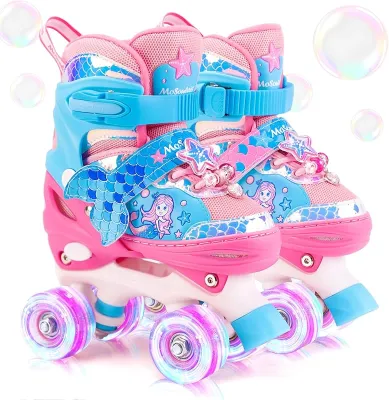
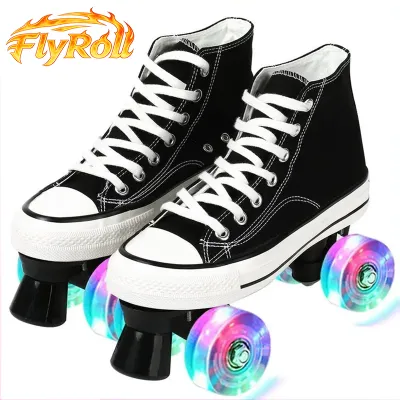
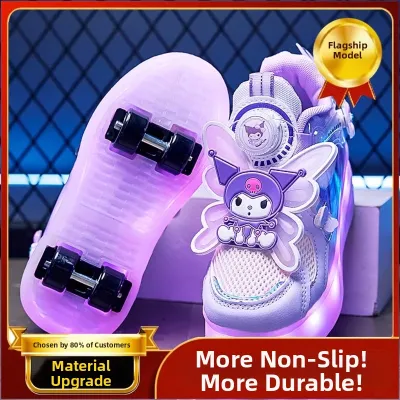
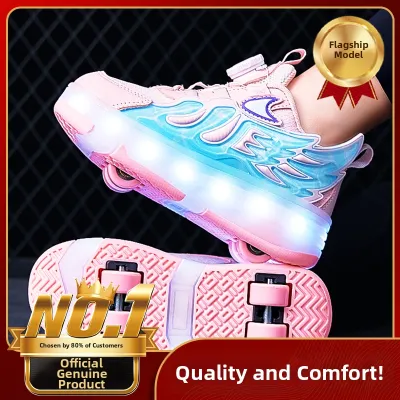
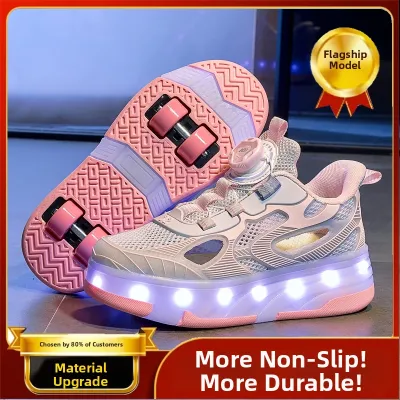
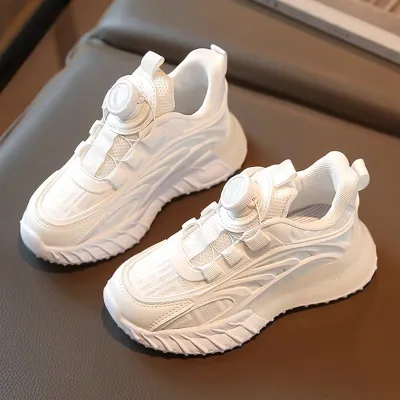
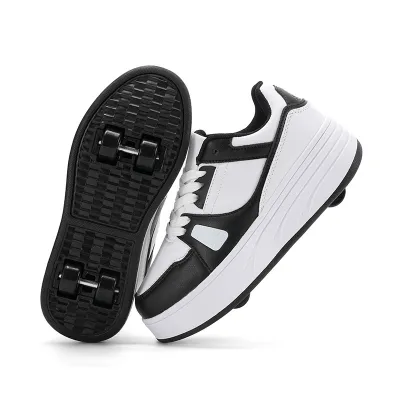
Prices are valid at publication and may change. Please refer to the product page for the latest price.
4-Wheel Inline Skates
Inline skates feature four wheels arranged in a single straight line along the center of the boot. This configuration mimics the feel of ice skating and is highly efficient for forward speed and maneuverability.
- Balance and Motion: Because the wheels are narrow and aligned, inline skates require active ankle stabilization to keep the feet upright. However, they offer a longer wheelbase, which makes rolling over small pebbles, cracks in the pavement, or drainage grates much easier.
- Braking Mechanism: Inline skates typically come equipped with a rubber heel brake on the right skate. To stop, the skater slides the braking foot forward and lifts their toes, pressing the rubber pad against the ground. This motion is highly intuitive for beginners.
- Best Suited For: Outdoor environments such as neighborhood pavements, park paths, and concrete barangay basketball courts. If your child wants to cover longer distances or skate outdoors, the inline configuration is generally more forgiving over uneven terrain.
4-Wheel Quad Skates
Quad skates feature a classic 2×2 wheel configuration, with two wheels in the front and two in the back. This design provides a wide, rectangular base of support.
- Balance and Motion: The wide wheel distribution makes standing completely still incredibly easy, providing immediate lateral stability that builds confidence in very young children. However, the wider profile makes them more susceptible to tripping when rolling over cracks or small stones outdoors.
- Braking Mechanism: Quad skates utilize a toe stop located at the front of the boot. To brake, the skater must drag the toe stop behind them, which requires slightly more coordination and balance than using a heel brake.
- Best Suited For: Smooth indoor surfaces, roller rinks, or highly polished concrete garage floors. They are excellent for children who prefer a slower, more controlled pace and want to focus on dance-like movements or artistic skating.
Decision Framework for Parents
To decide between the two, evaluate where your child will skate most frequently. If you live in a subdivision with paved streets or plan to visit public parks, inline skates are the practical choice for navigating outdoor obstacles. If your child will primarily skate indoors on tiles, wooden floors, or smooth rinks, quad skates offer the classic stability they need to get started.
Key Features to Evaluate in Light-Up Skates
The illuminating feature of modern roller skates is highly appealing to children, but the technology behind those lights varies. Understanding how these systems work, along with the quality of the wheels and bearings, will help you select a durable and low-maintenance pair.

Light Mechanisms: Magnetic Flash vs. Rechargeable LED
Light-up wheels generally fall into two categories based on how they generate power. Each system has distinct maintenance requirements and operational limits.
- Magnetic Flash Wheels (Dynamo-Powered): These wheels utilize a magnetic spacer located inside the wheel core between the two bearings. As the wheel spins around the metal axle, the friction-free rotation acts as a tiny generator, producing an electrical current that powers the embedded LED lights.
- Pros: They require no batteries, charging cables, or electrical upkeep. They are highly reliable, water-resistant, and will function for the entire lifespan of the wheel material.
- Cons: They require a minimum rolling speed to activate. If your child is standing still or stepping slowly, the lights will not illuminate.
- Rechargeable/Battery-Operated LED Boots: Some premium skates feature LED light strips embedded along the sole of the boot or within the frame, powered by an internal rechargeable lithium-ion battery.
- Pros: These lights are exceptionally bright, often feature customizable color patterns, and remain illuminated even when the child is standing completely still.
- Cons: They add slight weight to the boot, require regular charging via a USB cable, and have a finite battery lifespan. Furthermore, the charging ports are highly vulnerable to moisture and dust. In humid, tropical climates where sudden rain showers are common, exposed charging ports can easily corrode or short-circuit if not protected by a secure rubber cover.
Wheel Material and Bearings for Beginners
The quality of the wheels and bearings directly impacts how smoothly the skates roll and how much control your child has on different surfaces.
- Polyurethane (PU) vs. PVC Wheels: Always avoid skates made with PVC (polyvinyl chloride) wheels. PVC is a cheap, hard plastic that offers virtually no grip on smooth tiles or concrete, causing the wheels to slide sideways and leading to frequent falls. Instead, choose high-elasticity Polyurethane (PU) wheels. PU is a rubber-like material that grips the ground, absorbs vibrations from rough pavements, and provides a much safer, controlled ride.
- Wheel Hardness (Durometer): Wheel hardness is measured on the "A" scale. For children and beginners, look for a medium hardness rating between 82A and 85A. This range strikes the perfect balance between grip (preventing slips) and durability (resisting wear on rough outdoor concrete).
- ABEC Bearing Ratings: Bearings sit inside the wheels and determine how easily they spin. The ABEC scale (1, 3, 5, 7, 9) measures the precision of the bearings. For young beginners, ABEC-5 or ABEC-7 bearings are ideal. They roll smoothly without spinning so fast that the skates slide out from under a child who is still learning to balance. Avoid unrated bearings often found in cheap toys, as they can seize up or wobble.
- Rust Resistance in Humid Climates: High humidity and wet roads can quickly cause cheap steel bearings to rust, resulting in noisy, stiff wheels. Look for skates equipped with sealed bearings or chrome steel bearings, which offer better protection against moisture and road grime. Teach your child to avoid rolling through puddles, and always dry the skates thoroughly with a towel if they encounter moisture.
Fit, Adjustability, and Boot Support
A proper fit is the most critical factor in preventing injury and ensuring your child enjoys skating. Skates that are too loose do not provide adequate support, while skates that are too tight will cause painful blisters and foot fatigue.
Adjustable Sizing Mechanisms
Children’s feet grow rapidly, making adjustable skates a highly economical choice. Most quality kids’ skates feature a push-button adjustment system that allows the toe cap of the boot to slide forward or backward.
- Size Ranges: These skates typically cover three to four standard shoe sizes (for example, Small fits sizes 27–30, Medium fits 31–34, and Large fits 35–38).
- Liner Expansion: Ensure that the inner padded liner is designed to stretch or has an accordion-style toe box that expands naturally without bunching up, which can cause painful pressure points on the child's toes.
- Measurement Tip: Never buy skates based solely on your child's current shoe size, as skate sizing standards vary widely between manufacturers. Instead, measure your child's foot in centimeters from the heel to the tip of the longest toe, and compare this measurement directly to the brand's official sizing chart.
Triple-Lock Closure Systems
To keep the foot locked securely in place and prevent the ankle from rolling inward (pronation), look for a skate with a robust triple-lock closure system. This system consists of three distinct fastening layers:
- Traditional Laces: These secure the forefoot and allow you to customize the tightness across the top of the foot, accommodating both narrow and wide feet.
- Velcro Power Strap: Positioned at a 45-degree angle across the instep, this strap locks the heel firmly into the back pocket of the boot, preventing the foot from sliding forward and keeping the heel from lifting during strides.
- Top Cuff Buckle: A micro-adjustable plastic or aluminum buckle at the very top of the boot. This buckle provides rigid lateral support around the lower shin, keeping the ankle perfectly upright and preventing painful strains.
Boot Material and Ventilation
Parents must choose between hard-shell boots and soft-shell boots, each offering different benefits for comfort and support.
- Hard-Shell Boots: These feature a rigid plastic outer skeleton surrounding a padded liner. They offer maximum impact protection, excellent lateral ankle support, and are highly durable against scrapes and crashes. They are highly recommended for absolute beginners who need maximum structural support to keep their ankles straight.
- Soft Boots: These are constructed from heavy-duty fabric and mesh, resembling a high-top sneaker. They are lighter, highly flexible, and generally more comfortable out of the box. However, they offer less lateral support and can wear out faster if scraped against concrete.
- Ventilation Needs: In hot and humid tropical conditions, feet sweat quickly. Ensure the skates feature breathable mesh panels and moisture-wicking inner liners. Good airflow keeps the feet cool, reduces sweat buildup, and prevents the friction that leads to painful blisters.
Frame Material
The frame holds the wheels to the boot and bears the child’s entire weight.
- Composite/Plastic Frames: Usually made of nylon or thick plastic, these frames are lightweight and flexible. They absorb road vibrations well, making them comfortable for very young, lightweight toddlers.
- Aluminum Alloy Frames: Stiffer, stronger, and more durable than plastic. Aluminum frames do not flex under load, which provides better energy transfer and control. They are highly recommended for older children, heavier skaters, or those who skate frequently and aggressively.
Essential Safety Gear Pairing
No matter how high-quality your child’s skates are, equipment cannot replace proper safety preparation and training. Falls are an inevitable part of learning to skate. Before your child takes their first stride, they must be outfitted with a complete set of protective gear.
Certified Skate Helmets
Never allow your child to skate wearing a standard bicycle helmet if possible. While bicycle helmets protect against downward impacts, they often lack sufficient coverage at the back of the head.
- Rear-Head Coverage: When learning to skate, children frequently lose their balance and fall backward. A skate-specific helmet features a rounded, low-profile design that extends down to cover the base of the skull (the occipital lobe).
- Certification: Verify that the helmet carries safety certifications such as CPSC or EN 1078. The helmet must fit snugly, sit level on the head (two finger-widths above the eyebrows), and the straps must form a clean "Y" shape around the ears.
Wrist Guards
Wrist guards are arguably the most critical piece of protective gear for roller skaters. The natural human instinct when falling forward is to put the hands out to break the fall. This action can easily result in severe wrist sprains or fractures.
- Rigid Splints: Quality wrist guards feature a rigid plastic splint on the palm side to absorb the direct impact and allow the hand to slide forward on the concrete, dispersing the force of the fall.
- Proper Fit: Ensure the straps are pulled tight enough to prevent the splint from shifting during a fall, but not so tight that they restrict blood circulation.
Knee and Elbow Pads
Knee and elbow pads protect joints from painful scrapes, bruises, and fractures during forward falls.
- Hard Plastic Caps: Look for pads with thick, impact-resistant plastic outer shells (caps) secured to a shock-absorbing EVA foam backing.
- Sleeve vs. Strap Design: Some pads feature an elastic sleeve that the child slides their arm or leg through before securing the Velcro straps. This sleeve design is highly recommended as it prevents the pad from slipping out of place during a slide across the pavement.
High-Visibility Gear
Because light-up wheels are highly visible and most exciting to use during the late afternoon, dusk, or early evening, safety must extend to overall visibility.
- Reflective Elements: Choose skates that have reflective strips built into the boot or heel.
- Additional Lighting: Pair the skates with high-visibility vests, reflective armbands, or small clip-on LED safety lights attached to the child's helmet or clothing. This ensures they are easily spotted by cyclists, pedestrians, and motorists in low-light environments.
Safe Skating Practices and Stop Conditions
Before letting your child roll out, perform a quick safety inspection of their gear. Check that all buckles are securely clicked, laces are tied and tucked away so they cannot catch on the wheels, and the axle screws holding the wheels are tight.
Teach your child how to fall safely by practicing on a soft grassy patch first. They should learn to bend their knees, lower their center of gravity, and fall forward onto their knee pads and wrist guards, rather than falling backward onto their tailbone. Finally, establish clear stop conditions: never skate on wet or damp surfaces, as water can cause the wheels to slide unpredictably and will damage the bearings. Avoid steep hills, areas with heavy foot or vehicle traffic, and uneven, cracked surfaces until your child has fully mastered the art of stopping.
Frequently Asked Questions (FAQ)
Can I replace the light-up wheels if they stop working?
Yes, light-up wheels are fully replaceable. Standard inline and quad skates use highly standardized wheel dimensions and axle sizes (typically 8mm axles). If a light-up wheel stops flashing due to wear or a damaged magnetic spacer, you can easily purchase replacement wheels of the same diameter (such as 64mm or 70mm for inline skates) and swap them out using a standard Allen key. You can replace them with either standard non-lighted PU wheels or new light-up replacements.
Are light-up wheels safe for outdoor skating?
Light-up wheels are entirely safe for outdoor skating, provided they are made of high-quality polyurethane (PU) and not cheap, brittle PVC plastic. High-quality PU light-up wheels feature a solid, reinforced inner hub that securely houses the magnetic spacer and LED components, ensuring the structural integrity of the wheel is not compromised. However, because outdoor skating exposes the wheels to dust, sand, and moisture, you must regularly clean the bearings and axle area to prevent debris from grinding down the magnetic components and stopping the lights from working.
Community discussion
Share your experience or ask a question. Comments are reviewed before publication.