
Choosing the right boat canopy for a kayak or inflatable boat requires balancing sun protection with watercraft stability, mounting compatibility, and ease of movement. Unlike large motorized vessels, small watercraft are highly sensitive to added weight, wind resistance, and structural modifications. To find the ideal canopy, you must measure your boat’s width, identify secure mounting points that will not damage the hull, and select lightweight, weather-resistant materials designed for marine environments.
A well-chosen canopy transforms your paddling experience, allowing you to stay on the water longer without suffering from heat exhaustion or sunburn. However, an incorrect choice can hinder your paddling stroke, catch strong gusts of wind, or even damage your boat’s inflatable chambers. By evaluating your specific watercraft and paddling habits, you can select a canopy that offers reliable shade while keeping your trips safe and comfortable.
Assess Your Watercraft and Usage Needs
Before browsing online marketplaces or local marine shops, you must evaluate how you use your watercraft and identify its physical limitations. A kayak used for active sport fishing has very different requirements than an inflatable dinghy used for slow weekend cruising. Your primary activity dictates how much coverage you need and how much physical space the canopy’s frame can occupy without interfering with your movements.
Products mentioned in this guide
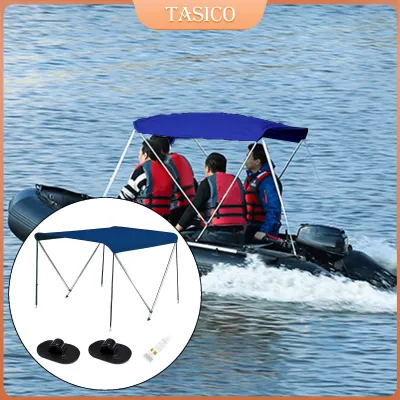
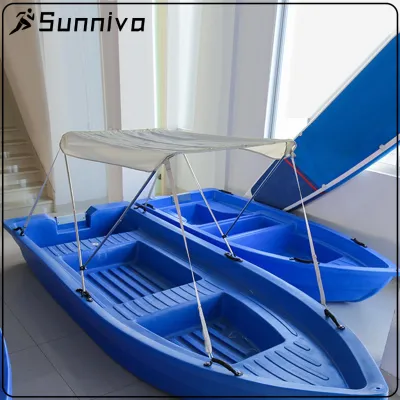
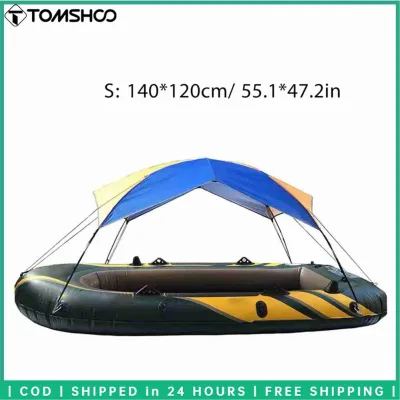
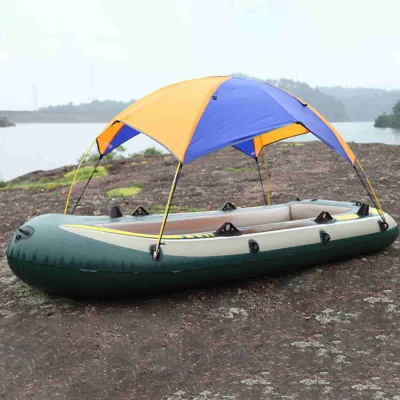
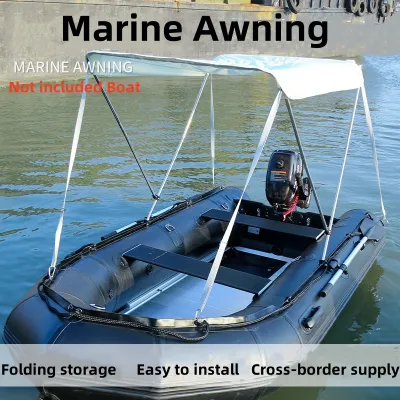
Prices are valid at publication and may change. Please refer to the product page for the latest price.
For active paddlers and anglers, a partial-coverage canopy is often the most practical choice. Anglers need clear space overhead and to the sides to cast lines, land fish, and manage rods without snagging the fabric or hitting the support poles. If your primary activity is leisure cruising or touring calm lakes and coastal bays, a larger canopy that covers the entire seating area provides maximum relief from intense tropical heat.
Next, check your watercraft’s maximum weight capacity in the manufacturer’s manual. Every kilogram of added gear reduces your boat’s freeboard and alters its handling characteristics. A heavy metal frame and thick canvas canopy might seem durable, but they can quickly eat into your safe load limit, especially when combined with your body weight, tackle boxes, coolers, and safety gear.
Finally, inspect the structural features of your boat to see what mounting options are already available. Rigid kayaks often feature accessory tracks, slide rails, or molded-in threaded inserts that can accommodate canopy hardware. Inflatable boats, on the other hand, rely on flat surfaces where you can adhere specialized mounting pads, or they may have existing D-rings and grab lines that can serve as anchor points.
Evaluate Canopy Sizing and Coverage Area
To ensure a proper fit, you must match the canopy’s physical dimensions to your boat’s width and the specific area you want to shade. The most critical measurement is the beam, which is the widest part of your boat at the exact points where you plan to mount the canopy frame. A canopy that is too narrow will bend the frame inward, putting stress on the mounts, while one that is too wide will overhang, creating a snagging hazard and catching water splashes.

The length of the canopy determines how much of the cockpit or seating area is shielded from the sun. While a long canopy offers more shade, it also increases wind resistance and can make it difficult to enter or exit the watercraft. For a standard single-person kayak, a canopy length of 1 to 1.2 meters is usually sufficient to cover your torso and lap without blocking your paddle path.
Height is another crucial dimension that requires careful calculation. The canopy must sit high enough above your head to allow comfortable movement and clear visibility, yet low enough to block angled sunlight during the early morning or late afternoon. If you paddle a kayak, ensure the frame height allows for a full, natural paddling stroke without your elbows or paddle shaft striking the support poles.
If you frequently transition between open water and shaded areas, look for adjustable or foldable canopy designs. These models allow you to fold the fabric back and secure it with straps when you want to paddle fast, navigate under low-hanging branches, or when the wind starts to pick up. A rigid, non-adjustable canopy forces you to commit to one configuration, which can be dangerous if weather conditions suddenly change.
Compare Mounting Types and Installation Hardware
The mounting system is the foundation of your canopy, and choosing the wrong type can lead to structural failure or permanent damage to your watercraft. For rigid kayaks made of polyethylene or composite materials, track-mounted or clamp-on systems are highly effective. These mounts attach directly to existing accessory tracks or clamp securely onto the gunwales, allowing for easy installation and removal without drilling holes into the hull.
Inflatable boats require a completely different approach because rigid clamps can easily puncture or wear through the soft PVC or Hypalon fabric. Instead, inflatable watercraft utilize flexible adhesive mounts, often called glue-on patches or bimini mounts, which are chemically bonded to the tubes using specialized marine adhesive. These patches distribute the pulling force of the canopy frame across a wider surface area, preventing localized tears or air leaks.
Regardless of your boat type, you must inspect the quality of the included installation hardware. Marine environments, particularly saltwater coastal areas in the Philippines, are highly corrosive to cheap metals. Look for hardware made of high-grade stainless steel (such as 316 grade) or heavy-duty nylon and reinforced plastics. Avoid zinc-plated steel or low-grade aluminum hardware, as they will quickly rust and seize up after exposure to salt spray and high humidity.
Before starting the installation, read the manufacturer’s instructions carefully to ensure you have the correct tools and adhesives. If you are gluing patches onto an inflatable boat, pay close attention to the recommended curing times and temperature ranges, as rushing this process can result in a weak bond that fails under wind pressure. Additionally, verify that your mounting method does not void your watercraft’s warranty, especially if you plan to drill into a rigid kayak’s deck.
Check Material Durability and Weather Resistance
A boat canopy must withstand harsh environmental conditions, including intense ultraviolet (UV) radiation, heavy rain, and constant exposure to moisture. When evaluating canopy fabrics, look for manufacturer labels that specify UV protection ratings, such as UPF 50+, which indicates the fabric blocks a high percentage of harmful solar radiation. Do not rely solely on generic material names like “polyester” or “canvas,” as untreated fabrics can degrade and tear after just one season under the tropical sun.
Water resistance is another critical factor, especially during sudden afternoon downpours. Look for fabrics treated with polyurethane (PU) coatings or water-repellent finishes that cause water to bead up and roll off rather than soaking through. The fabric weight, often measured in denier (e.g., 600D), is a good indicator of durability; higher denier fabrics are thicker and more resistant to tearing, though they also add more weight to your setup.
The frame material plays a major role in balancing weight and structural rigidity. Anodized aluminum tubing is the most common choice for small boat canopies because it is lightweight, relatively affordable, and offers decent resistance to corrosion. Stainless steel frames are incredibly strong and highly durable in saltwater, but they are significantly heavier and may be too cumbersome for lightweight kayaks. Reinforced fiberglass or plastic frames offer excellent flexibility and corrosion resistance but may bend excessively in strong winds.
Proper maintenance is essential to prevent mold, mildew, and material degradation over time. Before storing your canopy, always rinse it thoroughly with fresh water to remove salt deposits, sand, and dirt. Allow the fabric to dry completely in a shaded, well-ventilated area before folding it away; storing a damp canopy in a closed bag will quickly lead to mold growth, which weakens the fabric fibers and creates unpleasant odors.
Final Selection Checklist and Safety Boundaries
Before finalizing your purchase, you must verify that your chosen canopy setup aligns with operational safety limits and will not compromise your safety on the water. The most significant risk of adding a canopy to a small watercraft is the “sail effect.” Because kayaks and inflatable boats are lightweight and sit low in the water, a raised canopy acts like a sail, catching wind gusts that can easily push you off course, make paddling exhausting, or even capsize your boat in strong crosswinds.
To mitigate this risk, ensure your canopy features a quick-release mechanism or a folding design that allows you to collapse the structure in seconds. If you feel a sudden gust of wind or notice the water becoming choppy, your first action should be to fold down the canopy to lower your center of gravity and reduce wind resistance. Never use a rigid, non-collapsible canopy in open waters where weather conditions can deteriorate rapidly.
Additionally, cross-reference the canopy’s total weight and mounting footprint with your boat’s user manual. Ensure that the installation does not block access to essential safety equipment, such as your life jacket, paddle leash, bilge pump, or towing lines. By conducting a thorough safety check and testing your new setup in calm, shallow waters close to shore, you can enjoy the comfort of reliable shade while maintaining complete control over your watercraft.
Frequently Asked Questions (FAQ)
Can I use a standard bimini top on an inflatable kayak?
You should not use a standard, rigid-frame bimini top designed for hard-hulled boats on an inflatable kayak. Standard bimini tops rely on rigid metal clamps or screw-down deck mounts that require a solid, flat surface for secure attachment. Attempting to clamp these onto an inflatable tube can puncture the air chambers or cause severe wear through friction. Instead, look for specialized inflatable kayak canopies that utilize flexible glue-on patches, D-ring tie-downs, or strap-based mounting systems designed specifically to distribute tension safely across inflatable PVC or Hypalon surfaces.
How do I measure my boat for a custom-fit canopy?
To measure your boat for a canopy, use a flexible measuring tape to follow the contours of your watercraft. First, identify the exact locations on the gunwales or tubes where you plan to install the mounts. Measure the straight-line distance (the beam width) between these two points to determine the required frame width. Next, sit in your normal paddling position and measure from the mounting point up to about 15 to 20 centimeters above your head to find the ideal canopy height. Finally, measure the length of the area you want to shade, ensuring it covers your seating space without extending so far forward or backward that it interferes with your paddling stroke or gear access.
Will a boat canopy affect the stability of a small kayak?
Yes, a boat canopy will affect the stability of a small kayak by raising its center of gravity and increasing its wind profile. The weight of the frame and fabric, mounted high above the deck, makes the kayak more susceptible to tipping when you lean or when waves hit the hull. Additionally, strong winds pushing against the flat surface of the canopy can create a tipping force. To stay safe, always test your canopy-equipped kayak in calm, shallow waters first. Be prepared to fold down or remove the canopy immediately if you encounter strong winds, heavy currents, or choppy water conditions.
Community discussion
Share your experience or ask a question. Comments are reviewed before publication.