
Finding a running belt bag for women that securely holds a modern, heavy, large-screen smartphone without bouncing requires balancing tension, pocket design, and placement. When you run, the vertical oscillation of your stride creates kinetic energy that causes loose items to shift. To counteract this, a bounce-free running belt must distribute the weight of a large phone flat against your center of gravity.
The core criteria for a bounce-free fit rely on three pillars: continuous tension, a dedicated snug compartment, and a secure fastening mechanism. Generic open pockets allow heavy devices to tilt and sway, which amplifies movement with every step. A dedicated phone compartment, ideally lined with elastic or compression fabric, keeps the phone parallel to your body.
Before purchasing, look for a belt that offers adjustable tension to match your specific waist or hip measurements. In tropical climates like the Philippines, where high humidity and heavy sweating are constant factors, the belt must also maintain its grip when wet. A non-slip backing or high-elastane fabric blend helps prevent the belt from sliding upward during high-intensity workouts.
Products mentioned in this guide
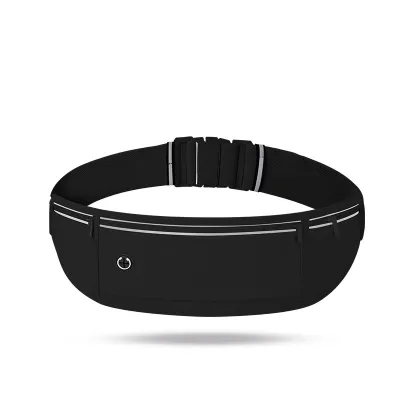
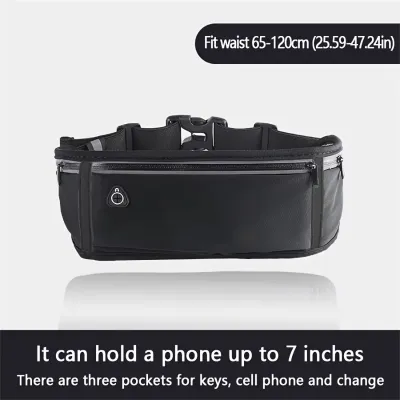
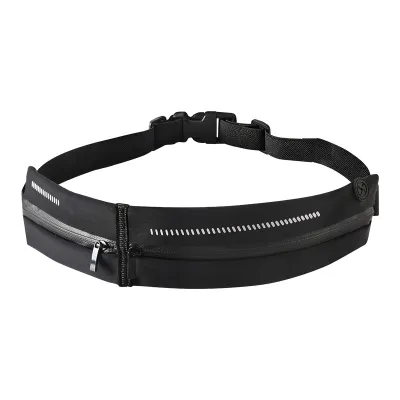
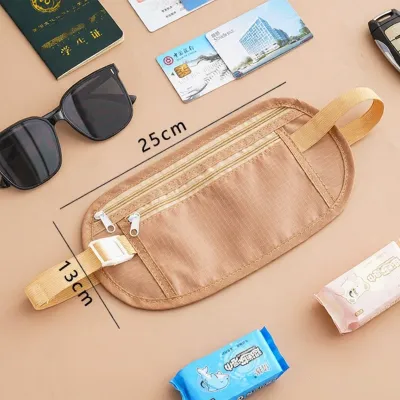
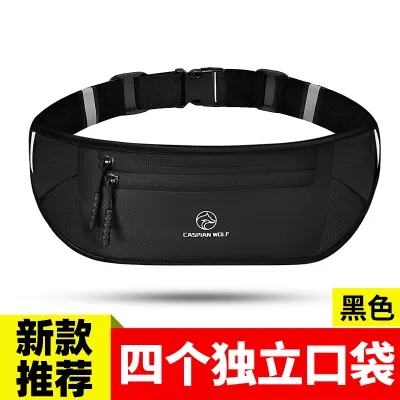
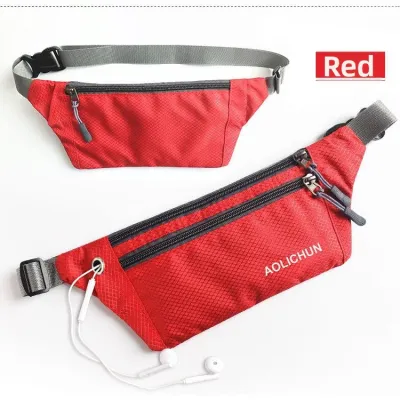
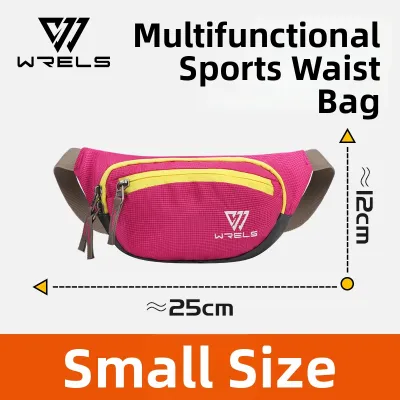
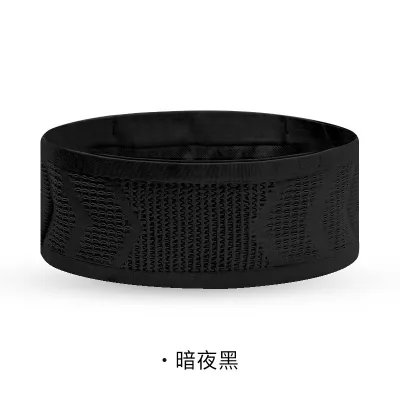
Prices are valid at publication and may change. Please refer to the product page for the latest price.
Tube Belts vs. Buckle Belts: Which Secures Large Phones Better?
To find the most stable setup, you must choose between the two primary designs on the market: tube-style belts and buckle-style belts. Each approach handles the weight of a large smartphone differently, and understanding their structural trade-offs is key to a bounce-free run.
Tube-style belts are continuous bands of stretchy fabric that you pull up over your legs and rest on your hips or waist. They rely entirely on compression to hold your gear flat against your body. Because there are no buckles, plastic adjusters, or pressure points, tube belts distribute weight evenly around your entire circumference.
For large smartphones, tube belts offer excellent stability because the continuous fabric presses the phone flat against your torso. However, they present unique challenges. Inserting a bulky phone into a tight fabric slit while on the move can be difficult. Over time, constant stretching from inserting wide devices can degrade the elastane fibers, causing the belt to lose its compression and begin to sag.
Buckle-style belts, on the other hand, feature a traditional pouch attached to an adjustable strap that secures with a plastic clasp. These belts allow you to customize the tension precisely using tri-glide adjusters. The dedicated zippered pocket on a buckle belt provides a secure, structured space that prevents your phone from shifting horizontally.
The main drawback of buckle belts is weight distribution. Because the weight of a large phone is concentrated entirely in one front or rear pouch, any slack in the strap will cause the pouch to bounce vertically. If you tighten the strap too much to compensate, the plastic buckle or narrow strap can dig into your waist, causing discomfort during long runs.
When deciding between the two, consider your access needs. If you frequently pull your phone out to check maps, change music, or take photos, a buckle belt with a zippered pocket offers easier access. If you prefer to slide your phone in at the start of a run and forget about it, a high-compression tube belt provides a more seamless, bounce-free experience.
Verifying Phone Compatibility and Pocket Dimensions
Do not rely solely on generic compatibility claims like “fits all smartphones” when shopping for a running belt bag for women. Modern large-screen phones, especially when paired with rugged, shockproof, or wallet cases, often exceed the standard dimensions of basic running pouches.

To ensure a perfect fit, start by measuring your phone while it is inside its daily protective case. Use a ruler to measure the exact length, width, and thickness in millimeters. A thick case can add up to 10 millimeters to the width and double the thickness of the device, which significantly impacts how easily it slides into a tight pocket.
When reviewing product specifications on e-commerce platforms, look for the exact pocket dimensions rather than compatible phone models. Pay close attention to the zipper opening length. A pocket might be wide enough to hold a large phone once inside, but if the zipper opening is too narrow, you will struggle to angle the device through the opening without risking damage to the zipper teeth.
Check the stretch limits of the fabric. Materials like neoprene offer water resistance but have limited stretch, meaning you need a pocket that is physically larger than your phone. In contrast, nylon-spandex blends stretch significantly, allowing a smaller pocket to expand around a large device. However, extreme stretching can make the fabric thin and reduce its water resistance.
Finally, inspect the internal pocket depth and closure security. For zipperless tube belts, ensure the pocket opening has a secure fold-over flap or an internal hook to prevent a heavy phone from slowly working its way out as you run. For zippered pockets, verify that the zipper is self-locking so it does not slide open under the pressure of a bouncing phone.
Achieving a Secure Fit for Women's Running Biomechanics
Women’s running biomechanics and hip-to-waist ratios play a significant role in how a running belt behaves during a workout. A belt that stays perfectly in place on one runner might constantly ride up to the narrowest part of the waist on another, causing the phone to bounce against the stomach.
The optimal placement of your running belt depends on your body shape. Wearing the belt low on the widest part of your hips often provides the most stable ride, as the wider bone structure prevents the belt from sliding downward. However, if you have a high waist-to-hip ratio, the belt may naturally migrate upward toward your natural waistline.
To prevent this upward migration, look for a belt with a wider strap or band. Narrow straps concentrate pressure in a small area, making them more likely to slip and roll over your hips. A wider band distributes the weight of a large phone over a larger surface area, increasing friction against your clothing and keeping the belt securely in place.
Evaluate the adjustability mechanisms of the belt. Elastic straps should be firm but pliable, allowing for natural breathing and torso expansion without losing tension. If you choose a buckle belt, ensure there is a mechanism to secure the excess strap. Loose, flapping strap ends are not only distracting but can also snag on your clothing or arms during your stride.
In the tropical climate of the Philippines, your choice of running apparel also affects belt stability. Slippery synthetic fabrics like polyester or nylon slick-face tights offer less friction than textured fabrics. If you wear slick compression tights, look for a running belt with silicone grip strips on the inner lining to lock the belt against your waistband.
Pre-Purchase Checklist: How to Test for Bounce and Chafing
Before committing to a new running belt bag for women, perform a thorough physical evaluation to ensure it meets your performance needs. Testing the belt at home before removing tags allows you to verify its fit and comfort without risking damage.
Start with the “jump test.” Place your large phone and any other essentials inside the belt, secure it to your preferred position, and perform ten vertical jumps in place. Next, run on the spot with high knees for thirty seconds. If the belt shifts vertically, slides up to your waist, or sways side to side, the tension is insufficient or the pocket design is not holding the phone close enough to your body.
Inspect the inner seams and edges of the belt for potential chafing points. Run your fingers along the interior lining, zipper backing, and buckle edges. Any rough stitching, exposed zipper teeth, or stiff plastic edges will cause painful chafing over long distances, especially when combined with sweat and high humidity.
Verify the water resistance of the phone compartment by checking the product label and material specifications. A true sweat-resistant belt will feature an internal waterproof laminate, a TPU lining, or a water-resistant zipper. This protection is crucial for safeguarding your expensive smartphone from heavy perspiration and sudden tropical downpours.
Lastly, review the return and exchange policies of the online marketplace or retailer. Because finding the perfect fit is highly dependent on your individual body shape and phone size, choose sellers that offer hassle-free returns. This ensures you can exchange the belt if your initial testing reveals any bouncing, slipping, or comfort issues.
Frequently Asked Questions (FAQ)
How should I wash a running belt to maintain its elasticity?
To preserve the elastic fibers and non-slip coatings of your running belt, always check the manufacturer’s care label first. Hand-washing in cold water with a mild detergent is the safest method to remove sweat and salt buildup. If using a washing machine, place the belt in a mesh laundry bag, select a delicate cycle, and avoid fabric softeners, which can degrade elastane. Always air-dry the belt away from direct sunlight, as high heat from a dryer will destroy its elasticity.
Can I carry keys and a large phone in the same running belt?
Avoid placing loose keys and a large smartphone in the same compartment, as the metal keys can easily scratch your phone screen or camera lens during a run. Look for a running belt that features separate pockets or an internal key clip to keep hard objects isolated. If your belt has only one large pocket, use a soft protective sleeve for your phone or wrap your keys in a small cloth before sliding them inside.
Where is the best place to wear a running belt to prevent bouncing?
The most stable position to prevent bouncing is low on your hips, just below your hip bones. This placement aligns the weight of your large phone with your body’s center of gravity and utilizes your pelvic structure to block downward movement. If the belt tends to ride up, try adjusting the tension so it sits snugly around your natural waistline, ensuring the phone rests flat against the small of your back or your lower abdomen.
Community discussion
Share your experience or ask a question. Comments are reviewed before publication.