
Finding a reliable ebike for sale brand new in the Philippines requires navigating a unique set of urban challenges. From intense tropical heat and sudden monsoon downpours to steep flyovers and uneven road surfaces, a daily commuter needs a machine built for durability, safety, and regulatory compliance. Choosing the right electric bicycle is not just about finding the fastest model; it is about matching the motor type, battery capacity, and frame style to your specific daily route and storage limits.
By focusing on practical specifications rather than marketing hype, you can select an e-bike that simplifies your daily journey, saves on transportation costs, and withstands the rigors of local roads. This guide establishes a clear decision framework to help you evaluate key features, match bike styles to your route, perform essential pre-purchase checks, and budget for long-term ownership.
Key Features to Evaluate for City Commuting
When evaluating a brand new e-bike, the motor placement and power output are critical factors that dictate how well the bike handles local terrain. Hub motors, which are integrated directly into the front or rear wheel hub, are highly common, affordable, and perfectly adequate for flat coastal cities. However, if your daily commute involves navigating steep bridge inclines, highway flyovers, or hilly residential areas, a mid-drive motor is highly advantageous. Mid-drive motors are positioned at the bike’s bottom bracket, transferring power directly through the chain and utilizing the bike’s existing gears to maximize climbing efficiency without overheating.
Products mentioned in this guide
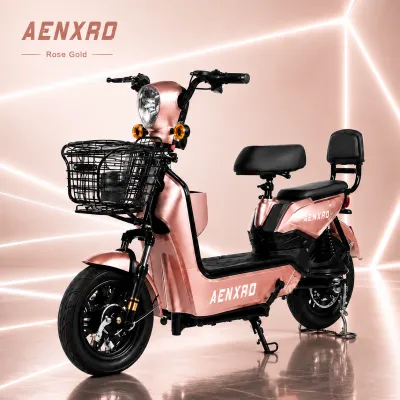
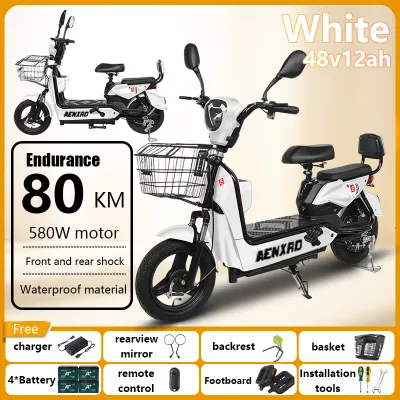
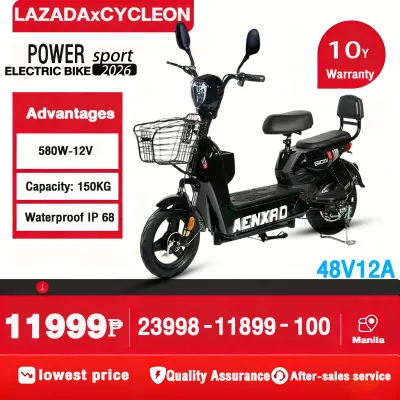
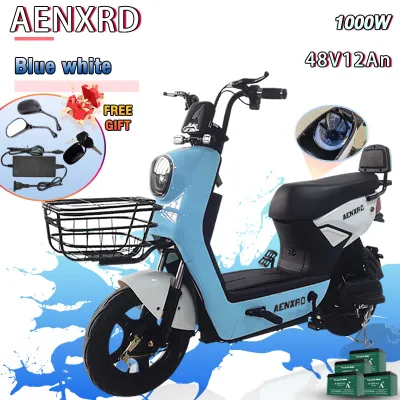
Prices are valid at publication and may change. Please refer to the product page for the latest price.
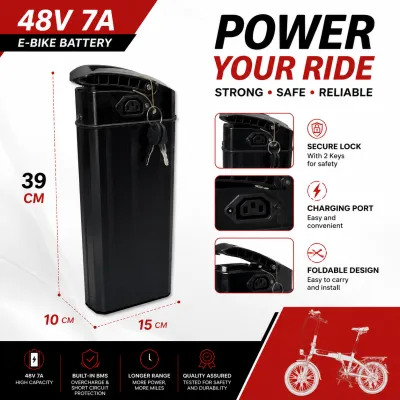
Battery capacity is another essential checkpoint that directly impacts your daily range and charging routine. Battery capacity is measured in Watt-hours (Wh), calculated by multiplying the voltage (V) by the Amp-hour (Ah) rating. For a standard daily commute, a battery capacity of 360Wh to 500Wh is generally sufficient for round-trip distances of 30 to 50 kilometers under moderate pedal assist. Because tropical heat and humidity can accelerate battery wear, look for models with removable battery packs; this allows you to bring the battery inside an air-conditioned office or home to charge safely away from extreme ambient temperatures.
Frame geometry and cargo capacity determine your daily comfort and utility. Step-through frames, which feature a low top tube, are highly practical for urban commuting because they allow you to mount and dismount easily at frequent traffic stops, regardless of your work attire. Additionally, a commuter e-bike must have robust cargo integration. Look for frames with welded rear racks or dedicated mounting points for front baskets and panniers, ensuring you can carry laptops, change of clothes, or groceries without destabilizing the bike’s balance.
Matching E-Bike Styles to Your Commuting Route
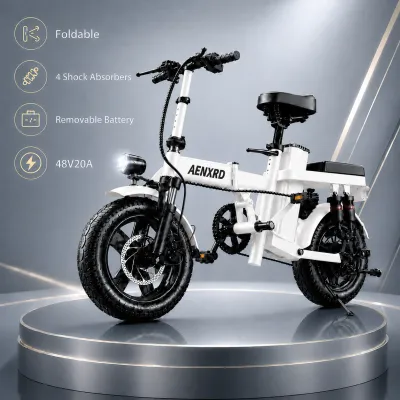
Selecting the right e-bike style depends heavily on your route conditions, storage limitations, and whether you plan to combine riding with other forms of transit. Folding e-bikes are highly popular for multi-modal commuters who need to bring their bike onto trains, store it under an office desk, or keep it inside a compact apartment. These bikes typically feature smaller 20-inch wheels, making them highly maneuverable in tight traffic. However, their compact frame design and smaller wheels mean they absorb road vibrations less effectively, which can make rides over potholes or rough asphalt more fatiguing.

Dedicated city commuter e-bikes are built specifically for comfort and utility on paved urban roads. These bikes feature an upright riding geometry, swept-back handlebars, and larger 26-inch or 700c wheels that roll smoothly over road imperfections. They almost always come equipped with full-coverage mudguards, which are indispensable for keeping road grime and dirty water off your clothes during sudden afternoon downpours. The upright posture also improves your field of vision, allowing you to spot traffic hazards and pedestrians more easily.
For commuters facing longer distances or mixed-surface routes, lightweight hybrid or gravel e-bikes offer a sportier, more efficient alternative. These models feature narrower tires, rigid frames, and a slightly forward-leaning riding position that reduces wind resistance. Because they are significantly lighter than traditional city e-bikes, they are much easier to pedal manually if you want to conserve battery power or if the battery runs dry. They are ideal for riders who want a natural bicycle feel and do not mind a slightly less upright riding posture.
Essential Pre-Purchase Checks for Brand New E-Bikes
Before purchasing a brand new e-bike, you must verify its legal classification with local transport authorities. In the Philippines, the Land Transportation Office (LTO) categorizes electric vehicles based on their maximum speed and propulsion method. Low-speed pedal-assist bicycles, commonly known as pedelecs, which require pedaling to activate the motor and cap assistance at 25 km/h, generally do not require vehicle registration or a driver’s license. Conversely, high-speed throttle-operated models or three-wheeled electric vehicles may face strict registration requirements and usage restrictions on major national highways. Always confirm the current regulatory status of your chosen model to avoid unexpected fines or road restrictions.
Evaluating the manufacturer’s warranty and local after-sales support is equally critical. A brand new e-bike is a significant investment, and its electrical components require specialized care. Ensure the seller provides a comprehensive warranty that covers the motor, battery, and controller for at least one to two years. Verify that the brand has an authorized local service center or a reputable partner bike shop in your area that stocks replacement parts, such as proprietary battery chargers, display units, and motor controllers, to avoid long periods of downtime if a component fails.
Finally, never finalize a purchase without conducting a thorough test ride. A test ride allows you to assess the bike’s braking performance, handling, and overall ergonomic fit. Pay close attention to the brakes; because e-bikes are heavier and travel faster than traditional bicycles, high-quality mechanical or hydraulic disc brakes are essential for safe stopping, especially on wet or slippery roads. Test how the motor assistance engages and disengages to ensure the power delivery feels smooth, predictable, and easy to control in tight spaces.
Budgeting and Ownership Costs for E-Bikes
When budgeting for a brand new e-bike, it is important to look beyond the initial purchase price and evaluate the overall price-to-value ratio. While entry-level models can be found for under ₱25,000, investing in a mid-range commuter between ₱35,000 and ₱75,000 often yields better long-term value. Higher-tier models typically feature reputable brand-name drivetrains, reliable hydraulic brakes, and certified battery cells that offer greater longevity, safety, and consistent performance over hundreds of charge cycles.
Long-term ownership costs must also be factored into your financial planning. Like any vehicle, an e-bike requires regular maintenance to remain safe and efficient. Because of the added weight of the motor and battery, as well as the increased torque applied to the drivetrain, e-bikes wear out tires, chains, and brake pads faster than traditional bicycles. You should budget for regular brake pad replacements, chain lubrication, and annual professional tune-ups to keep the electrical and mechanical systems functioning harmoniously.
Additionally, you must allocate a portion of your budget for essential safety and security accessories. A high-quality, certified bicycle helmet is non-negotiable for urban commuting. To protect your investment from theft, budget for a heavy-duty U-lock or a hardened steel chain lock. High-visibility front and rear LED lights are also crucial for navigating dark streets or heavy rain, while waterproof pannier bags or backpack covers will protect your daily work essentials from water damage during the wet season.
Frequently Asked Questions (FAQ)
Do I need to register my e-bike for road use in the Philippines?
Whether you need to register your e-bike depends on its speed capability and how the motor is activated. Low-speed pedal-assist bicycles (pedelecs) with a maximum speed of 25 km/h generally do not require registration or a driver’s license, and they are permitted on local roads and designated bike lanes. However, faster e-bikes, throttle-only models, and electric three-wheelers are subject to stricter Land Transportation Office (LTO) guidelines, which may require registration, a driver’s license, and restrict them from major national roads. Always check the latest LTO administrative orders and local municipal ordinances before riding.
How should I estimate the real-world range of an e-bike battery?
To estimate the real-world range of an e-bike battery, you must adjust the manufacturer’s advertised range, which is typically calculated under ideal laboratory conditions. In daily commuting, factors such as rider weight, carried cargo, frequent stop-and-go traffic, tire pressure, and the level of motor assistance used will significantly reduce the actual range. As a practical rule of thumb, subtract 20% to 30% from the manufacturer’s claimed range to establish a realistic daily commuting buffer, ensuring you do not run out of power before reaching your destination.
What precautions are necessary for riding an e-bike in heavy rain?
When riding in heavy rain, first verify that your e-bike has a sufficient Ingress Protection (IP) rating, ideally IP65 or higher, which indicates resistance to water splashes and rain. Avoid riding through deep standing water or flooded streets, as submerging the hub motor, bottom bracket, or battery compartment can cause permanent electrical damage. Reduce your speed, brake much earlier than usual to account for wet rims, and perform a post-ride routine by wiping down the electrical contacts, drying the chain, and storing the bike in a dry, well-ventilated area.
Community discussion
Share your experience or ask a question. Comments are reviewed before publication.