
To choose the best calf raise block, you must prioritize three key dimensions: a height that matches your ankle mobility (typically 2 to 4 inches), a material suited to your load requirements (such as wood, foam, or plastic), and a stable, non-slip base that guarantees safety under heavy loads. A dedicated calf raise block is far superior to improvised gym alternatives like weight plates or steps. It provides a flat, secure, and anatomically correct platform that allows your ankle to move through its full natural range of motion, which is essential for target muscle hypertrophy and joint health.
Selecting the ideal block requires balancing several practical trade-offs. For instance, a taller block offers a deeper muscle stretch but demands excellent ankle flexibility to avoid joint strain. Lightweight foam blocks provide comfortable barefoot training but can compress under heavy barbell loads, whereas solid wood blocks offer rock-solid stability but can scratch delicate home floors if not paired with a protective mat. Your final choice will depend heavily on your training style, the surface of your home gym, and whether you prefer to train barefoot or with athletic shoes.
Finding the Right Height for Your Range of Motion
Standard vs. Elevated Heights
Most calf raise blocks available on the market range in height from 2 inches (about 5 centimeters) to 4 inches (about 10 centimeters). This height difference directly impacts the stretch-mediated hypertrophy of your lower leg muscles. A higher block allows your heels to drop significantly lower than your toes at the bottom of the movement. This deep eccentric stretch is highly beneficial for muscle growth because it recruits the muscle fibers of the gastrocnemius and soleus under a high degree of tension.
Products mentioned in this guide
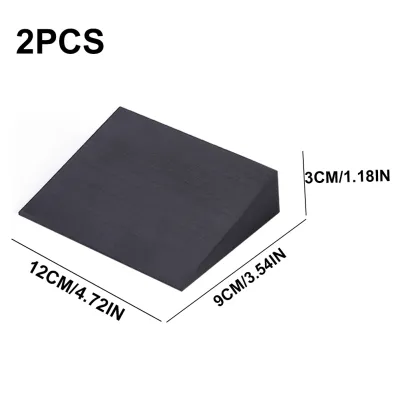
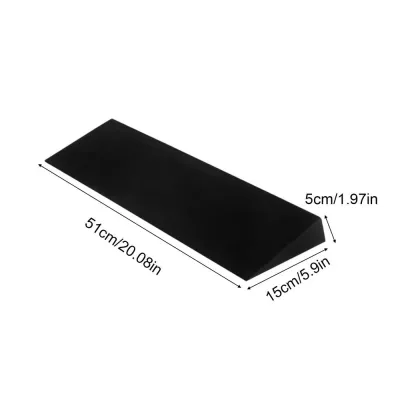
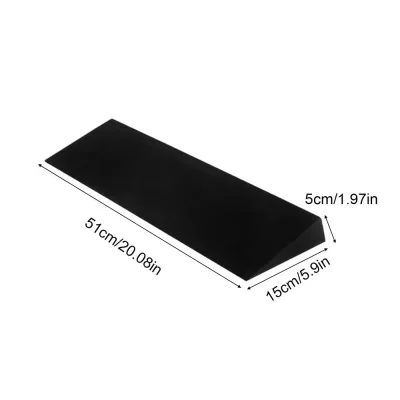
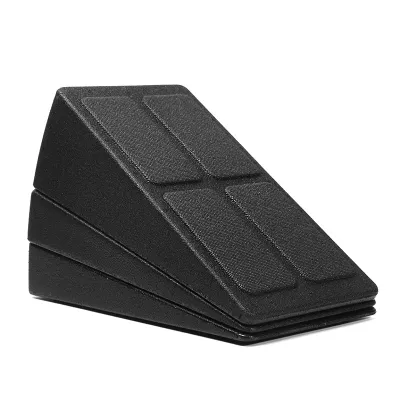
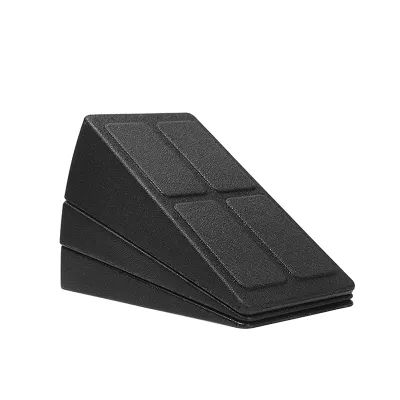
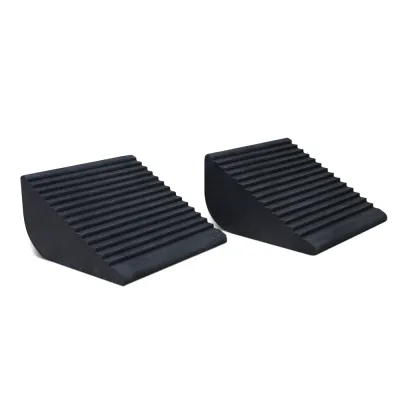
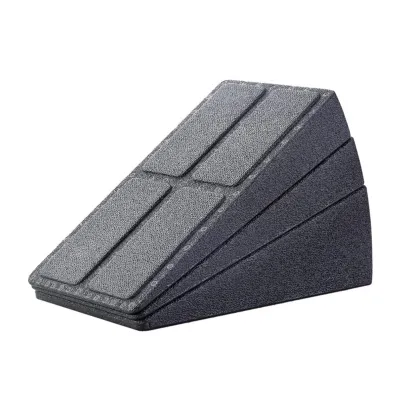
Prices are valid at publication and may change. Please refer to the product page for the latest price.
However, a higher platform is not universally better for everyone. Lower-profile blocks, typically around 2 inches high, are excellent for beginners, individuals recovering from ankle injuries, or those with naturally tight calves. A lower block provides a safer boundary that prevents you from accidentally overstretching your Achilles tendon. It allows you to build foundational strength and gradually improve your ankle dorsiflexion without placing excessive, unaccustomed strain on your connective tissues.
Matching Height to Your Flexibility and Goals
Before purchasing a calf raise block, it is highly recommended to perform a simple self-assessment of your ankle mobility. You can test your barefoot ankle dorsiflexion by standing near a wall, placing your toes a few inches away, and seeing if you can touch your knee to the wall without lifting your heel off the ground. If your heel lifts easily or if you feel sharp tightness in the back of your ankle, your mobility is limited, and a lower block is the safest starting point.
If you have excellent flexibility and want to maximize muscle growth, a taller block of 3 to 4 inches will allow you to access the deep, loaded stretch required for advanced training. For those who want the best of both worlds, adjustable or stackable platforms are an excellent investment. These systems consist of multiple interlocking layers or wedges, allowing you to start at a conservative height and gradually increase the elevation as your flexibility and joint tolerance improve over time.
Evaluating Materials: Wood, Foam, and Plastic Options
Solid Wood Blocks
Solid wood calf raise blocks are favored by powerlifters and heavy strength trainers due to their exceptional durability and structural integrity. A high-quality wooden block will not compress, bend, or warp, even when subjected to hundreds of kilograms of weight. This rigidity ensures that all the force you exert is transferred directly into your movement, providing a highly stable and consistent feel during heavy standing calf raises.

Despite their strength, wooden blocks have a few specific characteristics to consider. They are relatively heavy and less portable than foam options, making them best suited for permanent home gym setups. Additionally, raw or polished wood can be slippery, so look for models that feature pre-applied grip tape or a deeply textured surface. Because solid wood can easily scratch tiled, vinyl, or hardwood floors, you should always place a protective rubber mat underneath a wooden block to safeguard your home’s flooring.
In humid tropical environments, such as during the rainy season in the Philippines, untreated wood can also absorb moisture from the air or from your sweat. To prevent mold growth and warping, ensure any wooden block you select has been treated with a moisture-resistant sealant, and wipe it down thoroughly after humid training sessions.
High-Density Foam and EVA
High-density foam and ethylene-vinyl acetate (EVA) blocks are incredibly popular for home fitness enthusiasts who prioritize comfort and portability. These blocks are exceptionally lightweight, making them easy to pack into a gym bag or store away in a small apartment closet. The semi-soft surface is highly forgiving on bare feet, eliminating the pinching or discomfort that can sometimes occur when training barefoot on hard wood or metal surfaces.
However, foam blocks have distinct limitations when it comes to load-bearing capacity. Under heavy loads—such as when holding heavy dumbbells or resting a barbell on your shoulders—high-density foam will compress. This compression can cause the block to tilt slightly, introducing instability that makes it difficult to maintain your balance. Furthermore, if the foam surface lacks a deeply molded pattern, sweat can make the material slippery, increasing the risk of your foot sliding off mid-exercise.
Hard Plastic and Composite Options
Hard plastic and molded composite blocks offer a practical middle ground between the rigidity of wood and the lightweight convenience of foam. These blocks are typically constructed with a hollow interior reinforced by a network of internal plastic ribs. This design keeps the overall weight low while maintaining a high level of structural strength, preventing the block from flexing or compressing under moderate to heavy loads.
Most plastic blocks feature aggressive, molded-in tread patterns that provide excellent grip for athletic shoes. However, these sharp plastic ridges can be uncomfortable if you prefer to train barefoot, often requiring you to wear shoes or drape a small towel over the block. Additionally, hard plastic can easily slide across smooth indoor floors like ceramic tiles or polished concrete. To prevent dangerous slipping, always verify that the plastic block you choose is equipped with high-quality rubber feet or a non-slip silicone base.
Ensuring Stability and Safety Under Load
Base Width and Non-Slip Features
When performing calf raises, your center of gravity shifts constantly as you move from a deep heel deficit to a high tiptoe position. This shifting weight makes stability the most critical safety factor for any calf raise block. To prevent the block from tipping forward or backward during your eccentric lowers, look for a model with a wide, flared base. A block that is wider at the bottom than the top provides a highly stable foundation that resists tipping, even if you accidentally place your feet too far forward.
To ensure your feet remain securely anchored, evaluate the non-slip features on both the top and bottom of the block:
- Top Surface Traction: Look for heavy-duty adhesive grip tape, thick rubberized padding, or deep molded grooves. This is especially important in warm, humid climates where sweat can quickly turn a smooth surface into a slipping hazard.
- Bottom Floor Grip: The underside of the block must feature high-friction materials. Solid rubber feet, a fully rubberized base plate, or textured silicone strips are essential to keep the block from sliding forward when you push off to begin a repetition.
- Angled Foot Placement: Some blocks feature a slight wedge shape rather than a flat top. This angled design can reduce stress on the wrist-like joints of your ankles and help keep your feet from sliding off the back of the platform.
Weight Capacity and Floor Protection
Before purchasing any fitness accessory, always check the manufacturer’s official weight capacity rating. This is particularly crucial for hollow plastic and high-density foam blocks. Ensure the rated capacity comfortably exceeds your body weight plus the heaviest weights you plan to lift. Overloading a block can lead to sudden structural failure, such as the foam bottoming out or the plastic cracking, which can cause severe ankle sprains or falls.
Protecting your workout space is another important practical consideration. Heavy training can place immense pressure on small areas of your floor, potentially cracking ceramic tiles or denting wooden floorboards. To mitigate this risk, pair your calf raise block with a high-density rubber gym mat or a thick puzzle mat. This extra layer not only absorbs the impact and protects your home’s infrastructure but also provides an additional high-friction surface that keeps your block completely stationary during your workouts.
Integrating the Block Into Your Home Gym Setup
Integrating a new calf raise block into your home workout space requires a quick assessment of your available room and existing equipment. In compact living spaces, such as urban apartments, multi-functional gear is highly valuable. Some hollow plastic blocks are designed to double as storage containers for resistance bands, jump ropes, or fitness gloves, helping you keep your workout area organized and clutter-free. Alternatively, stackable foam blocks can be easily separated and repurposed as yoga blocks or squat wedges, giving you more training variety without taking up extra floor space.
If you plan to use your block alongside larger gym equipment, consider where it will be placed during your exercises:
- Power Racks and Smith Machines: If you perform barbell calf raises, ensure the block is narrow enough to fit comfortably between the uprights of your power rack, yet wide enough to accommodate your natural squat stance.
- Free-Weight Areas: When using heavy dumbbells for free-standing calf raises, your balance is challenged. Position the block near a wall or a sturdy piece of furniture that you can lightly touch with one hand for safety if you lose your balance.
- Clearance and Safety: Always measure your overhead clearance before stepping onto an elevated block, especially if you have low ceilings or ceiling fans in your workout room. Ensure there are no sharp objects or furniture corners nearby in case you need to step off the block quickly.
By carefully matching the block’s dimensions and material to your specific home gym environment, you can enjoy safe, effective, and highly productive lower-body training for years to come.
Frequently Asked Questions (FAQ)
Can I use a weight plate instead of a calf raise block?
While using a round weight plate is a common DIY alternative, it carries significant safety risks. Round plates are designed to roll and can easily slide or flip when you place your weight on the very edge to perform a calf raise. This instability can lead to sudden slips, loss of balance, or severe lateral ankle sprains. A dedicated calf raise block provides a flat, wide, and stable base specifically engineered to remain stationary under heavy, off-center loads, ensuring your joints remain safe and aligned.
Do I need a calf raise block for seated calf raises?
Yes, a calf raise block is highly beneficial for seated calf raises. The seated variation primarily targets the soleus muscle, which can only be fully stretched and trained effectively when your toes are elevated, allowing your heels to drop below horizontal. However, because your knees are bent and you are not balancing your entire body weight, you do not require as much ankle range of motion or extreme stability as you do during standing variations. A lower-profile block or a simple set of squat wedges is often perfectly sufficient for seated calf training.
Community discussion
Share your experience or ask a question. Comments are reviewed before publication.