
Selecting the ideal chest press machine for your home gym requires a balance of spatial planning, mechanical understanding, and ergonomic alignment. Rather than buying the first model you see on an online marketplace, you must evaluate how the machine’s footprint fits your room, how its resistance system matches your training style, and whether its adjustment points accommodate your body’s natural range of motion. By taking a systematic approach to these factors, you can secure a durable piece of equipment that delivers safe, effective chest workouts for years to come.
Assess Your Home Gym Space and Layout
Measuring your available space is the critical first step before purchasing any heavy strength equipment. A chest press machine requires not just its static footprint, but also dynamic clearance. You must measure the length and width of the machine, then add at least 50 to 60 centimeters of open space on all sides. This extra room ensures you can safely mount and dismount the machine, load weight plates without hitting walls, and perform routine maintenance or cleaning.
Ceiling height is another vital factor, especially if you are considering a machine with high pulley towers or overhead guide rods. Standard residential ceilings in modern homes or condominiums may have structural beams or low-hanging light fixtures that restrict taller equipment. Always verify the maximum height of the machine at its highest adjustment point and compare it to your ceiling measurements.
Products mentioned in this guide
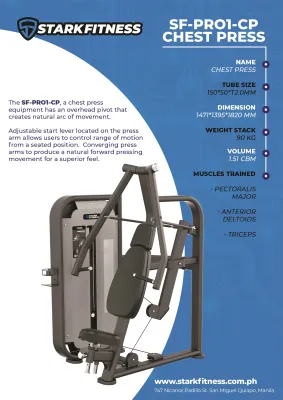
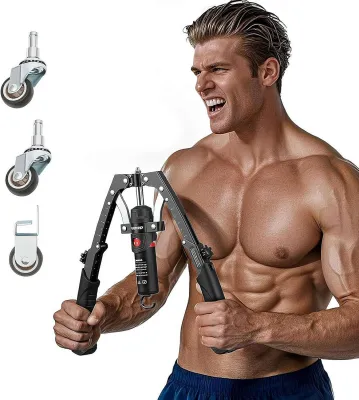
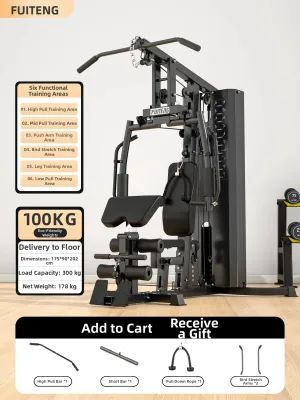
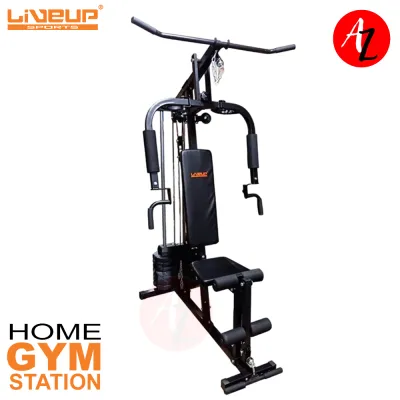
Prices are valid at publication and may change. Please refer to the product page for the latest price.
In the tropical climate of the Philippines, indoor air circulation and humidity play a significant role in equipment placement. Setting up your gym in a high-humidity area, such as an open-air garage or a room without proper ventilation, can accelerate rust on exposed steel components. Ensure your layout allows for adequate airflow from fans or air conditioning units, and position the machine away from windows where sudden tropical downpours might blow moisture onto the frame.
If your dedicated floor space is highly restricted, a massive single-purpose chest press machine might not be the most practical choice. In tight quarters, you may want to look into compact multi-gyms or wall-mounted folding racks with pulley attachments. These alternatives provide a similar pressing motion while preserving valuable floor space for other exercises when the machine is not in use.
Understand Chest Press Machine Types and Resistance
The mechanism that provides resistance on your chest press machine directly influences your workout experience, the machine’s physical footprint, and your long-term maintenance routine. Different systems offer distinct advantages in terms of smooth movement, setup speed, and overall cost. Understanding these mechanical differences allows you to choose a system that aligns with your daily training flow and budget.

Every resistance type carries specific trade-offs regarding preparation time and maximum load capacity. Some systems require manual loading before every set, which can slow down high-intensity training or supersets. Other systems allow for instantaneous adjustments but may limit your ultimate strength progression if the built-in weight stack is too light.
Plate-Loaded vs. Selectorized (Pin-Loaded) Machines
Plate-loaded chest press machines rely on standard or Olympic weight plates that you manually slide onto receiving pegs. This design generally results in a lower initial purchase price for the machine itself, as it does not include a heavy, expensive iron weight stack. If you already own a collection of weight plates for a barbell or rack, a plate-loaded machine allows you to maximize your existing investment without paying for redundant weight.
These machines typically offer a higher maximum weight capacity and a highly natural strength curve, especially those utilizing independent, converging arms. However, you must factor in the physical effort and time required to load and unload heavy plates between sets. Additionally, plate-loaded units require extra floor clearance around the weight horns so you can safely maneuver with heavy plates in hand without bumping into walls or other equipment.
Selectorized, or pin-loaded, machines utilize a built-in stack of weight plates guided by steel rods, where you adjust the resistance simply by inserting a magnetic pin into the desired weight level. This system is exceptionally convenient for fast-paced workouts, drop sets, and multi-user households where different fitness levels train consecutively. The enclosed nature of the weight stack also provides a cleaner, more compact aesthetic and reduces the risk of pinching fingers.
The primary trade-offs for selectorized machines are their higher upfront cost and fixed weight limits. Once you maximize the capacity of the built-in weight stack, upgrading or adding more resistance can be difficult or impossible depending on the manufacturer’s design. When browsing selectorized options, always check the total weight of the stack and verify if the manufacturer offers add-on weights or if the starting resistance is suitable for your current strength level.
Cable and Functional Trainers with Chest Press Attachments
If you want to maximize the utility of a single piece of equipment, a dual-cable functional trainer with a dedicated chest press attachment or an adjustable bench is an excellent alternative to a single-purpose machine. Cable systems provide constant tension throughout the entire range of motion, which keeps the pectoral muscles engaged even at the very top of the press. This constant tension can lead to excellent muscle activation and a highly versatile training experience.
When evaluating a cable-based chest press, look for independent pulley systems that allow you to adjust the height and angle of the cables. This adjustability enables you to perform flat, incline, and decline pressing movements from a single station. Furthermore, independent pulleys allow for a converging movement path, meaning your hands can move closer together at the end of the press, mimicking the natural contraction of a chest fly.
While functional trainers offer unmatched versatility for training your back, shoulders, and arms alongside your chest, they do require a larger overall footprint and a higher initial financial investment. You must decide whether the ability to perform dozens of different exercises justifies the extra space and cost compared to a dedicated, highly stable chest press machine.
Evaluate Biomechanics, Ergonomics, and Adjustability
The effectiveness and safety of a chest press machine depend heavily on its biomechanical design. Unlike free weights, which allow your joints to find their own natural path, a machine guides your movement along a fixed trajectory. If this trajectory does not align with your body’s natural joint mechanics, you risk placing excessive shear stress on your rotator cuffs and elbows.
To minimize joint strain, look for machines that feature converging or diverging motion paths. A converging path means the handles start wide apart and move closer together as you push forward, which matches the natural orientation of the shoulder joint and maximizes pectoral contraction. Linear or strictly straight-line pressing machines can sometimes force the shoulders into an unnatural, flared position, which may cause discomfort over time.
Proper seat and backpad adjustability are non-negotiable features for any home chest press machine. Because users vary greatly in height and torso length, a fixed seat can prevent you from aligning the handles with your mid-to-lower chest. Verify that the seat height can be adjusted smoothly, preferably with a secure pop-pin mechanism, so you can position your feet flat on the floor while keeping your shoulders packed safely against the backrest.
The design of the handles also plays a major role in user comfort and muscle targeting. High-quality machines offer multiple grip options, including a standard horizontal (pronated) grip and a vertical (neutral) grip. A neutral grip is highly beneficial for users with a history of shoulder issues, as it reduces external rotation of the shoulder joint during the press. Some advanced machines also feature rotating handles that self-adjust to your wrist angle throughout the movement, providing a highly customized feel.
Match the Machine to Your Fitness Goals and Usage Frequency
Your training intensity and how often the machine will be used should dictate the structural quality of the equipment you select. For light or occasional use—such as general fitness maintenance or active recovery sessions once or twice a week—a standard home-grade machine is often sufficient. These models typically feature lighter steel frames and basic vinyl upholstery, making them more affordable and easier to move if needed.
If you plan to train heavily, perform high-volume hypertrophy programs, or share the equipment with multiple family members, you should prioritize commercial-grade construction. Look for machines constructed from heavy-gauge steel, typically 11-gauge or 12-gauge, which provides the structural rigidity needed to prevent rocking or flexing under heavy loads. High-density foam padding wrapped in double-stitched, sweat-resistant vinyl is also essential to withstand the high humidity and intense sweat common in tropical home gyms.
Your specific fitness goals should also guide your choice of resistance increments and starting weight. If you are using the machine for rehabilitation or progressive strength building after an injury, you need a machine with a very low starting weight and small, manageable resistance increments. Conversely, if your goal is maximum muscle hypertrophy or power development, you will require a robust frame that can handle rapid, explosive movements without shifting on your gym floor.
Build Your Shortlist: Budget, Warranty, and Delivery Checks
Once you have narrowed down your technical preferences, it is time to evaluate the financial and logistical aspects of your purchase. The true cost of owning a chest press machine often extends beyond the initial price tag shown on an online marketplace. You must calculate the total cost of ownership, which includes the base machine, any necessary weight plates or attachments, shipping fees, and potential professional assembly costs.
In the Philippines, shipping heavy fitness equipment can add a substantial amount to your overall budget, especially if you live outside major metropolitan areas. Before finalizing your order, check the seller’s delivery policies and verify if they offer door-to-door delivery or if you will need to arrange transport from a local logistics hub. Additionally, consider whether the delivery service includes bringing the heavy boxes up to your specific floor, as navigating narrow stairwells or condominium service elevators with heavy steel components can be incredibly challenging without professional assistance.
Warranty coverage is a critical indicator of a machine’s long-term reliability and the manufacturer’s confidence in their product. Carefully review the warranty terms, noting that manufacturers often split coverage into different categories. The structural steel frame may carry a lifetime or multi-year warranty, while moving parts like cables, pulleys, and upholstery may only be covered for one or two years. Ensure you understand how to claim warranty service and whether replacement parts are readily available locally.
Finally, verify if professional assembly services are available in your area. Assembling a complex selectorized or cable-based chest press machine requires specialized tools, precise alignment of guide rods, and proper tensioning of cables to ensure smooth, safe operation. If you are not confident in your mechanical skills, paying for professional installation is a highly worthwhile investment to guarantee the machine is set up safely and functions exactly as intended.
Frequently Asked Questions (FAQ)
Can I use a chest press machine for both incline and flat presses?
Yes, many modern home chest press machines feature adjustable backpads or multi-position press arms that allow you to transition between flat, incline, and decline angles. On functional trainers or cable-based systems, you can easily adjust the pulley height and bench angle to target different areas of the chest. However, dedicated single-purpose machines are typically fixed in one position to maximize stability and biomechanical precision for that specific angle. If you want to target multiple angles on a single dedicated machine, ensure you verify the range of backpad and handle adjustments before purchasing.
How much weight should a home chest press machine hold?
When evaluating weight capacity, you must check two distinct specifications: the maximum user weight and the maximum structural load capacity. The machine’s frame should easily support your body weight plus the maximum amount of resistance you plan to lift, with a generous safety margin to account for dynamic forces during explosive movements. Choosing a machine with a weight capacity that comfortably exceeds your current lifting limits ensures the structural longevity of the frame, cables, and pulleys, preventing premature wear and ensuring a safe training environment.
Community discussion
Share your experience or ask a question. Comments are reviewed before publication.