
Choosing the right city bike requires balancing comfort, durability, and practical utility to match your daily routine. Unlike specialized racing or mountain bikes, a great urban commuter prioritizes an upright riding position, low-maintenance components, and built-in protection against the elements. While choosing the right equipment is vital, no bicycle feature can replace defensive riding judgment, traffic safety training, and situational awareness in busy urban corridors. By focusing on how your specific route, local climate, and storage limitations interact with a bike’s design, you can select a reliable companion that turns a stressful daily commute into an enjoyable, active journey.
Assess Your Commute and Riding Environment
Analyzing your daily route is the first step in narrowing down your bicycle options. If your commute is under five kilometers on flat, well-paved streets, a simple single-speed or three-speed bike is highly efficient. For longer distances or routes with significant elevation changes, a wider gear range becomes necessary to prevent physical exhaustion before you reach your destination. Pay close attention to the surface quality; urban roads often feature potholes, metal expansion joints, and loose gravel that demand a bike capable of absorbing minor impacts.
In tropical climates where sudden downpours and high humidity are common, components are highly susceptible to rust and road grime. Traffic density also dictates your safety needs; navigating congested city lanes requires an agile bike with excellent visibility and immediate braking response. Furthermore, consider where the bike will be stored at both ends of your trip. If you must carry the bike up office stairs or store it inside a compact condominium, a lightweight frame or a folding design may be necessary.
Products mentioned in this guide
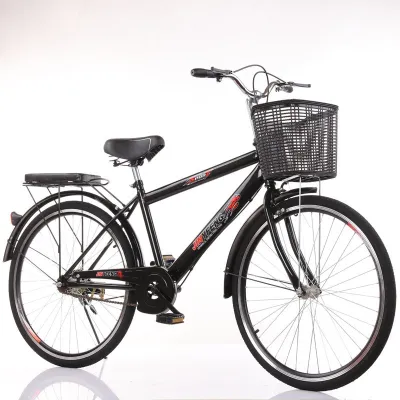
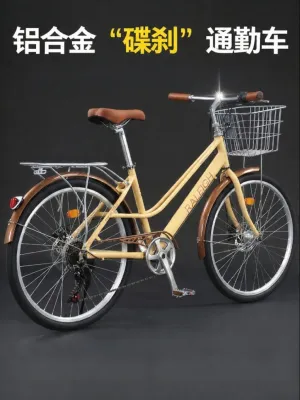
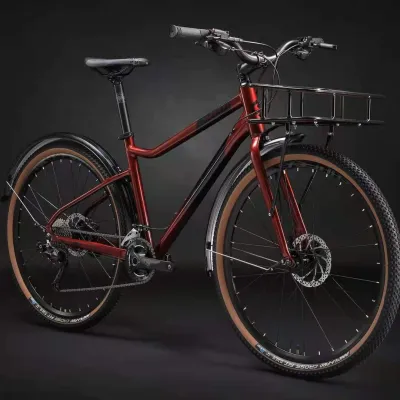
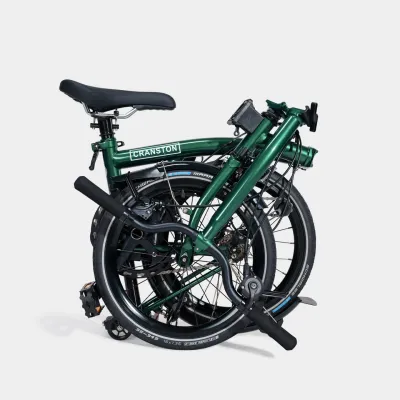
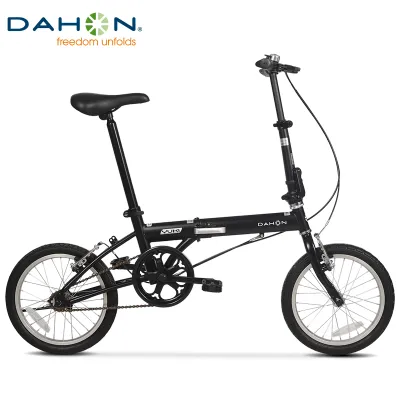
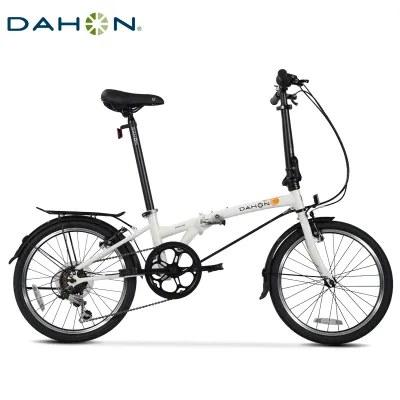
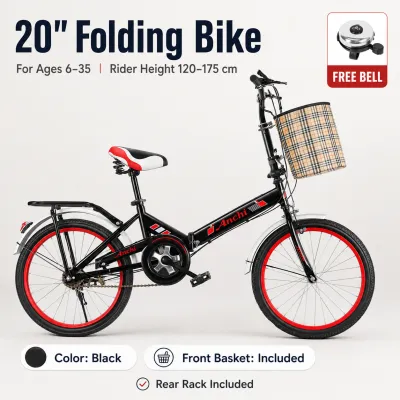
Prices are valid at publication and may change. Please refer to the product page for the latest price.
Commuting rarely involves riding empty-handed, so you must plan how to carry your daily gear. While backpacks are simple, they often cause discomfort and excessive sweating in hot, humid weather. Integrated front baskets, rear cargo racks, or frame-mounted panniers distribute weight more evenly, lowering the bike’s center of gravity and keeping your back cool during warm morning rides. Ensure the bike you choose has the necessary eyelets and mounting points to support these cargo solutions.
When planning your purchase, avoid spending your entire budget on the bicycle alone. A practical budget strategy involves allocating roughly 70% to 80% of your funds to the base bike and reserving the remainder for essential aftermarket upgrades. For example, if you set aside ₱20,000 for your commuter setup, spending ₱15,000 on the bicycle allows you to comfortably allocate ₱5,000 for a high-quality helmet, a secure lock, active safety lights, and wet-weather fenders.
Evaluate Core Specifications: Frame, Tires, and Drivetrain
The choice of frame material directly influences the bike’s weight, ride quality, and longevity in humid environments. Aluminum frames are highly popular because they are lightweight, stiff, and naturally resistant to rust, making them excellent for wet tropical climates. However, aluminum tends to transmit more road vibration to the rider. Steel frames, while heavier, offer a more forgiving, compliant ride that naturally dampens road chatter, though they require prompt paint touch-ups if scratched to prevent rust from developing.

Urban streets are often littered with debris, glass, and sharp stones that can easily puncture standard road tires. Look for tires with a width between 32mm and 45mm, which provide a larger volume of air to cushion your ride over uneven pavement. Ensure the tires feature built-in puncture-resistant belts beneath the tread. For wet-weather safety, select tires with grooved tread patterns designed to channel water away from the contact patch, maintaining reliable traction on slick asphalt.
Your local topography and willingness to perform maintenance should dictate your drivetrain choice. A single-speed setup is incredibly durable, lightweight, and virtually maintenance-free, but it is highly challenging to ride on steep inclines. Internal gear hubs house the shifting mechanism inside a sealed rear hub, protecting it from rain, mud, and salt air, which minimizes wear and allows you to shift gears while completely stopped. External derailleurs offer the widest gear range for hilly terrain and are easy to repair, but they require frequent cleaning, degreasing, and lubrication to prevent premature wear from road grit.
Prioritize Urban Features and Comfort Accessories
Reliable stopping power is non-negotiable when navigating unpredictable city traffic, especially during heavy downpours. Traditional rim brakes are lightweight and easy to adjust, but their stopping efficiency drops significantly when the wheel rims get wet. Disc brakes, whether mechanical or hydraulic, place the braking surface near the center of the wheel, keeping it cleaner and drier. Hydraulic disc brakes offer the most consistent stopping power with minimal hand effort, making them highly recommended for riders who commute year-round in wet conditions.
Arriving at your destination clean and presentable requires specific protective features on your bike. Full-coverage fenders are essential for blocking dirty road spray from coating your back and shoes during wet commutes. A chain guard covers the oily bicycle chain, preventing your trousers from getting caught or stained with grease. Some city bikes also feature skirt or coat guards over the rear wheel, which keep loose clothing from tangling in the spinning spokes.
An upright riding posture is a hallmark of a classic city bike, achieved through swept-back handlebars that allow you to sit tall. This position reduces strain on your lower back and wrists while keeping your head high so you can easily scan traffic. Pair this with a wider, supportive saddle designed for upright riding, where your weight rests on your sit bones rather than your hands. Finally, ensure the frame has dedicated mounting points for bright front and rear lights, which are critical for visibility during early morning commutes, evening rides, or sudden rainstorms.
Conduct a Pre-Purchase Test Ride and Fit Check
Before purchasing any city bike, perform a static fit check to ensure the frame size matches your physical proportions. Stand over the top tube of the bicycle with both feet flat on the ground; you should have at least one to two inches of clearance between your body and the frame to ensure safe mounting and dismounting. Next, sit on the saddle and reach for the handlebars. Your elbows should have a slight, relaxed bend, and you should be able to reach the brake levers comfortably without straining your back or shoulders.
A dynamic test ride is essential to evaluate how the bike handles under real-world conditions. Find a safe, quiet area to ride and test the steering responsiveness at both slow and moderate speeds to ensure the bike feels stable. Squeeze the brakes gently to test their modulation, ensuring they slow you down smoothly without grabbing suddenly or slipping. Shift through all the gears while pedaling to verify that the transitions are crisp, immediate, and free from hesitation.
Use the test ride to actively listen and feel for mechanical irregularities that indicate poor assembly or damaged components. Spin the wheels and look closely to ensure they run straight without wobbling or rubbing against the brake pads or frame. Listen for unusual clicking, grinding, or squeaking noises from the drivetrain, which often point to dry bearings or misaligned gears. Finally, hold the front brake and rock the bike forward and backward to check for any loose play in the headset or handlebars, which must be tightened before the bike is road-ready.
Frequently Asked Questions (FAQ)
Is a city bike suitable for long-distance weekend rides?
While city bikes excel at short-to-medium daily commutes, they are generally not optimized for long-distance weekend touring or high-speed group rides. The upright geometry that provides excellent visibility in traffic increases wind resistance, making sustained high-speed riding physically demanding. Additionally, the wider tires and heavier frames common to city bikes create more rolling resistance and inertia compared to dedicated road or gravel bikes. If you plan to regularly ride distances beyond 30 kilometers on weekends, a hybrid bike or a light touring bike may offer a more versatile balance of daily utility and weekend efficiency.
How do I determine the correct frame size without a professional fitting?
You can establish a reliable baseline frame size at home by measuring your inseam and comparing it to the manufacturer’s sizing chart. Stand flat against a wall in your riding shoes, place a book snugly between your thighs to mimic a bicycle saddle, and measure the distance from the top of the book to the floor. Use this measurement to ensure the bike’s standover height allows for safe clearance. Once you have the correct frame size, you can fine-tune the fit by adjusting the saddle height so your leg has a very slight bend at the bottom of the pedal stroke, and adjusting the handlebar angle to prevent wrist strain.
Community discussion
Share your experience or ask a question. Comments are reviewed before publication.