
Finding the perfect classic frame fixie requires looking beyond retro aesthetics to evaluate the frame’s material, geometry, and mechanical specifications. A well-chosen fixed-gear bicycle should match your local riding conditions, whether you are navigating congested city streets, dealing with tropical humidity, or seeking a responsive ride. By understanding how frame angles, tubing materials, and dropout designs interact, you can select a durable, safe, and comfortable bicycle that fits your body and riding style.
Frame Materials and Their Ride Characteristics
The material of your fixed-gear frame dictates how it handles road vibrations, how long it lasts, and how heavy the overall build will be. Classic fixies are traditionally built from steel, but modern options also include aluminum.
Chromoly steel (often labeled as CrMo or 4130 steel) is highly regarded for classic frames. It offers excellent vibration damping, which helps smooth out rough asphalt and uneven concrete surfaces common in urban environments. Chromoly is strong, relatively lightweight for steel, and has a long fatigue life, meaning it can withstand years of flexing without cracking.
Products mentioned in this guide

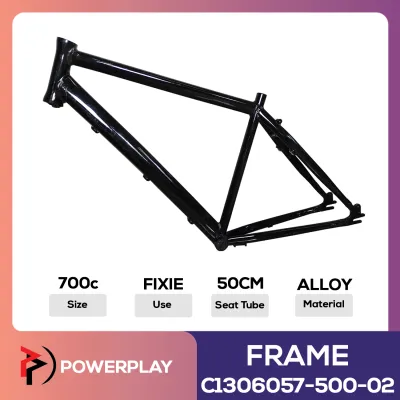
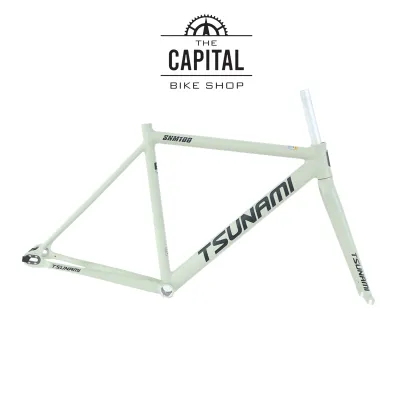

Prices are valid at publication and may change. Please refer to the product page for the latest price.
High-tensile steel (hi-ten) is a more budget-friendly option often found on entry-level classic frames. While it is durable and offers decent road-smoothing characteristics, it is significantly heavier and less resilient than Chromoly. This extra weight can make climbing steep flyovers or accelerating from a dead stop more tiring.
Aluminum frames provide a very different ride quality. They are lightweight and highly rigid, which translates to efficient power transfer when you pedal. However, this rigidity means aluminum does not damp road vibrations well, resulting in a harsher ride. In highly humid tropical climates, aluminum does have the advantage of being naturally resistant to rust, whereas steel frames require internal rust-prevention treatments or careful maintenance to prevent moisture damage.
To verify material claims when shopping, look closely at the frame decals. Reputable manufacturers usually place a tubing decal on the seat tube indicating the specific alloy used, such as “4130 Chromoly”. You can also perform a physical weight check; a bare Chromoly frame is noticeably lighter than a high-tensile steel frame of the same size. Always cross-reference these details with the official manufacturer specifications rather than relying solely on seller descriptions on an online marketplace.
Choosing between steel and aluminum involves balancing classic aesthetics with performance. Steel frames feature slim, elegant tubes and traditional lugged or neat TIG-welded joints that define the classic fixie look. Aluminum frames typically use thicker, oversized tubing and chunky weld beads, which lean toward a modern, aggressive aesthetic rather than a vintage silhouette.
Essential Geometry Features for a Classic Fixie
Frame geometry determines how a bicycle handles, how stable it feels at speed, and how your body is positioned while riding. Classic fixed-gear bikes generally fall into two geometric categories: aggressive track geometry and relaxed urban geometry.

Aggressive track geometry is derived from velodrome racing. These frames feature steep head tube and seat tube angles, often ranging from 74 to 75 degrees. This steepness positions your body forward and down, reducing wind resistance and making the steering incredibly fast and responsive. While excellent for quick maneuvers, this aggressive stance can put extra strain on your wrists, back, and neck during long daily commutes.
Relaxed urban geometry, sometimes called road or commuter geometry, uses shallower angles, typically around 72 to 73 degrees. This positions the rider in a more upright stance, distributing weight more evenly between the saddle and the handlebars. This setup is much more comfortable for navigating daily traffic, allowing you to keep your head up easily to watch for obstacles.
The wheelbase—the distance between the front and rear axles—and the chainstay length also play critical roles. A shorter wheelbase and tight chainstays make the bike feel agile, allowing for sharp, instantaneous turns. However, a very short wheelbase can lead to toe overlap, where your shoe hits the front wheel during tight, low-speed turns. A longer wheelbase provides greater straight-line stability, making the bike feel more planted when riding fast or descending hills.
Bottom bracket (BB) drop is the vertical distance between the center of the bottom bracket and an imaginary horizontal line connecting the wheel axles. Track-specific frames have a higher bottom bracket (less BB drop) to prevent the pedals from striking the banked track or the ground during sharp turns. Because a fixed-gear bike requires you to pedal continuously, even while cornering, a higher bottom bracket is essential for safety. If you plan to ride on streets with sharp corners, verify that the frame has sufficient pedal clearance to avoid dangerous pedal strikes.
Critical Frame Specs and Dropout Design
A true classic fixie requires specific frame hardware standards to ensure safety, ease of maintenance, and compatibility with fixed-gear components. The most critical of these is the rear dropout design.
Unlike geared bicycles that use a derailleur to keep the chain tight, a fixed-gear bicycle relies on moving the rear wheel backward or forward in the dropouts to set chain tension. A proper classic fixie frame must feature rear-facing horizontal track dropouts (often called track ends). These allow you to slide the rear axle back to achieve a perfectly tensioned chain and then bolt it securely in place. Avoid frames with vertical dropouts or forward-facing road dropouts, as they make setting and maintaining correct chain tension extremely difficult and potentially unsafe without specialized hubs.
The bottom bracket shell is another critical specification to verify. The most common and reliable standard for classic frames is the 68mm English threaded bottom bracket (BSA). This standard is widely supported, making it easy to find replacement bottom brackets and cranksets. When purchasing a frame, check the manufacturer specifications to confirm the threading type, as uncommon standards like Italian threading require specific, harder-to-find components.
The fork steerer tube standard determines what style of stem and handlebars you can install. Classic frames often use a 1-inch threaded steerer tube, which pairs with a traditional quill stem. This setup offers a clean, vintage look and allows for easy handlebar height adjustments. Modern classic frames may use a 1-1/8 inch threadless steerer tube, which uses an external stem clamped onto the outside of the tube. While threadless systems are stiffer and offer a wider selection of modern handlebars, they lack the traditional aesthetic of a slender quill stem.
Sizing and Fit Verification for Fixed-Gear Riding
Finding a frame that fits your body is essential for both comfort and control. On a fixed-gear bicycle, where you are constantly connected to the drivetrain, a poor fit can quickly lead to fatigue or joint strain.
When selecting a frame size, prioritize the top tube length over the seat tube length. The seat tube length can be easily compensated for by adjusting your seatpost height, but the top tube length dictates your reach to the handlebars. A top tube that is too long will force you to stretch out excessively, putting pressure on your lower back and hands. A top tube that is too short will make the cockpit feel cramped, potentially causing your knees to hit the handlebars when riding out of the saddle.
To check the standover height, stand barefoot or in your riding shoes flat on the floor, straddling the top tube of the frame. For a classic steel frame with a horizontal top tube, you should have at least one to two inches of clearance between your crotch and the metal tube. This clearance is vital for safe, sudden dismounts at traffic lights or during emergency stops on busy streets.
Always consult the manufacturer’s official geometry chart before making a purchase. Look closely at the stack (the vertical distance from the bottom bracket center to the top of the head tube) and reach (the horizontal distance from the bottom bracket center to the top of the head tube) measurements. Comparing these figures against a bicycle you already ride comfortably is the most reliable way to ensure the new classic frame will fit your body proportions perfectly.
Frequently Asked Questions (FAQ)
Can I convert a standard road bike frame into a classic fixie?
Converting an old road bike frame into a fixed-gear bicycle is a popular project, but it requires meeting specific mechanical conditions to be safe. The frame must have horizontal or semi-horizontal dropouts to allow for manual chain tensioning. Without these, you cannot achieve the precise chain tension required for a fixed-gear drivetrain.
Using a standard road frame with vertical dropouts for a fixie is highly discouraged. Because a fixed-gear bike relies on the chain to transmit back-pedaling force for braking and skidding, you cannot use a spring-loaded chain tensioner like those found on single-speed freewheel conversions. A spring-loaded tensioner will fail instantly under back-pedaling pressure, leading to a thrown chain and a complete loss of braking control.
Additionally, you must check the rear hub spacing of the frame. Standard track hubs use a 120mm spacing, whereas older road frames typically use 126mm or 130mm spacing. While you can sometimes cold-set (bend) a steel frame to accommodate a narrower hub, doing so requires precision to maintain wheel alignment. Always inspect the frame for rust, cracks, or structural damage before attempting any conversion.
Community discussion
Share your experience or ask a question. Comments are reviewed before publication.