
Choosing the right Decathlon weighted vest requires balancing your specific fitness objectives with the physical design, weight capacity, and structural fit of the gear. Adding external resistance to your torso alters your center of gravity, increases cardiovascular demand, and intensifies the load on your musculoskeletal system. To make an informed choice, you must evaluate how a vest manages weight distribution, permits heat dissipation in humid environments, and adjusts to your body shape during dynamic movements. Rather than simply purchasing the heaviest option available, selecting a vest that aligns with your current physical capacity and primary exercise modality ensures both training efficiency and long-term joint safety.
Understanding Your Training Needs and Load Requirements
Before browsing the shelves or online catalog, you must define the primary activity for which you will use the weighted vest. Different fitness disciplines place unique mechanical demands on your body, and a vest designed for static strength work may perform poorly during high-velocity cardiovascular training. For instance, bodyweight calisthenics, such as pull-ups, dips, and push-ups, require a vest that remains perfectly centered and does not restrict shoulder blade movement. Conversely, running, trail hiking, or high-intensity interval training (HIIT) demand a highly secure, low-profile fit that minimizes vertical bounce and lateral shifting during rapid directional changes.
Determining a safe starting weight is the next critical step in your decision-making process. A common guideline for progressive resistance training is to start with a load equivalent to approximately 5% to 10% of your total body weight, especially if you are new to weighted conditioning. Overloading your torso too quickly can compromise your form, leading to excessive shear stress on your knees, ankles, and lumbar spine. If your fitness goals involve gradual progression, look for customizable options where you can incrementally add weight as your tendon strength and core stability adapt, rather than committing to a heavy, non-adjustable model from day one.
Products mentioned in this guide
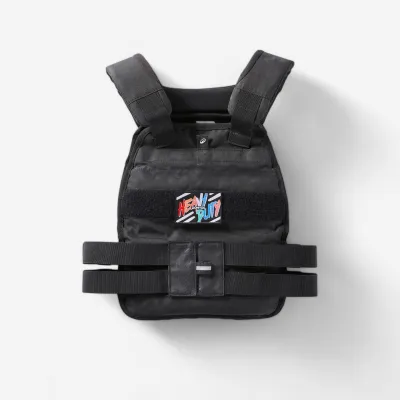
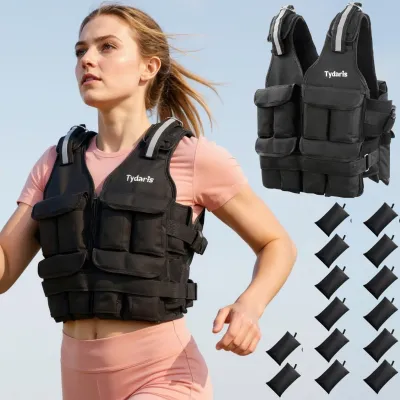
Prices are valid at publication and may change. Please refer to the product page for the latest price.
Load distribution is equally vital for preventing acute strain and long-term postural compensation. When you place weight on your torso, your nervous system automatically adjusts your posture to keep your center of mass over your feet. If a vest carries its weight primarily on the front or the back, you may find yourself leaning forward or hyperextending your lower back to compensate. This constant muscular tension can lead to premature fatigue in the erector spinae and hip flexors. Establishing a balanced baseline where the load is distributed equally between your chest and upper back helps maintain a neutral spine throughout your entire range of motion.
Key Specs to Check When Browsing Decathlon Weighted Vests
When evaluating the Decathlon range, the first specification to analyze is the weight mechanism itself, specifically comparing fixed-weight designs with adjustable systems. Fixed-weight vests are typically filled with sewn-in sandbags or metal shot, offering a streamlined, uniform shape that conforms closely to the body. These are highly convenient for consistent, single-intensity workouts but lack the flexibility needed for progressive strength building. On the other hand, adjustable vests feature dedicated pockets designed to hold removable iron plates, cast block weights, or modular sand packets. This design allows you to scale the resistance down for high-volume cardio sessions or scale it up for low-repetition strength sets, though it may result in a slightly bulkier profile.

Next, examine the structural elements that govern weight distribution and pressure management. Pay close attention to the width and padding of the shoulder straps. Narrow, unpadded straps tend to dig into the trapezius muscles under heavy loads, restricting blood flow and causing localized numbness during extended workouts. Look for wide, contoured shoulder straps lined with high-density foam to distribute the downward force across a larger surface area. Additionally, check the placement of the weight compartments; they should position the load high on the chest and upper back, close to your center of gravity, which minimizes the leverage the weight has against your spine.
In tropical climates like the Philippines, where high humidity and elevated temperatures are constant factors, material selection is paramount. A heavy, non-breathable vest can quickly trap body heat, leading to rapid dehydration, elevated heart rate, and heat exhaustion. Inspect the inner lining of the vest for moisture-wicking fabrics and open-mesh panels that facilitate airflow. The outer shell should consist of durable, abrasion-resistant materials such as high-denier polyester or ripstop nylon to withstand friction from ground contact, barbell knurling, or outdoor elements. Double-stitched seams and reinforced pocket closures are also essential indicators of a vest’s ability to hold heavy inserts securely over hundreds of training cycles.
Matching Vest Features to Specific Workout Goals
To streamline your selection, you can categorize Decathlon’s offerings based on how their specific features align with your primary training goals. For high-impact cardio, agility drills, and running, your absolute priority must be a snug, bounce-free fit. Vests designed for these activities typically feature elasticated side straps, secure hook-and-loop closures, or dual buckle systems that wrap tightly around your ribcage without restricting deep diaphragmatic breathing. These models often utilize flexible sand or steel-shot inserts that mold to your torso, preventing the hard, jarring impacts associated with rigid metal plates when your feet strike the ground. Keeping the total weight relatively low—often between 5kg and 10kg—allows you to maintain proper running mechanics while still elevating your metabolic demand.
If your focus is strength training, calisthenics, or gymnastics-style movements, your requirements shift toward higher weight capacities and maximum structural durability. Exercises like weighted pull-ups, dips, and squats benefit from a vest that can accommodate heavier loads, often ranging from 10kg to 20kg or more. For these movements, look for vests designed to hold heavy, compact steel plates. The compact nature of plate-loaded vests keeps the profile slim, preventing the gear from interfering with your arms during pull-ups or hitting your thighs at the bottom of a deep squat. Ensure the vest features heavy-duty, non-stretch straps and reinforced stitching around the weight pockets to handle the intense gravitational pull during explosive movements.
For hiking, rucking, and long-duration endurance walks, the ideal vest bridges the gap between a traditional backpack and a tactical training vest. Here, comfort over hours of continuous wear is the defining factor. Look for a model with thick, breathable shoulder padding and an integrated hydration bladder pocket if you plan to train outdoors in the heat. The outer material must be exceptionally rugged to resist tearing from tree branches or rough terrain. While a moderate, fixed weight is often sufficient for rucking, the vest must distribute this weight perfectly across your upper torso to prevent shoulder fatigue and allow you to maintain an upright, natural walking posture over several kilometers.
Fit, Comfort, and Safety Checks Before You Buy
Before finalizing your purchase or during your initial try-on session, performing a series of physical checks is crucial to ensure the vest fits your unique body shape. Begin by putting on the vest and adjusting the straps to secure it firmly against your torso. Take several deep, forceful breaths; the vest should feel snug enough to prevent shifting, but it must not restrict your chest from expanding fully. Next, perform a few basic movements: raise your arms completely overhead, bend forward to touch your toes, and perform a bodyweight squat. If the shoulder straps pinch your neck, rub against your collarbones, or slide off your shoulders during these movements, the vest’s cut may not be compatible with your frame.
Verify the functionality and security of all adjustment mechanisms, buckles, and straps. High-quality hook-and-loop fasteners should grip tightly without peeling away under tension, and plastic or metal buckles must click securely into place. It is highly recommended to choose a vest equipped with a quick-release mechanism or easily accessible buckles. In the event of sudden muscle cramping, extreme fatigue, or an accidental fall, you must be able to remove the vest rapidly without assistance. Avoid any model where the fastening straps are difficult to reach or require complex maneuvering to undo.
Finally, establish clear safety boundaries and stop conditions for your training sessions. Wearing a weighted vest increases the impact forces on your joints and places additional stress on your cardiovascular system. If you experience sharp joint pain, lower back discomfort, dizziness, shortness of breath, or numbness in your arms or hands, stop your workout immediately and remove the vest. These symptoms often indicate that the load is too heavy, the fit is restricting blood flow, or your posture has collapsed under the weight. Equipment is a tool to enhance your training, but it can never replace proper movement mechanics, progressive adaptation, and active listening to your body’s signals.
Frequently Asked Questions (FAQ)
Can I wash my weighted vest in a washing machine?
Before attempting to clean your weighted vest, always locate and read the manufacturer’s care label sewn inside the garment. As a general rule, you should never place a weighted vest containing fixed weights or metal plates directly into a washing machine, as this can destroy the machine’s drum and tear the vest’s fabric. For adjustable vests, remove all weight plates, sandbags, or steel blocks before cleaning. The empty outer shell can often be hand-washed in cold water with a mild detergent, or spot-cleaned using a damp cloth and a soft-bristle brush to remove sweat stains and dirt. Once clean, hang the vest to air dry completely in a well-ventilated area away from direct sunlight; never use a mechanical dryer, as high heat can degrade the elastic straps, synthetic fibers, and hook-and-loop fasteners.
How long should I wear a weighted vest during a workout?
When introducing a weighted vest to your routine, start with short intervals of 10 to 15 minutes during low-intensity movements to allow your joints and stabilizing muscles to adapt. As your core strength and endurance improve, you can gradually extend the wear time to match the duration of your standard workout, typically capping active use at 45 to 60 minutes. The safe duration depends heavily on the impact level of your exercise; high-impact running with a vest should be kept shorter to protect your joints, while low-impact walking or static strength training can be sustained for longer periods. Always monitor your body for signs of fatigue, such as a drooping posture or rounded shoulders, which serve as immediate indicators that it is time to remove the vest and rest.
Community discussion
Share your experience or ask a question. Comments are reviewed before publication.