
Quick Answer: Matching Your Practice to Thickness and Material
Choosing the right decathlon yoga mat depends on matching your specific practice style with your physical comfort requirements and the environment where you train. The ideal mat balances joint cushioning, stability, and surface traction to support your body safely through various poses.
For dynamic, sweat-inducing practices like Vinyasa, Power, or Ashtanga yoga, prioritize thin to standard-thickness mats (1.5mm to 4mm) made of natural rubber or polyurethane (PU). These materials provide the firm ground connection needed for balancing poses and offer superior slip resistance when wet.
For slow-paced, floor-based practices such as Yin, restorative yoga, or Pilates, look for thicker mats (5mm to 8mm or more) made of Thermoplastic Elastomer (TPE) or Nitrile Butadiene Rubber (NBR). These synthetic materials offer plush cushioning that protects sensitive joints, knees, and wrists from hard surfaces.
Products mentioned in this guide
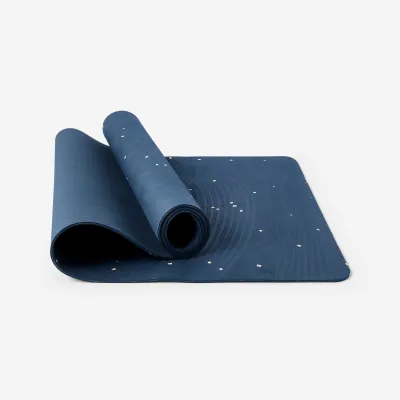
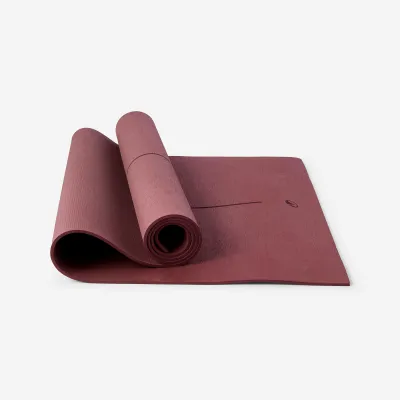
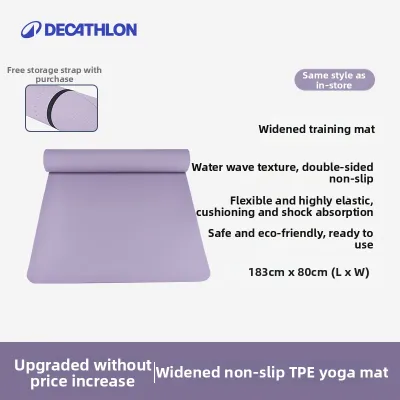
Prices are valid at publication and may change. Please refer to the product page for the latest price.
Because product lines, material blends, and exact specifications may be updated, always check the physical product tags at Decathlon stores or verify the details on their official website before making a final purchase. This ensures you get the exact specifications required for your training routine.
Understanding Decathlon Yoga Mat Materials
The material of your decathlon yoga mat dictates its grip, durability, weight, and how it responds to moisture. In a tropical climate like the Philippines, where high humidity and warm temperatures lead to increased sweating, choosing the right material is essential for maintaining a safe, slip-free practice.

Synthetic Options (PVC, TPE, and NBR)
Synthetic materials make up a large portion of entry-level and mid-range yoga mats, offering distinct balances of affordability, weight, and cushioning.
Polyvinyl Chloride (PVC) is a traditional material found in many budget-friendly entry-tier mats, typically priced under ₱1,000. PVC is highly durable, holds its shape well over years of use, and is exceptionally easy to clean. However, PVC is a non-porous, closed-cell material, meaning moisture sits on top of the surface. In humid conditions, sweat can quickly turn a PVC mat into a slippery surface, making it necessary to pair it with a microfiber yoga towel for safety.
Thermoplastic Elastomer (TPE) represents a popular mid-range option, often falling in the ₱1,000 to ₱2,500 price band. TPE is significantly lighter than PVC and natural rubber, making it an excellent option if you frequently commute to a studio. It is more eco-friendly to manufacture, recyclable, and hypoallergenic. TPE mats provide a textured, closed-cell surface that resists moisture absorption, making them hygienic and easy to sanitize, though they can degrade if exposed to high heat over long periods.
Nitrile Butadiene Rubber (NBR) is a thick, highly flexible synthetic rubber foam designed primarily for maximum impact absorption. NBR mats excel at providing a soft, pillowy barrier against hard tile or concrete floors, making them ideal for beginners, gentle stretching, and Pilates. The primary trade-off is that NBR is highly compressible and lacks lateral stability. Under heavy lateral pressure, the material stretches and compresses deeply, making it difficult to maintain balance during standing poses.
Natural and Premium Options (Natural Rubber and PU)
For dedicated practitioners, premium materials offer high performance, advanced traction, and superior structural density.
Natural rubber is harvested from sustainable plant sources and is highly favored for its exceptional density and natural traction. Unlike synthetic foams, natural rubber provides a heavy, grounded feel that prevents the mat from sliding or bunching on the floor during fast transitions. Its open-cell structure offers an inherent dry grip that keeps your hands and feet secure without relying on heavy surface texturing.
Polyurethane (PU) is commonly used as a top layer bonded to a natural rubber base on premium decathlon yoga mat models, which generally sit in the price tier over ₱2,500. PU is highly porous and absorbs moisture instantly, drawing sweat away from the surface to maintain a reliable wet grip. This makes PU-topped mats the premier choice for hot yoga sessions or practices in non-air-conditioned spaces during the hot season.
Because natural rubber and PU are premium organic and semi-synthetic materials, they require careful maintenance to prevent premature wear. Natural rubber contains latex, so individuals with latex sensitivities must verify product labels before handling. These mats are also sensitive to UV rays and harsh chemicals, requiring specific cleaning protocols to maintain their high-performance grip.
Decoding Thickness: From Travel to Extra Cushioning
Mat thickness directly influences your balance, joint comfort, and how easily you can transport your gear. Selecting the correct thickness requires analyzing where you practice and whether your body requires extra joint protection.
Thin Mats (1mm – 3mm) for Travel and Stability
Thin mats are designed for practitioners who prioritize portability and a direct, stable connection to the ground.
Mats in the 1mm to 2mm range are highly compressible and lightweight. Many travel-specific natural rubber mats can be folded into a compact square and packed into a backpack or suitcase, making them ideal for outdoor sessions or travel. They keep your feet close to the floor, providing maximum stability and preventing ankle wobble during complex balancing poses.
However, thin mats offer minimal shock absorption. Practicing on a 1.5mm mat over a hard concrete or tiled floor can place significant pressure on your knees, elbows, and tailbone. These mats are best suited for experienced yogis with strong joint alignment, or for use as a hygienic topper laid over a standard studio mat.
Standard Mats (4mm – 5mm) for Versatility
Standard-thickness mats represent the versatile middle ground of yoga gear, accommodating the widest variety of practice styles.
A 4mm or 5mm mat provides enough compression to cushion your joints during low-impact floor postures while remaining firm enough to keep you grounded during standing poses. This balance makes it the default recommendation for beginners who are still exploring different styles of yoga and need a single, reliable mat for both dynamic Vinyasa flows and slower Hatha classes.
These mats are easy to roll up, maintain their structural flatness on the floor, and are light enough to carry comfortably using a basic shoulder strap during daily commutes.
Thick Mats (6mm – 8mm+) for Joint Support and Restorative Practice
Thick mats are engineered specifically for comfort, deep relaxation, and therapeutic exercises.
Mats with a thickness of 6mm to 8mm or more use dense foam layers to isolate your body from cold, hard floors. They are highly beneficial for restorative yoga, Yin yoga, or somatic movement practices where you hold floor-based poses for several minutes at a time. The extra padding reduces pressure on the hips, knees, and spine, allowing your muscles to relax fully.
The primary disadvantage of thick mats is the loss of stability. The soft, deep cushioning allows your hands and feet to sink into the material, which compromises your balance during standing postures. This instability forces your ankles and wrists to work harder to maintain alignment, making thick mats less suitable for fast-paced or balance-heavy sequences.
Comparing Key Decision Dimensions
To simplify your selection process, the table below maps different practice styles to their ideal thickness ranges, materials, and primary benefits.
| Practice Style | Recommended Thickness | Recommended Material | Primary Benefit | Portability Level |
|---|---|---|---|---|
| Dynamic / Vinyasa Flow | 3mm – 4mm | Natural Rubber or TPE | High stability and dry grip | Moderate to High |
| Restorative / Yin / Pilates | 6mm – 8mm+ | TPE or NBR | Maximum joint cushioning | Low (bulky to carry) |
| Hot Yoga / Intense Sweat | 4mm – 5mm | PU Top / Rubber Base | Exceptional wet grip and absorption | Moderate |
| Travel / Commuting | 1mm – 2mm | Natural Rubber | Lightweight and foldable | Extremely High |
Using this comparison, you can apply a straightforward decision framework to narrow down your choices:
- Choose a thin, natural rubber mat if you prioritize absolute stability, need a strong connection to the floor for balancing poses, and want a mat that will not slide during dynamic transitions.
- Choose a thick, NBR or TPE mat if your practice consists mostly of floor poses, you experience joint discomfort on hard surfaces, or you focus on restorative routines.
- Choose a PU-topped mat if you sweat heavily, practice in non-air-conditioned spaces during hot seasons, or want to avoid using a separate yoga towel.
- Verify first if you have sensitive skin or latex allergies (avoid natural rubber), and check the product tag to see if the mat's weight fits your daily carrying method.
How to Verify and Test Your Mat Before Buying
Evaluating a decathlon yoga mat in person or immediately upon delivery helps ensure the texture, density, and weight match your expectations before you commit to a practice routine.
When visiting a physical store, take advantage of display models to perform a quick traction test. Place the mat on the floor, press your hands firmly onto the surface, and push forward as if entering a downward-facing dog pose. If your hands slide easily, the material may lack the grip required for your practice style, or it may require a breaking-in period to wash away manufacturing residues.
Be prepared for the natural scents associated with different materials. Unpacking a new natural rubber mat often releases a strong, earthy rubber smell. This is non-toxic and natural, but it can be distracting initially. To clear the scent, unroll the mat and let it air out in a shaded, well-ventilated indoor space for a few days before your first session. Synthetic mats may also have a mild plastic smell that dissipates quickly with proper airing.
Always read the physical product tags or the online product specifications to verify the exact material composition and weight. High-density materials like natural rubber are heavy; a 5mm natural rubber mat can weigh over 2.5 kilograms. If you plan to walk or take public transit to your studio, verify that the mat’s weight is manageable for your daily commute.
To preserve your mat’s performance, establish safe cleaning boundaries from day one. For regular maintenance, wipe the surface down after each session with a soft cloth dampened with clean water and a tiny drop of mild, non-oil-based soap. Never use harsh chemical sprays, bleach, or abrasive scrubs, as these can strip away the grip-enhancing layers. Avoid exposing any yoga mat—especially natural rubber or TPE—to direct sunlight for extended periods, as UV rays can dry out the material, cause cracking, and accelerate degradation. Never machine wash or submerge your mat unless the care label explicitly states it is safe to do so.
Frequently Asked Questions (FAQ)
Can I use a thick Decathlon mat for hot yoga?
Using a thick synthetic mat made of NBR or standard TPE is not recommended for hot yoga. These materials have a closed-cell surface that does not absorb moisture, causing sweat to pool on top and creating a highly slippery surface. Additionally, the soft, deep cushioning of a thick mat can feel unstable when your hands and feet are wet. If you require extra cushioning for hot yoga, it is safer to use a standard 4mm PU mat, or place a specialized non-slip microfiber yoga towel over a standard mat to absorb sweat and secure your grip.
How do I clean and maintain a natural rubber yoga mat?
Natural rubber requires gentle care to preserve its natural traction. Wipe the mat down after use with a soft cloth dampened with a mixture of water and a few drops of mild, oil-free soap. Avoid using vinegar, alcohol, or essential oils, as these can degrade the natural rubber over time. Always allow the mat to air dry completely in a cool, shaded, and well-ventilated indoor area before rolling it up. To prevent the material from cracking and losing its grip, store it away from direct sunlight and heat sources.
Community discussion
Share your experience or ask a question. Comments are reviewed before publication.