
To choose the right fish drying net, you must balance mesh density for pest protection with open airflow to prevent spoilage in high-humidity environments. A reliable net requires durable, UV-resistant materials to withstand intense tropical sunlight, a sturdy multi-tier frame that matches your typical catch volume, and secure, rust-proof closures to keep flies and debris out. Selecting the right gear depends on your specific drying location, whether you are hanging it on a coastal barangay patio, a suburban balcony, or a boat deck.
Decoding Mesh Size and Material for Airflow and Pest Control
In the tropical climate of the Philippines, drying fish (such as tuyo or daing) requires a delicate balance between ventilation and protection. The primary function of a fish drying net is to allow warm air to circulate freely around the fish while keeping out common pests like flies, wasps, birds, and blowing dust.
When evaluating mesh density, look for a weave that is tight enough to block tiny fruit flies and blowflies, yet open enough to let the breeze pass through. If the mesh is too dense, moisture gets trapped inside, raising the internal humidity and increasing the risk of bacterial spoilage before the fish can dry.
Products mentioned in this guide
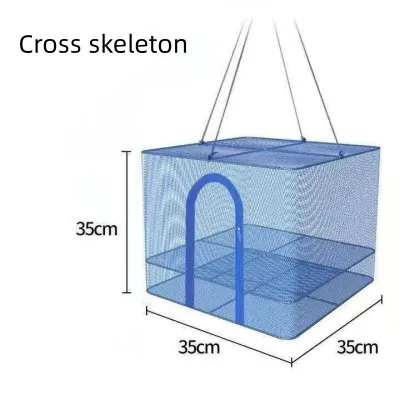
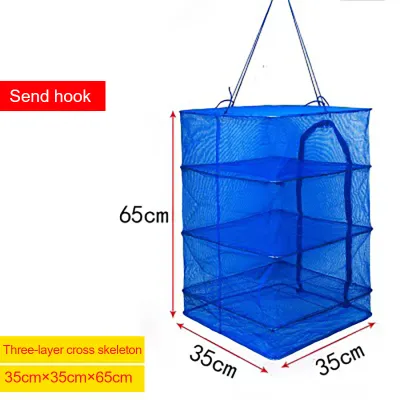
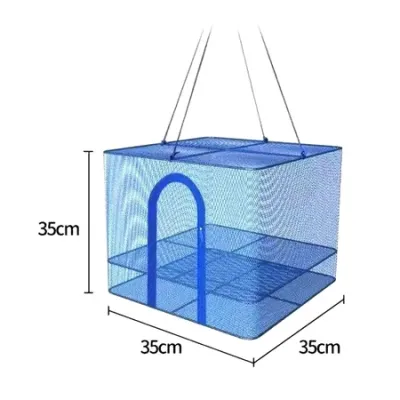
Prices are valid at publication and may change. Please refer to the product page for the latest price.
The material of the mesh determines how many seasons the net will last under intense tropical sun and salty coastal air. Look for heavy-duty polyethylene (PE) or nylon that has been treated for UV resistance. Untreated plastics degrade rapidly under direct sunlight, becoming brittle and tearing within a few weeks of outdoor exposure.
Additionally, check the product specifications to ensure the netting material is non-toxic and safe for direct food contact, as the fish will rest directly on the mesh floor. If you are drying salted fish, the salt can accelerate the corrosion of any metal components, so verify that the internal wire frames are fully coated in plastic or made of rust-resistant fiberglass.
To verify manufacturer claims regarding tear resistance and structural integrity before buying, inspect the edge binding and seam construction. High-quality nets feature double-stitched nylon webbing along the seams and corners to distribute tension evenly.
If you are purchasing from an online marketplace, look closely at user-submitted photos to check if the mesh appears loose, unevenly woven, or prone to fraying at the cut edges. A quick check of the product’s denier rating—which measures fiber thickness—can also give you a reliable indication of the mesh’s overall durability.
Evaluating Frame Design, Capacity, and Portability
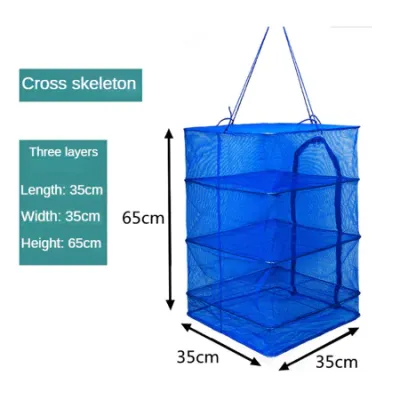
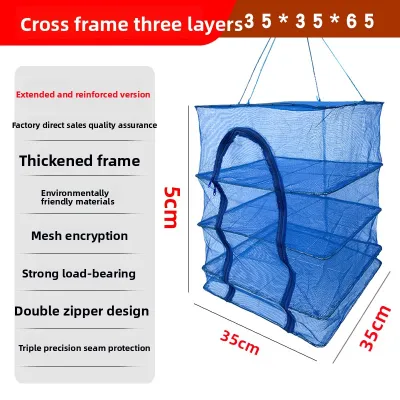
The physical structure of your fish drying net should match your typical catch volume and the space where you plan to hang it. Multi-tier collapsible designs, usually featuring three to five layers, are highly efficient because they maximize vertical space. This allows you to dry a large batch of fish on a small footprint, such as a narrow balcony or a compact backyard patio.

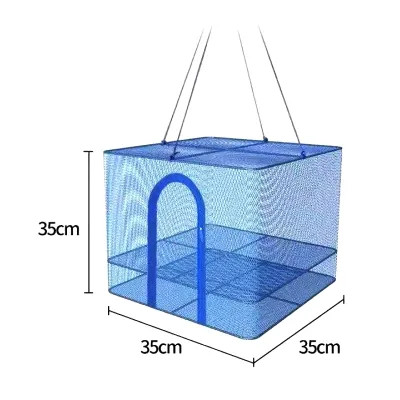
Single-layer nets are simpler and lighter, making them suitable for occasional recreational fishers who only need to dry a few fish at a time. They require less space to hang and are easier to manage if you are only processing a small catch.
Portability is another key factor, especially if you plan to take the net on fishing trips or store it away when not in use. Look for a collapsible frame that twists and folds down into a flat, compact disc. Many models come with an integrated carrying case or storage bag, which protects the mesh from snagging on other gear during transport.
Check the packed dimensions and weight to ensure it fits easily into your tackle bag or vehicle trunk without adding unnecessary bulk. A lightweight, compact design is especially useful if you need to carry your gear to remote coastal spots or campsites.
When using a multi-tier net, understanding weight capacity limits is essential for maintaining the structural integrity of the frame. Heavy catches can cause the wire hoops to sag, which forces the fish to slide toward the center, crowding them together and preventing even drying.
To prevent this, look for nets with reinforced horizontal support straps or rigid internal wire frames on each level. Always distribute your fish evenly across all tiers, placing heavier pieces on the bottom layers and lighter pieces on top to keep the center of gravity low and reduce strain on the hanging hardware and zippers.
Checking Closures, Hanging Hardware, and Maintenance Needs
A fish drying net is only as secure as its closures. Flies and other insects are highly persistent and will quickly find any small gap left by a faulty zipper or a poorly designed door. Look for nets featuring heavy-duty, dual-slide zippers that allow you to open individual compartments without exposing the entire net to the air.
Because these nets are frequently exposed to salt air and moisture, metal zippers are highly prone to rusting and jamming. Instead, opt for durable plastic or nylon zippers that slide smoothly and resist corrosion over long-term outdoor use.
The hanging mechanism must be robust enough to withstand sudden gusts of wind, which are common in coastal areas of the Philippines. Evaluate the strength of the top hanging loop, the quality of the attached rope, and whether it includes a secure carabiner or heavy-duty hook.
A single, centered hanging point is standard, but models with multiple attachment straps offer superior stability and prevent the net from spinning wildly or tilting in strong breezes. If you plan to hang the net in an exposed outdoor area, verify that the hanging hardware can be securely anchored to a beam, tree branch, or clothesline.
Hygiene is critical when processing seafood, making the ease of cleaning a vital consideration. Fish oils, scales, and salt residue will inevitably accumulate on the mesh, which can attract pests and cause unpleasant odors if not cleaned promptly.
Check the manufacturer’s care instructions to see if the net requires specific hand-washing routines or if it can be hosed down easily. Generally, a simple hand-wash using mild dish soap, warm water, and a soft brush is the safest way to remove fish residue without damaging the UV-resistant coating or warping the internal frame. Avoid machine washing unless the manufacturer explicitly states it is safe, as the spinning cycle can bend the internal wire frames out of shape.
Adapting Your Setup to Local Weather and Space Constraints
Operating a fish drying net in the Philippines requires constant attention to local weather patterns, which vary significantly between the dry season (tag-init) and the wet season (tag-ulan). High humidity levels slow down the evaporation process, meaning fish will take longer to dry and are more susceptible to spoilage.
During periods of high humidity, it is crucial to use a net with slightly larger mesh openings to maximize airflow, and to space the fish further apart on the drying tiers. In contrast, during the hot, dry months, you can utilize denser mesh nets with confidence, as the intense heat and dry air will rapidly draw out moisture.
Your physical living environment also dictates the best net design for your needs. If you live in an urban area with limited outdoor space, such as a condominium or a townhouse, a narrow, vertical multi-tier net is ideal. These designs can be hung from a balcony ceiling or a window frame, allowing you to utilize rising warm air currents while keeping the footprint minimal.
Ensure that the hanging location receives adequate sunlight and is shielded from direct wind blasts that could blow the net against walls or railings, which can damage the mesh. Proper clearance around the net is necessary to maintain a steady flow of fresh air.
Knowing when to pause the drying process or relocate your setup is essential for food safety. Sudden tropical downpours can quickly ruin a batch of semi-dried fish, introducing moisture that restarts bacterial growth.
If you observe dark clouds, a sudden drop in temperature, or a sharp rise in humidity, immediately move the drying net to a sheltered indoor area, such as a covered utility kitchen or a well-ventilated garage. Some collapsible nets feature quick-release hanging clips, making it easy to unhook the entire unit and bring it indoors without disturbing the fish arranged inside.
Frequently Asked Questions (FAQ)
How long does it typically take to dry fish using a net?
The time required to dry fish depends on several variables, including the thickness of the fish cuts, the preparation method (such as salting or marinating), ambient temperature, relative humidity, and wind speed. In ideal hot and dry conditions, small or thin fish can dry sufficiently within one to two days. To check if the fish is properly dried and safe for storage, look for visual and tactile cues: the flesh should feel firm, dry, and slightly leathery to the touch, with no soft or moist spots remaining near the bone.
Can I use a fish drying net for other types of food?
Yes, fish drying nets are highly versatile and can be used to dry a variety of other foods, such as herbs, chili peppers, sliced fruits, mushrooms, and vegetables. However, because fish leaves behind strong oils and odors, you must thoroughly clean and sanitize the net before switching between seafood and other food items. To prevent cross-contamination and off-flavors, wash the mesh thoroughly with food-safe sanitizing soap and allow it to dry completely in the sun before using it for non-seafood items.
Community discussion
Share your experience or ask a question. Comments are reviewed before publication.