
Selecting a fishing slingshot hunting set in the Philippines requires balancing mechanical power with extreme environmental resistance. Unlike standard dry-land models, an aquatic slingshot must withstand intense tropical humidity, brackish water, and high UV exposure while safely launching heavy, tethered projectiles. To choose the right set, you must prioritize corrosion-resistant frame materials, UV-stabilized elastic bands, secure reel systems, and hydrodynamic fish darts. Because this activity combines elements of archery, fishing, and target shooting, your safety depends on using specialized equipment, maintaining physical readiness, and respecting local environmental laws.
Quick Selection Guide: Key Features for Aquatic Slingshots
Aquatic slingshot sets are highly specialized tools designed to launch weighted darts connected to a fishing line, requiring a reel mount and a reinforced frame. Standard slingshots designed for clay or steel balls lack the structural reinforcement needed to handle the drag of a trailing line. Using standard dry-land ammunition in water is highly ineffective due to rapid deceleration and light refraction, and it poses severe ricochet hazards.
When evaluating a set, your primary focus should be on the synergy between the frame, the band, and the reel system. A high-quality set typically ranges in price from ₱1,500 to ₱5,000 on major online marketplaces, depending on material grade and included accessories. You should verify that all metal components are explicitly rated for marine or wet environments to prevent rapid degradation.
Products mentioned in this guide
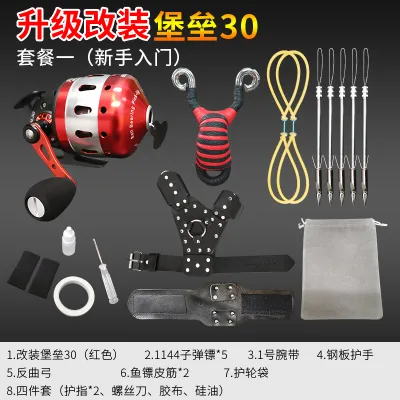
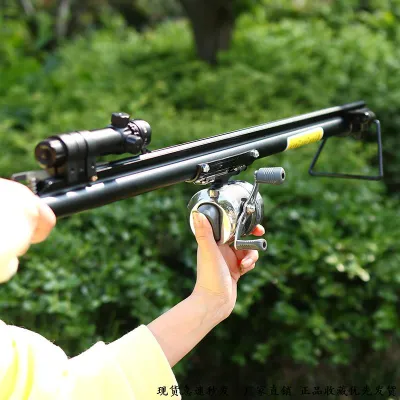
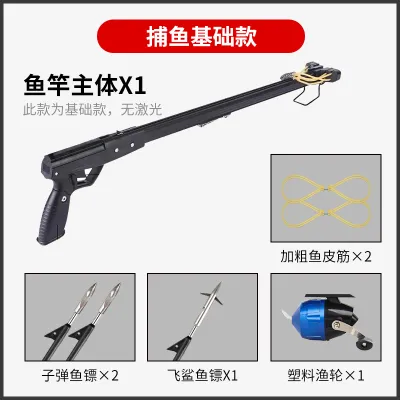
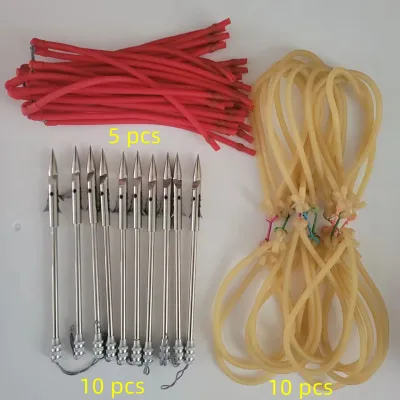
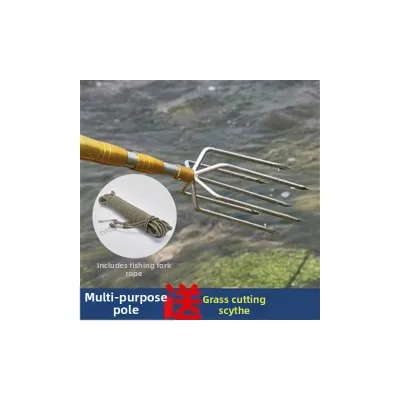
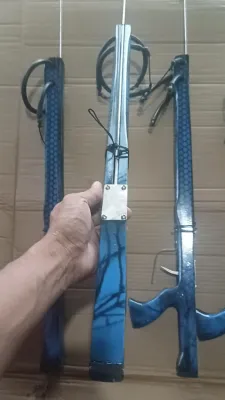

Prices are valid at publication and may change. Please refer to the product page for the latest price.
Carrying and storing your gear in tropical climates requires careful planning. Look for sets that include or are compatible with waterproof, hard-shell carrying cases to protect the elastic bands from humidity and heat when not in use. Additionally, ensure the total weight of the set matches your physical comfort, as a heavy setup can cause rapid wrist fatigue during extended wading sessions.
Before purchasing any gear, you must verify local municipal ordinances and national fisheries regulations. Slingshot fishing is subject to strict zoning laws in many Philippine coastal and inland waters. This guide provides objective evaluation criteria to help you assess different configurations, focusing on mechanical safety, material durability, and environmental suitability rather than specific brand endorsements.
Frame Materials: Choosing Rust-Proof Builds for Tropical Waters
The Philippine climate exposes gear to constant humidity, salt spray, and intense heat. Choosing the wrong frame material leads to rapid oxidation, structural weakening, and eventual mechanical failure. You must evaluate the frame material based on its chemical resistance to salt and brackish water.

Stainless Steel (304 or 316 Grade): Offers the highest durability and natural resistance to corrosion. However, it is heavier than alternative materials, which can increase hand fatigue during long outings. Always verify if the manufacturer specifies the grade of stainless steel, as lower-grade alloys can still rust in brackish conditions.
Anodized Aluminum Alloys: Provide an excellent balance of lightweight handling and strength. The anodized coating protects the underlying metal from oxidation, but any deep scratches that penetrate this protective layer will expose the aluminum to rapid corrosion in saltwater environments.
High-Density Polycarbonate or Resin: These materials are completely immune to rust and are highly lightweight. While modern engineered polymers are incredibly tough, they can degrade under prolonged exposure to direct tropical sunlight if they lack UV-stabilizing additives.
Ergonomics and grip design are critical when operating near water. Look for deeply textured, non-slip rubberized grips or moisture-wicking wraps. Smooth metal or polished plastic handles become dangerously slick when wet, compromising your aim and increasing the risk of the slingshot slipping out of your hand during a high-tension draw. Always check the manufacturer’s care instructions regarding post-use rinsing, as even the most rust-resistant frames require a fresh-water rinse after exposure to brackish or marine environments.
Elastic Bands: Balancing Power and UV Resistance
The elastic band is the engine of your slingshot, but it is also the component most vulnerable to the Philippine sun and water.
Natural Latex Tubes: Typically used in heavy-duty fishing setups because they offer excellent wall thickness and progressive power delivery. They are highly durable but are susceptible to UV degradation and ozone cracking over time.
Flat Latex Bands: Known for rapid retraction speeds and an easier draw cycle, making them popular for quick target acquisition. However, flat bands are thinner and wear out much faster than tubular bands when exposed to moisture and friction.
Synthetic and Polyurethane Bands: These materials offer superior resistance to UV rays, salt water, and ozone. While they do not degrade as quickly as natural latex, they often have a stiffer draw and lower energy transfer efficiency, meaning you may need a higher draw weight to achieve the same projectile speed.
Water resistance significantly slows down projectiles compared to air. To compensate for this drag, fishing bands are generally thicker and have a higher draw weight than target-shooting bands. However, you must match the draw weight to your physical capability; over-belting your slingshot can lead to unstable aiming, rapid fatigue, and unsafe releases.
Perform a rigorous pre-use inspection of your bands before every single session. Look closely for micro-tears near the attachment points, surface whitening (blooming), pitting, or a sticky texture. If you detect any of these signs, replace the band immediately. Do not rely on a fixed calendar schedule for replacements, as tropical heat and salt can degrade a band in a fraction of its expected lifespan.
Reels, Darts, and Lines: Essential Fishing Modifications
Converting a standard frame into a safe, functional fishing tool requires specialized, high-quality accessories that can handle the unique stresses of aquatic shooting.
Fish Darts vs. Standard Ammunition: Never use standard steel balls, lead shot, or rocks for fishing. These projectiles lack a line attachment point, suffer from extreme refraction deflection, and lose velocity almost instantly upon hitting water. Specialized fish darts are aerodynamic, heavy, and hydrodynamic, featuring barbed tips to secure the catch and rear attachment points for the line.
Reel Systems:
- Spincast Reels: Closed-face spincast reels are the most popular choice for beginners and intermediate users. They protect the line from tangling and allow for quick, push-button line release. Ensure the reel has a robust, corrosion-resistant drag system.
- Drum Reels: Simple manual drum reels are highly durable and have fewer moving parts to fail in sandy or salty environments, but they require manual line management and have shorter casting ranges.
- Line Wraps: Basic hand-wrap spools are lightweight and inexpensive but are slow to retrieve and prone to tangling.
Line Selection: Braided PE (polyethylene) lines are highly recommended due to their high tensile strength, thin diameter, and lack of stretch. Monofilament lines are more abrasion-resistant but have memory retention that can cause coils and tangles during a shot. Always use a heavy-duty shock leader (a thicker section of line or wire) near the dart to absorb the immense kinetic shock of the release and prevent snap-offs.
Safety Accessories and Compatibility: Ensure your setup includes a wrist brace or wrist support to distribute the draw weight and prevent wrist strain. A mechanical reel seat or mount must be securely bolted to the frame; verify that the mount is compatible with your specific slingshot model before purchasing. Loose mounts can cause the reel to shift mid-shot, leading to catastrophic line tangles or dangerous snap-backs.
Safety Boundaries and Legal Compliance in the Philippines
Slingshot fishing carries inherent risks that require strict discipline, proper technique, and a clear understanding of your equipment’s limits.
Personal Safety and Stance: Always wear polarized sunglasses. They are essential not only for cutting through water glare to spot fish but also for protecting your eyes from potential band snaps or projectile ricochets. Maintain a stable, wide stance on solid ground or secure boat decks; never attempt to draw or fire while swimming or wading in deep, unstable currents.
Equipment Limits: Slingshots are designed for small to medium-sized fish in shallow water. Attempting to target large, powerful fish can result in gear failure, broken lines, or the slingshot being pulled from your grip. If a fish is too large or the water is too deep, do not take the shot.
Legal and Ethical Boundaries: Before you head out, you must research and comply with the regulations of the Bureau of Fisheries and Aquatic Resources (BFAR) and local government units (LGUs). Many coastal areas, municipal waters, and inland lakes in the Philippines are designated as marine sanctuaries, protected habitats, or private fishing grounds where slingshot fishing is strictly prohibited. Always seek permission from barangay officials or local wildlife authorities if you are unsure of the rules.
Remember that specialized equipment is never a substitute for formal training, swimming proficiency, and sound environmental judgment. If water conditions are rough, visibility is poor, or local regulations are unclear, stop and consult a local professional or authority before proceeding.
Frequently Asked Questions (FAQ)
Can I use a regular hunting slingshot for fishing?
No, you should not use a standard hunting slingshot for fishing without proper modifications. Standard models lack the necessary reel mounts, line management systems, and structural reinforcements required to handle heavy fish darts and trailing lines. Attempting to shoot standard steel balls or stones into water is highly ineffective due to drag and refraction, and shooting a fish dart without a secure reel and line setup can lead to lost gear or dangerous ricochets.
How often should I replace the elastic bands in a tropical climate?
There is no fixed calendar schedule for band replacement, as factors like humidity, salt exposure, and intense UV rays in the Philippines accelerate wear. Instead, perform a thorough visual and physical inspection before every outing. Replace the bands immediately if you notice any micro-tears, surface whitening, cracks, loss of elasticity, or a sticky texture. Keeping spare bands in a cool, dark, and dry airtight container will ensure you always have a safe replacement ready.
Is slingshot fishing legal in all Philippine provinces?
No, legality varies significantly across different provinces, municipalities, and specific bodies of water. While some regions allow it as a form of recreational subsistence fishing, others classify it under restricted gear types or completely ban it within marine protected areas, national parks, and municipal sanctuaries. You must check with the local LGU, barangay hall, or the nearest BFAR office to verify the specific rules of the water body you plan to fish in.
Community discussion
Share your experience or ask a question. Comments are reviewed before publication.