
A foldable 3-wheel scooter offers an excellent balance of stability for young riders and portability for parents. When searching for the right model, focusing on adjustable ergonomics, intuitive steering systems, and robust folding joints ensures a safe and long-lasting purchase. Because specific models, prices, and inventory on online marketplaces change frequently, this guide focuses on the core selection criteria, safety checks, and physical dimensions you need to evaluate. By understanding these mechanical standards, you can confidently build a reliable shortlist and narrow down your options for your child’s next outdoor adventure.
Core Design Features: Steering and Folding Mechanisms
The steering mechanism of a 3-wheel scooter directly impacts how a child learns to balance and navigate their surroundings. Most modern 3-wheel scooters utilize a lean-to-steer system, which requires the child to shift their body weight left or right to curve the wheels. This design is highly recommended for developing motor skills, core strength, and coordination, as it mimics the natural leaning motion used when riding a bicycle later in life. It also inherently limits sharp, sudden turns, which significantly reduces the risk of the scooter tipping over forward or sideways at high speeds.
In contrast, some models feature direct steering, where the handlebars turn the front wheels directly, much like a traditional bicycle or tricycle. Direct steering can be easier for very young toddlers to grasp initially because the cause-and-effect relationship is straightforward. However, because direct steering allows for sharp angles, it requires closer supervision to ensure the child does not turn too sharply while moving quickly, which can cause the scooter to pitch forward.
Products mentioned in this guide
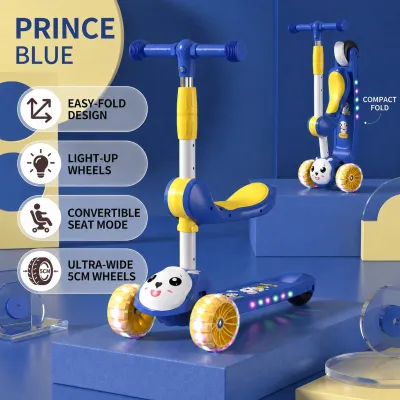
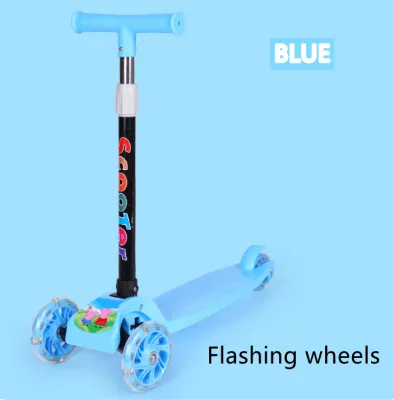
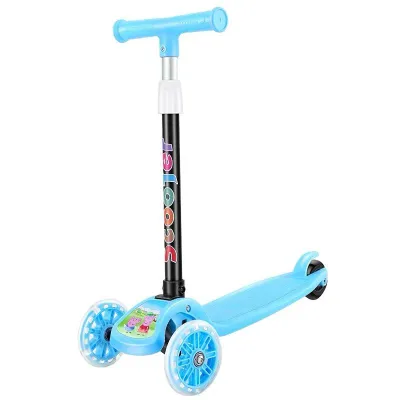
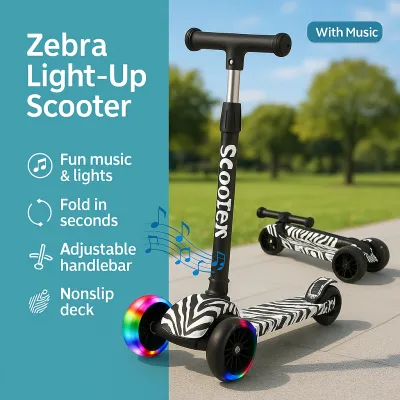
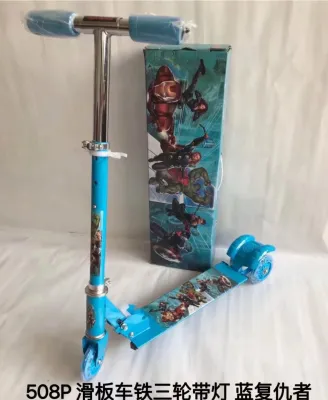
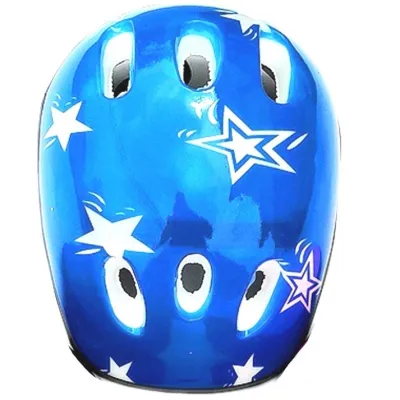
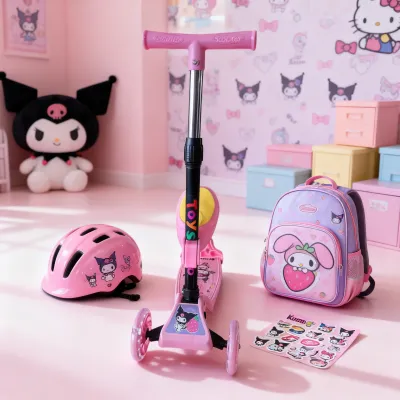
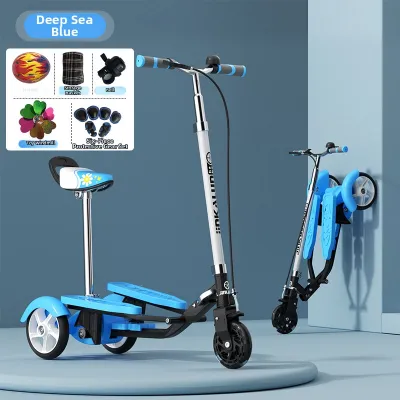
Prices are valid at publication and may change. Please refer to the product page for the latest price.
The folding joint is the mechanical heart of a portable scooter and must be evaluated for both ease of use and structural safety. Push-button folding systems are common and allow parents to collapse the stem with a single press, making them highly convenient for quick transitions. Another common design is the quick-release collar clamp, which uses a tension lever to lock the stem in place against the deck. Regardless of the style, a high-quality folding scooter should feature a secondary safety lock or physical pin that prevents the mechanism from accidentally disengaging while the child is riding.
When inspecting a scooter in person or immediately after unboxing an online purchase, you should physically test the stem for stability. Extend the handlebar to its highest setting, place one foot firmly on the deck, and gently wiggle the handlebars forward and backward. A high-quality stem should feel rigid, with minimal play or clicking sounds at the folding joint. If the stem wobbles excessively, the folding latch may not be engaging securely, which can compromise steering control and cause premature wear on the locking pins.
Sizing and Ergonomics: Matching the Scooter to Your Child
Selecting a scooter that matches your child’s physical proportions is essential for their comfort, safety, and riding posture. The most critical ergonomic measurement is the handlebar height, which should ideally align between the child’s waist and mid-chest when they are standing flat on the deck. If the handlebars are positioned too high, near the collarbone or chin, the child will struggle to leverage their weight for steering and faces a higher risk of facial injury during sudden stops. Conversely, handlebars that are too low force the child to hunch forward, shifting their center of gravity too far front and making them prone to falling over the front wheels.

To ensure the scooter remains usable as your child grows, look for a telescoping handlebar stem with multiple pre-set adjustment holes. These holes should be secured by a spring-loaded metal detent pin and reinforced by an external collar clamp. This dual-locking system prevents the handlebar from slowly sliding down under the child’s weight during a ride, which is a common issue with cheap, friction-only clamps.
The physical dimensions of the deck also play a vital role in stability and ease of use. A wider deck provides ample space for beginners to place both feet side-by-side when coasting, helping them feel more secure as they learn to balance. However, the deck should not be so wide that it interferes with the child’s kicking leg, as this can cause them to repeatedly strike their ankle against the side of the scooter.
Ground clearance is another key factor that directly affects how quickly a child tires during play. A lower deck height reduces the distance the child’s supporting leg must bend to allow the kicking foot to reach the ground. This lower center of gravity makes the scooter significantly more stable, easier to push, and simpler for a young child to step off of quickly if they lose their balance.
Before finalizing any purchase, always locate the manufacturer’s maximum weight capacity label, which is typically printed on a sticker on the underside of the deck or stamped into the frame. Do not rely on generalized age recommendations in product titles, as children of the same age can vary widely in weight. Verifying this certified limit ensures the deck will not sag, scrape against uneven pavement, or suffer structural failure under dynamic riding conditions.
Safety Indicators and Build Quality Checks
A thorough inspection of the scooter’s safety components and material quality is crucial before letting your child ride. The braking system is the primary safety feature, and for 3-wheel scooters, a rear friction foot brake is the most effective design. This brake consists of a spring-loaded mudguard over the rear wheel that slows the scooter down when stepped on. It is highly intuitive for young children, who naturally step backward when they feel off-balance, and it is far safer than hand brakes, which require hand strength that toddlers often lack. Ensure the underside of the brake pad is reinforced with a metal plate, as pure plastic brakes wear down rapidly and lose stopping power.
The material of the wheels determines how smoothly the scooter rolls and how well it grips the ground. High-quality scooters utilize polyurethane (PU) wheels, which offer excellent traction, shock absorption, and durability on concrete, asphalt, and outdoor tiles. Cheap models often use hard PVC or molded plastic wheels, which slide easily on smooth surfaces, transmit every vibration directly to the child’s joints, and wear down unevenly. If the manufacturer provides bearing ratings, look for ABEC-5 or ABEC-7 bearings, which ensure the wheels spin smoothly and consistently without binding.
The surface of the deck must feature reliable anti-slip properties to keep the child’s feet secure, especially in tropical climates where humidity or sudden rain can make surfaces slick. Look for decks with coarse, skateboard-style grip tape or deeply molded rubber patterns. Molded rubber is often preferred for younger children as it is gentler on bare skin during accidental falls and is much easier to wash clean when mud or dust accumulates.
Finally, examine the handlebar grips, which should be made of soft, durable rubber or thermoplastic elastomer (TPE) rather than cheap foam that tears easily. The grips must feature large, bulbous outer flanges at the ends. These raised edges prevent the child’s hands from slipping off the sides during sharp turns and act as protective bumpers for both the child’s fingers and the scooter frame when the vehicle is dropped onto hard pavement.
Building Your Shortlist: Pre-Purchase Verification
When compiling your shortlist of potential scooters on e-commerce platforms or in physical retail stores, practical ownership logistics should guide your final decision. Start by measuring the folded dimensions of the scooter and comparing them against your primary storage spaces, such as a car trunk, an entryway closet, or a small apartment balcony. Some folding mechanisms allow the stem to fold flat against the deck, while others require the stem to be completely detached. If you plan to carry the scooter frequently while walking back from local parks, look for models that feature a trolley mode, allowing you to pull the folded scooter behind you on its front wheels.
Given the humid and dusty conditions typical of outdoor play areas in the Philippines, mechanical parts will inevitably experience wear and tear over time. Before purchasing, check the availability of local after-sales support, warranty terms, and replacement parts such as wheels, bearings, and rear brake pads. Choosing a brand that actively stocks replacement parts locally is far more sustainable and cost-effective than being forced to discard an entire scooter due to a single worn-out wheel.
When evaluating options on online marketplaces, look past the overall star rating and read the specific feedback left by other parents. Pay close attention to reviews that mention long-term durability, specifically searching for terms like “wobble,” “stuck latch,” or “broken brake.” If multiple reviews indicate that the folding mechanism became difficult to operate after exposure to dust or that the wheels wore down within a few weeks of use on concrete, it is a clear sign to look for a more robust alternative.
Frequently Asked Questions (FAQ)
When should a child transition from a 3-wheel to a 2-wheel scooter?
A child is typically ready to transition to a 2-wheel scooter when they have developed strong dynamic balance, core stability, and the confidence to steer without tipping. A clear physical indicator is when they can easily coast on a 3-wheel scooter for long distances with their kicking foot held off the ground, or when they begin to find the turning radius of a 3-wheel design too restrictive for their speed. This transition usually occurs between the ages of 5 and 7, but it depends entirely on the child’s individual coordination, balance, and riding frequency rather than a strict age limit.
How do I maintain the folding mechanism to prevent it from getting stuck?
To keep the folding mechanism operating smoothly, perform regular visual inspections to clear out any dirt, sand, or small pebbles that can accumulate in the hinge during outdoor play. After riding on dusty paths or damp pavements, wipe the folding joint clean with a dry cloth to prevent moisture from causing rust. If the latch begins to feel stiff or squeak, consult the user manual and apply a small amount of manufacturer-approved dry lubricant, such as a silicone spray, directly to the moving joints. Avoid using heavy wet oils or grease, as these substances attract grit and dust, which can grind down the internal locking pins and cause the mechanism to jam permanently.
Community discussion
Share your experience or ask a question. Comments are reviewed before publication.