
To choose the right golf putting mat for home practice, you must evaluate the surface material for roll consistency, select dimensions that fit your physical space, and choose features like slopes or ball returns that match your skill level and training goals. Practicing your short game at home is one of the most effective ways to lower your scores, especially when tropical downpours or intense midday heat in the Philippines make heading to the local golf course impractical. A dedicated putting mat provides a controlled environment to build muscle memory and refine your stroke.
Surface Material and Roll Consistency
The material of your putting mat directly dictates how realistically the ball rolls compared to an actual green. Most high-quality mats utilize nylon or synthetic turf fibers. Nylon surfaces are typically smoother and offer a highly consistent, fast roll, while synthetic turf mimics the texture and grain of natural grass. When browsing options on online marketplaces, check the product specifications for green speed indicators, which are often compared to Stimpmeter ratings ranging from medium to fast.
Beyond the fiber type, pay close attention to the backing material and seam construction. A heavy, non-slip rubber or latex backing is essential to keep the mat flat and secure on tiled, wooden, or polished concrete floors common in local homes. You should also observe the surface grain; some mats are designed to roll faster in one direction and slower in the other, allowing you to practice different green speeds. Inspect user photos or manufacturer details to ensure the seams along the edges are securely stitched to prevent fraying over time.
Products mentioned in this guide
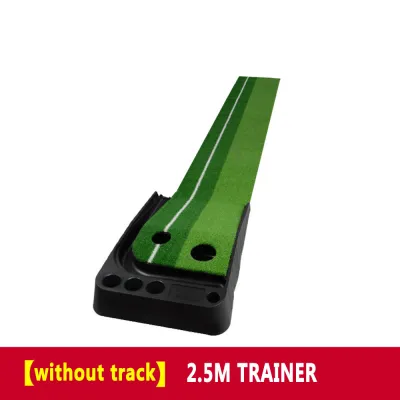
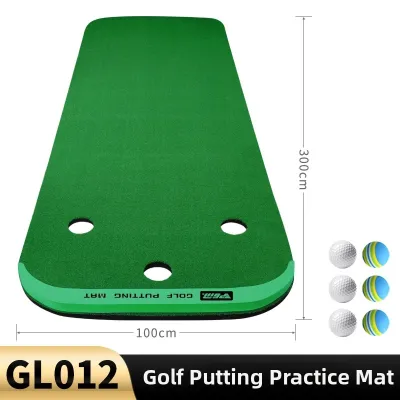
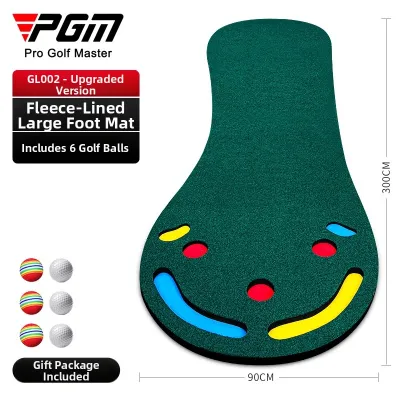
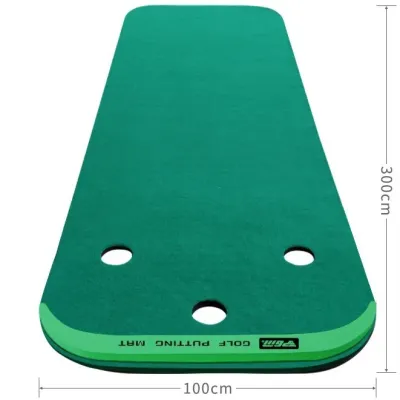
Prices are valid at publication and may change. Please refer to the product page for the latest price.
Size, Thickness, and Storage Requirements
Selecting the right dimensions requires balancing your personal practice goals with the physical constraints of your living space. Short mats, typically around 8 feet in length, are excellent for mastering alignment and short, critical putts. If you want to practice distance control and lag putting, look for mats that extend to 10 or 15 feet. Keep in mind that longer mats require a dedicated, clear pathway in your room to lie completely flat.

The width and base thickness of the mat also play a major role in your setup. A wider mat allows you to stand directly on the surface while putting, ensuring your feet are level with the ball for a realistic stance. Thicker foam bases provide excellent cushioning and help smooth out minor imperfections in your subfloor, but you must verify that the edges taper down gradually to prevent tripping hazards. Finally, consider how you will store the mat when it is not in use. Check the manufacturer’s care instructions to see if the mat can be rolled up tightly without creasing, as folding a mat can cause permanent ridges that ruin the ball’s trajectory.
Slope, Contours, and Practice Difficulty
Deciding between a flat mat and one with built-in slopes depends on your current skill level and what you want to achieve. Flat mats are the gold standard for mastering a square clubface and ensuring your ball starts on the intended line. On the other hand, mats with built-in ramps or elevated cups introduce an uphill challenge, forcing you to commit to a firm, positive stroke to reach the back of the cup.
For a more dynamic practice session, some mats offer adjustable slope inserts or foam wedges that you can slide underneath the turf. This feature allows you to simulate left-to-right or right-to-left breaks, mimicking real course conditions. Before purchasing, verify that the mat’s layout supports your specific stance. If you are a left-handed golfer, or if you share the mat with family members of different dominant hands, ensure the standing area and target lines accommodate both orientations comfortably.
Ball Return Systems and Target Cups
Auxiliary features like ball return systems can significantly increase your practice efficiency by returning the ball directly to your feet. Gravity-fed return systems use a simple wooden or plastic track along the side of the mat, requiring no electricity or batteries. Motorized return systems use an electronic sensor to pop the ball back to you, which is highly convenient but adds weight, requires a power source, and may increase the overall price point.
The design of the target cup also influences how you train. Standard-sized holes are great for building confidence, while smaller, precision-sized holes force you to focus on a highly specific target line. Some mats feature open cups that allow a ball struck with too much speed to roll right past, giving you realistic feedback on your pace. If you prefer structured practice, look for mats that feature printed distance markers and alignment guides, which help you track your backswing length and face angle.
Building Your Shortlist: Matching Specs to Your Practice Goals
To build your shortlist, align the specifications of each mat with your skill level and household environment. If you are a beginner, prioritize a flat mat with clear, printed alignment aids to build a consistent stroke. Advanced players should focus on realistic green speeds, customizable slope inserts, and smaller target cups to challenge their precision. If you have limited space or a budget of around ₱2,000 to ₱5,000, a simple, high-quality rollable mat without a bulky frame often provides the best value.
Before making your final decision on an ecommerce platform, carefully review the seller’s return policies and warranty terms. Pay close attention to whether the warranty covers issues like surface creasing, bubbling turf, or the degradation of the rubber backing under humid tropical conditions. Choosing a mat with clear care instructions and a solid return policy ensures your investment will withstand daily practice sessions for years to come.
Frequently Asked Questions (FAQ)
Can I use a regular carpet or rug instead of a dedicated putting mat?
Standard household carpets and rugs rarely match the tight weave and low friction of a golf green. They often cause the ball to bounce, skid, or veer off course due to thick fibers and uneven wear, making it difficult to develop a consistent feel for distance.
How do I remove creases if the mat arrives folded or tightly rolled?
To flatten a creased mat, try reverse-rolling it tightly with the turf facing outward and letting it sit for a few hours, or place heavy, flat objects like books along the creases. Avoid using high-heat appliances like irons or hair dryers directly on the synthetic fibers, as extreme heat can melt the turf or warp the rubber backing.
Do I need to use real golf balls on a putting mat?
Using real golf balls is highly recommended because their weight and dimple pattern provide the exact roll physics and auditory feedback you experience on the course. Lightweight foam or plastic practice balls do not roll with the same momentum and can mask flaws in your stroke.
Community discussion
Share your experience or ask a question. Comments are reviewed before publication.