
Selecting the right hydrofoil surfboard is a balancing act between your personal progression and the physical reality of your local breaks. Unlike traditional surfing, where a single board can often cross over into various conditions with minor adjustments, hydrofoiling introduces a complex set of hydrodynamic variables. To make the correct choice, you must evaluate your foil-specific skill level, analyze the behavior of the waves you ride, and understand how board volume, mast length, and wing profiles interact. This guide provides a structured framework to help you navigate these specifications, ensuring you purchase equipment that supports your progression rather than hindering it.
Assess Your Current Skill Level and Foiling Experience
Traditional surfing proficiency does not automatically translate to immediate success on a hydrofoil surfboard. Even if you have spent decades carving on shortboards or cruising on longboards, your first day on a hydrofoil will reset your learning curve. Traditional surfing relies on rail-to-rail contact and water resistance to control speed and direction. Foiling, by contrast, relies on subtle shifts in pitch, roll, and yaw while flying entirely above the water’s surface. Approaching this sport with a beginner’s mindset is the safest and most efficient way to progress.
For those entering the sport, beginner-oriented gear is designed to prioritize maximum stability, early lift, and forgiveness. When you are learning, you need a board that remains stable while paddling and provides a steady platform before you take off. This requirement typically translates to a larger, more buoyant board paired with a low-aspect front wing. Low-aspect wings have a shorter wingspan and a thicker profile, which generates lift at very low speeds. This slow-speed lift gives you more time to find your footing and balance before the board rises out of the water, making your initial flights much more manageable.
Products mentioned in this guide
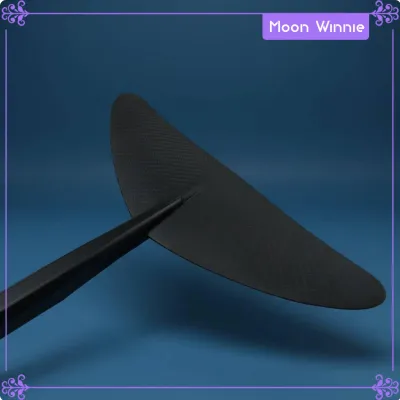
Prices are valid at publication and may change. Please refer to the product page for the latest price.
As you transition into an advanced rider, your equipment needs shift toward maneuverability, speed, and pumping efficiency. Advanced foilers require minimal swing weight to execute sharp turns and pump across flat sections of water to connect multiple waves. To achieve this, experienced riders use smaller, lower-volume boards that offer less aerodynamic resistance. They pair these boards with high-aspect front wings, which are long, narrow, and thin—resembling the wings of a glider. High-aspect wings reduce drag significantly at higher speeds, allowing you to glide effortlessly and maintain momentum with minimal physical effort.
To choose the right setup, you must base your gear decisions strictly on your foil-specific hours in the water rather than your overall years of traditional surfing. If you have logged fewer than twenty hours of active flight time on a foil, you are still developing your muscle memory and should remain on a stable, high-volume beginner setup. Investing in high-performance, low-volume gear too early will only result in frustration, prolonged learning curves, and an increased risk of injury.
Evaluate Your Local Wave Conditions
The physical characteristics of your local surf spots play a decisive role in determining which hydrofoil setup will perform best. Waves vary wildly in terms of power, speed, and shape, and a foil that excels in one environment may be completely unrideable in another. Before purchasing any gear, you must analyze the typical breaks where you plan to spend most of your water time.

Small, soft, or mushy waves are highly common during off-season periods or in sheltered bays. Because these waves lack raw power and steep faces, they do not provide enough natural push to easily get a low-volume board up to foil speed. In these gentle conditions, you need a high-lift foil system and a board with extra volume to assist with paddling. A larger front wing with a generous surface area will capture the subtle energy of a slow-moving swell, allowing you to rise onto the foil and fly even when the wave itself is barely breaking.
Steep, fast, or hollow waves present the opposite set of challenges. When riding powerful reef breaks or strong winter swells, the wave generates immense energy and rapid acceleration. If you attempt to ride these waves with a large, high-lift beginner foil, the system will generate too much upward force too quickly. This causes the foil to violently breach the surface of the water, leading to an immediate loss of control and a dangerous wipeout. These powerful conditions demand lower-volume boards and smaller, high-aspect foils that slice cleanly through the water, allowing you to maintain control at high speeds and execute precise, high-speed turns.
Water depth and bottom contours are equally critical factors to consider, especially when navigating coastal areas in the Philippines. Shallow reef flats restrict your choice of mast length; riding a long mast over a shallow reef risks striking the coral, which can damage your equipment and cause severe injury. Conversely, deep-water breaks provide a safe environment for longer masts, allowing you to pump continuously across deep channels without the risk of grounding. Always check local surf forecasts, observe the physical depth of the break at low tide, and note the wave shape before finalizing your equipment choices.
Match Board Volume and Foil Dimensions to Your Profile
Once you have assessed your skill level and local wave conditions, you can begin matching specific board volumes and foil dimensions to your physical profile. Finding the right balance between these measurements is key to ensuring your gear behaves predictably in the water.
Board volume, measured in liters, must be scaled relative to your body weight and your paddling ability. For prone paddle-in foiling, beginners should generally look for a board that provides a positive buoyancy margin, typically calculated as your body weight in kilograms plus 20 to 40 liters. This extra volume keeps the board high in the water, making it easier to paddle into weak waves and providing stability during the transition from paddling to standing. Advanced riders, who have mastered the art of pumping and generating their own speed, can subtract volume—often riding boards that are 15 to 30 liters below their body weight—to minimize swing weight and maximize responsiveness.
Mast length selection is a trade-off between stability and vertical clearance. Shorter masts, ranging from 60 to 75 centimeters, lower your center of gravity, making them highly stable and much easier to control during your first flights. They are also the safest choice for shallow waters where reef strikes are a constant concern. Longer masts, measuring 80 centimeters or more, are designed for deep water and advanced riding. A longer mast gives you more room to tilt the board during aggressive turns and provides a larger buffer zone to prevent the foil from breaching when riding over choppy water.
Front wing surface area determines the amount of lift and drag your system generates. Large front wings, measuring 1500 square centimeters or more, provide massive low-speed lift, making them ideal for heavier riders, beginners, and small-wave environments. Smaller front wings, typically under 1400 square centimeters, require more speed to lift off but offer incredible top-end speed, glide, and maneuverability in powerful waves.
To help guide your selection, refer to the general sizing matrix below. Always verify these ranges against the specific manufacturer’s guidelines, as wing profiles and board shapes can alter how these dimensions perform.
| Skill Level | Wave Conditions | Recommended Board Volume | Front Wing Surface Area | Recommended Mast Length |
|---|---|---|---|---|
| Beginner | Small, Mushy Waves | Rider Weight + 20L to 40L | 1500 cm² – 2000 cm² | 60 cm – 70 cm |
| Intermediate | Mixed / Average Swell | Rider Weight (approx. 1:1 ratio) | 1200 cm² – 1500 cm² | 70 cm – 80 cm |
| Advanced | Steep, Hollow Waves | Rider Weight minus 15L to 30L | 800 cm² – 1200 cm² | 80 cm – 90 cm |
Essential Safety Gear and Pre-Ride Checks
Hydrofoiling carries unique physical risks that set it apart from traditional surfing. The foil itself consists of sharp carbon or metal wings and a rigid mast moving at high speeds, which can act as a hazard during a wipeout. Because of these inherent dangers, safety gear and meticulous equipment maintenance are non-negotiable components of every session.
Mandatory protective gear must be worn every time you enter the water. A high-quality marine helmet is essential to protect your head from impacts with the board or foil during a fall. An impact vest provides flotation and cushions your torso against hard falls on the water or direct contact with your gear. Additionally, when foiling over shallow reef breaks, wearing thick-soled reef boots is highly recommended to protect your feet from both sharp coral and the trailing edges of your foil wings.
Before every session, perform a thorough pre-ride equipment check. Inspect all connection screws on the mast, fuselage, and wings to ensure they are tightened to the manufacturer’s specified torque. Vibrations during flight can cause loose screws to back out, leading to catastrophic equipment failure in the water. Verify that your mast plate is perfectly aligned and securely mounted to the board’s track boxes. Visually inspect the board, mast, and wings for any hairline cracks, delamination, or structural stress marks. If you detect any damage, do not ride; consult the manufacturer or a qualified repair professional.
Lineup etiquette requires a massive safety buffer when hydrofoiling. Because a foil board travels much faster and turns differently than a traditional surfboard, you must never ride in crowded lineups or near swimmers. Give other water users a minimum safety distance of at least three times your mast length plus your board length. Always yield the right of way to traditional surfers, as your ability to glide allows you to catch waves much further out.
Establish strict stop conditions for your sessions. Abort your ride immediately if the wind shifts dangerously, if the water depth drops below your mast length plus a safe clearance margin, or if the lineup becomes congested. Equipment can never replace proper ocean training, local knowledge, and sound personal judgment.
Frequently Asked Questions (FAQ)
Can I use a regular surfboard for hydrofoiling?
No, you cannot safely mount a hydrofoil to a standard surfboard. Traditional surfboards are not designed to withstand the extreme torsional forces and upward leverage generated by a hydrofoil mast. Attempting to mount a foil to a standard surfboard without specialized internal reinforcement will likely result in the track box ripping completely out of the foam, causing catastrophic structural failure, loss of your expensive foil, and potential physical injury. Dedicated foil boards are built with high-density foam stringers, reinforced track boxes, and extra layers of carbon fiber or fiberglass specifically designed to distribute these high-stress loads safely.
How do I maintain my hydrofoil after riding in saltwater?
Saltwater is highly corrosive and can cause galvanic corrosion, particularly where stainless steel screws meet aluminum components. After every session, thoroughly rinse your entire foil setup with clean, fresh water to remove salt deposits. At least once a week, completely disassemble the mast, fuselage, and wings. Clean the screw threads and apply a marine-grade anti-corrosion paste or grease, such as Tef-Gel, to all screws before reassembling them. Always consult your manufacturer’s specific care instructions for approved lubricants and recommended maintenance intervals to keep your equipment operating safely.
Community discussion
Share your experience or ask a question. Comments are reviewed before publication.