
Selecting the right multi-function bench requires balancing structural safety, adjustment versatility, and the physical constraints of your workout space. A high-quality bench serves as the foundation of your home strength training, allowing you to perform incline, flat, and decline exercises safely. In tropical climates like the Philippines, you must also pay close attention to sweat-resistant upholstery and rust-resistant frame coatings to ensure your equipment survives high humidity. By focusing on key specifications rather than aesthetic appeal, you can invest in a bench that supports your long-term fitness progression without compromising on safety.
A multi-function bench, often referred to as a Flat-Incline-Decline (FID) bench, is highly versatile because it adapts to various movement patterns. Unlike a fixed flat bench, an adjustable model allows you to target specific muscle groups from different angles, such as the upper chest during incline presses or the shoulders during seated overhead presses. However, this added versatility introduces moving parts, hinges, and locking pins that must be carefully evaluated to ensure they can withstand heavy loads over years of consistent use.
Define Your Training Goals and Space Limits
Before browsing online marketplaces or local fitness equipment retailers, you must clearly define your primary training style. If your routine revolves around basic dumbbell exercises, a standard adjustable bench with a moderate weight capacity will likely suffice. However, if you plan to integrate your bench with a heavy barbell squat rack or power cage, you will need a model with a narrower profile and a much higher weight rating to handle both your body weight and the loaded barbell safely.
Products mentioned in this guide
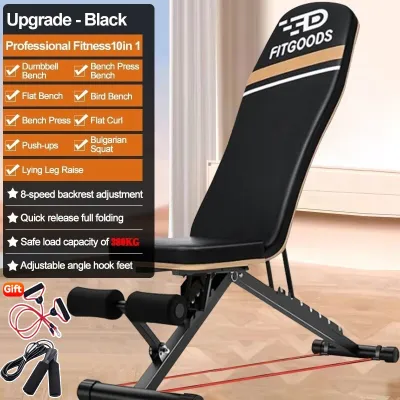
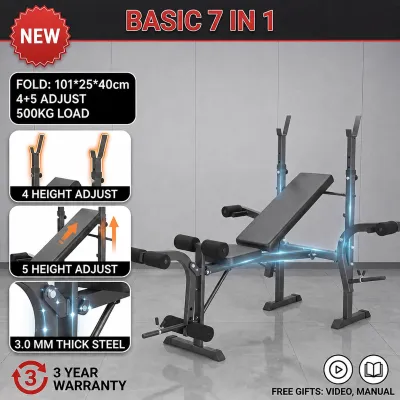
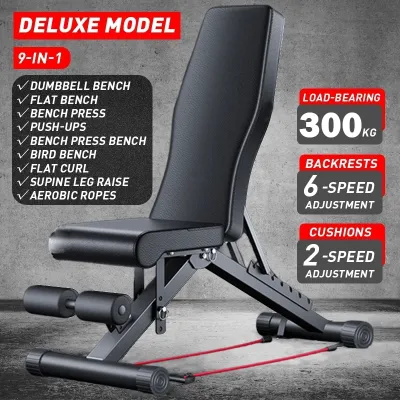
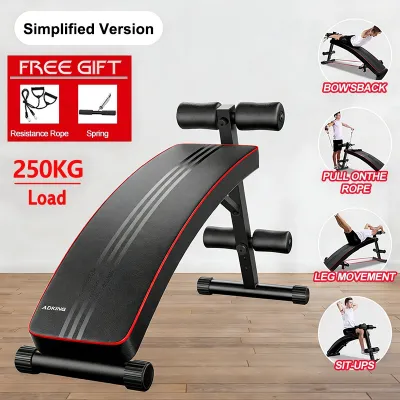
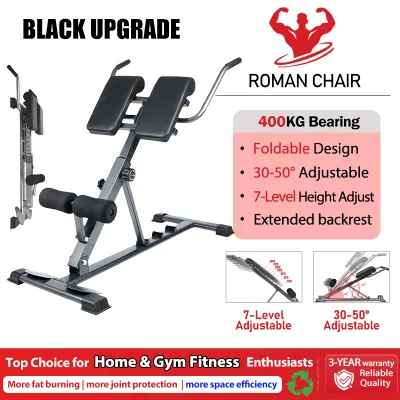
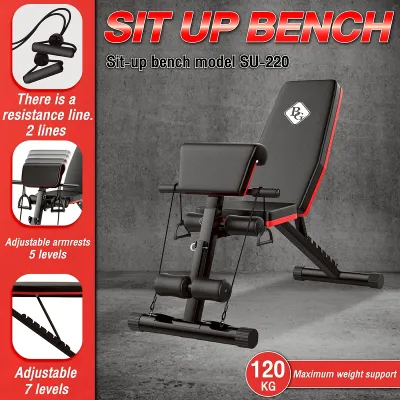
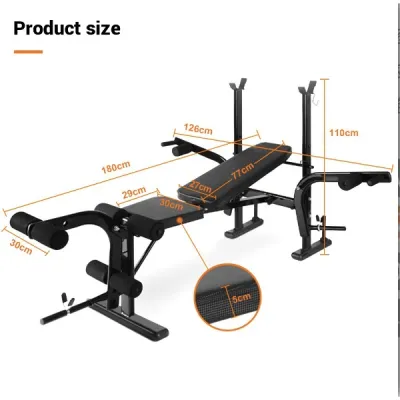
Prices are valid at publication and may change. Please refer to the product page for the latest price.
Physical space is another critical constraint that dictates your choice of equipment. You must measure your designated workout area carefully, keeping in mind that you need at least 60 centimeters of clear clearance on all sides of the bench to move dumbbells and position your body safely. Do not forget to check your ceiling height, especially if you plan to perform seated overhead shoulder presses; a high-incline position elevates your starting height, and a low ceiling or a spinning ceiling fan can quickly become a safety hazard.
You must also decide whether your bench will have a permanent home or if it needs to be put away after every workout. In compact living spaces, such as condominiums or shared apartments, a stationary commercial-grade bench can quickly become an obstacle. For these environments, a bench that folds flat or stands vertically is highly advantageous, whereas a dedicated garage gym can easily accommodate a heavier, non-folding model that prioritizes maximum structural rigidity.
Evaluate Backrest Adjustability and Angle Positions
The core utility of a multi-function bench lies in its ability to transition smoothly between different angles. You should look for a bench that offers a wide range of backrest positions, typically ranging from a decline of -15 degrees to a near-vertical incline of 85 degrees. Having at least five to six distinct angle options allows you to fine-tune your positioning for exercises like incline chest presses, shoulder presses, and chest-supported rows.

While the backrest angle is crucial, the seat pad adjustment is equally important for maintaining proper form and safety. When you perform exercises at a steep incline, a flat seat pad will cause your hips to slide forward, arching your lower back excessively and placing unwanted stress on your spine. An independently adjustable seat pad that tilts upward by 10 to 30 degrees cradles your pelvis, locking your body securely into position so you can focus entirely on executing the lift.
You must also inspect the physical mechanism used to adjust and lock these angles. The two most common designs are the ladder (or spine) system and the pop-pin system. Ladder systems use a steel arm that drops into pre-cut slots along the frame; they are incredibly fast to adjust but require deep, precisely machined slots to prevent the arm from slipping out under load. Pop-pin systems require you to pull a spring-loaded knob, slide the tube to the desired hole, and let the pin snap into place; this design is exceptionally secure but can take slightly longer to adjust during fast-paced workouts.
Verify Frame Stability and Weight Capacity Limits
Structural integrity is the most critical safety factor when selecting strength training equipment. You must look for the manufacturer’s stated maximum weight capacity and understand how it is calculated. This limit represents the combined weight of the user and the weights being lifted; for example, if you weigh 85 kilograms and plan to bench press 100 kilograms, your bench must have a certified capacity of at least 185 kilograms. To ensure a safe training environment, it is wise to choose a bench with a capacity that exceeds your maximum projected lifting weight by at least 50 kilograms.
The thickness and quality of the steel frame determine how much abuse the bench can handle without bending or warping. High-quality benches are typically constructed from heavy-gauge steel, such as 11-gauge or 14-gauge tubing. You should inspect the welding points along the frame; clean, continuous welds indicate superior craftsmanship and structural strength, whereas patchy, uneven welds are common failure points under heavy loads.
Frame stability also depends heavily on the design of the base and the stabilizer feet. A bench with a wide rear stabilizer bar is much less likely to wobble or tip sideways when you are racking heavy weights or performing unilateral movements like single-arm rows. Look for wide, non-slip rubber end caps on the feet; these not only protect your flooring from scratches but also grip the ground firmly to prevent the bench from sliding backward during intense leg-drive maneuvers.
Assess Attachments and Accessory Compatibility
Many multi-function benches feature front-end receiver tubes that accept various training attachments, transforming a simple bench into a multi-purpose workout station. Common add-ons include leg developer attachments for leg extensions and lying leg curls, preacher curl pads for isolated bicep training, and foot rollers to secure your ankles during decline sit-ups or presses. If you have limited space and want to perform full-body workouts with a single piece of equipment, these attachments offer excellent utility.
However, you must verify how these accessories connect to the main frame. Cheap benches often use simple friction-fit knobs that allow the attachment to wobble or sway during use, which can disrupt your balance and ruin your exercise mechanics. Look for connection points that utilize heavy-duty locking pins or threaded pull-pins that tighten down completely to eliminate any play or movement within the receiver tube.
Additionally, you must consider how the bench interacts with other equipment you already own or plan to buy. If you intend to use a barbell, ensure the bench’s overall width and height are compatible with your squat stand or power rack. Some benches feature built-in uprights to hold a barbell, but these are often fixed in width and may not accommodate standard Olympic-sized barbells comfortably, making independent benches and racks a more versatile choice for long-term progression.
Evaluate Padding Comfort and Storage Convenience
The quality of the padding directly affects both your comfort and your stability during heavy lifts. Soft, mushy foam padding may feel comfortable when you first sit down, but it will quickly bottom out under heavy loads, leaving your shoulders and spine pressing directly against the hard wooden or metal backing. Look for high-density, firm foam padding that supports your body weight without compressing completely, as this firmness provides a solid platform to push against during heavy presses.
In the tropical climate of the Philippines, high humidity and intense sweat can rapidly degrade low-quality gym equipment. You must inspect the upholstery material to ensure it is made from thick, sweat-resistant vinyl that is easy to wipe clean after each session. Double-stitched seams are highly recommended, as single-stitched edges tend to fray and split open when exposed to moisture and friction over time.
For home gym users who must share their workout space with daily living activities, storage convenience is a major priority. Benches designed with built-in transport wheels and a convenient grab handle allow you to roll the equipment out of the way with minimal effort. If you need to store the bench in a closet or under a bed, verify the folded dimensions provided by the manufacturer to ensure it fits your designated storage space perfectly before making a purchase.
Your Multi-Function Bench Selection Checklist
When comparing different models online or in a physical showroom, having a structured checklist ensures you do not overlook critical safety and usability features. Use the following guidelines to evaluate your options:
- Weight Capacity: Ensure the combined user and load capacity is at least 200 to 250 kilograms for general fitness, or higher if you plan to lift heavy barbells.
- Frame Material: Look for 11-gauge or 14-gauge steel construction with clean, continuous welds and a wide stabilizer base.
- Adjustment Range: Verify the bench offers flat, incline, and decline settings, with an independently adjustable seat pad.
- Locking Mechanism: Choose a secure ladder or pop-pin system that locks firmly into place without any noticeable play.
- Padding and Vinyl: Select firm, high-density foam covered in thick, double-stitched, sweat-resistant vinyl.
- Portability: Check for transport wheels, a grab handle, or a folding frame if you need to store the bench after use.
- Warranty and Returns: Confirm the manufacturer offers a solid warranty on the structural frame (ideally several years) and a clear return policy in case of shipping damage or manufacturing defects.
Frequently Asked Questions (FAQ)
Can I use a multi-function bench for heavy barbell powerlifting?
While a high-quality multi-function bench is excellent for general strength training and bodybuilding, it is generally not recommended for competitive powerlifting or lifting near-maximal barbell loads. Multi-function benches feature multiple moving parts, hinges, and adjustment pins that introduce small amounts of play and represent potential failure points under extreme stress. For heavy powerlifting, a dedicated, solid flat bench with a welded frame and no moving parts offers superior stability and safety. Always check the manufacturer’s explicit weight limits and safety warnings, and never attempt heavy barbell lifts without a sturdy squat rack, safety spotter arms, or a human spotter nearby.
How do I maintain the adjustment pins and moving parts?
To keep your multi-function bench operating smoothly and safely, you should perform regular visual inspections of all moving parts. Check the adjustment pins, pop-pins, and hinges for any signs of wear, metal shavings, or deformation, and tighten any bolts that may have loosened from regular use. In humid environments, wipe down the frame and upholstery with a dry cloth immediately after every workout to prevent sweat from causing rust or degrading the vinyl. If the adjustment pins or hinges begin to stick, apply a small amount of manufacturer-approved lubricant, such as silicone spray or light machine oil, directly to the moving joints as specified in your user manual.
Community discussion
Share your experience or ask a question. Comments are reviewed before publication.