
A no electric treadmill is an increasingly popular choice for fitness enthusiasts living in modern Philippine condominiums. These self-powered machines eliminate the need for a dedicated electrical outlet, allowing you to position your workout station anywhere from a breezy balcony to a tight corner in your living room. By removing the motor, manual treadmills also reduce the risk of electrical component failures caused by tropical humidity or sudden power fluctuations.
However, transitioning to a manual treadmill involves more than just swapping a plug for willpower. Because your own leg power drives the belt, the physical dynamics, space requirements, and noise profiles differ significantly from traditional motorized gym equipment. Understanding these differences is key to selecting a machine that fits both your fitness routine and your building’s community guidelines.
Is a Manual Treadmill Right for Your Condo Routine?
Unlike motorized treadmills that pull the belt underneath your feet at a constant speed, a manual treadmill requires you to actively push the belt backward with every step. This self-powered design means the machine only moves when you move. Starting the belt from a complete standstill requires a noticeable burst of lower-body strength, engaging your calves, hamstrings, and glutes far more intensely than a motorized deck.
Products mentioned in this guide
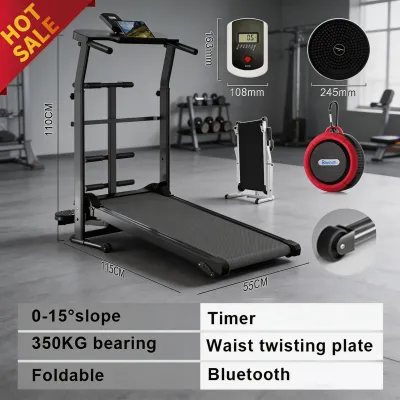
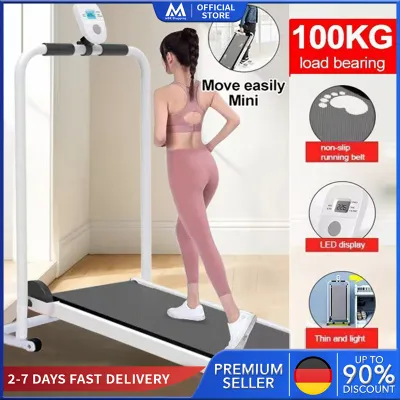
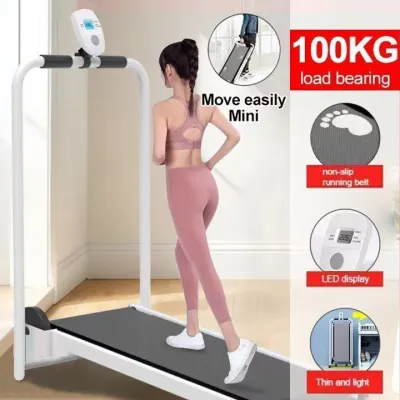
Prices are valid at publication and may change. Please refer to the product page for the latest price.
This user-driven mechanism naturally alters the intensity of your workouts. If you want to speed up, you simply run faster; if you need to slow down, the belt decelerates in response to your stride. This makes non-electric treadmills exceptionally well-suited for high-intensity interval training (HIIT) and short, explosive sprints. However, maintaining a steady, moderate pace for long-distance cardio can feel significantly more exhausting on a manual deck, requiring greater mental focus and physical endurance.
For condo dwellers, noise and vibration are critical factors to consider before purchasing any fitness equipment. Without an electric motor humming, a manual treadmill is inherently quieter in terms of ambient mechanical noise. However, the physical force required to drive the belt can lead to heavier footstrikes. In typical Philippine high-rise buildings constructed with concrete floor slabs, these impacts can easily translate into low-frequency vibrations that travel down to the unit below. Managing this impact through proper running form and dampening accessories is essential to maintaining good relations with your neighbors.
Space and Portability: Sizing Your Equipment for Small Rooms
Condo living in urban centers demands careful spatial planning. Before purchasing a treadmill, you must distinguish between its active running footprint and its folded storage dimensions. The active footprint is the total floor area the machine occupies while in use, which must include a safe clearance zone around the perimeter.

When evaluating a treadmill’s size, look closely at the folding mechanism and transport features. Many flat-belt manual treadmills are designed to fold almost completely flat or upright, allowing you to slide them under a bed or stand them against a wall when your workout is finished. Check for built-in transport wheels at the base of the frame. These wheels are crucial for rolling the unit across laminated wood, vinyl, or tile flooring without scratching the surface or straining your back.
Another often-overlooked dimension is ceiling height clearance. When you step onto a treadmill deck, you are elevated several inches off the floor. If your manual treadmill features a fixed incline or if you are using a curved model with a high deck profile, your head will be significantly closer to the ceiling. Ensure you measure your condo’s floor-to-ceiling height, factoring in your own height and the deck’s elevation, to prevent any accidental contact with low-hanging light fixtures, ceiling fans, or concrete beams during vigorous exercise.
Curved vs. Flat-Belt Manual Treadmills: Which Fits Your Goals?
Non-electric treadmills generally fall into two distinct design categories: curved slat-belt models and flat-belt models. Each design serves a different style of training and imposes different spatial demands on your condo.
Curved manual treadmills feature an ergonomic, upward-curving deck made of individual rubberized slats. This curved shape leverages gravity and the biomechanics of your stride; as your foot strikes the front of the curve, your body weight helps pull the belt downward and backward. This design promotes a natural, low-impact running gait and is highly favored by competitive runners and athletes for sprint training. However, curved treadmills are heavy, bulky, and rarely foldable. They require a permanent spot in your home gym and can be difficult to maneuver through narrow condo hallways.
Flat-belt manual treadmills, on the other hand, feature a traditional straight deck. They rely on magnetic resistance flywheels to help smooth out the belt movement and often include manual incline adjustments to increase workout difficulty. Because they lack the heavy slat construction of curved models, flat-belt treadmills are much lighter, highly portable, and significantly more affordable. They are ideal for walking, light jogging, and space-constrained homes, though they do not offer the same fluid running experience as their curved counterparts.
In terms of financial investment, flat-belt models are highly accessible, often fitting comfortably within a modest home gym budget. Curved slat-belt treadmills represent a premium investment, with prices reflecting their commercial-grade construction and advanced biomechanical benefits. Balancing your budget against your fitness goals and available square footage will quickly point you toward the correct category.
Pre-Purchase Checklist: Verifying Specs and Condo Rules
Before purchasing a treadmill from an online marketplace or visiting a local fitness showroom, you must verify several technical specifications and administrative rules to avoid costly mistakes.
First, examine the maximum user weight capacity of the treadmill. For manual treadmills, it is wise to choose a model with a weight limit that exceeds your actual body weight by at least 15 to 20 kilograms. Because you must actively push against the deck to move the belt, the frame and internal bearings experience higher peak forces than they would on a motorized machine. A generous weight margin ensures the belt glides smoothly and prevents premature wear on the resistance mechanisms.
Second, consult your condominium’s property management office regarding rules on heavy fitness equipment. Some high-rise developments have strict guidelines regarding floor load capacities, especially for older structures or loft-style units. Additionally, ask about designated delivery hours and elevator access. Heavy, non-folding curved treadmills may not fit into standard passenger elevators, requiring manual transport up stairwells, which can incur extra handling fees or logistics challenges.
Finally, carefully review the warranty terms and the availability of local customer support. In the humid Philippine climate, metal components are susceptible to corrosion if not properly treated, and moving parts can wear down over time. Ensure the seller offers a reliable warranty on the frame and the belt, and verify that they have a local service center or technician network that can source replacement parts or perform repairs without requiring you to ship the heavy unit back overseas.
Safe Setup and Daily Maintenance in Compact Spaces
Setting up your manual treadmill correctly is essential for your safety, the protection of your property, and the comfort of your neighbors.
Always place a high-density, anti-vibration rubber mat underneath your treadmill. This mat serves multiple purposes: it prevents the machine from shifting or “creeping” across slick tile or vinyl floors during intense workouts, protects your flooring from scratches and sweat, and acts as a crucial sound barrier. The dense rubber absorbs the downward impact of your footsteps, significantly reducing the structure-borne noise that penetrates the concrete floor slab into the apartment below.
Routine maintenance is straightforward but must be performed diligently to keep a manual treadmill running smoothly. Regularly check the alignment and tension of the belt; an off-center belt can rub against the side rails, causing fraying and increased resistance. Lubricate the deck underneath the belt using only the manufacturer-approved silicone lubricant. In tropical environments, dust and humidity can combine to form a sticky residue on the deck, so wiping down the machine after every workout is vital to prevent rust and maintain a hygienic exercise space.
Lastly, ensure you leave adequate clearance space around the treadmill. The area directly behind the deck should remain completely clear of walls, furniture, or storage boxes. If you lose your balance or need to dismount quickly, you must have an unobstructed safety zone to step off safely. Proper ventilation is also key; position your treadmill near a window or under a ceiling fan to maintain comfortable airflow, helping you manage body temperature during intense, self-powered cardio sessions.
Frequently Asked Questions (FAQ)
Do manual treadmills require a special floor mat?
Yes, using a high-density rubber or dense EVA foam mat is highly recommended for condo setups. The mat stabilizes the treadmill on slick surfaces, prevents sweat from damaging your flooring, and absorbs the vibrations generated by your footstrikes, keeping your workouts quiet for your downstairs neighbors.
Can I use a curved treadmill for long-distance steady-state running?
While possible, running long distances on a curved treadmill is significantly more physically demanding than on a motorized deck. Because you must constantly exert force to keep the belt moving, your heart rate and muscle fatigue will increase more quickly. It is best suited for intervals, but you can build up endurance for longer sessions with consistent practice.
How do I move a heavy manual treadmill within a small condo?
To move a heavy treadmill safely, tilt the unit onto its built-in transport wheels and roll it slowly across the floor. If you need to navigate tight corners, door frames, or steps, always enlist a second person to help lift and guide the machine to prevent personal injury or damage to your condo’s walls.
Community discussion
Share your experience or ask a question. Comments are reviewed before publication.