
Selecting the right popper fishing lure for Philippine game fish depends on matching the lure’s cup design, weight, and hardware to the specific hunting habits of your target species. For structure-dwelling predators like lapu-lapu, you need a highly maneuverable, smaller popper that can be worked precisely over shallow reefs and drop-offs. For open-water powerhouses like malalaki, you require a heavy, deep-cupped popper capable of creating massive surface commotion and enduring extreme tension.
Philippine coastal waters, reefs, and drop-offs present diverse marine environments where predatory fish feed aggressively on the surface. Anglers must evaluate water conditions, target species behavior, and lure construction to ensure successful hookups and prevent gear failure. By understanding how different popper designs behave in the water, you can make an informed choice that maximizes your chances of landing a trophy catch.
Understanding Target Species and Their Strike Zones
Lapu-lapu are classic ambush predators that thrive around coral heads, rocky crevices, deep drop-offs, and submerged structures. Unlike pelagic species that roam the open ocean, these groupers rarely venture far from their shelters to chase prey. Their strike zone is incredibly tight and immediate, often consisting of a sudden, explosive burst from a dark crevice to grab a passing baitfish before retreating back into the rocks. To target them successfully with a popper, you must place the lure directly over or adjacent to their known hiding spots and generate an enticing action that coaxes them upward.
Products mentioned in this guide
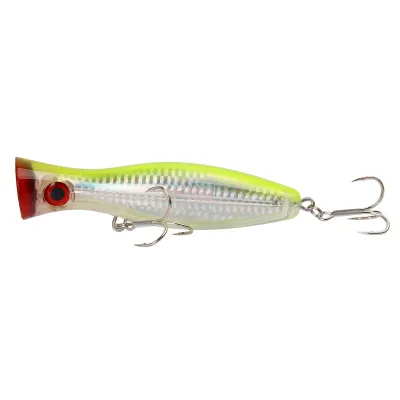
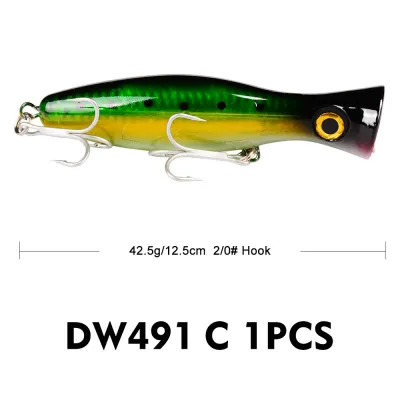
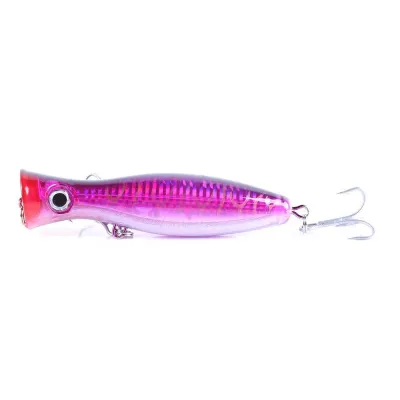
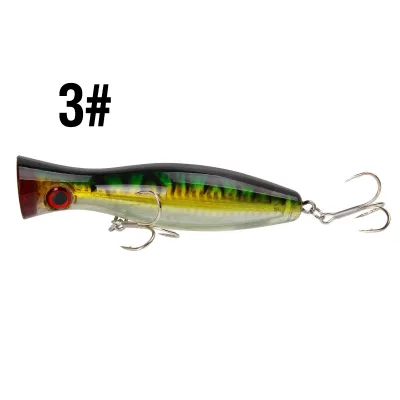
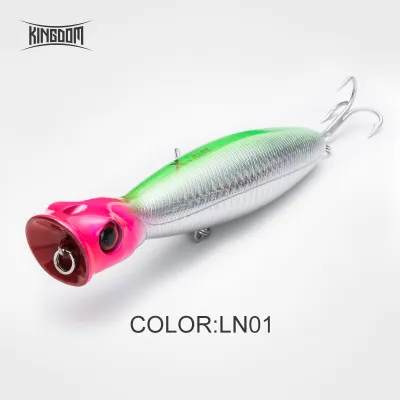
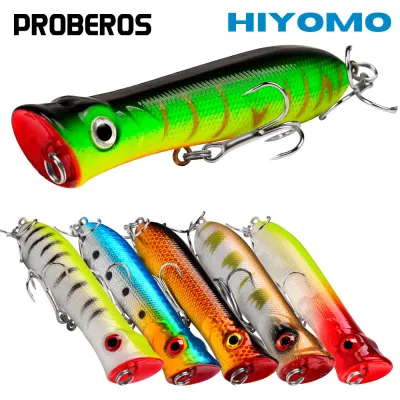
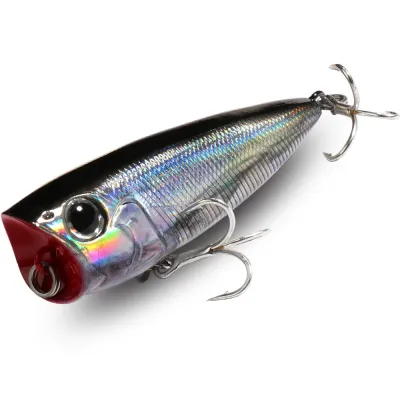
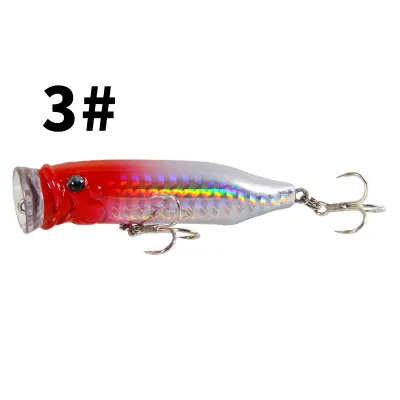
Prices are valid at publication and may change. Please refer to the product page for the latest price.
Because lapu-lapu seek to return to their rocky strongholds immediately after striking, the initial seconds of the fight are critical. If the fish manages to retreat into a cave or coral head, your line will likely rub against sharp edges and snap. This behavior dictates not only how you fight the fish but also the type of popper you select. You need a lure that can be worked slowly and precisely, staying in the strike zone longer to convince the grouper that the meal is worth leaving its safe haven.
Malalaki, on the other hand, exhibit entirely different hunting patterns. These apex predators patrol high-energy zones, including open water, surf lines, rocky points, and strong current seams where baitfish become disoriented. They are highly visual hunters with lateral lines sensitive to low-frequency vibrations. Malalaki often hunt in packs or as dominant solitary individuals, charging from deep water or long distances to smash prey on the surface with immense speed and power.
Their strike zone is expansive, and they will readily chase a fast-moving popper over dozens of meters. The aggression of a malalaki strike is legendary, often resulting in the fish launching itself completely out of the water with the lure in its mouth. To trigger this competitive predatory instinct, your popper must create a significant amount of noise, splash, and bubble trail. A quiet or subtle lure will often be ignored in the turbulent, white-water environments where these fish prefer to hunt.
Other Philippine game fish, such as talakitok, mactan, and pelagic visitors like dorado and tuna, fall along different points of this behavioral spectrum. While some prefer a fast, skipping action on the surface, others respond best to deep, rhythmic thuds. Understanding these nuances allows you to look at a popper not just as a piece of painted plastic or wood, but as a specialized tool designed to trigger a specific predatory response.
Key Design Features to Evaluate in a Popper
The cup shape and size at the front of the popper are the primary factors determining how the lure behaves when swept through the water. A deep, concave cup acts like a shovel, catching a large volume of water and forcing it forward to create a loud, low-frequency “bloop” sound accompanied by a large plume of white water. This design is ideal for calling fish from deep water or cutting through choppy surface conditions. Conversely, a shallow or narrow cup produces a higher-pitched splash and allows the lure to slide more easily, making it suitable for faster retrievals or calmer water.

Weight and balance directly influence both casting distance and the lure’s action on the retrieve. In the Philippines, coastal anglers often face strong sea breezes and must cast long distances from rocky shores or boats to reach the reef edge. Tail-weighted poppers are designed with the majority of their mass concentrated at the rear, allowing them to fly straight and true like an arrow. When resting in the water, a tail-weighted popper sits at a steep angle, keeping the cup clear of the surface so it is primed to pop instantly on the next rod sweep.
Center-weighted poppers sit more horizontally on the surface. While they may not cast quite as far into a headwind, they offer a more versatile action, allowing the angler to perform a “walk-the-dog” retrieval where the lure zig-zags from side to side. This horizontal resting posture mimics a dying baitfish floating flat on the surface, which can be highly effective during calm mornings or in shallow water where fish are easily spooked by aggressive splashing.
Buoyancy is another critical factor, determined largely by the materials used in construction. High-quality wood poppers, such as those made from paulownia or balsa, offer natural buoyancy and a unique swimming action that synthetic materials struggle to replicate. However, modern heavy-duty ABS plastic poppers are incredibly durable, resistant to punctures from sharp teeth, and can be manufactured with internal weight-transfer systems for superior casting. Whichever material you choose, the lure must float high enough to ensure the cup can clear the water between sweeps.
Hardware strength is where many standard lures fail when subjected to Philippine saltwater predators. The sheer crushing power of a lapu-lapu’s jaws and the relentless, high-speed runs of a malalaki will easily straighten cheap hooks and open weak split rings. Look for poppers that feature through-wire construction, where a single, continuous piece of heavy-duty stainless steel wire connects the front tow point to all hook eyelets. Split rings should be rated for heavy saltwater use, and hooks should be 3X or 4X strong trebles or specialized inline single hooks.
Matching Lure Specifications to Your Target Catch
When targeting lapu-lapu, your gear configuration should focus on precision, maneuverability, and snag resistance. Because you are fishing directly over shallow, hook-grabbing coral reefs and volcanic rocks, a smaller popper profile between 80mm and 120mm is highly effective. This size mimics the local reef forage and allows for highly accurate casts into small pockets of open water between structures. Rigging these smaller poppers with inline single hooks rather than trebles significantly reduces the risk of snagging the reef while still providing an incredibly secure hookset once the fish strikes.
For malalaki, the rule of thumb is to scale up your tackle to match the violent nature of the encounter. Lures ranging from 120mm to 200mm or larger, weighing between 60g and 150g, are standard. These substantial profiles present a worthwhile meal for a large predator and provide the weight necessary to cast into the windward side of reefs where waves are breaking. The hardware must be top-tier, featuring reinforced split rings and heavy-duty hooks that can withstand drag settings often exceeding 10 kilograms.
If you are targeting pelagic species like dorado or tuna that occasionally patrol near the reef edge or in deep blue water, your configuration should shift toward speed and visibility. These fish hunt fast-moving prey like flying fish, so a popper that can be skittered rapidly across the surface is essential. Choose a streamlined popper with a narrower cup that doesn’t create excessive drag, allowing you to maintain a high-speed retrieval without exhausting yourself. Bright, light-reflecting colors like pink, blue, silver, and laser-holographic finishes work exceptionally well under the intense tropical sun.
To help you quickly select the right tool for your next outing, refer to the comparison matrix below, which pairs target species with recommended lure specifications and actions:
| Target Fish | Recommended Size | Cup Style | Retrieval Action | Key Hardware Requirement |
|---|---|---|---|---|
| Lapu-Lapu | 80mm – 120mm | Shallow to Medium | Short, precise pops with long pauses | Inline single hooks to prevent reef snags |
| Malalaki (GT) | 120mm – 200mm+ | Deep Concave | Loud, aggressive bloops with steady sweeps | Through-wire construction, 4X strong hooks |
| Pelagics (Dorado/Tuna) | 100mm – 150mm | Narrow / Chugger | Fast, skipping retrieval with minimal pauses | High-tensile split rings, corrosion-resistant hooks |
Rigging, Retrieval, and Safety Boundaries
Your choice of popper is only as good as the rigging that connects it to your rod. A braided main line (typically PE 3 to PE 8, depending on the target size) is essential for topwater casting because it offers no stretch, allowing you to transfer the movement of your rod directly to the lure. However, braid has poor abrasion resistance. You must use a thick shock leader—typically 50lb to 80lb fluorocarbon for lapu-lapu to resist coral scraping, or 80lb to 130lb nylon monofilament for malalaki to absorb the shock of the initial strike. Connect the braid to the leader using a high-strength knot like the FG knot or PR knot, which passes smoothly through the rod guides.
Retrieval cadences should be adjusted based on how the fish are reacting on any given day. The standard “bloop and pause” involves sweeping the rod tip down and back to make the popper splash, then winding up the slack line while pausing for a few seconds. This pause is often when the strike occurs, as it mimics a stunned baitfish. If the water is calm or the fish seem cautious, transition to a gentler “walk-the-dog” action, using short, rhythmic twitches of the rod tip to make the lure slide side-to-side with minimal splash.
Safety is paramount when engaging in heavy-duty topwater fishing. Because surface strikes are highly visual, it is common for anglers to react too quickly. If you pull the rod back the moment you see a splash without feeling the weight of the fish, you risk launching a heavy lure with sharp hooks directly back toward the boat or shore at high speed. Always wait until you feel the physical pull of the fish on your line before setting the hook. Wearing polarized sunglasses is not only essential for spotting fish, but it also serves as vital eye protection against flying lures.
When fishing from wet, slippery rocks (barancos) or a moving boat, maintain a clear casting perimeter to avoid hooking companions. Once a powerful fish is landed, never attempt to remove the hooks with your bare hands. A thrashing lapu-lapu or malalaki can easily drive an exposed treble hook deep into your hand. Always use long-nosed pliers or a dedicated hook removal tool, and consider wearing heavy-duty casting gloves to protect your hands from sharp gill plates, teeth, and braided line cuts.
Finally, make it a habit to inspect your gear regularly during your session. After every strike, reef contact, or major fight, check the leader for nicks or frays and run your fingernail over the hook points to ensure they haven’t dulled or bent. Taking a few moments to re-tie a worn knot or swap out a damaged hook can make the difference between landing the fish of a lifetime or watching it swim away with your favorite popper.
Frequently Asked Questions (FAQ)
What type of fishing line and leader works best with poppers?
A high-quality braided line is the best choice for your main line when fishing with poppers. Braid provides the thin diameter needed for long casts and has virtually zero stretch, which is crucial for transmitting your rod’s movements to the lure and setting the hook over long distances. For the leader, a heavy fluorocarbon or nylon monofilament is essential. Fluorocarbon is highly abrasion-resistant and sinks slightly, making it excellent for fishing around sharp coral reefs where lapu-lapu hide. Nylon monofilament is more supple and has a slight stretch, which acts as a shock absorber during the violent, high-speed strikes of malalaki. Avoid using wire leaders unless toothy species like barracuda or mackerel are dominant, as wire can weigh down the nose of the popper and ruin its splashing action.
How should I adjust my popping cadence if fish are following but not striking?
If you observe fish following your popper or swirling behind it without committing to a strike, it usually indicates they are interested but suspicious. The most effective adjustment is to slow down your retrieval and significantly increase the duration of your pauses. A longer pause mimics a severely injured baitfish that has run out of energy, often triggering an instinctual strike from a hesitant predator. Alternatively, you can try reducing the intensity of your pops. Switch from loud, aggressive bloops to subtle, gentle twitches that create small ripples rather than large splashes. If the water is exceptionally clear and calm, bright sunlight can make fish more cautious; in these conditions, matching the natural color of local baitfish and working the lure with a faster, erratic skipping motion can prevent the fish from inspecting the lure too closely before striking.
Community discussion
Share your experience or ask a question. Comments are reviewed before publication.