
Managing a fast-paced football match or conducting an intense training session requires clear, authoritative communication. For decades, the traditional mouth-blown pea whistle has been the standard tool for referees and coaches to command attention on the pitch. However, the physical demands of officiating, coupled with modern hygiene considerations, have driven a significant shift toward electronic alternatives. A rechargeable electronic whistle offers a consistent, high-volume signal at the press of a button, eliminating the physical strain of constant blowing while keeping your hands and mouth free for verbal instructions.
Choosing the right rechargeable electronic whistle involves evaluating how these devices perform under the demanding conditions of an open-field sport. Unlike indoor sports, football is played on expansive pitches where wind, ambient noise, and sudden weather changes can severely muffle low-quality audio signals. By understanding the core specifications, ergonomic designs, and practical limitations of electronic whistles, you can select a reliable tool that enhances your match control and coaching efficiency.
Why Football Officials and Coaches Use Electronic Whistles
The transition from traditional mouth-blown whistles to electronic models is primarily driven by hygiene, physical comfort, and tactical flexibility. In a typical football tournament, a single coach or referee might need to share equipment or hand over signaling duties to an assistant. Traditional whistles present a clear hygiene challenge, as they require direct mouth contact and can easily spread pathogens. Electronic whistles completely bypass this issue, allowing multiple officials to share the same device safely by simply sanitizing the handheld casing or passing it between users without any oral contact.
Products mentioned in this guide
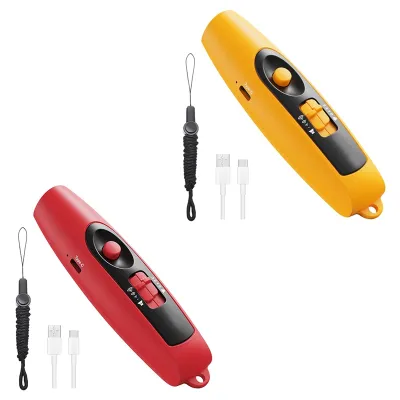
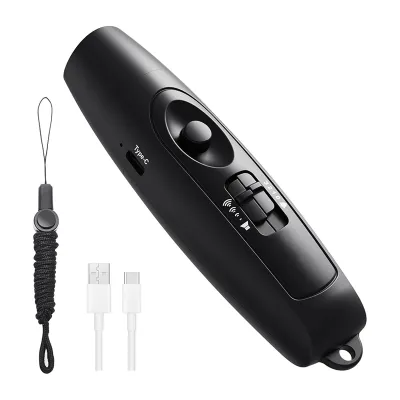
![[Pure heart]Handheld Electronic Whistle with USB Charging Sports Flashlight Whistle for Football Soccer Lifeguard Classroom](https://img.lazcdn.com/g/p/4c2a78d532fbf47241702f9bbb843920.jpg_400x400q80.jpg_.webp)
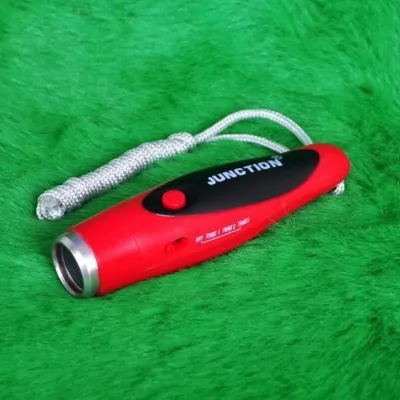
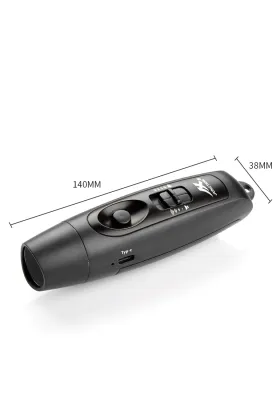
Prices are valid at publication and may change. Please refer to the product page for the latest price.
Vocal strain and physical fatigue are also major concerns for sports officials, especially during multi-match tournaments or day-long training camps. Blowing a traditional whistle repeatedly at maximum lung capacity can lead to dizziness, dry throat, and vocal exhaustion. An electronic whistle replaces physical exhalation with a simple button press, delivering a consistent decibel level every single time. This allows coaches to maintain their energy levels and reserve their voices for tactical instructions rather than struggling to project over a noisy pitch.
Furthermore, electronic whistles excel in complex, multi-pitch environments where sound confusion is common. Many electronic models feature multiple distinct tones, allowing a referee on one pitch to use a high-pitched electronic beep while a coach on an adjacent field uses a traditional whistle simulation. This clear acoustic separation prevents players from stopping play due to a whistle blown on a neighboring pitch.
Despite these advantages, users must remain aware of the practical limitations inherent to electronic devices. Unlike a traditional plastic whistle, which has no moving parts and works indefinitely, an electronic whistle relies entirely on battery power. If the battery dies mid-match, or if moisture penetrates the internal circuitry, the device will fail instantly. Referees must always carry a traditional mouth-blown whistle as a backup in their pocket to ensure match continuity in the event of an unexpected electronic malfunction.
Core Specifications to Evaluate for Football Environments
When evaluating electronic whistles for outdoor football pitches, sound output is the most critical specification to verify. Manufacturers often advertise peak decibel ratings, sometimes claiming levels of 120 to 130 decibels. However, these measurements are typically taken directly at the speaker nozzle. In an open-field football environment, sound disperses rapidly, and wind resistance can significantly reduce the effective range. To ensure the whistle is audible from the center circle to the touchlines, look for devices that project sound forward through a directional horn or nozzle rather than dispersing it omnidirectionally.

Battery capacity and power management are equally vital for match-day reliability. When browsing options on online marketplaces, check the rated milliampere-hour (mAh) capacity of the internal lithium-ion battery. A higher mAh rating generally translates to longer continuous runtimes and extended standby periods. For a referee managing multiple ninety-minute matches in a single day, a whistle should offer at least several hours of active signaling time per charge. It is also wise to verify if the device features a low-battery indicator, such as a flashing LED, to prevent the whistle from dying unexpectedly during a critical play.
The tropical climate of the Philippines introduces unique environmental challenges, including high humidity, intense sweat, and sudden heavy downpours during the rainy season. An electronic whistle used on a local pitch must possess adequate weather resistance to prevent moisture from short-circuiting the internal components. Look for devices with a verified Ingress Protection (IP) rating, with IPX4 being the minimum requirement for splash resistance, and IPX6 or higher preferred for heavy rain. Additionally, the casing should be constructed from high-impact ABS plastic to survive accidental drops onto hard ground, artificial turf, or concrete sidelines.
Evaluating Ergonomics and Carrying Options for the Pitch
The physical design of an electronic whistle directly impacts how comfortably and quickly you can signal a stoppage in play. Handheld designs are the most common, featuring a cylindrical or ergonomic body with a button positioned naturally under the thumb or index finger. This design keeps your mouth completely free to shout instructions or run alongside players. However, some officials prefer mouth-triggered or bite-activated electronic whistles, which feature a small switch near a soft mouthpiece. This hybrid design allows hands-free operation, which is highly beneficial for referees who need to make immediate hand signals while running.
Carrying options are crucial for preventing accidental drops and ensuring the whistle is always within reach. A secure wrist lanyard or a finger-loop attachment is highly recommended for active referees who must sprint, turn, and signal simultaneously. A finger loop keeps the whistle securely nested against the palm, allowing the referee to open their hand to signal a free kick or advantage without dropping the device. For coaches who spend more time standing or walking the sidelines, a traditional neck lanyard is often more comfortable, keeping the whistle resting on the chest when not in use.
Weight and balance also play a significant role in long-term comfort. A heavy, poorly balanced whistle can cause noticeable neck fatigue when worn on a lanyard for several hours. Look for lightweight models that distribute the weight evenly across the body of the device. The button mechanism should offer tactile feedback, meaning you can feel a distinct click when the button is fully depressed, ensuring you know exactly when the sound has been triggered without having to look down at the device.
Matching Whistle Features to Your Specific Role
Your specific role on the football pitch—whether you are a match referee or a training coach—should dictate the features you prioritize when choosing an electronic whistle. Referees require absolute precision and immediate response times. In a competitive match, a delay of even half a second between a foul and the whistle blow can lead to player confusion or unnecessary physical contact. Referees should look for whistles with high-performance microswitches that trigger the sound instantly upon pressing. The tone should be sharp, piercing, and highly authoritative, mimicking the classic pealess whistle sound that players are conditioned to respect.
Coaches, on the other hand, benefit from a more versatile feature set. During training drills, a coach may need to signal continuously to guide player movement or run structured conditioning sessions. Whistles with a continuous sound option—where the tone plays as long as the button is held down—are ideal for these scenarios. Additionally, coaches often work in closer proximity to players, making variable volume settings highly useful. Being able to lower the volume for small-sided drills prevents ear fatigue for both the coach and the players, while still allowing the volume to be boosted for full-pitch tactical sessions.
For coaches who frequently hold clipboards, tactical boards, or training cones, ease of one-handed operation is paramount. A whistle that can be easily clipped to a pocket or held securely with a single finger loop allows the coach to manage equipment without losing the ability to signal instantly. Some advanced models also include integrated LED lights, which can be useful for signaling during early evening training sessions under poor pitch lighting.
Practical Checks Before Purchasing
Before finalizing your purchase on an online marketplace, perform a few practical checks to ensure the device fits seamlessly into your existing gear setup. First, verify the charging standard used by the whistle. Modern electronic whistles should ideally utilize a USB-C charging port, which matches the cables used by most contemporary smartphones and electronic devices. This compatibility simplifies your gear bag, allowing you to charge your whistle using a standard power bank, car charger, or wall adapter without needing to carry a proprietary cable.
Budgeting is another practical consideration. While basic models can be found on online marketplaces for under ₱500, investing in a durable, weather-resistant model typically ranges from ₱800 to ₱2,000. This price difference often reflects better battery longevity, enhanced water resistance, and more reliable internal microswitches.
Hygiene and maintenance should also be straightforward. Even though electronic whistles are handheld, they are constantly exposed to sweat, dirt, and outdoor grime. Check if the casing is made from non-porous, easy-to-wipe materials that can withstand regular cleaning with disinfectant wipes. If you choose a model with a mouth-trigger option, ensure that the mouthpiece cover is removable, washable, and ideally replaceable, allowing you to maintain a sanitary device over months of heavy use.
Finally, review the manufacturer’s warranty and customer support policies. Rechargeable lithium-ion batteries naturally degrade over time, especially when exposed to the high ambient temperatures common in tropical climates. A reliable warranty that covers battery degradation, charging port failures, or electronic defects within the first year of purchase is a strong indicator of a quality product. Investing a bit more in a well-supported brand can save you from the frustration of a device that fails after only a few matches.
Frequently Asked Questions (FAQ)
Can I use an electronic whistle in official football matches?
Whether you can use an electronic whistle in an official match depends entirely on the regulations of the local governing body, league, or tournament organizers. While electronic whistles are widely accepted and highly encouraged in amateur leagues, youth tournaments, and school sports due to hygiene and ease of use, professional leagues often mandate traditional acoustic whistles. Official referees at high competitive levels are typically required to use standard pealess whistles to ensure absolute consistency in sound and to avoid any risk of electronic failure during a broadcasted match. Always consult your local referee association or tournament director before officiating a sanctioned match with an electronic device.
How do I maintain the battery health of my electronic whistle?
To maximize the lifespan of the lithium-ion battery in your electronic whistle, avoid letting the battery drain completely to zero percent before recharging it. Shallow discharge cycles—such as charging the device after every match day even if it is only partially depleted—are much healthier for lithium-ion chemistry than full discharges. Additionally, store the whistle in a cool, dry place away from direct sunlight when it is not in use. High temperatures, such as those found inside a parked car or a gear bag left in the sun, can accelerate battery degradation and permanently reduce the device’s overall capacity. If you plan to store the whistle for an extended off-season, charge it to approximately fifty percent capacity beforehand rather than storing it completely full or completely empty.
Community discussion
Share your experience or ask a question. Comments are reviewed before publication.