
Finding the perfect scuba diving mask is the single most critical gear decision you will make as a diver. A mask that leaks or constantly fogs up can quickly turn a spectacular dive in the vibrant marine sanctuaries of Anilao or Panglao into a frustrating, stressful struggle. To choose a diving mask that fits your face shape and remains clear, you must match the mask’s skirt design to your unique facial structure, verify the seal with a dry suction test, adjust the strap for comfort rather than tightness, and properly treat the lens to prevent condensation.
While high-quality scuba diving equipment is essential for safety and comfort, it can never replace formal training and certification. Before heading into open water, ensure you are certified by a recognized agency and comfortable with basic water-clearing skills. A well-fitting mask is a tool that enhances your underwater journey, but your safety ultimately relies on your training, situational awareness, and split-second judgment.
Matching Mask Design to Your Face Shape
When selecting scuba diving equipment, the phrase “one size fits all” simply does not apply. A proper, watertight seal depends entirely on how well the mask’s silicone skirt conforms to your individual facial anatomy. Because human faces vary wildly in width, bone structure, and features, manufacturers design masks with different skirt shapes, frame profiles, and internal volumes to accommodate this diversity.
Products mentioned in this guide
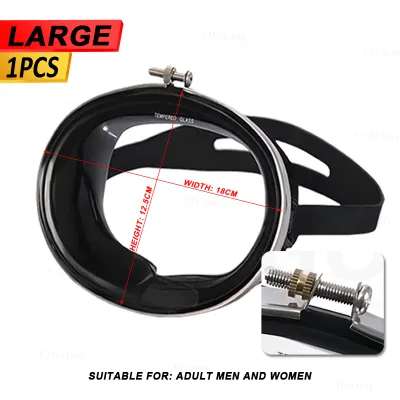
Prices are valid at publication and may change. Please refer to the product page for the latest price.
To find your ideal match, start by assessing your face shape. Divers with narrow faces or prominent cheekbones often struggle with standard masks, as gaps can easily form near the temples. If you have a narrow face, look for “small” or “mini” mask variations, which feature narrower skirts and smaller frames. Conversely, wider faces require a broader skirt with a wider horizontal span to prevent the silicone from pressing uncomfortably against the outer edges of the eye sockets.
Nose bridge height is another critical factor that dictates comfort and seal integrity. A high nose bridge requires a mask with a deep, generous nose pocket to prevent the hard frame from pressing painfully against the bone, especially under pressure at depth. For divers with lower nose bridges, standard masks may bunch up around the nose, leading to persistent leaks. Many brands now offer specialized “low bridge fit” or “Asian fit” masks, which feature redesigned nose pockets and a modified skirt angle to create a flush, leak-free seal.
You must also choose between single-lens and dual-lens configurations, as this choice affects both fit and field of vision. Single-lens masks feature a continuous pane of glass without a central frame, offering an open, unobstructed view and often fitting well on broader forehead shapes. Dual-lens masks have a rigid vertical frame dividing the lenses, allowing the glass to sit closer to your eyes. This low-volume design reduces the air space inside the mask, making it much easier to clear water and equalize, which is highly beneficial for both scuba divers and freedivers.
Performing a Dry Seal Test Before You Buy
Before purchasing a mask from a dive shop or online marketplace, you must perform a dry seal test to verify its compatibility with your face. This quick, practical test allows you to evaluate the mask’s suction and identify potential leak points without ever getting wet. Trying on a mask in a dry environment is the most reliable way to avoid buyer’s remorse and ensure safety on your next dive.

To conduct the dry seal test correctly, follow these step-by-step instructions:
- Clear your hair: Look upward and pull all hair away from your forehead and temples. Even a single stray strand of hair trapped under the silicone skirt will act as a microscopic straw, allowing water to slowly flood your mask during a dive.
- Position the mask: Place the mask gently against your face without using the head strap. Let the strap dangle loosely in front of the mask or hold it out of the way, as utilizing the strap during this test can mask a poor fit by forcing the frame against your face.
- Inhale gently: Inhale gently and steadily through your nose. You do not need to inhale aggressively; a light, natural sniff is sufficient to create a vacuum.
- Hold and release: Hold your breath and gently remove your hands from the mask. If the mask fits your face shape, the negative pressure should cause it to suction securely to your face, remaining in place without any physical support.
While the mask is suctioned to your face, pay close attention to how the skirt feels against your skin. Feel along the entire perimeter of the skirt, checking for any gaps or pressure points near your temples, the bridge of your nose, and your upper lip. If you feel air rushing in or if the mask falls off immediately, the skirt is not making complete contact with your face, indicating that the mask is either too wide, too narrow, or incompatible with your bone structure.
Be aware of common fit failures that may not cause the mask to fall off immediately but will cause discomfort or leaks underwater. For example, if the top of the skirt rests on your hairline, water will inevitably seep in once you submerge. Additionally, pay close attention to your upper lip; if the skirt presses uncomfortably against your lip or nose, or if it distorts when you mimic holding a regulator mouthpiece, you should try a different model. Testing the mask with a snorkel or regulator mouthpiece in your mouth is an excellent way to simulate real diving conditions.
Adjusting the Strap to Prevent Leaks Underwater
A common misconception among beginner divers is that tightening the mask strap will prevent leaks. In reality, over-tightening is one of the primary causes of mask flooding. When you pull the strap too tight, you apply excessive force to the rigid frame, which deforms the soft silicone skirt, causing the edges to buckle, lift, and create channels for water to enter. A mask strap should only be tight enough to keep the mask in place; the ambient water pressure at depth will do the rest of the work to maintain the seal.
To achieve a comfortable and secure fit, pay close attention to the position of the strap on your head. The strap should sit high on the back of your head, resting near the crown rather than pulling down toward the nape of your neck. Positioning the strap too low pulls the mask downward, putting painful pressure on your nose bridge and upper lip while breaking the seal along the top of your forehead. If your mask has a split strap, spread the two bands apart on the back of your head to distribute the pressure evenly.
Several external factors can compromise an otherwise perfect seal, including long hair, neoprene hoods, and facial hair. Long hair can easily slip under the silicone skirt or cause the strap to slide down your head during a dive. To manage this, consider using a neoprene strap cover, which slides over the silicone strap, prevents hair tangling, and helps keep the strap securely positioned on the crown of your head. Always take a moment before deflating your BCD to tuck any loose hair away from the skirt edges.
Facial hair, particularly a mustache, presents a unique challenge because the coarse hairs prevent the silicone skirt from making flush contact with the skin above the upper lip. If you have a mustache, you can improve the seal by applying a small amount of food-grade silicone grease or specialized mask wax to your facial hair before diving. This grease fills the microscopic gaps between the hairs, creating a temporary barrier against water. Avoid using petroleum-based products, as they can degrade high-quality silicone over time; always check your mask manufacturer’s care instructions before applying any substance to the skirt.
Preparing the Lens and Applying Anti-Fog Solutions
Even a perfectly fitting, leak-free mask can ruin a dive if it constantly fogs up, obscuring your view of the underwater world. Fogging is caused by a simple physical process: the warm, humid air inside your mask—heated by your face and breath—comes into contact with the lens, which is cooled by the surrounding ocean water. This temperature differential causes the moisture to condense into thousands of microscopic water droplets on the inner surface of the glass, creating a cloudy barrier.
To keep your vision crystal clear, you must approach anti-fog management in two distinct phases. The first phase is a one-time preparation process required for brand-new masks to remove manufacturing residues. The second phase consists of daily anti-fog applications and best practices carried out immediately before every dive.
Removing the Factory Film from New Masks
When a tempered glass mask is manufactured, a thin, invisible layer of silicone vapor or chemical residue deposits onto the inside of the lens. This factory film acts as a magnet for moisture, causing the mask to fog up instantly and severely, regardless of how much anti-fog solution you apply. Before you use a new mask for the first time, you must thoroughly strip this protective film away.
To safely remove the factory film, apply a small dab of non-gel, non-whitening toothpaste or a dedicated commercial mask scrub to the inside of each lens. Using a clean finger or a soft microfiber cloth, rub the paste firmly in circular motions across the entire glass surface for several minutes, paying close attention to the corners. Rinse the mask thoroughly with fresh water, and repeat this process two to three times to ensure the film is completely gone.
Always check the manufacturer’s care instructions before performing this cleaning procedure. While tempered glass lenses can withstand gentle scrubbing, some modern masks feature plastic, polycarbonate, or specialized anti-reflective and UV-cut coatings that will scratch or degrade if treated with abrasive toothpaste or scrubs. Never use harsh household chemicals, abrasive scouring pads, or open flames to burn off the film unless explicitly authorized by the manufacturer, as these methods can permanently damage the silicone skirt or compromise the structural integrity of the frame.
Daily Anti-Fog Treatments and Best Practices
Once the factory film is removed, you must apply an anti-fog treatment before every single dive to prevent condensation. Divers have several effective options to choose from, each with its own advantages and trade-offs.
- Commercial Anti-Fog Drops: These specialized formulas are highly effective, long-lasting, and specifically designed to be safe for both your eyes and the mask's materials. While they require a modest financial investment (typically ranging from ₱300 to ₱800 per bottle in local dive shops), a single bottle can last for dozens of dive trips.
- Diluted Baby Shampoo: A highly popular and cost-effective alternative used by dive guides throughout the Philippines is a mixture of water and gentle, tear-free baby shampoo. This solution is incredibly cheap, smells pleasant, and is gentle on the eyes if a small amount leaks during the dive.
- Saliva: The traditional, budget-friendly method involves spitting onto the inside of the lens. While saliva is always available and free, it is generally less sanitary, does not last as long as commercial alternatives, and can introduce bacteria to the mask during storage.
Regardless of the solution you choose, the application process remains the same. Apply a few drops of the anti-fog treatment to the inside of the dry lens, rub it thoroughly across the entire surface with a clean finger, and then rinse the mask briefly in fresh or seawater immediately before putting it on. Be careful not to rinse too aggressively, as you want to leave a microscopic, surfactant film on the glass that prevents water droplets from forming.
Once you have rinsed the mask, avoid touching the inside of the lens with your bare fingers. Your skin naturally carries oils that will instantly disrupt the anti-fog barrier, creating patchy areas where condensation will quickly form once you submerge. Keep the mask on your face or around your neck until you enter the water to maintain the integrity of the treatment.
Validating the Fit and Clearing Water in Shallow Depths
Before committing to a deep dive or navigating strong currents, it is highly recommended to validate your mask’s fit and performance in a controlled, shallow-water environment. A shallow pool, a calm sandy beach entry, or the shallow house reef of your dive resort is the perfect place to ensure your mask seals comfortably and to practice essential safety skills without the stress of depth.
While in shallow water, practice the standard mask clearing technique to ensure you can easily manage any minor water entry. To clear your mask, press firmly on the top frame of the mask with your fingers, look upward toward the surface, and exhale a steady, continuous stream of air through your nose. The air will rise to the top of the mask, displacing the water and forcing it out of the bottom edge of the silicone skirt. Repeat this motion until all water is expelled.
Establish a strict “stop and adjust” condition for your dive. If your mask continuously floods, causes painful pressure points on your nose or forehead, or requires you to clear water every few minutes, you must stop your descent. Return to shallow water or the surface with your buddy to reassess the fit, adjust the strap tension, or clear any trapped hair. Never attempt to push through a dive with a poorly fitting mask, as constant flooding can lead to anxiety, rapid air consumption, and a loss of buoyancy control.
A well-fitting, properly adjusted mask should require minimal to no clearing during a standard dive. While knowing how to clear your mask is a fundamental safety skill, your equipment should work with you, not against you. A proper fit ensures that you can focus on your buoyancy, your dive buddy, and the beautiful marine life, rather than struggling with a leaky mask.
Frequently Asked Questions (FAQ)
Can I use a scuba diving mask if I wear prescription glasses?
You cannot wear standard prescription glasses under a scuba diving mask because the temple arms of the glasses will prevent the silicone skirt from sealing against your face, causing immediate and severe flooding. Fortunately, divers have several excellent alternatives for vision correction. You can purchase a dual-lens mask designed to accept drop-in prescription lenses, which are readily available in various negative and positive diopters. Alternatively, you can order a mask with custom-bonded prescription lenses from specialized optical labs. Many divers also choose to wear soft, daily disposable contact lenses under a standard mask; however, you must be comfortable keeping your eyes closed if you need to clear your mask underwater, as flooding can wash a contact lens out of your eye.
Why does my mask skirt turn yellow over time?
The yellowing of a clear silicone mask skirt is a natural degradation process caused by prolonged exposure to ultraviolet (UV) radiation from the sun, as well as contact with skin oils, sunscreen, cosmetics, and environmental pollutants. To slow down this discoloration and prolong the lifespan of your mask, always rinse it thoroughly with clean, fresh water after every dive to remove salt, chlorine, and oils. Store your mask in a cool, dry, and dark place away from direct sunlight, and avoid leaving it inside hot vehicles, near exhaust fumes, or in close contact with black rubber items (such as fins or snorkels), which can transfer pigments and accelerate yellowing.
Community discussion
Share your experience or ask a question. Comments are reviewed before publication.