
A successful snorkeling experience in the tropical waters of the Philippines—whether exploring the vibrant reefs of El Nido or swimming alongside marine life in Moalboal—depends heavily on your gear. The most common frustration for snorkelers is a leaking mask, which constantly interrupts your view and forces you to clear water. Finding a mask that fits your unique face shape and creates a reliable, watertight seal is the most critical step before entering the water. To achieve a leak-free fit, you must identify your facial width, nose bridge height, and contour lines, match these dimensions to the appropriate mask skirt and lens design, and verify the seal using a hands-free dry fit test.
While high-quality equipment enhances your comfort and visibility, remember that gear is never a substitute for water safety training, swimming proficiency, and sound judgment. Snorkeling in open water carries inherent risks, including strong currents, shifting tides, and physical fatigue. Always assess local sea conditions, swim with a buddy, and know your personal limits. If your mask floods repeatedly or you feel fatigued, return to the shore or boat immediately.
Why Snorkel Masks Leak and How the Seal Works
To understand why masks leak, you must first understand how they are designed to seal against your face. A snorkel mask does not rely on tight straps to keep water out; instead, it uses the natural pressure of the water and the flexibility of the silicone skirt to create a vacuum-like seal. The skirt is the soft, flexible border of the mask that makes direct contact with your skin. When you submerge, the external water pressure gently pushes the mask against your face, compressing the skirt into your facial contours and keeping water from entering.
Products mentioned in this guide
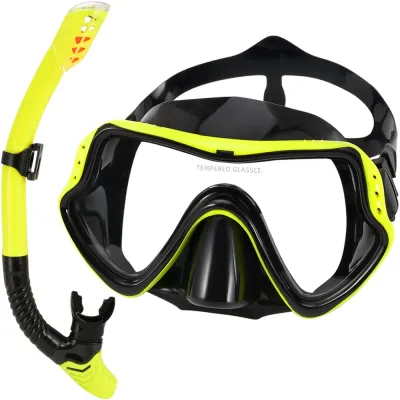
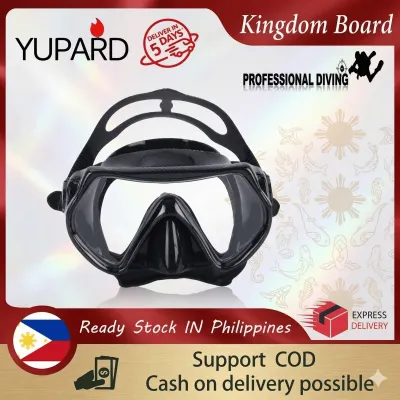
Prices are valid at publication and may change. Please refer to the product page for the latest price.
A very common mistake among beginners is pulling the mask straps as tight as possible in an attempt to block leaks. Over-tightening actually has the opposite effect. When you pull the straps too tight, you distort the flexible silicone skirt, causing it to buckle, fold, or lift away from your skin. This distortion creates tiny channels where water can easily seep in. Additionally, a strap that is too tight presses the rigid frame of the mask against your nose bridge and forehead, causing severe discomfort and headaches within minutes.
The material of the mask skirt plays a decisive role in how well it conforms to your face. High-quality masks use liquid silicone, which remains highly flexible, soft, and resilient over years of use in warm, salty environments. In contrast, inexpensive or low-grade masks often feature skirts made of rigid plastics, PVC, or low-grade splay silicone. These materials lack the elasticity needed to adapt to subtle facial movements, such as smiling or breathing through a snorkel, and they tend to stiffen and crack when exposed to tropical sunlight and saltwater. For a reliable seal, choosing a high-grade silicone skirt is essential.
In tropical climates like the Philippines, high humidity, intense UV exposure, and heat can accelerate the degradation of silicone if the mask is not cared for properly. Leaving your mask on the dashboard of a hot car or baking in the direct sun on a boat deck can cause the silicone to warp permanently. Once warped, the skirt will no longer conform evenly to your face, rendering the mask prone to chronic leaks. Always rinse your mask in fresh water after use to remove salt crystals and chlorine, and store it in a cool, dry, shaded place.
Step 1: Identify Your Face Shape and Key Fit Points
Before browsing different mask models, you need to analyze the physical structure of your face. Snorkel masks are not one-size-fits-all, and a mask that seals perfectly on one person may flood instantly on another. Taking a few minutes to assess your facial dimensions will help you narrow down your options to models designed for your specific profile.

Assessing Facial Width and Nose Bridge
Start by determining your overall facial width. You can do this by looking in a mirror or having someone measure the distance between your temples. A narrow face typically features closer-set eyes and a slender cheekbone structure, requiring a smaller, more compact mask frame. An average face fits standard mask sizes, while a wide face requires a broader frame and a wider skirt to prevent the edges from pressing directly against the outer corners of the eyes.
Next, examine your nose bridge, which is one of the most common leak points. In the Philippines and throughout Asia, low to medium nose bridges are very common, though individuals vary widely. A low nose bridge requires a mask with a shallower nose pocket or a specialized “Asian fit” (often labeled as low-bridge fit) design, which prevents water from pooling in the extra space and stops the rigid frame from pressing against the bridge. Conversely, a high nose bridge requires a deeper, more prominent nose pocket to prevent the internal silicone or glass from pinching or rubbing against the bone.
Checking for Contours and Obstructions
Run your fingers along your face to identify prominent features that might disrupt a flat seal. High, pronounced cheekbones or deep smile lines (nasolabial folds) running from the nose to the corners of the mouth can create gaps beneath the skirt. If you have deep smile lines, you will need a mask with an exceptionally soft, double-feathered skirt that can flex into these natural depressions without losing its seal.
External obstructions are another primary cause of mask flooding. Facial hair, particularly a mustache, sits directly under the nose where the bottom of the mask skirt must seal against the upper lip. Even a few days of stubble can create microscopic channels that allow water to slowly trickle into the mask. Similarly, long hair, bangs, or a low hairline can easily get trapped under the top or sides of the skirt during preparation, breaking the seal completely.
Step 2: Match Mask Features to Your Face Shape
Once you have mapped your facial structure, you can match your specific needs to the design features of different snorkel masks. Understanding how skirt styles, lens configurations, and nose pockets interact with your face will allow you to make an informed choice.
Skirt Design and Material
The edge of the mask skirt comes in two primary designs: single-feathered and double-feathered. A single-feathered skirt has a single layer of silicone contacting your face. A double-feathered skirt features an additional inner flap that runs parallel to the outer edge. This double-layer design is highly recommended for irregular facial contours, high cheekbones, or deep smile lines, as the inner flap acts as a secondary barrier to catch any water that bypasses the outer seal.
You must also choose between clear and black (or solid colored) silicone skirts. Clear silicone allows ambient light to enter from the sides, providing a more open, airy feel that is excellent for beginners or anyone prone to mild claustrophobia. However, in the bright, intense sunlight of tropical destinations, clear silicone can cause distracting glare and internal reflections on the glass. Black silicone blocks peripheral light completely, which reduces glare, sharpens your forward vision, and is highly favored by underwater photographers and experienced snorkelers.
Furthermore, pay attention to buckle attachments. Frame-mounted buckles are attached directly to the rigid plastic frame, which is highly durable but can create rigid pull points. Skirt-mounted buckles are attached directly to the soft silicone skirt. This design allows the strap to pull more evenly, reducing pressure on the frame and allowing the skirt to wrap more naturally around your face, which is highly beneficial for irregular face shapes.
Lens Configuration and Internal Volume
Masks are generally divided into single-lens and dual-lens designs, each offering distinct fitting characteristics. Single-lens masks feature a continuous pane of glass across the front, providing an uninterrupted field of view. Because they lack a central nose bridge frame, they often fit wide faces comfortably and offer a spacious feel. However, they generally have a higher internal volume, meaning there is more air inside the mask.
Dual-lens masks have two separate glass panes divided by a frame over the nose. This design allows the lenses to sit closer to your eyes, significantly reducing the internal volume of the mask. Low-volume masks are much easier to clear if water does enter, as they require very little air from your nose to displace the water. Dual-lens masks are highly adaptable and are often the best choice for narrow or petite faces. Frameless masks, where the silicone skirt is molded directly to the glass lens without a heavy plastic frame, are also excellent; they are incredibly lightweight, fold flat, and offer a highly flexible, forgiving fit that conforms easily to many different face shapes.
Nose Pocket Dimensions
The nose pocket must accommodate your nose comfortably without pinching the nostrils closed or pressing against the bridge. When trying on a mask, verify that you can easily pinch your nose through the silicone pocket. This action is essential for equalizing the pressure in your ears as you dive deeper, even during casual snorkeling. If the nose pocket is too narrow, it will pinch your nostrils and restrict breathing; if it is too shallow, the rigid frame of the mask will press painfully against the bridge of your nose.
Step 3: The Dry Fit Test (Checking the Seal Without Water)
Never buy a mask or take it to the beach without performing a dry fit test on land. This simple, reliable test allows you to verify if a mask is compatible with your face shape before you ever get wet. Follow these steps carefully to check the seal:
- Preparation: Pull all your hair back completely. If you have long hair, tie it in a ponytail or bun. Ensure your face is clean and free of heavy sunscreens or moisturizers, which can make the skin slippery and interfere with the test. Do not put the strap over your head yet; let it hang loose in front of the mask.
- Positioning: Look slightly upward and place the mask gently against your face. Align the skirt so it sits evenly across your forehead (well below your hairline), along your cheekbones, and across your upper lip (just below your nose). Make sure no part of the silicone skirt is folded inward.
- The Inhale Test: Inhale gently and steadily through your nose, then hold your breath. Do not inhale sharply or forcefully, as extreme suction can make even a poorly fitting mask seem sealed.
- Verification: While holding your breath, let go of the mask with your hands. If the mask fits your face shape, the negative pressure will hold it securely in place, and it will not fall off. If the mask slides off, drops immediately, or if you hear a hissing sound of air entering, there is a gap in the seal. Common gap locations are around the temple area on narrow faces, or near the smile lines on the upper lip.
- Physical Comfort Check: While holding the mask against your face, pay close attention to any hard pressure points. If the rigid frame presses against the bridge of your nose, or if the bottom of the nose pocket pushes up against the base of your nose, the mask is too small or too shallow for you. This pressure will become painful after just a few minutes in the water.
If the dry fit test fails, do not try to compensate by tightening the straps. Instead, run through a quick troubleshooting checklist. Check for trapped hair across the forehead or temples, ensure the inner feather of a double skirt is not folded backward, and try adjusting the vertical position of the mask slightly higher or lower on your face. If it still fails to hold a seal, the mask shape is simply incompatible with your facial structure, and you should try a different model.
Step 4: In-Water Testing and Strap Adjustments
Once you find a mask that passes the dry fit test, the next step is adjusting it correctly and testing it in a controlled water environment. Proper strap adjustment is key to maintaining the seal you verified on land.
- Strap Placement: When putting the mask on, place the split strap high on the crown of your head, at roughly a 45-degree angle from your eyes. Do not let the strap slide down to the base of your skull or rest on your neck. A low strap pulls the mask downward, which drags the nose pocket onto your nose bridge and breaks the seal at the top of your forehead.
- Tension Adjustment: Tighten the strap buckles only until the mask feels snug and secure against your face. The strap's only job is to keep the mask in place while you swim; it should not be tight enough to leave deep red marks on your skin. Let the natural water pressure do the work of sealing the silicone skirt against your face.
- Shallow Water Test: Always test your mask in a calm, shallow area—such as a swimming pool or waist-deep water near the shore—before swimming out to deeper reefs. Submerge your face, breathe slowly through your snorkel, and look around. Move your jaw, mimic a smile, and look up and down to simulate real-world movements. This test ensures the mask maintains its seal during active use.
- Leak Management: If a small amount of water trickles in, do not panic or immediately tighten the straps. You can easily clear the water while remaining submerged. Simply tilt your head back slightly, press the top frame of the mask firmly against your forehead with one hand, and exhale steadily through your nose. The air will force the water out through the bottom skirt of the mask. If the mask floods repeatedly despite correct placement, return to shallow water and check for trapped hair or a misaligned skirt.
Additionally, pay attention to the position of your snorkel keeper (the clip or loop that attaches the snorkel to your mask strap). If the snorkel keeper is positioned too far forward or back, it can pull the mask strap to one side, creating an asymmetrical pull that breaks the seal on that side. Ensure the snorkel is attached at a natural angle, usually just behind your left ear, so it does not drag or twist the mask frame. When snorkeling in choppy water, waves can exert force on the snorkel tube. Choosing a snorkel with a flexible corrugated silicone lower section reduces this leverage, helping your mask maintain its watertight seal.
Special Considerations for a Perfect Seal
Certain physical traits and personal preferences require specific adjustments to ensure a reliable, watertight seal. If you face any of these common scenarios, use these practical strategies to protect your seal.
- Facial Hair: For snorkelers with mustaches, the hair texture prevents the silicone skirt from making flat contact with the skin. To minimize leaks, you can apply a very thin layer of silicone grease or food-grade petroleum jelly to your mustache where the skirt rests. This helps fill the microscopic gaps between the hairs. Alternatively, trimming the top millimeter of your mustache directly beneath your nose can create a clean patch of skin for the skirt to grip.
- Vision Correction: If you wear glasses, you cannot wear them inside a standard snorkel mask, as the temples of the glasses will prevent the skirt from sealing. Wearing contact lenses under a standard mask is a common solution, but it carries a risk: if your mask floods, the saltwater can wash your contacts out or cause eye irritation. A safer, highly reliable alternative is investing in a prescription snorkel mask, which features corrective lenses built directly into the frame.
- Hair Management: Long hair can easily tangle in the standard silicone straps of a mask, causing pain and pulling the mask out of alignment. To prevent this, slide a neoprene strap cover over your silicone mask strap. The smooth neoprene glides easily over hair, prevents tangling, and helps distribute the strap pressure more evenly across the back of your head.
Frequently Asked Questions (FAQ)
How do I clear water from my mask while snorkeling?
To clear water while submerged, look up toward the surface at a slight angle. Press the top center of your mask frame firmly against your forehead with your hand to keep the top seal closed. Exhale a steady, strong breath through your nose. The exhaled air will rise to the top of the mask, creating pressure that forces the water out through the bottom edge of the silicone skirt.
Should I use anti-fog spray on a new snorkel mask?
Yes, but you must prep the mask first. New masks have a thin layer of manufacturing silicone film on the inside of the glass lenses, which causes instant fogging that standard anti-fog sprays cannot prevent. Before your first use, scrub the inside lenses gently with a non-abrasive cleanser, such as a specialized mask prep paste or basic white toothpaste (avoid gel formulas), using your clean finger, then rinse it thoroughly. Once this film is removed, apply standard anti-fog drops, spray, or a small amount of saliva to the dry lenses before each snorkeling session, rinsing quickly before putting the mask on.
Community discussion
Share your experience or ask a question. Comments are reviewed before publication.