
Choosing a stainless basketball net requires looking beyond basic aesthetics to evaluate the physical specifications that dictate durability, playability, and rim compatibility. Unlike traditional nylon nets that degrade quickly under intense sun and heavy downpours, a steel chain net offers long-term resilience for both indoor and outdoor courts.
To find the right fit for your setup, you must focus on three critical specifications: the wire gauge, the link size, and the attachment loop configuration. Prioritizing these technical details ensures your net can withstand aggressive play while delivering that classic, satisfying metallic sound with every successful shot.
Understanding Wire Gauge and Durability
When evaluating a stainless basketball net, the wire gauge is the primary indicator of how well the chain will hold up over time. In wire manufacturing, gauge numbers share an inverse relationship with physical thickness. This means a lower gauge number indicates a thicker, heavier wire, while a higher gauge number represents a thinner, lighter wire. For instance, a 12-gauge steel wire is significantly thicker and more robust than a 15-gauge wire.
Products mentioned in this guide
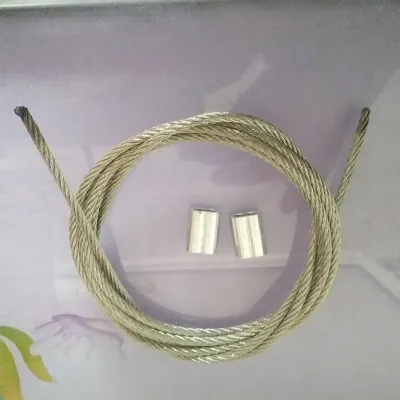
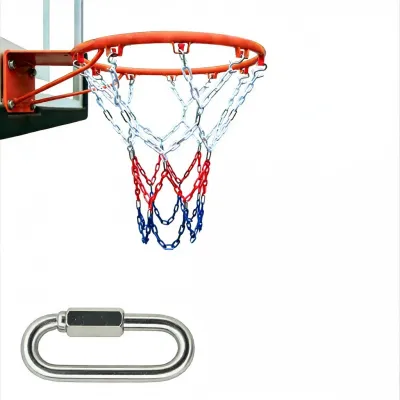
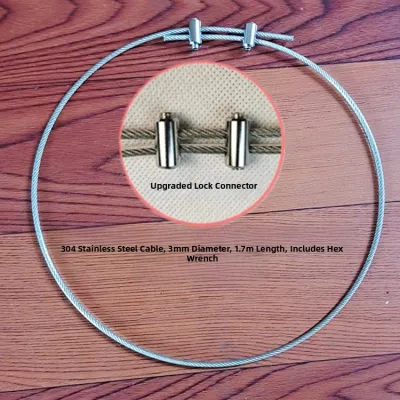
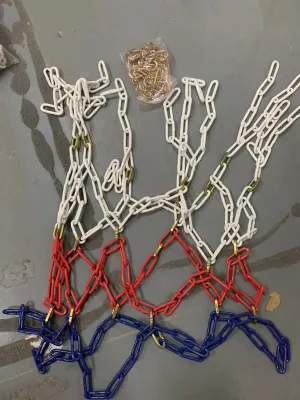
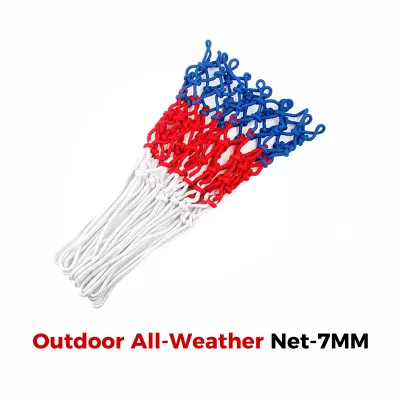
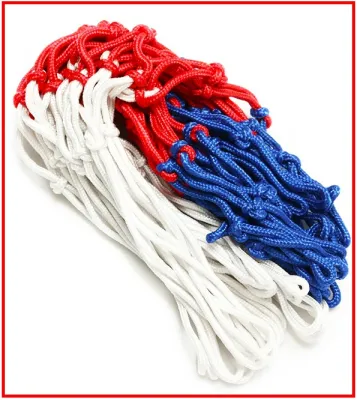
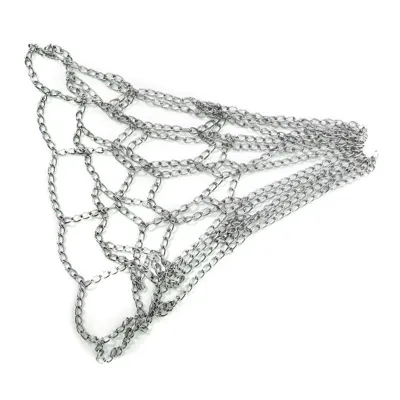
Prices are valid at publication and may change. Please refer to the product page for the latest price.
Because visual estimates can be highly deceptive online or in packaging photos, you should always verify the exact gauge measurements in the manufacturer’s official product specifications. Relying on product images alone can lead to purchasing a net that is too flimsy for intense recreational play.
Selecting the right thickness involves balancing durability against weight and wind resistance. Thicker, lower-gauge wires provide excellent longevity and resist bending during heavy use, making them ideal for high-traffic public parks. However, these heavier nets require a sturdy rim to support the extra weight. Conversely, thinner, higher-gauge wires are lighter and sway less in strong winds, but they may wear down faster under constant impact.
Evaluating Link Size and Ball Response
The dimensions of the individual chain links directly influence how the basketball behaves as it passes through the hoop. When a ball travels through a stainless basketball net, the size and weight of the links determine the acoustic feedback—the distinct metallic “swish” sound—and how much the net decelerates the ball. Larger, heavier links tend to slow the ball down more dramatically, giving players a clear visual and auditory confirmation of a successful shot.

To ensure smooth gameplay, you must check the interior gap of the links before purchasing. If the gaps within the chain links or the mesh pattern are too wide, a standard size 7 basketball can wedge itself inside the net, disrupting the flow of your game. The ideal net design features a tapered mesh structure that narrows gradually to guide the ball through without any risk of trapping it.
Additionally, take the time to inspect the uniformity of the welded or linked joints. High-quality stainless steel nets feature consistent, clean welds at every connection point. Uneven welds or gaps in the links can create weak spots that split under the force of a hard shot, leading to premature structural failure.
Verifying Hoop Fit and Attachment Loops
A durable net is only useful if it securely attaches to your existing basketball rim without requiring custom modifications. Before making a purchase, count the hooks on your rim and match that exact number to the net’s top attachment loops. Most standard regulation rims feature 12 hooks, but some recreational or youth rims may have fewer. Ensuring an exact match prevents uneven tension and keeps the net centered.
You should also measure the inner diameter of your rim to confirm compatibility with the net’s top ring spread. Standard basketball rims have an inner diameter of 18 inches. A compatible stainless basketball net will have a top opening designed to stretch or sit evenly across this diameter, preventing the chain from hanging too loosely or pulling too tightly against the metal hooks.
Finally, perform a quick inspection of the finishing on the top loops. Look for smooth, rounded loops that slide easily onto your rim hooks. Sharp edges or poorly finished loops can scratch the protective paint on your rim, leading to rust, or they can prematurely unravel if the metal is not properly secured.
Matching Specs to Your Court Environment
Your playing environment plays a massive role in how well your stainless basketball net performs over time. In the Philippines, outdoor courts face extreme tropical conditions, including intense solar heat, high humidity, and heavy seasonal rainfall. Under these harsh conditions, standard steel nets will quickly rust, making genuine stainless steel essential for preventing corrosion and maintaining structural integrity.
Even with high-quality stainless steel, you should conduct routine visual checks on your entire hoop setup. Inspect the net for loose links, structural deformation from heavy use, or surface degradation on any non-stainless hardware components, such as the mounting S-hooks or the rim itself.
To maximize the lifespan of your equipment, always follow the manufacturer’s specific cleaning and storage guidelines. If you play on an outdoor court near coastal areas with salty air, periodically rinsing the net with fresh water can help remove corrosive salt deposits and preserve the metal’s clean finish.
Frequently Asked Questions (FAQ)
Does a stainless steel net damage the basketball?
A high-quality stainless basketball net with smooth, well-finished steel links will not damage a standard leather, composite, or rubber basketball. However, rough manufacturing can leave sharp edges. You should always inspect the net for any sharp burrs, rough spots, or broken welds before your initial game to protect your basketball from scuffs and punctures.
How do I install a steel net on a standard rim?
To install the net safely, begin by aligning the top loops of the chain net with the hooks on your basketball rim, distributing them evenly around the perimeter. Once aligned, hook each loop securely into place. Always consult the manufacturer’s product manual for any specific locking mechanisms, tension adjustments, or specialized tools required to complete the installation.

Community discussion
Share your experience or ask a question. Comments are reviewed before publication.