
Selecting the right tennis ball cart requires balancing your training volume with the physical demands of your playing environment. A cart that is too small forces constant interruptions to collect balls, while an oversized or overly heavy model can become a chore to transport and store. By evaluating your typical practice scenarios, court surfaces, and storage limitations, you can identify a cart that streamlines your drills and withstands local weather conditions.
Matching Ball Capacity to Your Practice Scenario
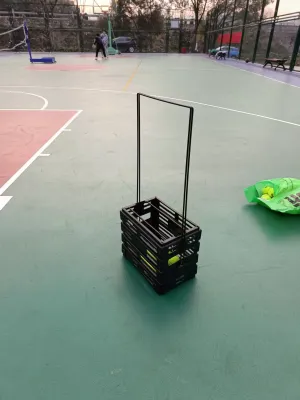
For solo practice, self-feeding drills, and serve practice, a compact cart or a portable ball hopper is usually the most practical choice. If you are practicing alone, a capacity of 75 to 120 balls is generally sufficient to establish a consistent hitting rhythm without requiring constant refilling. This volume allows you to focus on mechanical adjustments during baseline drills or serve repetitions before initiating a pickup phase. A smaller capacity also keeps the overall weight manageable, allowing you to lift the cart in and out of your vehicle without physical strain.
Group coaching sessions demand a significantly larger ball volume to maintain high training intensity and student engagement. Instructors running multi-ball feeding drills or managing continuous rally exercises for three or more students typically require a cart that holds between 150 and 250 balls. This capacity ensures that drills can run continuously for several minutes, allowing each player to receive multiple repetitions before the group pauses to collect balls. A larger ball supply also helps coaches maintain the momentum of the lesson, reducing downtime and keeping players active on the court.
Products mentioned in this guide
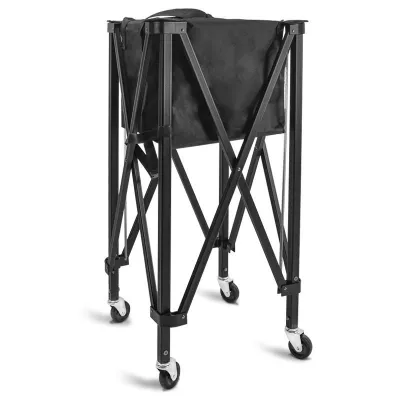
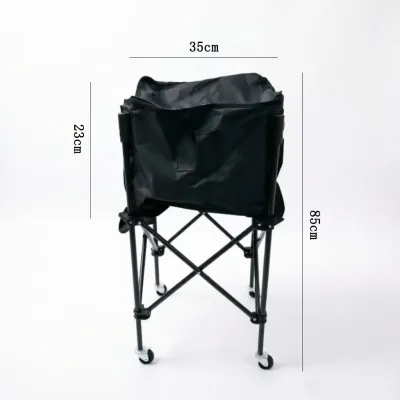
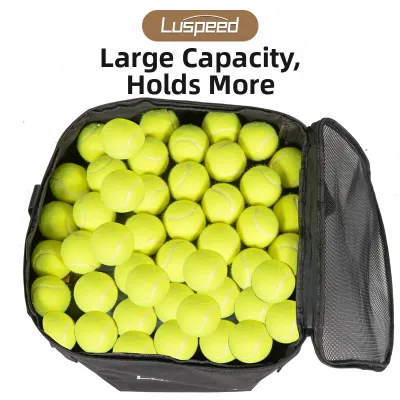
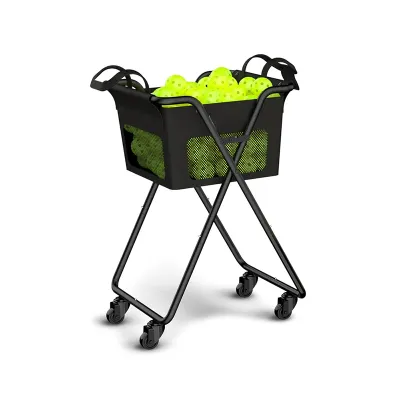
Prices are valid at publication and may change. Please refer to the product page for the latest price.
In club or commercial facility settings, carts often need to accommodate 300 or more balls to support high-volume clinics, team practices, and back-to-back coaching sessions. However, maximizing capacity introduces a trade-off with overall weight and maneuverability. A fully loaded 300-ball cart can weigh over 15 kilograms in balls alone, excluding the weight of the frame. Facility managers must balance this high volume against the physical effort required for staff to push the cart across multiple courts throughout the day, especially when navigating ramps or uneven pathways.
Selecting the Frame Material and Wheel Type for Your Court
The frame material directly impacts the cart’s durability, weight, and resistance to environmental wear. Heavy-duty steel frames offer excellent structural rigidity and stability under heavy loads, making them a common choice for permanent teaching carts at dedicated tennis clubs. However, steel is susceptible to rust, particularly in humid tropical climates like the Philippines, where moisture and salty air can accelerate corrosion if the protective coating is chipped. If you select a steel frame, verify that it features a durable powder-coated finish to protect the underlying metal from moisture.

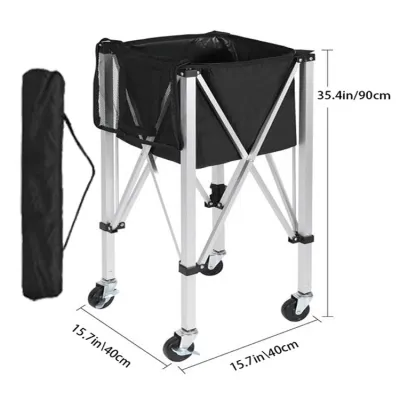
Aluminum frames present a lighter, highly rust-resistant alternative that is well-suited for coaches and players who frequently travel between different courts. These frames are significantly easier to lift into vehicles and maneuver around the court, reducing physical fatigue during transport. While aluminum is inherently resistant to oxidation, users should check the manufacturer’s specified load-bearing limits on the product label, as lightweight aluminum tubing can bend under excessive vertical force or rough handling.
Wheel selection is equally critical for court performance and surface protection. Solid rubber or hard plastic wheels are standard on many entry-level carts, performing well on clean, hard concrete or acrylic courts. However, on clay or grass courts, small, hard wheels can dig into the surface, causing drag and potentially damaging the court. For these softer surfaces, wider pneumatic or turf-friendly tires are necessary to distribute the weight evenly and ensure smooth rolling. Additionally, look for wheels equipped with locking mechanisms to keep the cart stationary on slightly sloped courts or during windy days.
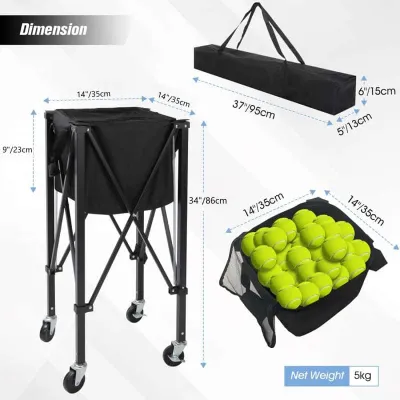
The choice between folding and fixed frames involves a trade-off between convenience and long-term durability. Folding frames utilize scissor-like joints and locking pins to collapse into a compact shape, which is ideal for players who must transport their equipment in a standard vehicle trunk. Fixed frames, conversely, feature welded joints that offer superior structural rigidity and eliminate moving parts that can wear out over time. While fixed frames are highly durable and suitable for on-site club storage, they require dedicated storage space and are difficult to transport without a large utility vehicle.
Building Your Shortlist: Ergonomics, Mesh Durability, and Storage
When evaluating candidate carts across different budget tiers, ergonomics should be a primary consideration. Pushing a heavy cart with a handle that is too low can lead to back and shoulder strain during long training sessions. Look for carts with adjustable handle heights or angled grips that allow you to maintain a natural, upright posture. Testing the handle height relative to your body size before purchasing helps prevent repetitive strain injuries. Padded foam or rubber grips also enhance comfort and control when maneuvering a fully loaded cart.
The durability of the mesh bag or basket determines how well the cart handles the physical weight of the balls over years of use. Inspect the quality of the zippers, the thickness of the nylon or polyester mesh, and the reinforcement along the seams. High-quality bags often feature a rigid bottom support panel or a fabric sleeve that slides over a metal crossbar, preventing the bag from sagging and rubbing against the wheels or the ground. Verify that the mesh material is UV-resistant, as prolonged exposure to intense sunlight can weaken synthetic fibers and cause them to tear under load.
Assembly requirements and collapsed dimensions are vital practical checks. Some heavy-duty carts require specialized tools and significant time for initial assembly, while others feature tool-free, snap-together designs. Measure your available storage space—such as your car trunk, home closet, or club locker—and compare these measurements against the manufacturer’s collapsed dimensions to ensure a hassle-free fit. If you plan to transport the cart daily, prioritize models that can be folded and unfolded in under a minute without requiring tools.
Budget considerations in the local market often range from affordable, entry-level wire baskets costing around ₱1,500 to professional-grade folding carts that can exceed ₱8,000. While lower-priced options are suitable for occasional backyard play, investing in a mid-range cart with reinforced joints and a weather-resistant bag offers better long-term value for active players and coaches who use their equipment weekly. Compare the warranty terms and the availability of replacement parts, such as replacement mesh bags or wheel assemblies, before making your final decision.
Extending Cart Lifespan: Maintenance and Storage Checks
Proper maintenance is essential to protect your investment from the wear and tear of daily use and environmental exposure. The mesh bag accumulates court dust, clay residue, and sweat, which can degrade the fabric fibers over time. Periodically removing the bag and washing it with mild soap and water helps maintain its strength; ensure the bag is completely dry before reattaching it to prevent mold growth in humid conditions. Avoid using harsh chemical cleaners or bleach, which can weaken the synthetic mesh and cause premature tearing.
Regularly inspect the metal frame and joints for early signs of wear. Look for chipped paint, scratches, or loose hardware, especially at pivot points on folding models. Applying a thin layer of rust-inhibiting spray to exposed metal and tightening loose bolts with a wrench will prevent structural failures during a practice session. Storing the cart in a dry, shaded indoor area rather than leaving it exposed to direct sunlight and rain will significantly prolong its lifespan and prevent the frame from corroding.
The wheels and axles require routine attention to ensure quiet, smooth operation. Hair, dust, and court debris can wrap around the axles, increasing rolling resistance and causing uneven wear on the tires. Periodically clear any debris from the wheel assemblies and apply a small amount of silicone-based lubricant to the bearings. Check the tire tread and inflation levels on pneumatic models to maintain optimal traction and mobility, ensuring the cart rolls smoothly across the court without leaving marks.
Frequently Asked Questions (FAQ)
Can I use a standard tennis ball cart on grass or clay courts?
Standard tennis ball carts equipped with small, hard plastic wheels are generally not suitable for grass or clay courts. These narrow wheels tend to sink into soft turf or loose clay, creating significant drag that makes the cart difficult to push and can leave unsightly ruts on the playing surface. If you regularly play on these surfaces, check the manufacturer’s specifications for carts equipped with wider, pneumatic tires or specialized turf wheels designed to distribute weight more effectively.
How do I prevent the mesh bag from sagging over time?
To prevent the mesh bag from sagging and dragging on the ground, always adhere to the manufacturer’s stated weight and volume limits. Overloading the bag with extra equipment, heavy water bottles, or more balls than recommended stretches the fabric and weakens the seams. Additionally, perform routine visual checks to ensure that any integrated bottom support panels, straps, or metal crossbars are properly positioned and securely fastened to support the weight of the balls.
Community discussion
Share your experience or ask a question. Comments are reviewed before publication.