
Quick Guide to Evaluating Home Volleyball Sets
Setting up a volleyball court at home is an excellent way to encourage outdoor activity, host family gatherings, and practice athletic skills. However, choosing a complete volleyball with net set requires looking beyond the price tag to evaluate how the equipment will perform in your specific home environment. A mismatched set can lead to sagging nets, bent poles, or a ball that is too painful for casual players to enjoy.
To make a smart purchase, you must assess four primary areas: the play surface, the durability of the net and poles, the space available in your yard or driveway, and the age of the players. Outdoor setups in tropical climates face unique challenges, including high humidity, intense sunlight, and sudden downpours, which can quickly degrade low-quality materials. By understanding the specifications of each component, you can select a durable system that provides years of safe, active entertainment.
Choosing the Right Volleyball for Your Play Environment
The volleyball included in a complete set dictates the initial play experience, but its performance depends heavily on where and who is playing. Matching the ball’s construction to your backyard lawn, sandy patch, or concrete driveway prevents premature wear and physical discomfort.
Products mentioned in this guide
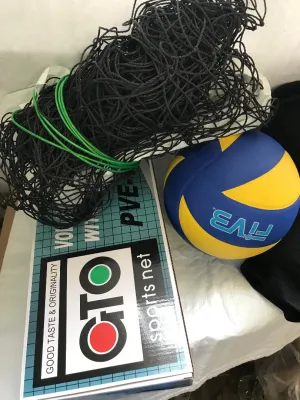
![[Spot +24hours delivery]950*100cm International Standard Volleyball Net Outdoor Training Net with Bag](https://img.lazcdn.com/g/p/265af00d9b59ff5008a08a4eaf652680.jpg_400x400q80.jpg_.webp)
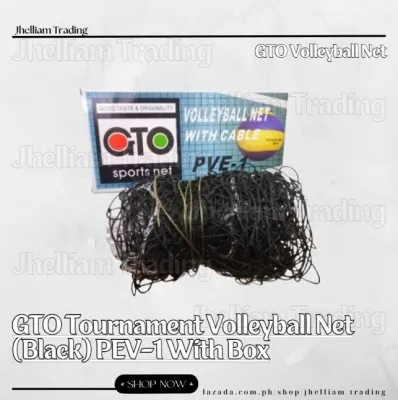
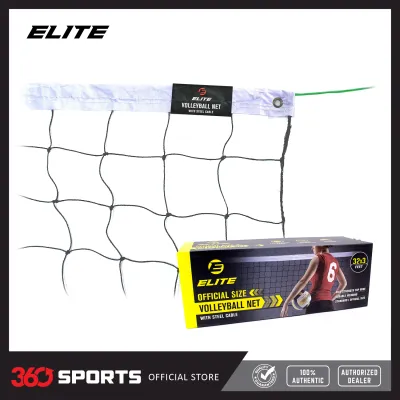
Prices are valid at publication and may change. Please refer to the product page for the latest price.

Material and Surface Compatibility
Synthetic Leather (PU/PVC): Synthetic leather covers offer a soft feel that mimics professional indoor balls, making them comfortable for bare arms. However, their water resistance varies, and rough concrete surfaces can scuff them quickly. They are best suited for grass lawns or sandy areas where abrasive contact is minimal.
Rubber Covers: Rubber volleyballs are highly durable, waterproof, and ideal for rough concrete driveways or wet grass. The trade-off is a harder impact, which can sting the forearms of casual players or younger children during extended play. If you choose a rubber ball, look for models with textured surfaces to improve grip when hands get sweaty.
Composite Materials: High-grade composite covers balance softness and durability, performing well on grass and sand. They resist moisture better than standard synthetic leather but should still be dried before storage. These are excellent for teenagers and adults who want a realistic play feel without sacrificing outdoor durability.
Surface Verification: Before buying, inspect the manufacturer’s product specifications to confirm if the ball is rated for outdoor use. Look for labels indicating “all-weather,” “outdoor,” or “soft-touch” to ensure the material can handle local humidity and rougher ground contact. Stitched panels are generally more durable for outdoor environments than glued panels, which can peel when exposed to moisture and heat.
Size, Weight, and Age Appropriateness
Official Standards: Standard adult volleyballs (Size 5) have a circumference of 65 to 67 centimeters and a weight of 260 to 280 grams. These are ideal for teenagers and adults practicing standard skills. Using a regulation ball helps players develop proper muscle memory and technique.
Youth and Lightweight Options: For younger children or family gatherings, look for oversized or lightweight “soft-play” balls. These are designed with extra padding and reduced weight to prevent bruising and encourage longer rallies. They allow younger players to build confidence without the fear of painful impacts.
Valve Quality and Pressure Retention: Check the ball’s valve construction in the product description. A recessed butyl rubber bladder offers superior air retention compared to latex bladders, reducing the frequency of re-inflation. Ensure the set includes a reliable hand pump and inflation needles so you can maintain the correct pressure.
Age-Grade Labels: Always verify the recommended age range on the packaging. Choosing a ball that matches the physical development of your players ensures safety and prevents hand or wrist strain.
Assessing Net Durability and Frame Stability
A sagging net or a collapsing frame can quickly ruin a weekend game. Evaluating the structural integrity of the net and the stability of the poles ensures your setup remains upright and safe during intense spikes and windy afternoons.
Net Construction and Weather Resistance
Mesh Thickness and Material: Look for nets made from polyethylene (PE) or nylon with a high ply rating, such as 18-ply or higher. Thicker mesh resists tearing when hit by hard-driven balls or accidental player contact. It also maintains its shape better under constant tension.
Knot Types: Knotted nets generally offer better structural integrity and shape retention over time compared to knotless designs, which can stretch out unevenly under constant tension. Knotted construction ensures that a small tear in one section does not cause the entire net to unravel.
Reinforced Borders: The top, bottom, and side bands (tapes) should be made of heavy-duty waterproof canvas or vinyl. Double or triple stitching along these boundaries prevents the net from fraying and tearing at high-stress connection points. Wide borders also improve visibility during fast-paced play.
UV and Moisture Protection: Outdoor nets face constant exposure to intense sunlight and tropical downpours. Verify that the net material has been treated with UV inhibitors and water-resistant coatings to prevent rot, fading, and brittleness. A net without these treatments can degrade and snap within a single season of outdoor exposure.
Pole Materials and Anchoring Systems
Steel Poles: Steel poles offer maximum rigidity and stability, making them excellent for permanent or semi-permanent setups. However, they are heavy and must have a rust-resistant powder coating to survive humid environments. Uncoated steel will quickly rust from the inside out when exposed to rain and morning dew.
Aluminum Poles: Aluminum poles provide a great balance of strength and lightweight portability. They do not rust, making them highly suitable for coastal areas or frequent transport, though they can bend under extreme tension. Look for aircraft-grade aluminum for the best durability.
Fiberglass Poles: Fiberglass poles are extremely lightweight and flexible, making them easy to carry. They are best suited for light, casual play but may bow significantly under high net tension. They are highly resistant to weather but require careful handling to avoid splintering.
Anchoring Systems:
- Ground Stakes and Guy Lines: This system uses tension ropes anchored into the grass or sand with heavy-duty stakes. It provides excellent stability for lawn play but cannot be used on concrete driveways. Look for metal stakes rather than plastic ones, as they penetrate hard soil more easily.
- Weighted Bases: These bases are filled with water or sand and sit directly on the ground. They are essential for hard surfaces like concrete or paved yards, though they require significant effort to fill and empty. Ensure the plastic used for the bases is thick and UV-resistant to prevent cracking.
Tensioning Mechanisms: Look for sets equipped with pull-down guy line adjusters, tension rings, or integrated winch/ratchet systems. These mechanisms allow you to adjust and lock the net tension easily without tying complex knots. A secure locking system prevents the net from sagging mid-game.
Pole Wall Thickness: Check the specifications for the pole diameter and wall thickness. Thicker walls prevent the poles from bending or crimping when the guy lines are pulled tight to eliminate net sag. Avoid ultra-thin poles that flex excessively under moderate tension.
Portability, Storage, and Space Requirements
Before purchasing a volleyball with net set, measure your available outdoor space to ensure a safe and functional layout. An official volleyball court measures 18 meters long by 9 meters wide, with a free zone of at least 3 meters on all sides. For casual home play in backyards or driveways, you can easily scale down these dimensions to fit your space, but you must ensure there are no low-hanging tree branches, power lines, or sharp obstacles nearby.
Consider how often you plan to assemble and disassemble the set. If you intend to take the set to the beach or a local park, portability is key. Look for sets that collapse into compact dimensions and fit into an included heavy-duty carrying bag. Examine the carrying bag’s material; heavy-denier polyester (600D or higher) with reinforced handles and durable zippers will withstand the weight of metal poles and stakes without tearing.
Review the manufacturer’s estimated setup time and tool requirements. Many modern home sets feature push-button locking poles that require no tools for assembly, allowing you to go from storage to play in under fifteen minutes. If you have limited storage space in your garage, utility shed, or closet, verify the folded dimensions of the poles to ensure they fit comfortably without cluttering your home.
Building Your Shortlist: Matching Sets to Your Home Setup
To find the right volleyball with net set, start by defining your primary use case and matching it to your household’s specific needs.
Define Your Primary Use Case:
- Family and Kids' Play: Focus on safety, soft-touch balls, adjustable pole heights, and easy setup. Lightweight plastic or thin aluminum poles are usually sufficient.
- Active Adult and Competitive Practice: Prioritize heavy-duty steel or thick aluminum poles, a high-ply knotted net, a regulation-size composite ball, and a robust ratchet tensioning system.
Establish a Realistic Budget: Home volleyball sets in the local market vary widely in price.
- Entry-Level Sets (under ₱2,500): Typically feature plastic or thin fiberglass poles, basic lightweight nets, and simple plastic ground stakes. These are best for occasional, gentle backyard play by young children.
- Mid-Range Sets (₱2,500 to ₱6,000): Often include adjustable aluminum poles, weather-resistant nylon nets, guy lines with tension adjusters, and a decent carrying bag. This range offers the best value for regular family use.
- Premium/Semi-Professional Sets (above ₱6,000): Feature heavy-duty powder-coated steel or thick-walled aluminum poles, professional-grade nets with wide vinyl borders, advanced winch or ratchet tensioning systems, and high-quality boundary lines.
Verify Platform and Brand Policies: When purchasing through online marketplaces or official brand stores, check the warranty coverage and return policies. Look for sellers that offer at least a 7-day replacement window for manufacturing defects, especially for critical parts like tensioning clips, pole joints, or net stitching. Reading customer feedback regarding customer service responsiveness can also save you from future headaches.
Pre-Purchase Accessory Checklist: Before finalizing your order, confirm exactly what is included in the box. A complete, hassle-free set should ideally contain:
- Adjustable poles (2 pieces or multi-section)
- Weather-resistant net
- Guy lines with tensioning hardware
- Heavy-duty ground stakes (metal or high-impact plastic)
- Volleyball (preferably soft-touch or composite)
- Hand pump with inflation needle
- Pre-measured boundary lines with anchors
- Durable carrying bag with shoulder straps
Frequently Asked Questions (FAQ)
How do I maintain the net tension over time?
To maintain optimal net tension, regularly inspect the guy lines, tensioning clips, and pole anchors before each play session. Avoid over-tightening the lines beyond the manufacturer’s recommendations, as excessive force can warp aluminum poles, snap fiberglass rods, or tear the net’s side sleeves. Always release the tension slightly when the set is not in use to prevent the net fibers and elastic cords from stretching permanently.
Can I leave the volleyball set outside permanently?
While many home volleyball sets feature weather-resistant coatings, leaving them exposed to the elements permanently is not recommended. Continuous exposure to intense tropical sunlight, high humidity, and heavy rain will accelerate UV degradation of the net fibers, cause steel poles to rust, and weaken plastic tensioning clips. To maximize the lifespan of your equipment, take down the set and store it in a dry, shaded area during the rainy season or when it will not be used for extended periods.
What is the standard net height for casual home play?
The official regulation net height is 2.43 meters for men and 2.24 meters for women. For casual home play involving mixed ages and genders, a height of 2.24 meters is highly practical. If young children are playing, look for a set with adjustable poles that allow you to lower the net to 1.8 to 2.0 meters, ensuring everyone can safely enjoy the game and successfully clear the net.
Community discussion
Share your experience or ask a question. Comments are reviewed before publication.