
Finding a reliable waterproof dive flashlight under ₱3,000 in the Philippines is entirely possible, but it requires careful scrutiny of technical specifications and realistic expectations. For recreational divers, snorkelers, and night-reef explorers visiting local destinations like Anilao or Moalboal, a budget-friendly underwater light provides essential visibility without the premium price tag. However, safety underwater is paramount; a cheap light must never replace proper dive training, pre-dive planning, or a primary backup system. To get the best value, you must look past flashy marketing terms and focus on verifiable depth ratings, secure switch mechanisms, and robust battery configurations that fit within your strict ₱3,000 budget.
Setting Realistic Expectations for a ₱3,000 Dive Light
When shopping for dive gear within a ₱3,000 budget, you must distinguish between casual, shallow-water exploration and technical deep diving. Entry-level lights in this price range are highly suitable for recreational snorkeling, shallow reef dives, and night-time tide pool exploration. They are not engineered, however, for technical deep dives, cave penetration, or decompression diving where an equipment failure could become life-threatening. Safety in water sports depends on strictly adhering to the manufacturer’s specified depth limits and never pushing your gear past its tested capabilities. If a light is rated for 30 meters, do not attempt to take it down to 40 meters, as hydrostatic pressure increases rapidly with depth and can easily breach compromised seals.
Additionally, shopping on local e-commerce platforms in the Philippines requires a bit of financial strategy. While the base price of the flashlight itself might sit comfortably under ₱3,000, you must account for potential hidden costs. Shipping fees to provinces outside Metro Manila, import duties, or the need to purchase external accessories can quickly inflate your total checkout price. Many budget dive lights do not ship with high-capacity rechargeable batteries (such as 18650 or 26650 lithium-ion cells) or a dedicated charger. Be sure to verify what is included in the box so you do not exceed your ₱3,000 budget once all necessary components are added to your cart.
Products mentioned in this guide
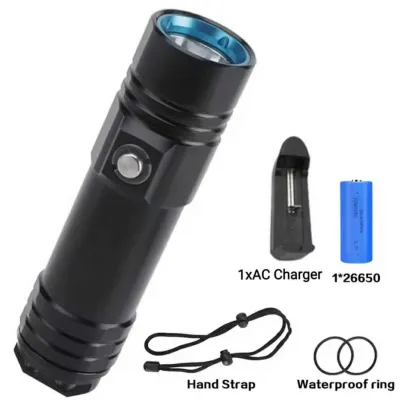
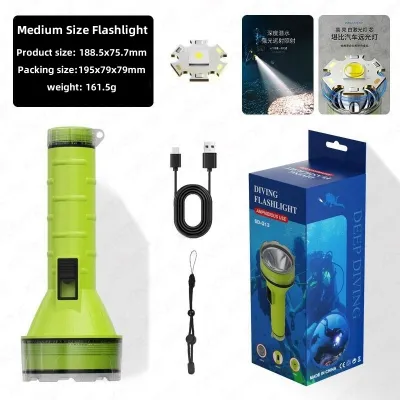
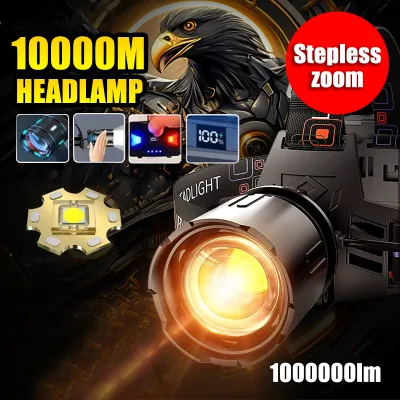
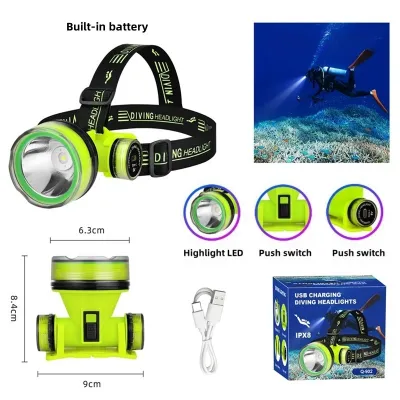
Prices are valid at publication and may change. Please refer to the product page for the latest price.
Must-Have Specifications for a Waterproof Flashlight and Underwater Safety
To ensure your safety and avoid a sudden blackout in the dark depths, you must understand the technical specifications of any underwater light. The most critical distinction is between a generic waterproof rating and an explicit depth rating. Many products advertise an IPX8 rating, which technically means the device can withstand continuous submersion in water, often only up to 1.5 or 2 meters for a limited time. For diving, you must ignore generic “waterproof” labels and look for an explicit depth rating, such as 30 meters, 50 meters, or 100 meters. This rating indicates the light has been designed and tested to withstand the specific hydrostatic pressure encountered at those depths.

The balance between lumens and beam angle also dictates how well you can see underwater. While high-end brands offer precise optical engineering, budget lights often overstate their lumen output to attract buyers. A realistic output for a ₱3,000 dive light is typically between 800 and 1,200 true lumens. For general reef diving or snorkeling in clear Philippine waters, a wide beam angle (around 60 to 70 degrees) is excellent for illuminating a broad area. Conversely, if you plan to do night dives or explore murky waters with suspended particles, a narrow, focused beam (around 10 to 15 degrees) is superior because it cuts through the turbidity without causing excessive backscatter.
Your power source and switch type are equally vital safety considerations. Rechargeable lithium-ion batteries, such as the 18650 or 26650 formats, are standard for dive lights because they provide the high voltage and sustained runtime required by bright LEDs. When evaluating switches, avoid standard mechanical clicky tail switches. Under pressure, these switches can become difficult to press or, worse, can easily leak. Instead, look for magnetic rotary ring switches or double-click electronic switches. Magnetic switches do not require a physical hole through the flashlight body, drastically reducing the risk of water ingress and accidental activation inside your gear bag.
Premium Features You Can Safely Skip
To stay under the ₱3,000 threshold without sacrificing safety, you should identify which premium features are luxury add-ons rather than necessities. For instance, high-end dive lights often feature bodies milled from aircraft-grade aluminum or titanium. While these materials offer exceptional durability and heat dissipation, high-impact ABS plastic or standard anodized aluminum is perfectly adequate and safe for shallow recreational use. ABS plastic is lightweight, completely corrosion-resistant, and highly affordable, making it an excellent choice for casual divers who prioritize budget over ruggedness.
You can also skip complex lighting modes. Many tactical and outdoor lights come packed with half a dozen modes, including strobe, SOS, beacon, and even UV light. In standard recreational diving, these modes are rarely used and can actually complicate operation under water. A simple, reliable interface with high, low, and off settings is far more practical. Fewer electronic modes mean a simpler internal driver circuit, which reduces the likelihood of mechanical or electronic failure when you are underwater and need your light to perform reliably.
How to Verify Quality on Online Marketplaces
Navigating local e-commerce platforms requires a critical eye to separate genuine, high-quality dive lights from cheap imitations. One of the easiest ways to spot exaggerated claims is to look at the listed lumens. If a seller claims a flashlight produces 10,000 lumens for only ₱1,500, you can safely assume this is an inflated marketing tactic. To verify real-world performance, ignore the polished studio graphics and scroll directly to the customer reviews. Look for verified buyer photos and videos showing the light in actual underwater conditions, such as during a pool test or a shallow dive, which provides a much more accurate representation of its true brightness and build quality.
Next, always check the product description or ask the seller directly about the sealing mechanism. A true dive-rated light must feature double O-ring seals at every joint, particularly around the battery compartment cap. Single O-rings are standard for rainproof lights, but they are highly susceptible to failing under the pressure of a proper dive. If the product listing does not explicitly mention double O-rings, or if customer reviews point out that the seals are thin and flimsy, it is best to look for another option.
Finally, before you take any new budget light into the open ocean, utilize the platform’s return window to conduct a controlled test. Once your package arrives, inspect the seals and submerge the light in a bucket of water or a shallow swimming pool for at least 30 minutes without the batteries installed. This low-risk test allows you to verify the integrity of the watertight seal. If you notice any moisture inside the lens or battery compartment afterward, you can initiate a return or exchange immediately, ensuring you never risk an equipment failure during an actual dive.
Essential Maintenance to Prevent Saltwater Damage
Even the most robust budget dive light will quickly fail if it is not properly maintained, especially when exposed to the harsh, salty, and humid tropical environment of the Philippines. Saltwater is highly corrosive and can form micro-crystals as it dries, which can easily tear delicate rubber seals and jam mechanical switches. To prevent this, make it a strict habit to soak and rinse your flashlight in fresh water as soon as possible after every dive. Let it soak for at least 10 to 15 minutes, and operate the switch a few times underwater to flush out any trapped salt or sand particles.
O-ring care is the single most important factor in extending the lifespan of your dive light. Periodically remove the O-rings to visually inspect them for cracks, dirt, or signs of flattening. Clean the grooves with a soft, lint-free cloth, and apply a very thin layer of silicone grease to the O-rings before reassembling. You must never use petroleum-based lubricants like Vaseline, as petroleum chemically degrades rubber and silicone seals, causing them to swell, soften, and ultimately fail under pressure.
Proper storage protocols are also essential for long-term reliability. When you are not planning to dive for an extended period, always remove the batteries from the flashlight body. Store the batteries in a cool, dry place to prevent slow discharge or potential acid leakage, which can ruin the internal electronics of your light. Additionally, store the flashlight with the tail cap slightly unscrewed; this relieves constant compression on the O-rings, helping them maintain their elastic shape and sealing capability for your next underwater adventure.
Frequently Asked Questions (FAQ)
Can I use a regular waterproof flashlight for scuba diving?
No, you should never use a standard waterproof flashlight designed for camping, hiking, or heavy rain for scuba diving. While these lights may carry an IPX7 or IPX8 rating, they are only designed to withstand temporary, shallow submersion near the surface. They lack the reinforced bodies, double O-ring seals, and specialized pressure-resistant switches required to handle the intense hydrostatic pressure of deeper water. Taking a non-dive-specific light underwater will almost certainly result in structural deformation, flooded battery compartments, complete electronic failure, and a sudden, dangerous loss of visibility during your dive. Always choose a light explicitly rated and pressure-tested for the depths you plan to explore.
Community discussion
Share your experience or ask a question. Comments are reviewed before publication.