
When shopping for an inflatable boat for adult water activities, aligning the vessel’s design with your primary use case is the most important safety and financial decision you will make. Modern inflatables have evolved far beyond basic pool toys; they are highly engineered, multi-chambered vessels designed to handle diverse marine and freshwater environments. However, because specialized designs serve very different purposes, choosing the wrong type can lead to poor performance, safety risks, or unnecessary expenses.
Identifying your primary activity prevents you from overspending on heavy-duty transoms or complex floor systems you may never use. The market divides these boats into three primary classifications: fishing, leisure, and water sports. To make an efficient decision, look at the single most critical factor for each category. Fishing demands exceptional stability and accessory mounts; leisure prioritizes passenger comfort and cockpit space; water sports require specialized hull shapes and high motor ratings.
Fishing Inflatable Boats: Stability, Mounts, and Gear Storage
Water safety and stability are the absolute priorities when choosing an inflatable boat for adult angling. Fishing involves active movement—casting heavy lures, leaning over the side to land a catch, or standing up to stretch. Without a highly stable platform, these actions can cause the boat to tilt dangerously or capsize.
Products mentioned in this guide
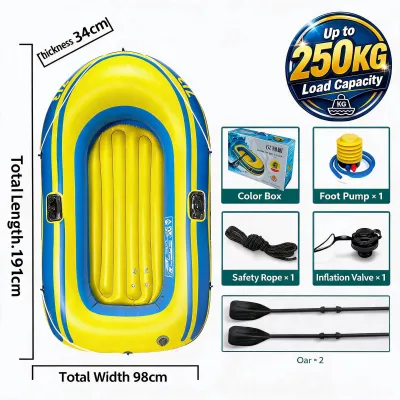
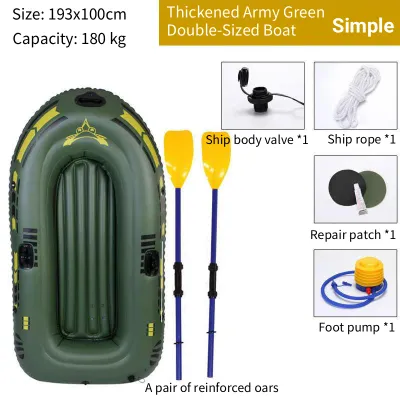
![[Buy 1 Get 10] 5-7 Person Inflatable Boat Family Raft PVC Fishing Boat for Beach & Sea Trips](https://img.lazcdn.com/g/p/7667031b67bb2e40b79639fcda639050.jpg_400x400q80.jpg_.webp)
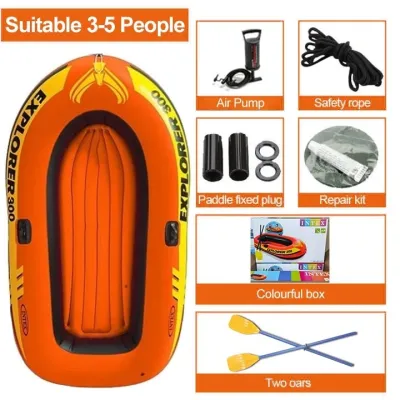
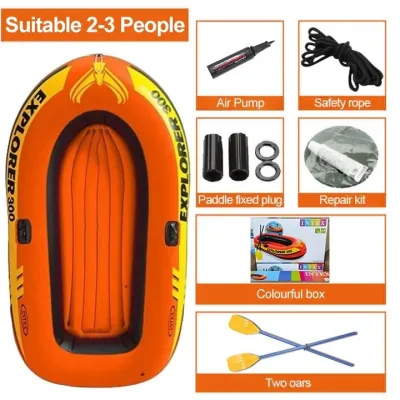
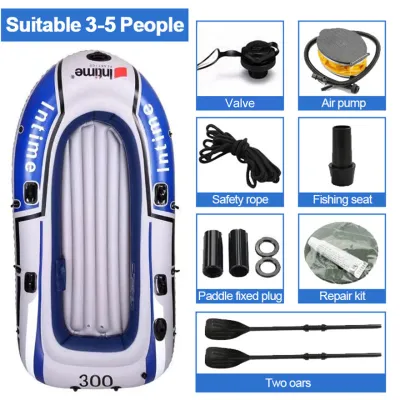
Prices are valid at publication and may change. Please refer to the product page for the latest price.
Before heading out, you must recognize your own physical limits and water conditions. Wind, sudden currents, and wakes from larger vessels can quickly destabilize a small craft. Equipment can never replace proper water safety training and sound judgment; if weather conditions deteriorate or water turns rough, you must return to shore immediately.
To ensure safety, always verify the manufacturer’s maximum weight capacity on the capacity plate. This rating must accommodate the combined weight of all anglers, heavy tackle boxes, rods, coolers, anchors, and any potential catch. Exceeding this limit compromises the boat’s freeboard—the distance from the water’s surface to the top of the tubes—making it highly susceptible to swamping.
Hull and Floor Types for Anglers
The construction of the floor directly determines how safely and comfortably you can stand while fishing. Inflatable boats typically feature one of three floor designs:
- Air Floors (Drop-Stitch): These utilize thousands of polyester threads woven tightly together, allowing the floor to be inflated to a high pressure. They offer a firm surface that is remarkably lightweight and easy to roll up, though they may feel slightly less rigid than solid materials under heavy loads.
- Rigid Panels (Aluminum or Plywood): These interlocking slats provide a completely flat, solid platform. They offer excellent stability for standing and casting, but they increase the overall weight of the boat and require more setup time.
- Rigid Inflatable Boats (RIBs): These combine a solid fiberglass or aluminum hull with inflatable collar tubes. They offer the highest level of structural integrity and performance in rough water, but they cannot be fully deflated and folded into a vehicle, requiring a trailer for transport.
When selecting a floor, verify the manufacturer’s puncture resistance ratings. If you plan to fish near sharp rocks, shallow coral reefs, or oyster beds common in Philippine coastal waters, a heavy-duty floor material or an added protective under-armor layer is essential to prevent catastrophic punctures.
Fishing-Specific Features and Accessories
A dedicated fishing inflatable boat should come equipped with specialized hardware to manage your gear safely. Look for built-in rod holders that secure your equipment while trolling or navigating. Integrated motor mounts or a reinforced transom are vital if you plan to attach a trolling motor or a small outboard engine.
Always check the product specifications to confirm whether these accessories are included in the purchase price or must be bought separately. Additionally, locate the heavy-duty D-rings on the bow and stern; these are crucial for securing gear bags, anchors, and safety tethers. If you intend to use a motor, always verify the transom’s maximum horsepower rating on the manufacturer’s label. Installing an engine that exceeds this rating can damage the transom, void your warranty, and create severe safety risks on the water.
Leisure and Family Boats: Selecting an Inflatable Boat for Adult Comfort and Space
Leisure and family inflatable boats are designed for relaxation, casual cruising, and spending quality time on calm waters. Unlike specialized fishing or high-speed sports boats, these vessels prioritize user-friendly operation, rapid setup, and passenger comfort. They are ideal for exploring protected bays, quiet rivers, or calm inland lakes.

When choosing a leisure model, focus on the ease of inflation and deflation. Since these boats are often transported in the trunk of a car and assembled at the shoreline, a straightforward multi-chamber design ensures you spend more time relaxing and less time pumping. Because they are built for calmer environments, they typically feature lighter materials that make carrying them from the vehicle to the water highly manageable for one or two adults.
Design Priorities for Relaxation and Passengers
Passenger comfort hinges on the cockpit’s layout and seating options. High-quality leisure boats feature inflatable benches, removable bow cushions, and ergonomic backrests that support natural sitting postures during long afternoons on the water.
Before purchasing, check the product label for the recommended maximum passenger count. Ensure the physical dimensions of the cockpit provide enough legroom for adults to sit comfortably without crowding. A crowded boat not only reduces comfort but also restricts movement, making it harder to react to sudden shifts in water conditions. Look for robust grab lines running along the perimeter of the tubes, which provide secure handholds for passengers when crossing small wakes or boarding from the water.
Safety and Capacity Considerations
Understanding the limits of your boat’s capacity is vital for family safety. There is a significant difference between the maximum structural weight capacity and the practical, comfortable capacity of a boat. While a boat may be rated to carry a specific weight, packing it to that absolute limit with multiple adults can make the cockpit cramped and difficult to navigate.
Always check the manufacturer’s capacity plate before loading. When calculating your total load, you must factor in the weight of all passengers, fully loaded coolers, dry bags, safety gear, and personal flotation devices (PFDs). Maintaining proper freeboard is essential; a heavily loaded boat sits lower in the water, increasing the risk of waves washing over the tubes. Never compromise on safety—ensure every passenger has a properly fitted, approved life jacket before leaving the shore.
Water Sports Boats: Speed, Agility, and Motor Compatibility
For adults seeking high-speed cruising, towing, or active water sports, a standard flat-bottom inflatable boat will not suffice. These high-energy activities require specialized water sports inflatables designed to handle the dynamic forces of rapid acceleration, sharp turns, and rough water impacts.
Operating a high-speed vessel demands advanced skill, constant vigilance, and strict adherence to safety protocols. Before attempting to tow tubes or wakeboarders, operators must be fully trained in high-speed boat handling and emergency rescue maneuvers. Equipment cannot replace operator judgment; always establish clear hand signals with the rider and maintain a dedicated spotter on board at all times. If water conditions become choppy or visibility drops, suspend all towing activities immediately.
Performance Hulls and Towing Capabilities
The hull design is the single most important factor influencing how a boat performs at high speeds. Water sports boats typically feature deep-V hulls or specialized rigid hulls that cut through waves rather than bouncing over them. This shape allows the boat to transition quickly to a plane—the state where the hull rises and glides on top of the water—improving both speed and fuel efficiency.
To support towing, you must verify the manufacturer’s maximum horsepower rating for the transom. Towing a rider requires sufficient torque and speed, which can only be achieved with a compatible outboard motor. Check local maritime regulations in your area, as many jurisdictions require specific towing setups, safety flags, and mandatory safety equipment for motorized vessels. Ensure your boat’s transom is structurally reinforced to handle the constant pulling force of a tow rope without warping or tearing.
Material Durability for High-Speed Use
High-speed travel subjects the boat’s hull to intense hydrodynamic pressure and friction. Consequently, you must inspect the manufacturer’s specifications for fabric durability. Look for high denier ratings—which measure the thickness and strength of the individual threads in the fabric—to ensure the material can withstand high-speed impacts with waves and debris.
Pay close attention to seam construction. Welded seams generally offer superior strength and longevity compared to glued seams, especially under the high-pressure demands of motorized use. Additionally, check the product label for specific UV and abrasion resistance ratings. High-speed boats are frequently exposed to intense sunlight and friction; choosing robust, rated materials ensures the tubes maintain their structural integrity and pressure over years of active use.
Cross-Scenario Compatibility: Can One Boat Handle Multiple Activities?
It is common to seek a single, multi-purpose inflatable boat that can handle fishing, family leisure, and occasional water sports. While hybrid models exist, they always involve distinct design trade-offs that you must carefully evaluate.
A boat optimized for fishing or water sports requires a heavy, rigid floor and a reinforced transom to support a powerful motor. While this setup delivers excellent stability and speed, it makes the boat significantly heavier, more difficult to transport, and slower to assemble. Conversely, a lightweight leisure boat is incredibly easy to pack and inflate, but it will lack the rigid floor needed for comfortable standing while fishing, and its transom will not support the high-horsepower motors required for towing.
To navigate these trade-offs, use a simple prioritization framework:
- Identify your top two activities: Determine which use case represents at least 70% of your time on the water.
- Establish safety minimums: Ensure the boat you select meets the absolute safety and structural requirements for your most demanding activity (e.g., rigid floors for fishing, or a reinforced transom for towing).
- Accept performance compromises: If you choose a hybrid boat, accept that it may be slightly heavier than a pure leisure boat or slower than a dedicated sports boat, but it will safely allow you to enjoy both worlds.
In the Philippine market, entry-level leisure inflatables typically range from ₱5,000 to ₱15,000, whereas heavy-duty fishing models with rigid floors can range from ₱20,000 to ₱50,000, and high-performance rigid inflatable boats (RIBs) can exceed ₱100,000.
Adapting to Tropical and Coastal Conditions
Operating an inflatable boat in tropical environments like the Philippines presents unique maintenance challenges. Intense sunlight, high humidity, and saltwater exposure can accelerate fabric and seam degradation if the boat is not cared for properly.
Always check the manufacturer’s care instructions for specific guidelines on UV protection and saltwater maintenance. Saltwater is highly corrosive; after every excursion, thoroughly rinse the entire boat—including the valves, transom, and floorboards—with clean fresh water to remove salt crystals that can abrade the material.
High humidity can also promote mold and mildew growth in the crevices of deflated boats. Ensure the vessel is completely dry before folding and storing it. Store your deflated boat in a cool, dry place out of direct sunlight, as prolonged exposure to heat can cause the air inside the chambers to expand dangerously, weakening the seams. Finally, verify the manufacturer’s warranty terms regarding environmental degradation, as some warranties may have specific exclusions for damage caused by improper storage in high-UV regions.
Frequently Asked Questions (FAQ)
Do I need a license to operate an inflatable boat with a motor?
You must check the latest local maritime authority regulations in the Philippines, specifically those from the Philippine Coast Guard (PCG) and the Maritime Industry Authority (MARINA). Licensing and registration requirements generally depend on the boat’s overall length, the horsepower of the attached motor, and whether you are operating in municipal or national waters.
How long does it take to inflate a boat designed for adults?
Inflation time varies widely based on the boat’s overall volume, the number of safety air chambers, and the inflation equipment used. While a standard manual foot pump may take 15 to 30 minutes of physical effort, a high-quality electric pump can significantly reduce setup time. Always refer to the manufacturer’s estimated setup times for your specific model.
Can I leave my inflatable boat in the water all summer?
It is strongly advised not to leave an inflatable boat in the water continuously, particularly in saltwater or high-UV environments. Continuous exposure increases the risk of biofouling, yellowing, seam weakening, and sudden pressure drops due to water temperature changes. Always follow the manufacturer’s guidelines regarding maximum continuous water exposure.
Community discussion
Share your experience or ask a question. Comments are reviewed before publication.