
Selecting the right golf cart cover requires matching the cover’s specific design with your cart’s exact seating configuration, roof length, and the physical dimensions of your loaded golf bags. In the Philippines, where vehicles face extreme ultraviolet (UV) exposure and sudden, heavy downpours during the monsoon season, an ill-fitting or poorly constructed cover will quickly fail. A loose cover can collect water, flap violently during transport, or trap humidity, which accelerates mold growth on your vinyl seats and corrodes sensitive electrical components.
To ensure your golf cart and expensive clubs remain fully protected, you must evaluate how you intend to use the cover, take precise physical measurements of your modified or stock cart, and select materials engineered to withstand tropical climates. Taking a systematic approach to sizing and fabric selection prevents the common pitfalls of premature tearing, water pooling, and inadequate rear clearance.
Identify Your Primary Cover Type and Use Case
Before taking any measurements, you must determine how and where you will primarily use the cover. Golf cart covers generally fall into three distinct categories, each designed with different sizing tolerances, structural reinforcements, and installation methods. Choosing the wrong category will result in a cover that either fails to protect your vehicle during transit or is too cumbersome for daily use.
Products mentioned in this guide
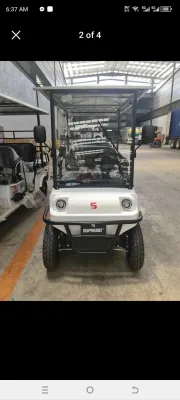
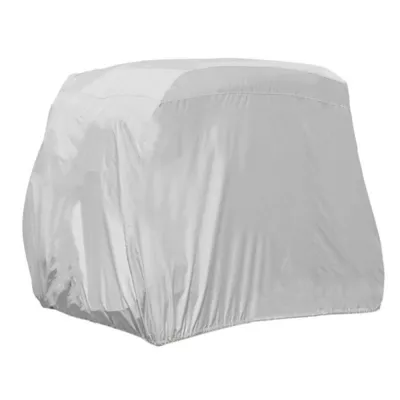
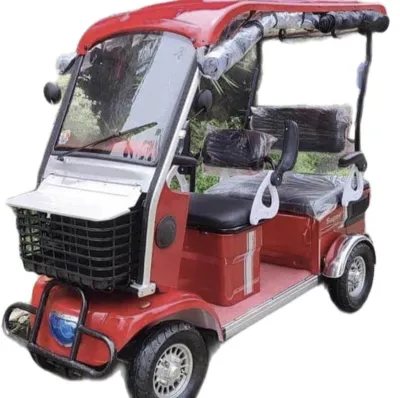
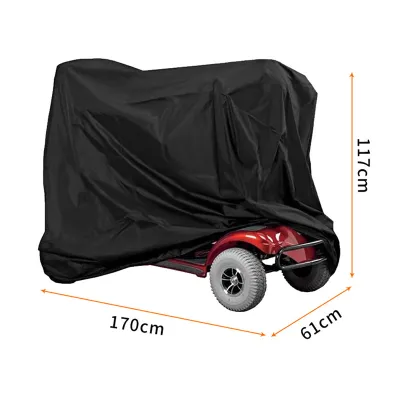
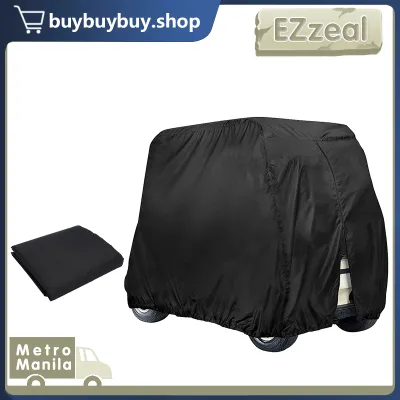
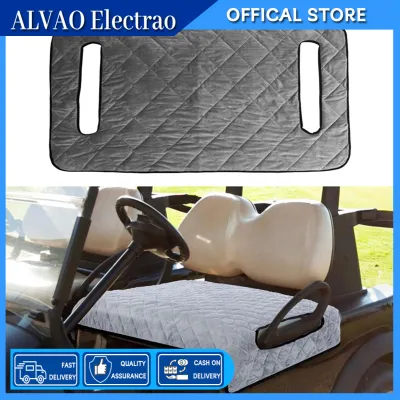
Prices are valid at publication and may change. Please refer to the product page for the latest price.
Storage Covers Storage covers are designed for stationary protection when your cart is parked in a garage, carport, or outdoor lot. These covers focus on blocking dust, dirt, bird droppings, and ambient moisture. Because they are not subjected to high-wind resistance from travel, they typically feature a slightly looser drape and lightweight fabrics that are easy to slip on and off. They rely on elasticized bottom hems and basic under-chassis drawstrings to stay secure against moderate wind gusts.
Travel Covers Travel covers are engineered specifically for transporting your golf cart on an open trailer or in the bed of a pickup truck at highway speeds. These covers must withstand severe wind buffeting without flapping, tearing, or ballooning. Consequently, travel covers feature heavy-duty fabrics, reinforced tie-down straps, and heavy-duty buckles that wrap securely around the entire chassis. They must fit tightly to prevent wind from catching the underside, and they require extra rear reinforcement to accommodate the sharp angles of mounted golf bags.
Weather Enclosures Weather enclosures, or drivable covers, are designed to protect the driver, passengers, and golf gear while the cart is actively in use on the course or within a residential estate. These enclosures feature clear vinyl windows, zippered roll-up doors, and specialized openings for the windshield and headlights. Sizing for weather enclosures is exceptionally precise; the cover must align perfectly with the roof support pillars and body panels to avoid obstructing the driver’s line of sight or interfering with the wheels.
Measure Your Cart Dimensions and Configuration
Generic sizing charts based solely on passenger capacity often lead to purchasing errors because custom modifications and brand-specific designs alter the physical footprint of the vehicle. A standard two-passenger cart has vastly different dimensions than a four-passenger model equipped with a rear flip seat or an extended canopy. To find a cover that fits snugly without overstretching, you must measure your cart’s actual physical dimensions.

Begin by identifying your cart’s configuration variables. A standard suspension cart sits lower to the ground, while a lifted cart designed for off-road use or rugged estate paths requires a cover with a deeper drop to prevent exposing the lower chassis. Similarly, check your roof style: standard short roofs cover only the front two seats, whereas extended roofs stretch over the rear passenger seats or cargo area. Brand variations among major manufacturers like Club Car, EZ-GO, and Yamaha mean that even carts with the same passenger capacity can vary by several inches in height and length.
To establish an accurate baseline, park your cart on a flat surface and use a soft measuring tape to record three essential dimensions:
- Overall Length: Measure from the front bumper to the furthest rear-facing point. If your cart is equipped with a rear seat kit, a footrest, a cargo box, or a rear bag attachment, ensure your measurement extends to the outer edge of these accessories.
- Overall Width: Measure the widest part of the cart body, which is typically the rear wheel arches or fenders. If your cart has side mirrors that do not fold inward, include them in your width measurement to prevent the cover from tearing at the mirror mountings.
- Overall Height: Measure from the ground to the highest point of the roof canopy. For lifted carts, do not rely on stock manufacturer manuals; physically measure from the ground to ensure the cover's skirt will reach the lower chassis without dragging on the tires.
Once you have these measurements, compare them against the detailed sizing charts provided by cover manufacturers. If your measurements fall between two sizes, always opt for the larger size to avoid putting excessive stress on the seams and zippers.
Factor in Golf Bag Dimensions and Rear Clearance
One of the most common mistakes when purchasing a golf cart cover is measuring the cart while it is empty. If you plan to leave your golf bags mounted on the rear rack during storage or transport, the cover must accommodate this extra length and height. Failing to account for your golf gear will cause the cover to stretch tightly over the rear, exposing the front bumper or leaving the bottom of the cart unprotected.
Different golf bag profiles alter the rear silhouette of your cart in distinct ways. A standard lightweight stand bag has a relatively slim profile, whereas an oversized staff bag or a fully loaded cart bag with external shoe pockets and umbrella holders extends significantly further back. When two large bags are mounted side-by-side on the rear rack, they create a wide, bulky projection that can easily tear a standard-sized cover.
For travel covers, look for models that feature dedicated rear expansion gussets or integrated bag-compartment extensions. These design elements provide the necessary slack to fully enclose the golf bags, protecting your expensive clubs from road debris, exhaust soot, and sudden rain during transit. The seams around these rear compartments should be heavily reinforced, as they bear the brunt of the wind resistance when trailing the vehicle.
If you are selecting a weather enclosure, verify that the rear curtain or zipper clearance allows you to access your clubs easily. High-quality enclosures feature roll-up rear panels or heavy-duty zippers that let you reach your golf bags without having to detach or loosen the entire cover. Before finalizing your purchase, mount your golf bags onto the cart exactly as you would for a round of golf, and measure the total length from the front bumper to the outermost curve of the mounted bags to ensure complete coverage.
Select Fabrics Built for Tropical Climates
The climate in the Philippines presents unique challenges for outdoor fabrics. High humidity, intense tropical sun, and torrential downpours during the wet season can degrade cheap materials within months. When selecting a golf cart cover, you must look for specific fabric specifications engineered to withstand these harsh environmental factors.
UV Resistance Intense solar radiation causes non-treated fabrics to become brittle, fade, and tear easily. Look for covers made from solution-dyed polyester or fabrics treated with specialized UV-inhibiting coatings. These materials reflect solar heat and prevent the sun from cracking your cart’s dashboard, fading the vinyl seats, and damaging the battery casing.
Waterproofing vs. Water Resistance For reliable protection during heavy tropical downpours, a simple water-resistant cover is insufficient. Water-resistant fabrics will eventually saturate and leak during prolonged rain. Instead, seek out fully waterproof materials with a high denier rating (such as 300D or 600D polyester) paired with a polyurethane (PU) inner coating. Crucially, verify that the cover features heat-sealed or taped seams; standard stitched seams have thousands of tiny needle holes that will allow water to slowly drip onto your cart’s upholstery.
Breathability and Ventilation In high-humidity environments, a completely sealed waterproof cover can do more harm than good. Moisture from the air or ground will get trapped underneath the cover, creating a greenhouse effect that fosters rapid mold, mildew, and rust. To prevent this, ensure the cover is equipped with built-in mesh air vents. These vents allow air to circulate freely, promoting the evaporation of trapped condensation while still preventing rain from entering from above.
Step-by-Step Installation and Fit Verification
Proper installation is critical to extending the life of both your golf cart cover and the vehicle itself. An improperly secured cover can scratch the cart’s paintwork, collect heavy pools of water, or blow away during a storm. Follow these steps to ensure a secure, protective fit:
- Prepare the Vehicle: Ensure the golf cart is completely clean and dry. Trapping abrasive road grime, sand, or moisture beneath the cover will scratch the clear coat and promote mildew. Fold in the side mirrors, lower or secure the windshield, and remove any loose items from the dash or cup holders that could snag the fabric.
- Drape the Cover Symmetrically: Unfold the cover and identify the front and rear sections, which are usually marked with labels on the inside hem. Lift the cover over the roof canopy, centering it carefully. Gently pull the cover down over all four corners of the cart, working in a balanced, circular pattern to avoid putting uneven tension on any single corner.
- Secure the Fasteners: Pull the elasticized hem down around the lower edge of the chassis. Locate the under-chassis straps or drawstrings. Carefully route these straps underneath the cart body.
Safety Check: Ensure the straps do not rub against sharp metal brackets, steering linkages, or suspension components. On gas-powered carts, keep all straps and fabric completely clear of the hot exhaust pipe and muffler to prevent melting or fire hazards. - Verify the Tension: Walk around the cart to check that the fabric is taut but not overstretched. Look for any sagging areas on the roof canopy where rainwater could pool. If you notice sagging, adjust the strap tension or use a support system to create a slight pitch.
- Check Battery Ventilation: If you own an electric golf cart, never completely seal the vehicle while it is charging. Lead-acid batteries release highly flammable hydrogen gas during the charging cycle. Ensure the cover's ventilation ports are completely unobstructed, or leave the cover partially open at the bottom to allow the gas to dissipate safely.
Clean and Store the Cover for Longevity
Accumulated dirt, salt air, and organic debris can degrade the protective coatings on your golf cart cover over time. Regular maintenance is essential to preserve its water-repellent and UV-resistant properties, especially in coastal or highly humid regions.
To clean your cover, drape it over the cart or spread it out on a clean, flat surface. Use a soft-bristled brush, lukewarm water, and a mild, non-detergent soap. Avoid using harsh household detergents, bleach, or high-pressure washers, as these will strip away the specialized polyurethane waterproof backing and weaken the fabric fibers. Thoroughly rinse away all soap residue with a low-pressure garden hose.
Never fold or store a damp cover. Storing a wet cover in a warm environment will cause mold and mildew to develop within 24 to 48 hours, leaving permanent stains and foul odors. Hang the cover in a shaded, well-ventilated area and allow it to air-dry completely.
Once dry, fold the cover neatly and store it in a cool, dry place. Avoid using airtight plastic bins, which can trap ambient moisture; instead, use a breathable fabric storage bag that allows air to circulate, keeping the material fresh and ready for your next round of golf.
Frequently Asked Questions (FAQ)
Can I use a standard cover for a lifted golf cart?
No, standard covers are designed for stock carts with low ground clearance. If you install a standard cover on a lifted golf cart, the hem will sit too high, leaving the lower chassis, suspension, and wheels exposed to sun and rain. You must purchase a cover specifically designated for lifted models, which features a longer vertical drop to ensure full coverage down to the ground.
How do I prevent water from pooling on the roof?
Water pooling stretches the fabric and degrades the waterproof coating over time. To prevent this, ensure your cover’s tie-down straps are adjusted tightly to keep the roof fabric taut. If your cart has a flat roof canopy, you can place a specialized cover support pole, a soft inflatable ball, or a custom foam block in the center of the roof before installing the cover. This creates a slight dome shape that forces rainwater to shed off the sides naturally.
Community discussion
Share your experience or ask a question. Comments are reviewed before publication.