
Choosing the right balance pad for workout routines depends on matching the pad’s physical properties to your fitness level and specific exercises. A balance pad introduces controlled instability to challenge your core, ankles, and stabilizing muscles. However, because training on an unstable surface increases the risk of slips and falls, selecting the wrong specifications can lead to joint strain or loss of balance. Before starting any balance training, ensure you have the physical capacity for basic single-leg standing on a flat floor, and always perform new exercises near a stable support.
Decoding Balance Pad Thickness and Density
Thickness refers to the vertical height of the pad, which typically ranges from 5 cm to 8 cm. This dimension provides the initial cushioning. Density, on the other hand, refers to how tightly packed the foam material is, determining its resistance to compression under your body weight.
A common misconception is that a thicker pad automatically provides a more intense balance challenge or better joint support. If a thick pad has very low density, your feet will sink straight through to the hard floor, rendering the pad ineffective and potentially straining your ankles. Conversely, an extremely dense, thick pad might feel as rigid as a brick, offering no instability challenge at all.
Products mentioned in this guide
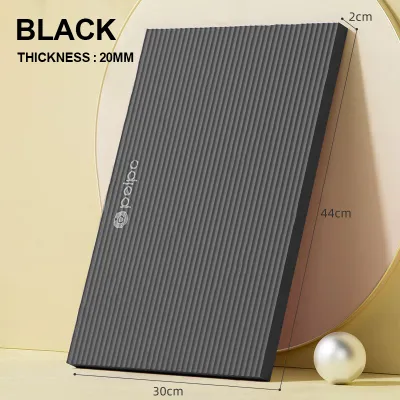


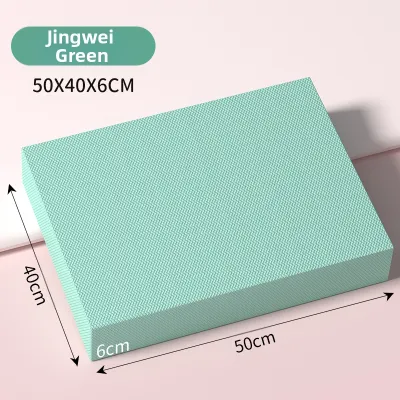

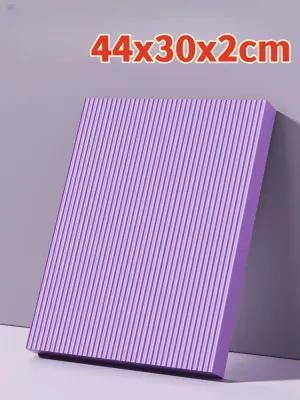
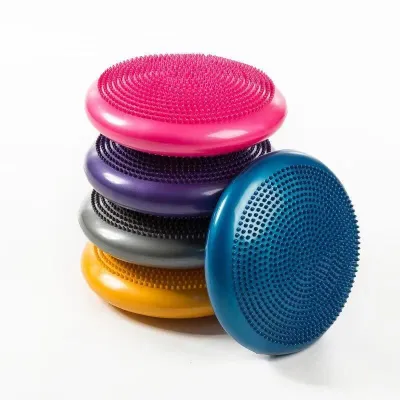
Prices are valid at publication and may change. Please refer to the product page for the latest price.
When shopping, look closely at the manufacturer’s product specifications rather than relying on product photos. Look for terms like high-density closed-cell foam or specific firmness ratings. High-quality pads often list their weight capacity and compression recovery rates, which indicate how quickly the foam returns to its original shape after use.
Matching Specs to Your Workout Type and Fitness Level
Your workout style dictates the level of instability and shock absorption you need. For low-impact rehabilitation, physical therapy, or gentle yoga static holds, a moderately firm, medium-density pad is ideal. It provides enough yield to activate stabilizing muscles without causing excessive joint wobble that could re-injure a recovering ankle or knee.

For high-intensity interval training (HIIT), dynamic lunges, or plyometrics, you require a high-density pad with excellent shock absorption. Dynamic movements exert several times your body weight upon landing. A low-density pad will bottom out instantly during a jump landing, failing to protect your joints from the impact.
The progression principle is vital for safety. Beginners should always start with a thinner, firmer pad that offers minimal deformation. As your joint stability and proprioception improve, you can transition to softer, thicker, or less dense pads that demand greater active stabilization.
To help you decide, consider this general framework based on your primary activity:
- Rehabilitation & Balance Basics: Medium-to-high density, moderate thickness (around 5 cm). Focuses on joint alignment and controlled, slow movements.
- Yoga & Pilates: Medium density, standard thickness. Offers cushioning for knees and wrists during static poses.
- Dynamic Cardio & HIIT: High density, high shock absorption, standard thickness. Designed to withstand rapid footwork and impact without shifting or bottoming out.
Factoring in Size, Shape, and Surface Texture
The physical footprint of your balance pad determines which exercises you can safely perform. Standard rectangular pads are highly versatile, offering ample space for dual-foot stances, wide squats, or kneeling exercises. Curved, oval, or circular variants are specifically optimized for single-leg balance drills or targeted physical therapy, as they force a more centralized focus of your center of gravity.
Surface texture is another critical safety factor, especially in warm, tropical climates where sweat can quickly make workout gear slippery. If you prefer barefoot training, look for a pad with a textured, non-slip waffle pattern on both sides to prevent your feet from sliding and to keep the pad firmly anchored to the floor. For workouts with athletic shoes, a durable, tear-resistant outer skin is necessary to prevent shoe treads from gouging the foam.
Always verify the manufacturer’s stated weight capacity before purchasing. Dynamic movements increase the effective load on the pad, so choosing a pad rated well above your body weight ensures the material maintains its structural integrity and does not flatten permanently over time.
Testing Your Setup and Knowing When to Progress
When using a new balance pad for workout sessions, always conduct a safe, low-risk initial test. Place the pad close to a sturdy wall or a heavy piece of furniture that you can easily grab if you lose your balance. Step onto the center of the pad with one foot first, gradually transferring your weight while keeping your hands near the support.
Pay attention to how the foam behaves under your weight. If your foot sinks completely to the floor (bottoming out), the pad is too soft or has insufficient density for your weight, which can strain your plantar fascia and ankles. If the pad does not compress at all and feels identical to standing on the floor, it is too firm to provide any balance-challenging benefits.
To progress safely, avoid the dangerous practice of stacking multiple balance pads on top of each other, as this creates highly unpredictable shifting. Instead, increase the difficulty by narrowing your stance, closing your eyes, or incorporating light hand weights. If you are recovering from an injury, consult a certified fitness professional or physical therapist before advancing your balance routine.
Frequently Asked Questions (FAQ)
Can I use a standard yoga mat instead of a balance pad?
A standard yoga mat is designed primarily for traction and mild cushioning, usually measuring only 3 mm to 6 mm in thickness. It is highly dense and stable, meaning it does not provide the three-dimensional instability required for deep proprioceptive training. While you can fold a yoga mat multiple times to create a temporary, slightly unstable surface, it lacks the progressive compression and rebound properties of a dedicated closed-cell foam balance pad. For targeted balance workouts, a specialized pad is much more effective.
How do I clean and maintain my balance pad?
Most quality balance pads are made from closed-cell foam, which naturally resists water and sweat absorption. To clean the pad, wipe it down after each workout with a damp cloth and a mild, diluted soap solution. Avoid harsh chemical cleaners, bleach, or abrasive scrubbing brushes, as these can degrade the foam’s protective outer skin and ruin the non-slip texture. Allow the pad to air dry completely in a shaded, well-ventilated area away from direct tropical sunlight, which can warp the material and cause it to become brittle.
Community discussion
Share your experience or ask a question. Comments are reviewed before publication.