
To choose the right Barbie roller skates for your child, you must prioritize structural ankle support, adjustable sizing mechanisms, and appropriate wheel materials that match their skating environment. While the vibrant pink designs and iconic Barbie branding are immediately appealing to young skaters, safety and physical fit dictate how long and how safely they can enjoy the sport. Parents should look for skates with rigid high-top boots, secure multi-point closure systems, and wheels that match their child’s current balance level.
In tropical environments like the Philippines, where outdoor skating often happens on concrete driveways, barangay basketball courts, or paved park paths, choosing the right specifications is crucial. High humidity and warm temperatures mean that materials must be durable, and boots must offer adequate ventilation to keep young feet comfortable. Balancing the fun aesthetic of Barbie with these technical requirements ensures a positive, injury-free introduction to roller skating.
Matching the Skate to Your Child's Skill Level
Aligning the design of the skate with your child’s current balance and coordination is the first step toward a successful skating experience. For absolute beginners, quad skates—which feature four wheels arranged in a two-by-two rectangular configuration—provide a highly stable platform. This design allows children to stand upright with minimal effort, making it easier to learn basic posture, pushing, and stopping techniques without the constant fear of tipping sideways.
Products mentioned in this guide
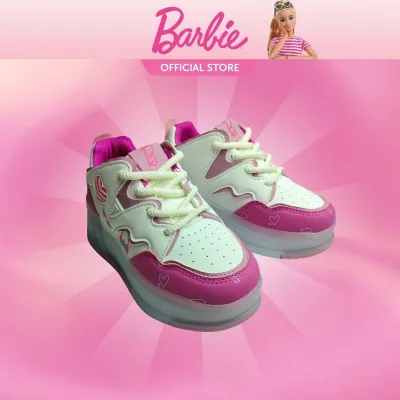
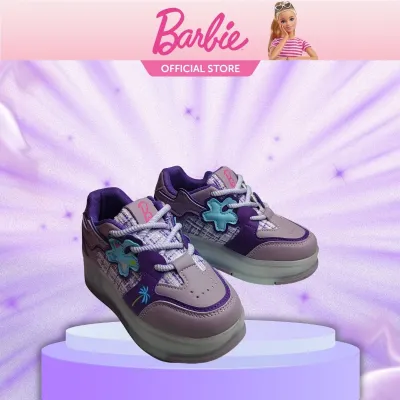
Prices are valid at publication and may change. Please refer to the product page for the latest price.
As children gain confidence and basic rolling experience, inline skates become a viable option. Inline skates feature wheels arranged in a single straight line, which requires more developed ankle strength and lateral balance. However, they offer smoother transitions over small pebbles and cracks, making them highly suitable for outdoor surfaces once the child has mastered basic balance. If your child is transitioning from a tricycle or balance bike, they may adapt to inline skates more quickly than a child with no prior balance training.
Regardless of the skate style, a high-top boot design is essential for beginners. High-top boots, typically constructed from molded plastic or stiff synthetic materials, wrap firmly around the ankle joint to provide structural support. This rigidity prevents the ankle from bowing inward or outward under the child’s weight, reducing muscle fatigue and protecting developing joints from strains. Low-top or soft-boot designs should be reserved for older, more experienced skaters who have already built up significant ankle strength.
Before making a purchase, always check the manufacturer’s recommended age, weight limits, and skill-level indicators printed on the packaging or detailed in the online product listing. These guidelines are calibrated to the structural integrity of the skate’s frame and boot. Exceeding the recommended weight limit can cause the chassis to flex excessively, which compromises steering control and increases the risk of mechanical failure during use.
Essential Safety and Ankle Support Features
A secure closure system is the foundation of ankle safety, ensuring that the child’s foot remains locked flat against the sole of the skate. Look for skates that utilize a multi-point closure system, typically combining traditional laces, a mid-foot Velcro strap, and a top micro-adjustable buckle. The laces allow you to customize the tightness across the top of the foot, while the mid-foot strap (often set at a 45-degree angle) pulls the heel back into the heel pocket to prevent slippage.

The top micro-adjustable buckle is particularly critical because it secures the upper cuff of the boot around the lower shin. This buckle should feature a double-lock mechanism that prevents it from popping open during sudden impacts or deep knee bends. Avoid skates that rely solely on elastic bands or single Velcro straps for ankle closure, as these materials stretch over time and fail to provide the rigid lateral support necessary to prevent ankle rolling.
Inspect the chassis, or frame, which connects the wheels to the boot. For children’s skates, frames are commonly made of reinforced nylon, composite plastic, or aluminum. While aluminum frames offer the highest rigidity and direct power transfer, high-quality composite frames are excellent for beginners because they absorb road vibrations, providing a smoother ride on rough concrete. Ensure the frame is securely riveted or bolted to the boot; any play or wobbling between the frame and the boot is a major safety hazard.
The braking system is your child’s primary tool for speed control and must be constructed from reliable materials. Quad skates feature a toe stop at the front of the boot, while inline skates typically have a heel brake attached to the rear of the right skate. Verify that these stops are made of a grippy, durable polyurethane compound rather than hard, cheap PVC plastic. Hard plastic brakes slide dangerously on smooth surfaces instead of gripping, whereas polyurethane provides the friction needed for controlled, predictable stops.
Getting the Right Fit: Sizing and Adjustability
Selecting the correct size is a delicate balance between accommodating growing feet and maintaining immediate physical control. Never buy skates that are several sizes too large with the expectation that your child will grow into them. Excess space inside the boot allows the foot to slide forward and backward, which causes painful friction blisters, reduces steering responsiveness, and increases the likelihood of ankle injuries due to lack of support.
To find the correct size, measure your child’s foot accurately in centimeters rather than relying on standard shoe sizes, which vary widely between brands. Have your child stand barefoot on a sheet of paper with their heel flat against a wall. Mark the tip of their longest toe, measure the distance with a ruler, and compare this measurement directly to the manufacturer’s specific size chart. This precise measurement ensures you select a boot that matches the actual physical length of their foot.
Adjustable-size skates are an excellent, cost-effective solution for growing children, often expanding across three to four full sizes. These skates feature a push-button mechanism that allows the toe cap of the boot to slide forward or backward while keeping the heel secure. When evaluating adjustable models, verify that the adjustment mechanism locks firmly into place with an audible click and does not slip when pressure is applied to the toe area. This design provides excellent longevity, allowing the skates to last through multiple growth spurts.
When your child tries on the skates, perform a quick fit check to ensure proper alignment. Have them wear the socks they plan to skate in—ideally slightly thick, moisture-wicking athletic socks. With the boot fully buckled, have them stand up and bend their knees slightly; their toes should gently touch the front of the toe box without feeling cramped. Slide a finger down the back of the boot behind their heel; if you can easily fit more than one finger, the skate is too large and will not provide adequate control.
Choosing the Right Wheels and Bearings for Stability
Wheel hardness, measured on the durometer “A” scale, directly affects how the skates grip the ground and absorb shocks. For outdoor skating on concrete, asphalt, or rough neighborhood paths, look for softer wheels rated between 78A and 82A. These wheels are resilient enough to compress slightly over small bumps and pebbles, providing a smoother ride and superior grip. Harder wheels (85A and above) are designed for smooth indoor rink floors and will feel harsh, noisy, and slippery on outdoor surfaces.
Wheel width and profile also play a significant role in stability. Beginners benefit from wider wheels with a flat profile, as they provide a larger contact patch with the ground, making it easier to maintain balance while standing still or rolling slowly. Narrower wheels with a rounded profile reduce rolling resistance and allow for quicker turns, which is ideal for intermediate skaters but can feel unstable and fast for a child who is still learning the basics.
Bearings are housed inside the wheels and dictate how smoothly and quickly the wheels spin. They are rated using the ABEC scale (typically ABEC 1, 3, 5, 7, or 9), where higher numbers indicate tighter manufacturing tolerances and less rolling resistance. For young beginners, high-speed bearings are actually a disadvantage because they allow the skates to roll too quickly, making it difficult for the child to stay in control. Standard entry-level bearings, such as ABEC 3 or ABEC 5, provide a controlled, moderate roll that helps children build confidence safely.
Keep in mind that bearings require regular maintenance to function safely. In humid climates, moisture and road dust can quickly penetrate the bearing shields, leading to rust and seized wheels. Teach your child to avoid rolling through puddles or sand, and regularly check that all four wheels spin freely and quietly. If a wheel squeaks or feels gritty when spun by hand, the bearings may need to be cleaned, lubricated, or replaced to prevent sudden wheel lockups.
Pre-Purchase Checklist: Verifying Quality and Value
Because Barbie is a highly popular licensed brand, the market contains a wide variety of products ranging from high-quality, officially licensed sporting goods to cheap, unlicensed novelty toys. Before finalizing your purchase, verify that the skates carry official licensing marks from Mattel and comply with recognized international safety standards, such as CE or ASTM certification. These marks indicate that the product has undergone structural testing for impact resistance and material safety.
Many Barbie skate models are sold as part of a bundle that includes matching protective gear, such as knee pads, elbow pads, and wrist guards. While these bundles offer excellent visual appeal and convenience, inspect the quality of the included gear carefully. The pads should feature thick, impact-resistant plastic caps and secure, adjustable elastic straps. Note that these bundles rarely include a certified safety helmet; you must purchase a properly fitted, impact-rated helmet separately to protect your child’s head.
Review the seller’s return and exchange policies before purchasing, especially when buying from online marketplaces. Because precise fit is critical for safety, you need the flexibility to exchange the skates if the physical fit does not match your measurements. Additionally, check if the manufacturer offers a warranty against structural defects, such as cracked frames or broken buckles, which can occasionally occur during the initial weeks of use.
Finally, consider the long-term availability of replacement parts. Components like toe stops, heel brakes, wheels, and bearings are wear items that will naturally degrade with regular use. Choosing a skate model that uses standard, replaceable parts ensures that you can easily refresh the skates when the brakes wear down, rather than having to purchase an entirely new pair of skates. This maintainability extends the lifespan of the product and ensures your child can continue skating safely.
Frequently Asked Questions (FAQ)
Do Barbie roller skates come with protective gear?
Some Barbie roller skate models are sold as starter sets that include basic knee pads, elbow pads, and wrist guards. However, these bundles rarely include a certified safety helmet, which is the most critical piece of protective equipment. Always read the product description carefully before purchasing to confirm exactly what is included in the box, and plan to purchase a high-quality, properly fitted helmet separately to ensure complete safety.
Can I use indoor Barbie skates for outdoor skating?
You can use indoor Barbie skates outdoors, but the performance and safety will depend heavily on the wheels. Indoor skates often feature harder wheels designed for smooth rink floors, which can slip, vibrate excessively, and wear down quickly on rough outdoor concrete or asphalt. If your child plans to skate primarily outdoors, check if the wheels can be swapped for softer, shock-absorbing outdoor wheels to provide better grip and a smoother, safer ride.
Community discussion
Share your experience or ask a question. Comments are reviewed before publication.