
Choosing the right detachable roller skates as an adult beginner requires balancing the convenience of a convertible shoe with the structural stability needed to learn safely. Unlike traditional skates, detachable models allow you to transition from rolling to walking by separating the wheel frame from the boot. However, because a multi-part system introduces potential points of movement, your primary focus must be on verifying the locking mechanism, ensuring rigid ankle support, and matching the components to your local skating environment. By prioritizing safety and build quality over pure convenience, you can confidently start your skating journey on local pavements, subdivision roads, or park pathways.
Understanding Detachable Roller Skates and Their Limits
Detachable roller skates, often referred to as walk-and-roll or convertible skates, feature a unique design where the wheel chassis can be detached from the shoe portion. This differs significantly from traditional inline or quad skates, where the boot is permanently attached to the frame. While traditional skates offer maximum structural rigidity for athletic performance, detachable skates prioritize versatility, allowing you to skate to a destination, detach the wheels, and walk inside a building without changing footwear.
However, adult beginners must understand the physical limitations of this convertible design. These skates are engineered for casual cruising, commuting on smooth pavements, and gentle recreational rolling. They are not designed for aggressive skating, jumps, grinds, or high-speed downhill riding. The joint where the shoe meets the chassis cannot withstand the high-impact forces of tricks or sudden lateral stops. Attempting advanced maneuvers on detachable skates can compromise the locking mechanism, leading to structural failure.
Products mentioned in this guide
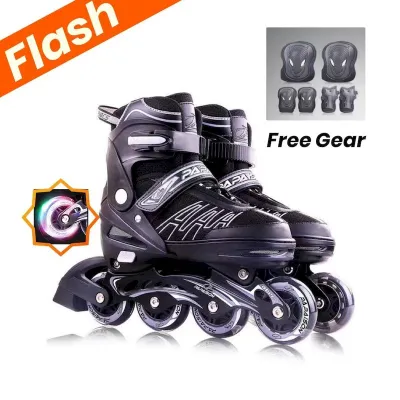
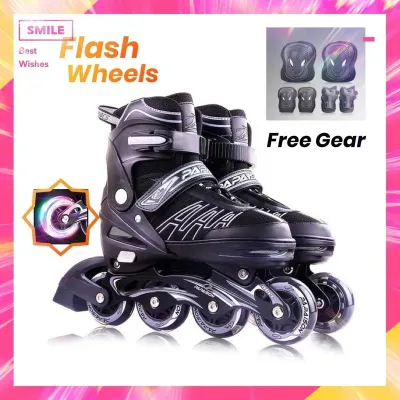
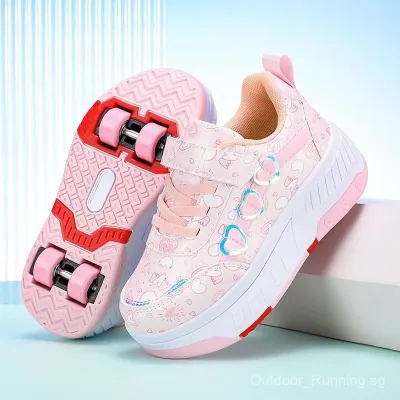
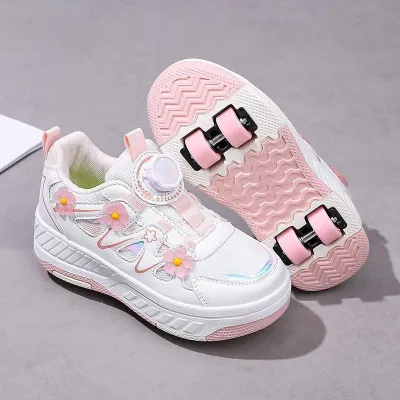
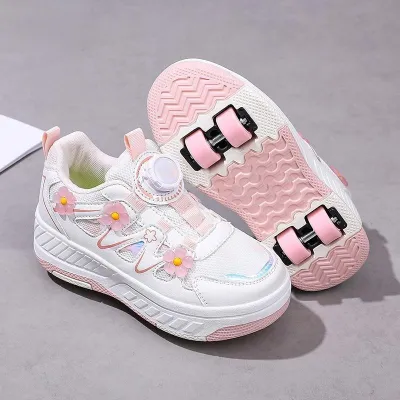
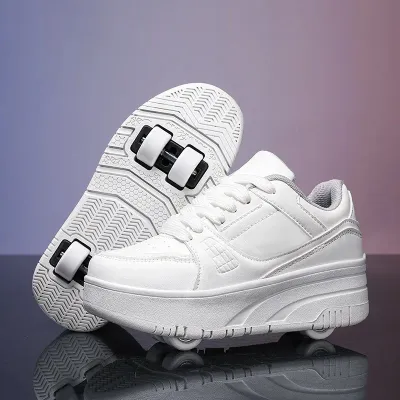
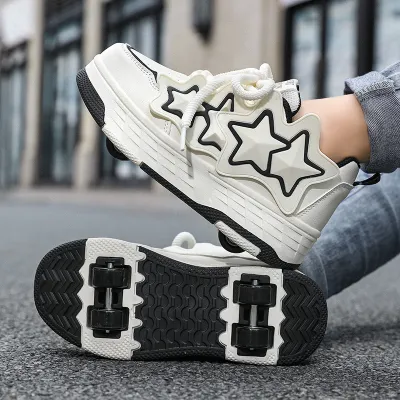
Prices are valid at publication and may change. Please refer to the product page for the latest price.
For beginners in the Philippines, local environments like subdivision streets, barangay courts, and designated park paths are ideal testing grounds. However, these surfaces often feature uneven concrete, small pebbles, and expansion joints. Because detachable skates inherently have less structural rigidity than one-piece skates, riding over rough terrain requires extra caution and a slower pace.
Evaluating the Detachable Mechanism and Build Quality
The heart of any detachable roller skate is the connection interface between the shoe and the wheel frame. As an adult beginner, your safety depends entirely on the integrity of this locking mechanism. When evaluating different models, look closely at how the two parts engage. Common designs include spring-loaded levers, push-button quick-releases, or step-in mechanical locks. Regardless of the style, the mechanism must engage securely with no detectable lateral or vertical play. Any wobbling or shifting when you apply weight indicates a weak connection that could fail during a turn.

Inspect the materials used at the connection points. High-quality detachable skates utilize reinforced metal plates, heavy-duty alloys, or high-impact composite materials where the boot meets the chassis. Avoid models that rely solely on thin, unreinforced plastics at these critical stress points. The constant friction and weight distribution of an adult rider will quickly wear down weak plastic tabs, leading to loose fits or sudden breakage.
Always verify the manufacturer’s specified weight limits and load-bearing capacities before purchasing. Adult riders exert significantly more force on skates than children do, making adherence to these limits a critical safety factor. If a product listing or manual does not clearly state a maximum weight capacity, treat it as a warning sign and look for a model that explicitly supports your weight class.
Before your first outdoor session, plan a physical test in a controlled indoor environment. Assemble and disassemble the skates multiple times to confirm the mechanism operates smoothly. A reliable locking system should produce an audible click or a clear visual indicator when fully engaged. If the locking lever feels mushy or fails to lock into a fixed position, do not ride on them.
Finding the Right Fit and Ankle Support for Adult Beginners
Achieving a precise fit is essential for maintaining balance and preventing foot fatigue. When shopping for detachable roller skates, do not rely on your standard casual shoe size. Because these skates incorporate a mechanical interface, the sizing dynamics can differ from regular footwear. Always measure your feet in millimeters and compare the results directly against the manufacturer’s specific sizing chart. A boot that is too loose will allow your foot to slide, causing painful blisters and reducing your control over the wheels.
For adult beginners, ankle stability is the single most important factor in preventing injuries. Traditional skating boots are stiff and high-cut to keep the ankle upright. Many detachable skates resemble casual sneakers, which may offer less lateral support. To prevent your ankles from rolling inward or outward, prioritize models that feature a high-top design, a reinforced heel counter, or an external supportive cuff. If the ankle area feels soft and easily collapsible under hand pressure, it will not provide enough support to keep you balanced.
Given the tropical climate and high humidity in the Philippines, heat buildup inside the boot is a major comfort consideration. Look for inner liners made from breathable mesh fabrics that promote airflow. Adequate padding around the ankle collar and under the tongue is also necessary to cushion your feet against the hard structural elements of the detachable frame.
Finally, examine the closure system. A secure fit requires more than just standard laces. Look for a combination closure system that includes laces, a mid-foot power strap to lock the heel down, and a top micro-adjustable buckle to secure the ankle. This multi-point system allows you to fine-tune the tightness, ensuring your foot remains locked into the heel pocket during every stride.
Selecting Wheels, Bearings, and Brakes for Your Skating Environment
The rolling components of your skates dictate how they interact with the ground. For adult beginners, the choice of wheels can make the difference between a smooth, controlled learning experience and a bumpy, unstable ride. Wheels are categorized by their size (measured in millimeters) and hardness (measured by a durometer rating, such as 78A to 85A). For outdoor skating on typical Philippine pavements, which can be rough or dusty, softer wheels (78A to 82A) are highly recommended. Softer urethane absorbs road vibrations and provides better grip on uneven surfaces, while larger wheels (around 80mm to 84mm) roll more easily over small cracks and debris.
Bearings are rated using the ABEC scale (typically ABEC-5, ABEC-7, or ABEC-9), which measures manufacturing precision. While higher ratings roll with less friction, beginners do not need ultra-fast bearings. An ABEC-5 or ABEC-7 rating is ideal, offering a smooth, predictable roll that allows you to focus on balance without the skates slipping out from under you too quickly. Avoid unrated or generic bearings, as they may suffer from poor dust sealing, leading to rapid degradation when exposed to outdoor dirt.
Never overlook the braking system. A reliable heel brake is an indispensable safety tool for any beginner. Ensure the skate comes equipped with a functional brake pad on at least one boot. Verify that the brake housing is securely attached to the frame and that replacement brake pads are readily available for purchase. As you learn to control your speed, you will rely heavily on this brake to navigate slopes and avoid obstacles.
Step-by-Step Selection Checklist and Pre-Ride Safety Verification
Before finalizing your purchase, compile a quick checklist to ensure the skates meet your safety and performance needs. First, confirm the locking mechanism is robust and made of reinforced materials. Second, verify the boot offers structured ankle support. Third, ensure the wheels and bearings are suited for outdoor use.
Equally important is acquiring the proper protective gear. Never skate without a certified helmet, wrist guards, knee pads, and elbow pads. In the event of a fall, wrist guards are particularly crucial for beginners, as they prevent hyperextension when instinctively reaching out to break a fall. Ensure all pads fit snugly and do not slip out of place during movement.
Once your gear arrives, perform a thorough pre-ride inspection before every session:
- Check the Hardware: Tighten all axle bolts and frame mounting screws.
- Test the Lock: Engage the detachable mechanism and apply full body weight while holding onto a stable support.
- Spin the Wheels: Verify they rotate freely without grinding noises or lateral play.
- Inspect the Brake: Confirm the brake pad is tight and positioned at the correct angle.
Establish clear stop conditions for your sessions. If you notice any unusual clicking sounds, vertical play in the locking joint, or visible hairline cracks in the chassis or boot connection points, stop skating immediately. Do not attempt to repair a compromised locking mechanism with tape or unauthorized adhesives; instead, contact the manufacturer for guidance or replacement parts.
Frequently Asked Questions (FAQ)
Can I use detachable roller skates for long-distance fitness skating?
Detachable roller skates are not recommended for long-distance fitness training. The mechanical joint that allows the boot to separate from the frame introduces a small amount of energy transfer loss with every stride. Over long distances, this inefficiency requires your muscles to work harder, leading to premature fatigue. Additionally, the casual boot designs typical of detachable skates do not offer the rigid power transfer found in dedicated fitness skates. For long-distance skating, a traditional one-piece inline skate is a much more efficient and supportive choice.
How do I maintain the detachable locking mechanism?
Maintaining the connection interface is vital for safety. After skating, use a soft brush or dry cloth to remove dust, sand, and road grime from the locking channels. Moisture from humid tropical air can cause corrosion, so dry the metal components thoroughly if they get wet. Periodically check the mounting bolts that secure the locking plates, tightening them according to the manufacturer’s instructions. Avoid applying heavy greases or wet lubricants to the locking mechanism, as these substances attract dirt and debris, which can jam the latch.
Are detachable roller skates safe for heavier adults?
Detachable roller skates can be safe for heavier adults, provided you strictly adhere to the manufacturer’s rated weight capacity. Because the rider’s weight is concentrated entirely on the mechanical connection points, exceeding the specified limit significantly increases the risk of structural failure. When shopping, look for heavy-duty models that feature reinforced aluminum frames and metal locking plates rather than plastic alternatives. If you are close to the upper weight limit of a specific model, consider choosing a traditional one-piece skate, which inherently offers superior load distribution.
Community discussion
Share your experience or ask a question. Comments are reviewed before publication.