
Understand How Fin Design Affects Your Choice of Fins for Free Diving
Selecting the right fins for free diving is one of the most critical decisions you will make as you explore the underwater world on a single breath. Unlike standard snorkeling or scuba gear, specialized free diving fins feature an extra-long blade design. This elongated shape is engineered specifically to maximize thrust per kick while minimizing the amount of energy your muscles consume.
To understand how these fins work, it helps to break them down into their two primary components: the blade and the foot pocket. The blade is responsible for underwater propulsion, bending and snapping to push water backward. The foot pocket acts as the crucial interface that transfers the physical energy from your legs directly into the blade.
Because oxygen conservation is the ultimate goal of any breath-hold activity, these fins are designed for a specific kicking style. Instead of the rapid, short flutter kicks used in other water sports, free diving demands slow, deep, and highly efficient kicks. This deliberate cadence keeps your heart rate low, helping you stay underwater longer and dive deeper with greater comfort.
Products mentioned in this guide
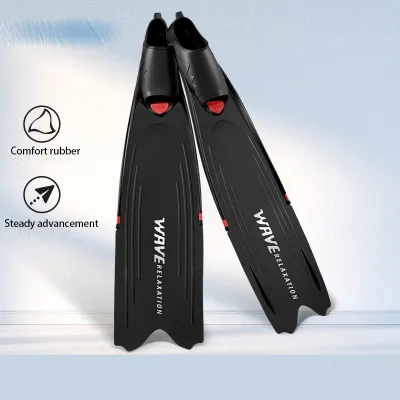
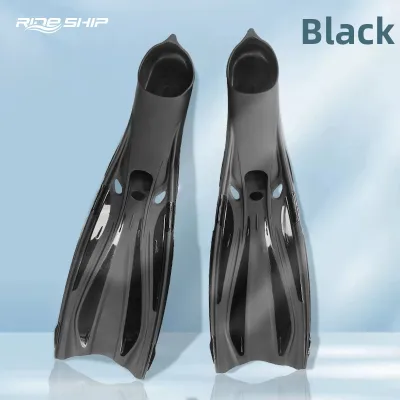
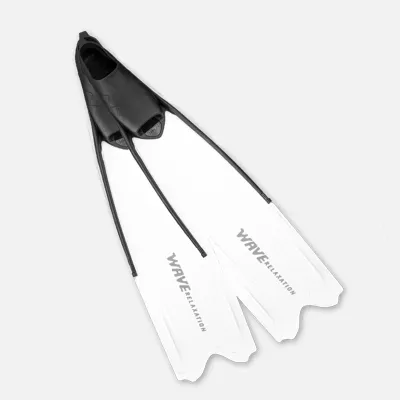
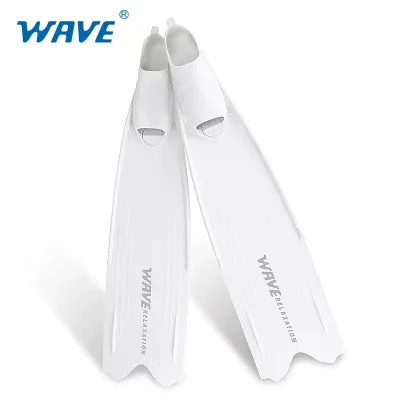
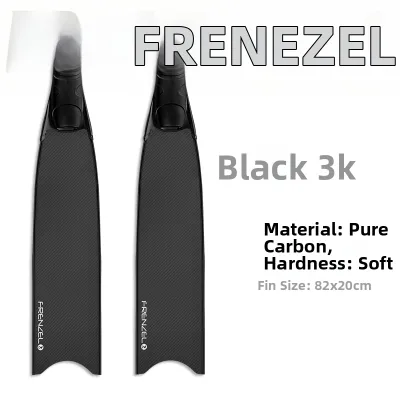
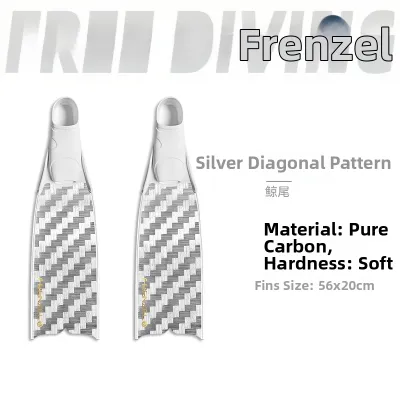
Prices are valid at publication and may change. Please refer to the product page for the latest price.
While high-quality gear significantly enhances your efficiency, equipment can never replace proper training and safety protocols. Before attempting deep dives, ensure you have completed formal free diving instruction. Always dive with a certified buddy, follow established safety protocols, and never push past your physical limits.
Match Fin Materials to Your Budget and Experience
The material of your fin blades is the primary factor determining both the retail price and the overall performance of your gear. Balancing your current skill level, intended diving depth, and spending capacity will help you choose between the three main material categories: plastic, fiberglass, and carbon fiber. Each option offers a distinct trade-off between durability, cost, and energy return.

Plastic Fins (Entry-Level and Budget-Friendly)
Plastic polymer blades are the most common entry point for beginners and budget-conscious divers. Their primary advantages are exceptional durability and affordability, with prices in the Philippines typically ranging from ₱4,000 to ₱8,000. These blades can withstand scrapes against shallow coral reefs, rocky entries, and the general wear-and-tear of rental fleets without cracking or breaking.
However, plastic blades are heavier and offer significantly less “snap” or energy return compared to advanced materials. This means you must exert more physical effort to achieve the same amount of propulsion, which can lead to faster leg fatigue during long sessions.
Despite these limitations, plastic fins are highly recommended for those just starting their free diving journey. They are also the ideal choice for recreational divers who stick to shallow waters, or anyone exploring rugged environments like wrecks and tight caverns where blade damage is a constant risk.
Fiberglass Fins (Intermediate and Mid-Range)
Fiberglass blades represent the ideal middle ground for divers progressing in depth and technique. They offer a much better energy return, lighter weight, and superior reactivity compared to plastic, allowing for more effortless ascents from deeper dives.
In the local market, high-quality fiberglass fins generally cost between ₱8,000 and ₱18,000. While they are highly resilient, they do require more careful handling than plastic, as striking a hard surface at a bad angle can cause the material to delaminate or crack.
If you are an intermediate diver working on your advanced certifications or transitioning to deeper recreational depths, upgrading to fiberglass provides a noticeable boost in efficiency. It bridges the performance gap beautifully without requiring the premium investment of carbon fiber.
Carbon Fiber Fins (Advanced and Premium)
Carbon fiber is the gold standard for advanced and competitive free divers who require maximum performance. These blades boast an unmatched strength-to-weight ratio and deliver the highest possible energy return, meaning almost every ounce of effort you put into your kick is converted into forward momentum.
This extreme efficiency comes at a premium, with carbon fiber setups often starting around ₱20,000 and easily exceeding ₱35,000 depending on the brand and customization. Furthermore, carbon fiber is highly fragile and susceptible to cracking if dropped on concrete boat decks, packed incorrectly for travel, or kicked against sharp rocks.
Consequently, carbon fiber fins are strictly recommended for experienced divers who have refined their finning technique. They are best utilized in open, deep-water environments where the risk of physical impact is minimal.
Select the Right Blade Stiffness for Your Body and Strength
Choosing the correct blade stiffness—typically categorized as soft, medium, or hard—is not about finding the “best” option, but rather matching the gear to your physical attributes. Your leg strength, body weight, and ankle flexibility are the primary factors that should dictate this decision.
If you select a blade that is too stiff for your physical build, your legs will cramp and fatigue rapidly, especially during long surface swims to a dive spot. Conversely, if the blade is too soft, you will feel a distinct lack of propulsion or a “mushy” sensation, requiring excessive kick cycles to move through the water.
As a general guideline, lighter divers or those with less lower-body conditioning should opt for soft blades, while average-weight divers with moderate fitness usually find medium blades to be the most versatile. Hard blades are generally reserved for larger, highly conditioned divers or safety divers who need to generate massive bursts of power to assist others.
It is crucial to check the manufacturer’s specific sizing and stiffness charts before purchasing, as ratings are not standardized and can vary significantly between brands. Additionally, environmental factors play a role: while colder waters or strong currents might occasionally warrant a slightly stiffer blade to overcome resistance, the warm, calm tropical waters of the Philippines generally favor softer, more energy-efficient options.
Ensure a Secure and Efficient Fit with Foot Pockets
The foot pocket is the unsung hero of your free diving setup, serving as the direct link that transfers energy from your legs to the blades. Full-foot pockets are the absolute standard for free diving because they enclose the entire heel, maximizing direct energy transfer and minimizing the power loss common in open-heel strap designs.
To find the perfect fit, start by measuring your feet accurately while wearing the exact thickness of the neoprene socks you plan to use. In warm tropical waters, divers typically wear 1mm to 2mm socks, which must be factored into your sizing to prevent the pocket from being too tight.
The golden rule for foot pockets is a “snug but not restrictive” fit. Your toes should not be painfully curled or compressed, but your heel should not slide or lift inside the pocket during the upward phase of your kick cycle, as this friction will quickly lead to painful blisters and energy loss.
Many modern free diving systems feature interchangeable blades and foot pockets. This modular design is highly advantageous, as it allows you to upgrade from plastic to fiberglass or carbon blades in the future while keeping the same comfortable, broken-in foot pockets.
Adapt Your Gear to Tropical Waters and Dive Sites
Diving in the Philippines presents unique environmental conditions that should directly influence your gear choices. The warm, tropical water temperatures mean you do not need thick exposure suits, allowing you to wear thin 1mm or 2mm neoprene socks, which keeps your foot pocket sizing closer to your actual shoe size.
Environmental responsibility must also guide your selection, especially when exploring delicate marine ecosystems. If your primary dive sites include shallow coral reefs, historic wrecks, or confined caverns like those found in Coron or El Nido, using shorter fins or durable plastic blades is highly recommended to prevent accidental contact that could damage fragile corals or ruin expensive carbon blades.
On the other hand, if you are training along the deep drop-offs of Panglao, Bohol, or the steep walls of Anilao, Batangas, long-bladed fiberglass or carbon fins are ideal. These open-water environments allow you to fully utilize the high-performance glide and efficiency of longer blades without the risk of striking underwater obstructions.
Regardless of where you dive, always rinse your fins and foot pockets thoroughly with fresh water after every saltwater session. Salt crystals and tropical humidity can degrade rubber foot pockets and compromise the bonding agents used in composite blades over time, so proper rinsing and drying in the shade are essential for maintaining material integrity.
Your Step-by-Step Fin Selection Checklist
To simplify your purchasing decision, follow this step-by-step framework to ensure you select the perfect pair of fins for your needs.
- Step 1: Define Your Primary Dive Environment. Determine whether you will spend most of your time exploring shallow, rocky reefs and wrecks or training in deep, open-water drop-offs.
- Step 2: Set a Realistic Budget. Align your spending with your current skill level; avoid investing in premium carbon fiber if you are still mastering basic duck dives and equalization techniques.
- Step 3: Choose Your Material and Stiffness. Select plastic for durability and budget, fiberglass for balanced progression, or carbon for elite performance, matching the stiffness to your body weight and leg strength.
- Step 4: Measure with Your Diving Socks. Always measure your feet while wearing your intended neoprene socks and cross-reference these measurements with the manufacturer's specific sizing guide.
- Step 5: Verify the Retailer's Return Policy. Ensure the local dive shop or online seller allows for exchanges, as achieving the perfect foot pocket fit often requires trying on different sizes.
Frequently Asked Questions (FAQ)
Can I use scuba diving fins for free diving?
While you can technically enter the water with any fins, scuba diving fins are highly suboptimal for free diving. Scuba fins are generally shorter, wider, and designed to provide rapid maneuvering and overcome the significant drag of heavy tanks and BCDs. Using them for free diving forces you to maintain a much faster, less efficient kick cycle, which rapidly elevates your heart rate, consumes precious oxygen, and ultimately reduces your breath-hold time and depth potential.
Do I need to wear neoprene socks with free diving fins?
Yes, wearing neoprene socks is highly recommended for several reasons. They act as a protective barrier to prevent painful friction blisters caused by the constant motion of the foot pocket, provide essential thermal insulation during long sessions, and help fill any minor gaps to ensure a perfectly snug fit. Just remember to wear your socks when measuring your feet or trying on foot pockets to avoid purchasing fins that are too tight and restrict your circulation.
Community discussion
Share your experience or ask a question. Comments are reviewed before publication.