
Selecting the right gymnastics rings requires balancing your training goals, hand anatomy, and the environment where you plan to exercise. To find the perfect pair, you must evaluate four primary specifications: ring material, ring dimensions, strap adjustment systems, and verified weight capacities. Because your entire body weight is suspended during ring training, prioritizing structural safety and ergonomics over low prices is essential for preventing injuries.
In the Philippines, the tropical climate introduces unique challenges. High humidity and intense heat can cause certain materials to degrade rapidly, while excessive sweat can compromise your grip during high-intensity calisthenics. Understanding how these environmental factors interact with different product specifications will help you make an informed investment that lasts for years.
Ring Material: Wood vs. Plastic vs. Metal
The material of your gymnastics rings directly dictates your grip security, comfort, and how well the equipment withstands the elements.
Products mentioned in this guide
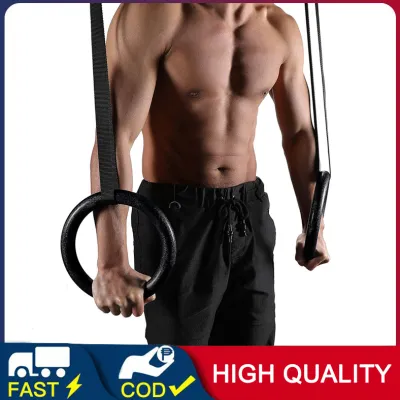
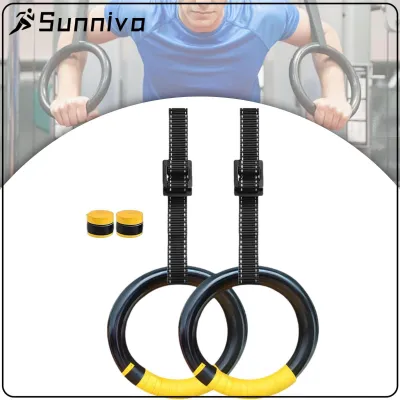
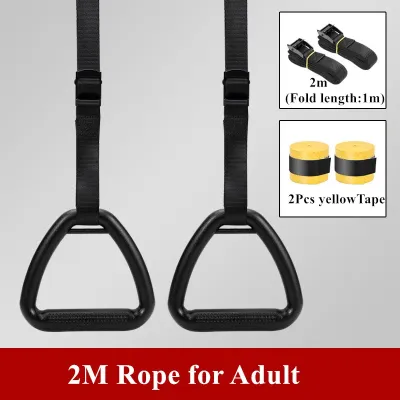
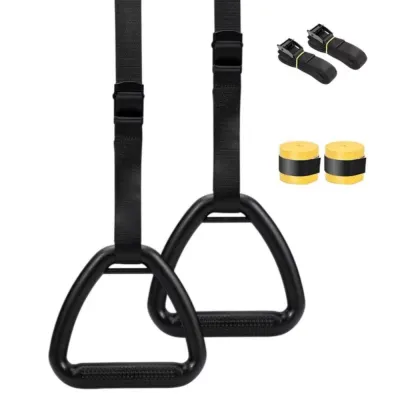
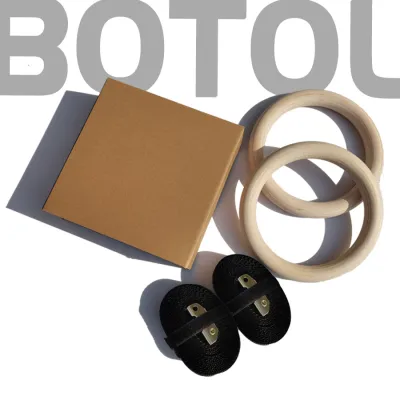
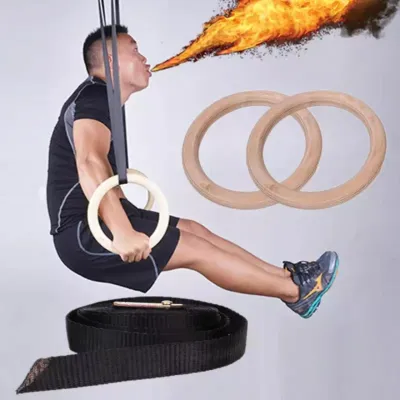
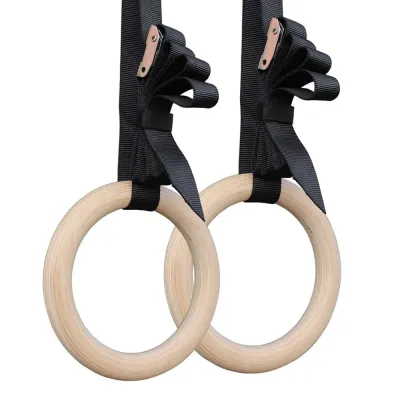
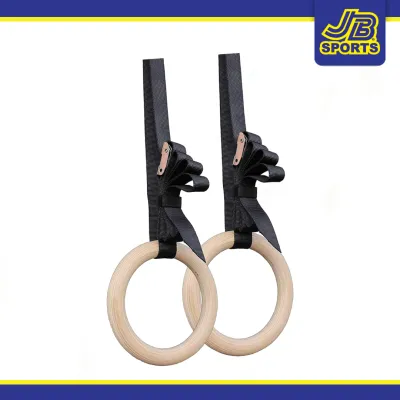
Prices are valid at publication and may change. Please refer to the product page for the latest price.
Wood is widely considered the gold standard for indoor training, competitive gymnastics, and serious calisthenics. Natural wood possesses excellent sweat-absorption properties, providing a superior, tactile grip even without chalk. However, wood is highly sensitive to moisture. In humid tropical environments, wooden rings require basic maintenance, such as wiping them down after use and storing them in a dry, ventilated space to prevent warping, splintering, or mold growth.
Plastic (typically polycarbonate or high-density ABS) is a highly durable, budget-friendly alternative that excels in outdoor environments. Plastic rings are completely waterproof and immune to rot, making them ideal for backyard setups or public parks. The primary trade-off is grip quality; plastic surfaces do not absorb moisture and can become incredibly slippery when your hands sweat. If you choose plastic, you will likely need to use athletic tape or chalk to maintain a secure hold.
Metal rings, usually crafted from steel or textured aluminum, offer unmatched structural durability and are commonly found in rugged outdoor military fitness courses or high-traffic CrossFit boxes. While virtually indestructible, metal rings are heavy and inherently slippery. They conduct heat rapidly under the sun and require a consistent application of chalk or permanent grip tape to be usable for dynamic movements.
To decide, evaluate your primary training location. If you train indoors or have a covered home gym where you can store your gear safely, wood offers the best performance. If you plan to leave your rings hanging on an outdoor patio or need a low-cost, weather-resistant option for travel, plastic is the more practical choice. Broadly speaking, basic plastic sets may cost around ₱800 to ₱1,500 on online marketplaces, while premium wooden rings with high-quality numbered straps often range from ₱2,000 to ₱4,500.
Ring Dimensions: Diameter and Thickness
Gymnastics rings are not one-size-fits-all; the thickness of the ring profile and the overall outer diameter must match your hand anatomy and training style.

Thickness (Cross-section): The standard thickness for gymnastics rings generally falls into two categories: standard men’s rings (typically 28mm) and women’s or youth rings (typically 25mm). A 28mm ring aligns with standard competitive specifications and is highly recommended for most adult hands, helping to reduce grip fatigue during high-repetition workouts. A 25mm ring is ideal for smaller hands, women, or youth athletes, making it much easier to wrap the fingers completely and execute a “false grip”—a fundamental hand position required for muscle-ups.
Outer Diameter: Standard outer sizes are approximately 180mm (often used for standard adult training) and 165mm for smaller hands or youth setups. These dimensions affect hand placement and leverage. A standard outer diameter is crucial because it provides adequate clearance for your wrists and forearms during rotational movements, preventing painful chafing or restricted leverage as you transition from below the rings to above them.
To choose the right size, measure your hand from the base of your palm to the tip of your middle finger. If your hand length is under 18 centimeters, a 25mm ring thickness will generally feel more comfortable and secure. If you have larger hands or primarily focus on basic pushing movements rather than complex gymnastics transitions, a 28mm ring may provide better palm support.
Strap System: Length, Width, and Buckles
While the rings themselves receive the most attention, the suspension strap system is what determines the safety, versatility, and ease of use of your entire setup.
Strap Length: Standard straps typically range from 4.5 meters (15 feet) to 6 meters (20 feet) in length. You will need longer straps if you plan to anchor your system to high warehouse ceilings, tall outdoor tree branches, or public park scaffolding. For standard home use on a doorway pull-up bar or a standard garage beam, a 4.5-meter strap provides more than enough length without leaving excessive excess webbing dangling in your way.
Strap Width and Material: Look for heavy-duty nylon webbing with a minimum width of 25mm (1 inch). Wider straps offer greater surface area, which increases friction against the anchor point to prevent slipping and provides higher resistance to stretching under tension. High-quality nylon is tightly woven to resist fraying when pulled over rough surfaces like concrete beams or wooden rafters.
Buckle Types: The two main buckle designs are cam buckles and roller buckles. Cam buckles utilize spring-loaded metal teeth that clamp down aggressively on the strap, offering a highly secure, slip-free lock that is easy to thread and release. Roller buckles (or carabiner-style locking systems) are sometimes preferred for extreme heavy-duty use because they mechanically lock into pre-sewn loops, eliminating any chance of slippage, though they offer less granular height adjustability.
Numbered Straps: If your budget allows, prioritize straps with printed or woven measurement markings along their entire length. Adjusting two independent rings to the exact same height by eye can be incredibly tedious and frustrating. Numbered straps allow you to make quick, perfectly symmetrical height adjustments in seconds, keeping your training efficient and protecting your joints from the uneven loading caused by misaligned rings.
Weight Capacity and Safety Ratings
Because gymnastics training involves dynamic forces that far exceed your static body weight, verifying structural safety ratings is a non-negotiable step before buying.
It is vital to differentiate between the weight capacity of the rings themselves and that of the strap and buckle system. A wooden ring might be rated to support 400 kilograms, but if the metal cam buckle or the nylon strap is cheaply made, the system can fail under a fraction of that load. The entire assembly is only as strong as its weakest link, which is almost always the buckle mechanism.
When browsing products, look for manufacturers that explicitly state the Working Load Limit (WLL) rather than just a vague “breaking strength.” A reputable system should feature a safety factor ratio (often 10:1), meaning the equipment is tested to withstand forces multiple times higher than the recommended user weight limit to account for the high g-forces generated during dynamic swings, drops, or sudden bails. Avoid products that make extreme weight claims without providing clear details on buckle testing and material certifications.
Before every training session, perform a quick visual safety check. Inspect the nylon straps for any signs of fraying, cuts, or heat damage. Check the metal buckles for bent teeth, weak springs, or dirt buildup that could prevent the teeth from gripping the strap. Finally, run your hands over wooden rings to check for hairline cracks or splinters, and inspect plastic rings for deep gouges that could compromise their structural integrity.
Mounting Environments and Necessary Accessories
Your gymnastics rings must be compatible with your physical training space, and installing them safely often requires specific accessories.
Indoor Setups: If you are mounting your rings indoors, common anchor points include heavy-duty wall-mounted pull-up bars, ceiling joists, or exposed structural beams. Ensure you have adequate clearance: you need at least 1 meter of clear lateral space in all directions around the rings, and enough overhead clearance to perform exercises above the rings (like dips or muscle-ups) without hitting your head on the ceiling. If mounting directly to wood or concrete ceilings, use certified anchor eyebolts rated for dynamic loads.
Outdoor Setups: When taking your workouts outdoors to local parks or backyard trees, you must protect both your gear and nature. Never wrap bare nylon straps directly around rough tree bark or concrete pillars. The abrasive friction will quickly fray the straps, creating a severe safety hazard. Instead, use thick tree protection sleeves or dedicated anchor slings. These accessories shield your straps from sharp bark, abrasive concrete, and sticky tree sap, while also preventing damage to the tree itself.
For beginners, practicing advanced movements like inversions, shoulder stands, or dynamic transitions carries an inherent risk of falling. Investing in a thick, high-density foam gym mat or landing pad to place directly beneath your rings is highly recommended. Additionally, keeping a block of gym chalk nearby will help manage palm moisture, ensuring your grip remains locked even during hot, humid afternoons.
Frequently Asked Questions (FAQ)
Can I leave my gymnastics rings outside permanently?
No, you should not leave your gymnastics rings outside permanently. While plastic and metal rings resist water damage better than wood, prolonged exposure to direct sunlight (UV rays) and rain will rapidly degrade the nylon straps and cause metal buckles to rust or seize. Wooden rings will warp, crack, and develop mold when exposed to outdoor humidity and wet weather. To maximize the lifespan and safety of your equipment, always take the rings down and store them indoors after your workout.
Do I need chalk when using wooden gymnastics rings?
For standard workouts in dry conditions, you generally do not need chalk when using wooden gymnastics rings because bare wood naturally absorbs sweat and provides an excellent grip. However, if you sweat heavily, train in high-humidity environments, or are performing advanced, high-friction movements like strict muscle-ups, applying a small amount of gym chalk can significantly enhance your grip security and prevent blisters.
How high should I hang my gymnastics rings for a beginner?
For beginners, gymnastics rings should be hung at chest or shoulder height for foundational movements like inverted rows, assisted push-ups, and basic support holds. Hanging the rings at this height allows your feet to remain in contact with the ground, which helps you easily scale the difficulty of the exercises, maintain core control, and safely bail out if you lose your grip or balance.
Community discussion
Share your experience or ask a question. Comments are reviewed before publication.