
Selecting reliable heavy-duty camping hooks for the diverse outdoor environments of the Philippines requires a careful evaluation of load capacity, material durability against intense tropical humidity, and attachment compatibility. Because specific product inventories and models change frequently, this guide provides a systematic framework of selection criteria, verification checklists, and safety boundaries to help you match the right hook type to your specific camping equipment, such as lanterns, water containers, and tarps. By understanding the mechanical limits and material properties of your gear, you can ensure a secure, organized, and hazard-free campsite whether you are pitching a tent in the humid rain forests of Rizal or setting up camp along the windy coastlines of Zambales.
Understanding Load Limits and Weight Distribution
When hanging gear around your campsite, distinguishing between static and dynamic forces is critical for preventing sudden equipment failure. A static load refers to a stationary object hanging in a calm environment, such as a water jug suspended from a dedicated camp kitchen stand. Conversely, a dynamic load occurs when environmental factors or human activity introduce motion. For instance, a heavy lantern hanging from a tree branch will sway during a sudden tropical gust, and a tarp line will experience sharp, sudden tension during a downpour. These movements multiply the instantaneous force exerted on the hook, meaning a hook rated only for the static weight of your gear can easily fail under dynamic stress.
To ensure your setup remains secure, you must locate and verify the manufacturer’s Working Load Limit (WLL) or Breaking Strength on the product packaging, instruction manual, or official specification sheets. The Working Load Limit is the maximum mass that the manufacturer designates the hook can safely support under normal operating conditions. Breaking Strength, on the other hand, represents the point of physical failure where the hook bends, snaps, or deforms permanently.
Products mentioned in this guide
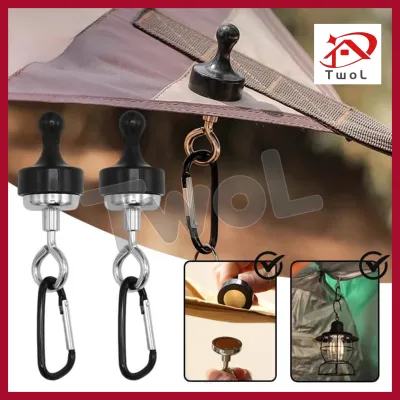
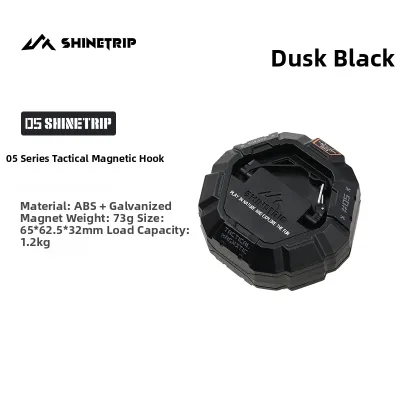
Prices are valid at publication and may change. Please refer to the product page for the latest price.
A fundamental rule of outdoor rigging is to apply a safety factor, which dictates that the actual suspended weight should remain significantly below the stated maximum limit of the hook. For general camping applications, a safety factor of at least 3:1 or 4:1 is highly recommended. This means if you plan to hang a water container weighing 5 kilograms, you should select a hook with a verified Working Load Limit of at least 15 to 20 kilograms.
You must also avoid the common mistake of estimating a hook’s load capacity based solely on its physical thickness or visual size. A thick, bulky hook made of low-grade cast iron or unrated recycled plastic may look incredibly robust but can fail under minimal stress due to internal air pockets, poor material density, or structural flaws. Conversely, a compact, lightweight carabiner made of certified aerospace-grade aluminum can support substantial weight safely.
Selecting Rust-Resistant Materials for Humid Climates
The tropical climate of the Philippines presents a severe challenge to outdoor gear, as high humidity, frequent rainfall, and salt-laden coastal air accelerate the oxidation and degradation of metals. The three most common material categories for heavy-duty hooks are stainless steel, anodized aluminum, and coated carbon steel, each offering distinct levels of corrosion resistance.

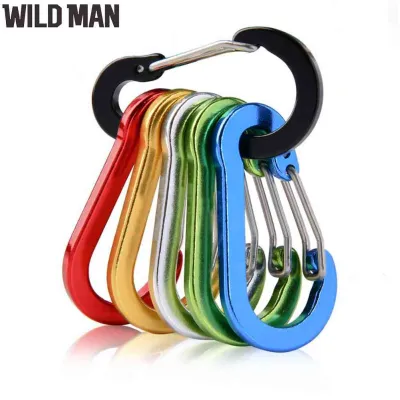
Stainless steel, particularly grades 304 and 316, offers exceptional resistance to rust and chemical degradation, making it the premier choice for heavy-duty, long-term setups or coastal camping. Grade 316 contains molybdenum, which provides superior protection against saltwater corrosion, making it ideal for beach camping in areas like El Nido or Anawangin Cove. Anodized aluminum, such as 6061 or 7075 alloys, provides an outstanding strength-to-weight ratio and excellent resistance to atmospheric moisture due to its protective electrochemical oxide layer. Coated carbon steel is highly durable and cost-effective, but its rust resistance depends entirely on the integrity of its surface treatment, such as powder coating or zinc plating.
To ensure you are getting the level of protection required for your camping environment, verify the exact material grade and surface treatment through the product packaging or official specification tables. Reputable manufacturers will clearly state the specific grade of stainless steel or aluminum alloy used, allowing you to make an informed decision based on your expected exposure to moisture and salt.
Before and after every camping trip, perform a thorough visual inspection of your hooks to identify early signs of degradation. Look closely for bubbling, cracking, or flaking in powder-coated finishes, as well as reddish-brown rust spots on steel hooks or a fine, white powdery residue on aluminum hooks, which indicates oxidation. Check for pitting, which appears as tiny divots or craters on the metal surface and can severely compromise the structural strength of the hook over time.
In coastal or consistently wet environments, such as high-altitude mossy forests or beach campsites, you should completely avoid using untreated carbon steel or low-grade zinc-plated hooks. The combination of salt spray, constant moisture, and warm temperatures will cause these materials to rust rapidly, sometimes within a single weekend trip.
Matching Hook Designs to Your Gear and Anchor Points
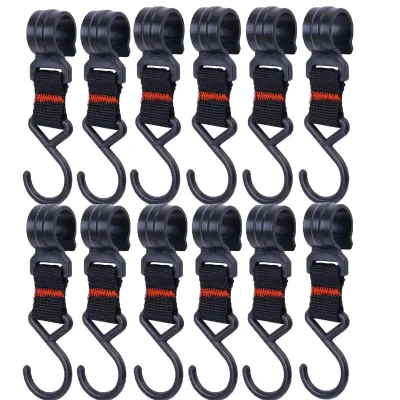
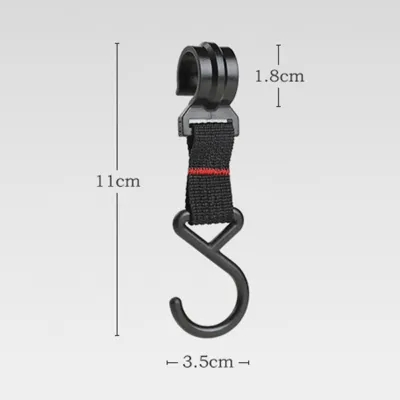
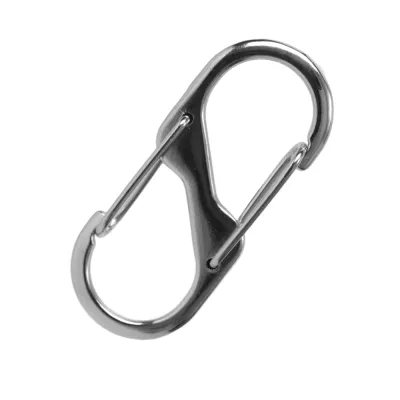
Selecting the right hook design is just as important as choosing the right material, as different shapes and locking mechanisms are engineered for specific tasks and anchor points. S-hooks are highly versatile and excellent for quick, temporary hanging on horizontal bars, chains, or utility ropes, but they lack a closed loop, making them susceptible to slipping off if the gear is bumped or shaken by the wind. Locking carabiners represent the gold standard for security, featuring a spring-loaded gate that closes completely and can be locked in place, making them ideal for securing heavy water bladders, expensive lighting systems, or critical shelter lines. Strap hooks, which feature integrated webbing straps, are designed to wrap securely around tree trunks or thick poles, distributing the weight across a wider surface area to protect the tree bark while providing a stable hanging point.
The inclusion of a reliable locking mechanism, such as a manual screwgate or an automatic twistlock, is crucial for preventing accidental detachment. A screwgate requires you to manually thread a collar over the gate to lock it closed, offering excellent reliability and resistance to debris. A twistlock mechanism is spring-loaded and automatically locks the gate upon closure, providing fast, one-handed operation.
Before setting up your camp, measure the gate opening or hook gap to ensure it is compatible with the diameter of your intended anchor points, such as tent loops, tree branches, or hanging ridgelines. The hook must be able to clear the anchor point easily without forcing. If you are hanging gear from a thick tree branch, a standard small carabiner will not fit, and attempting to force it can damage both the tree and the gate mechanism.
Establish a strict rule against forcing incompatible hooks onto anchors that are too thick or too thin. Forcing a hook onto an oversized anchor point can prevent the gate from closing completely, which drastically reduces the load capacity of the hook and can cause it to snap under tension. If the anchor point is too thin or slippery, use a specialized knot, a friction hitch, or a dedicated strap hook to secure the connection rather than relying on a loose, sliding hook.
Safe Setup and Inspection Rules for Suspended Gear
Hanging heavy items around a campsite requires a systematic approach to safety to prevent property damage and personal injury. For exceptionally heavy items, such as a fully loaded camp kitchen organizer, a large Dutch oven, or a bulk water bladder holding more than 10 liters, you should plan a multi-point suspension strategy. Instead of relying on a single hook and anchor point, distribute the weight across multiple hooks and separate anchors.
To maintain a safe campsite, you must define and strictly adhere to clear stop-use conditions for all your hanging gear. Inspect your hooks regularly and immediately retire any item that exhibits visible bending, hairline cracks, gate spring failure, or an incomplete closure of the locking gate. A hook that has bent even slightly has undergone plastic deformation, meaning its internal crystalline structure has been permanently weakened, and it can no longer support its rated load.
Spatial planning is another critical aspect of campsite safety when dealing with suspended gear. Always ensure that heavy suspended items are kept far away from high-traffic walking paths, tent entryways, and sleeping areas. Position these items to the side of your living space, ensuring they are securely anchored to stable, living tree trunks or robust, dedicated gear stands rather than dead branches or flimsy tent poles.
Finally, establish a firm safety boundary regarding product instructions and structural stability. If the product instructions for your hooks are missing, the intended use is not explicitly covered by the manufacturer, or the anchor point itself appears unstable or decaying, you must stop and consult a qualified professional or the manufacturer. Prioritizing safety and verifying the stability of your anchors ensures a worry-free outdoor experience.
Frequently Asked Questions (FAQ)
Can I use standard climbing carabiners for heavy-duty camp tasks?
Yes, climbing-rated carabiners are exceptionally strong and highly reliable for heavy-duty camp tasks, but they must be used with a clear understanding of their design limits. Climbing carabiners are engineered to handle high dynamic forces along their major longitudinal axis. They are not designed to handle cross-loading, which occurs when force is applied across the gate, or tri-axial loading, which can significantly reduce their effective strength. If you decide to use a climbing carabiner for camp utility tasks, you must permanently retire it from your active climbing gear kit. Never mix gear used for hanging camp equipment back into your life-safety climbing system, as micro-fractures or surface damage from camp use could compromise its safety during a climb.
How do I clean and maintain metal hooks after a camping trip?
Proper maintenance is essential to prolong the lifespan of your metal hooks, especially after exposure to tropical rain, mud, or salty coastal air. Begin by rinsing your hooks thoroughly with fresh, clean water to remove dirt, grit, salt residue, and sticky tree sap. Use a soft-bristled brush, such as an old toothbrush, to clean out tight crevices, screw threads, and the gate hinge mechanism. For hooks with moving parts, such as carabiner gates or spring-loaded clips, check for smooth operation. If the gate sticks or squeaks, apply a small drop of dry, manufacturer-approved lubricant to the hinge pin, and wipe away any excess lubricant to prevent dirt and grit from adhering to the mechanism.
Are heavy-duty polymer or plastic hooks safe for hanging gear?
Heavy-duty polymer or plastic hooks can be safe and highly convenient for lightweight to moderate camp tasks, but they must be used with caution. You must verify that the polymer hook is explicitly rated by the manufacturer for the specific load and environmental conditions you expect to encounter. Unlike metals, plastics degrade significantly when exposed to prolonged ultraviolet (UV) radiation from the sun, which is particularly intense in tropical climates. Over time, UV exposure breaks down the polymer chains, making the plastic brittle and prone to sudden snapping under load. For critical, heavy, or dynamic loads—such as hanging a heavy water container or securing a primary shelter line—it is always safer to rely on high-grade metal hooks unless the polymer product provides clear, verifiable load-testing data.
Community discussion
Share your experience or ask a question. Comments are reviewed before publication.