
To choose the right long fins for freediving, you must match the blade’s material and stiffness to your current experience level, physical strength, and kicking technique. Unlike scuba diving, where divers prioritize maneuverability, freediving relies on maximizing horizontal or vertical distance per kick with minimal oxygen consumption. Selecting a fin that is too stiff for your physical conditioning will quickly exhaust your oxygen reserves and cause painful muscle cramps, while a fin that is too soft will fail to provide adequate propulsion. Your skill level, physical conditioning, and the typical environments you dive in should dictate your purchase rather than brand popularity or aesthetic appeal.
Assess Your Freediving Skill Level and Leg Strength
To find the perfect pair of long fins for freediving, you must first honestly evaluate your diving experience and physical conditioning. Freediving is a high-risk sport where equipment cannot replace formal training, physical preparation, or sound underwater judgment. Before looking at gear specifications, you must determine where you sit on the spectrum of skill levels.
Beginner freedivers typically operate within the 0 to 15-meter depth range. At this stage, the primary focus is on mastering basic equalization, maintaining a calm mental state, and establishing a consistent, straight-leg flutter kick from the hips. Beginners often have not yet developed the specific muscle memory or ankle flexibility required to handle high-performance, unforgiving gear.
Products mentioned in this guide
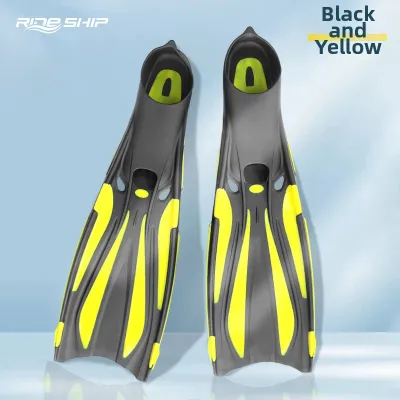
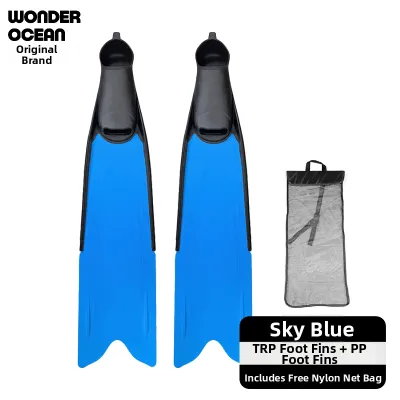
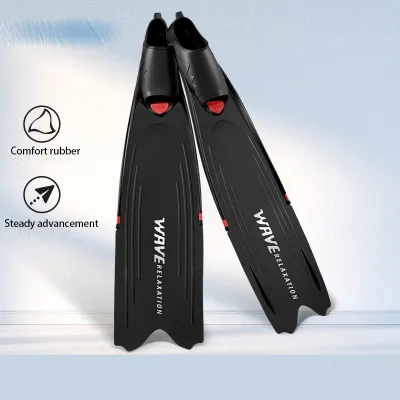
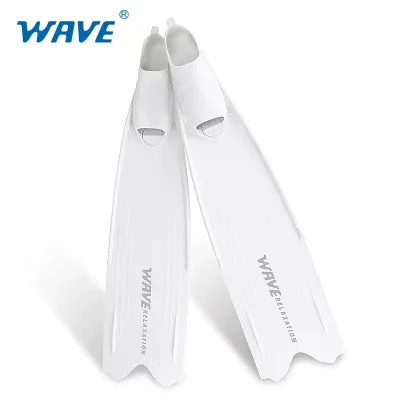
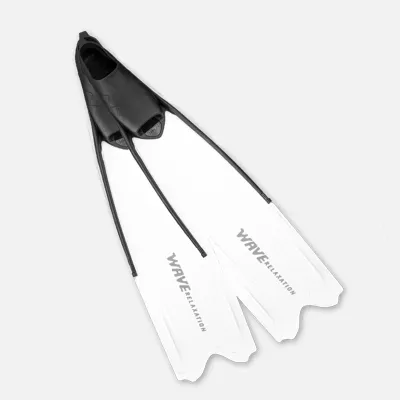
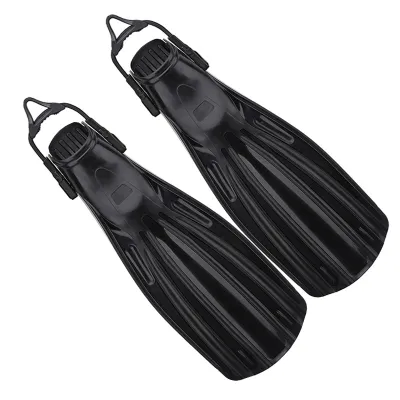
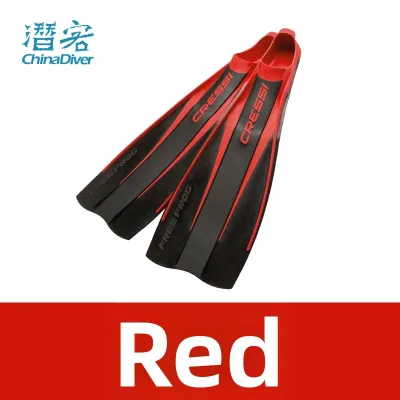
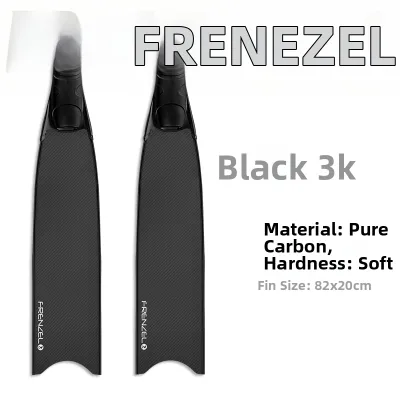
Prices are valid at publication and may change. Please refer to the product page for the latest price.
Intermediate divers confidently descend between 15 and 30 meters. These divers have refined their buoyancy control, can maintain a streamlined body position during both descent and ascent, and have developed the ankle flexibility needed for efficient energy transfer. They are ready to transition to materials that offer better responsiveness.
Advanced freedivers regularly dive beyond 30 meters. They possess highly efficient kicking mechanics, including both flutter and dolphin kicks, and have excellent breath-hold relaxation. Their leg muscles and ankles are well-conditioned to handle stiff, highly responsive blades that maximize depth per kick.
Your physical traits—specifically leg strength, kicking technique, and ankle flexibility—directly influence how a fin performs. Propulsion in freediving does not come from bending the knees; it originates from the hips and thighs. Your ankle flexibility determines how well the blade can angle against the water during both the forward and backward phases of the kick. Stiff ankles combined with a stiff blade will act like a flat board, dragging you down rather than pushing you forward.
Safety Warning: Overestimating your current level and choosing a blade that is too stiff is one of the most common errors in the sport. This mistake leads to rapid lactic acid buildup, severe muscle cramps, and joint strain in the ankles and knees. In open water, a sudden calf cramp can compromise your safety and rescue capacity, making it critical to prioritize comfort and ease of kick over theoretical power. Always verify your physical limits and match your gear to your actual, current capability.
Understand Fin Blade Materials and Stiffness
The blade is the engine of your fin. Its material and stiffness determine how efficiently you move through the water and how much energy you expend with every kick cycle.

Plastic, Fiberglass, and Carbon Fiber Blades
Plastic blades are highly durable, impact-resistant, and the most economical choice. For beginners, they are highly recommended because they can withstand rough handling. In the Philippines, shore entries often involve navigating shallow reef flats, volcanic rocks, or sharp coral rubble in popular spots like Anilao or Moalboal. Plastic blades can take a beating against these surfaces without cracking. However, they are heavier and suffer from elastic fatigue over time, meaning they do not snap back to their original shape as quickly, requiring more physical effort to kick. Entry-level plastic fins generally cost between ₱4,000 and ₱8,000.
Fiberglass blades are constructed from compressed glass fibers bound by resin, offering a significant upgrade in responsiveness and energy return over plastic. They are lighter and help intermediate divers transition to deeper depths by providing more propulsion per kick. Fiberglass is moderately durable but requires more care than plastic when navigating rocky entries. They strike an excellent balance between performance and durability for divers developing their technique. Fiberglass fins typically range from ₱9,000 to ₱18,000.
Carbon fiber blades represent the pinnacle of performance. They are incredibly lightweight and possess an exceptional snap-back rate, meaning they return energy instantly with minimal effort. This efficiency is critical for deep dives where conserving oxygen is paramount. However, carbon fiber is highly fragile and susceptible to structural damage from impacts, scratches, or being stepped on. They are best reserved for advanced divers who have mastered boat entries and controlled descents. Premium carbon fiber fins can exceed ₱20,000 to ₱35,000.
Matching Stiffness (Soft, Medium, Hard) to Your Ability
Soft stiffness is ideal for beginners, divers with lighter body weights, or those who prioritize a high-cadence, low-effort kick. Soft blades allow you to maintain a relaxed, fluid motion, which prevents early fatigue and keeps your heart rate low—a crucial factor for extending breath-hold times.
Medium stiffness is the most versatile option on the market. It suits intermediate divers with established leg strength and refined technique. It provides a balanced blend of acceleration, depth propulsion, and current-fighting capability without putting excessive strain on the joints.
Hard stiffness is designed exclusively for divers with exceptional leg conditioning, larger body masses, or those who need explosive power, such as safety divers or spearfishers carrying heavy loads. Attempting to use hard fins without the corresponding muscular development will ruin your hydrodynamic form, cause your knees to bend excessively, and rapidly deplete your oxygen. Always check your physical readiness before opting for a hard blade.
Select the Right Foot Pocket for Comfort and Power Transfer
The foot pocket is the critical connection point between your foot and the blade. A poorly fitting foot pocket will waste energy through friction and slippage, while a tight one will restrict blood circulation, leading to discomfort and safety risks.
Full-foot, closed-heel pockets are the absolute standard for long freediving fins. Unlike open-heel scuba fins that rely on adjustable straps, full-foot pockets wrap the entire heel to ensure that every movement of your foot is directly translated into blade movement. This design minimizes energy loss and provides a streamlined profile.
In the warm tropical waters of the Philippines, water temperatures typically hover between 26°C and 30°C. While you might not need thick thermal protection, wearing thin neoprene socks (usually 1.5mm to 2mm) is highly recommended. These socks act as a barrier against friction, preventing painful blisters during long sessions, and provide minor protection against stinging marine life during shore entries. When choosing a foot pocket size, always measure your feet while wearing the exact thickness of neoprene socks you plan to use.
A proper foot pocket should fit snugly like a second skin. If you feel any pinching at the toes, pressure on the top arch of your foot, or a restriction of blood flow, the pocket is too small. Restricted circulation in water can lead to rapid foot numbness and severe calf cramps during a dive. Conversely, if your heel lifts out of the pocket when you flex your ankle, the pocket is too large, which will cause energy loss and painful chafing.
Step-by-Step Guide to Fitting and Testing Your Fins
Before taking your new long fins for freediving into deep or open-water environments, you must verify their fit and performance through a structured testing process.
Step 1: Dry Fit Put on your neoprene socks and slide your feet into the foot pockets. Stand up and transfer your weight from side to side. Note any immediate pressure points, especially around the pinky toes or the instep. Sit down and point your toes straight out, simulating a kick. If the heel of the pocket slips off easily, or if you feel a painful pinch, you need to adjust the size or try a different brand’s foot pocket mold, as different manufacturers cater to narrow or wide feet.
Step 2: Confined Water Test Test the fins in a swimming pool or a calm, shallow coastal area. Practice basic surface swimming using a slow, relaxed flutter kick. Keep your legs straight, initiating the movement from your hips rather than your knees. Observe how the blade responds. If the blade feels incredibly heavy to move or causes immediate tension in your ankles, it is likely too stiff. If you feel like you are kicking rapidly but moving nowhere, the blade may be too soft for your body weight.
Step 3: Submerged Evaluation Perform a series of relaxed, shallow vertical or horizontal swims underwater. Pay close attention to the energy transfer during both the up-kick (backwards) and down-kick (forwards) phases. A well-matched fin should feel like an extension of your leg, providing smooth, consistent glide with minimal physical exertion.
Stop Condition: If at any point during dry fitting or water testing you experience sharp joint pain, immediate calf cramping, or numbness in your toes, stop the activity immediately. Do not attempt to “push through” the discomfort. Remove the fins and reassess either the foot pocket size or the blade stiffness. Continuing to dive with ill-fitting or overly stiff fins in deep water increases the risk of physical exhaustion and panic underwater.
Common Mistakes to Avoid When Buying Freediving Fins
Many divers buy advanced carbon fiber or extra-stiff blades early on, thinking they will “grow into them.” This slows down technique development. Beginners need a forgiving blade to learn the correct hip-driven kick; a stiff blade forces the diver to bend their knees to generate power, establishing bad habits that are difficult to break.
Ignoring the blade angle is another frequent pitfall. The angle between the foot pocket and the blade (typically ranging from 20 to 30 degrees) is crucial. A proper angle allows your foot to remain in a natural, relaxed position while keeping the blade parallel to your body’s line of travel. If you have limited ankle flexibility, a higher blade angle (around 29 to 30 degrees) can help reduce drag and make kicking more comfortable.
Selecting fins based solely on color, design, or brand popularity is a recipe for discomfort. Every manufacturer uses a slightly different foot pocket mold (some are wide, some are narrow, some have high arches). Always prioritize how the foot pocket conforms to your unique foot shape over visual appeal or social media trends.
Frequently Asked Questions (FAQ)
Can I use scuba diving fins for freediving?
While you can technically swim with any fin, scuba diving fins are not suitable for freediving. Scuba fins are shorter, wider, and designed for high-torque, short-stroke kicks to push through currents while carrying heavy gear. Freediving requires long, highly flexible blades that optimize energy efficiency and conserve precious oxygen. Long fins allow you to cover more distance with fewer, slower kicks, which is essential for maintaining a low heart rate and extending your breath-hold time.
How do I maintain my long freediving fins?
Proper maintenance extends the lifespan of your gear and ensures safety. After every dive, thoroughly rinse your fins with clean, fresh water to remove salt, sand, and chlorine. Avoid leaving your fins in direct sunlight, especially on hot beaches or boat decks, as prolonged UV exposure degrades plastic, weakens fiberglass resins, and damages rubber foot pockets. Always store your fins flat or hang them vertically by the foot pocket loops. Never lean them vertically against a wall on their tips, as the constant pressure will warp or permanently bend the long blades out of shape.
Community discussion
Share your experience or ask a question. Comments are reviewed before publication.