
Selecting the right nunchuks for martial arts training requires balancing physical dimensions, material properties, and your current skill level. The ideal training pair should match your body proportions to prevent injury while providing the specific feedback needed to master swings, catches, and transitions. Whether you are practicing traditional Filipino martial arts variations, Japanese Kobudo, or modern freestyle tricking, understanding how specifications like weight, length, and connection type affect your flow is essential before making a purchase on any online marketplace.
Match Material to Your Skill Level and Safety Needs
Your current proficiency dictates the safest and most effective material for your training weapons. Beginners and advanced practitioners have vastly different needs when it comes to impact absorption and structural feedback.
- Foam and Padded Covers: If you are picking up nunchuks for the very first time, foam-padded models are the mandatory starting point. These training tools feature a solid plastic or wood core wrapped in dense foam, which absorbs the impact of accidental strikes. This design allows you to learn basic swings, figure-eights, and catches without the fear of painful self-injury or bruising. Foam models typically fall into a budget-friendly price band of ₱200 to ₱500, making them highly accessible for beginners.
- Wood (Rattan and Hardwood): Intermediate practitioners typically transition to wooden models to develop authentic tactile feedback. Rattan is highly favored in tropical climates like the Philippines because its fibrous structure resists splitting under high humidity and absorbs shock exceptionally well. Traditional hardwoods, such as red oak or kamagong, offer a heavier, more solid feel that is ideal for striking pads, target shields, or heavy bags, though they require regular inspection for cracks. High-quality rattan or hardwood pairs generally range from ₱600 to over ₱1,500 depending on the wood type and craftsmanship.
- Metal and Hard Polycarbonate: Advanced martial artists often reserve aircraft-grade aluminum, stainless steel, or heavy polycarbonate nunchuks for demonstration, speed tricking, or maximum impact training. These materials offer extreme durability and do not warp, but they carry a high risk of severe injury. A single handling error with a metal stick can lead to fractured bones or deep lacerations.
- Safety Boundary: It is critical to establish a strict safety boundary during your training progression. Heavier, harder, or completely rigid materials must only be introduced after you have demonstrated consistent control, spatial awareness, and muscle memory using padded versions. If you cannot reliably execute basic transitions without hitting your own forearms or head, you are not ready to graduate to wood or metal.
Stick Length and Weight: Balancing Control and Power
The physical dimensions of your training equipment directly translate into handling characteristics and performance outcomes. Finding the sweet spot between control and momentum depends on your physical build and specific training goals.
Products mentioned in this guide
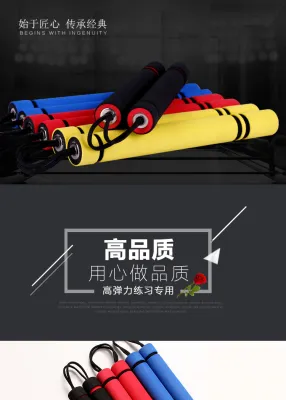
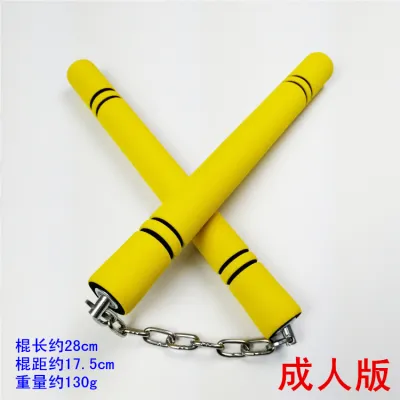
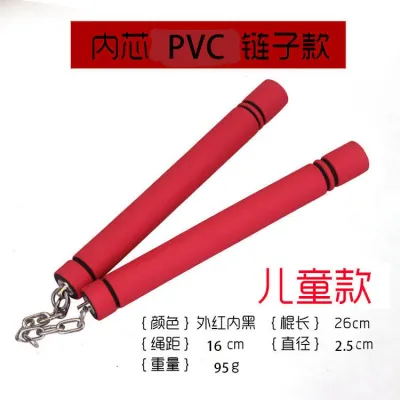
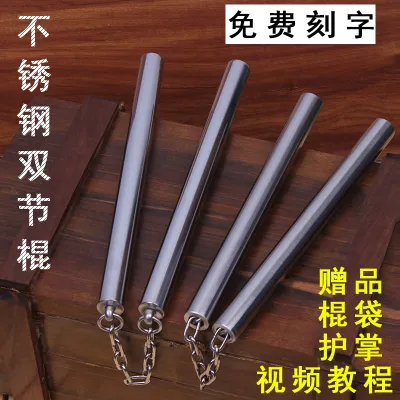
Prices are valid at publication and may change. Please refer to the product page for the latest price.

- Stick Length: The standard fitting rule dictates that the length of a single stick should roughly match the distance from your elbow to the base of your wrist. Opting for longer sticks increases your overall reach and creates a wider, more dramatic striking arc, which is useful for traditional demonstrations. However, longer sticks significantly decrease rotational speed and make close-quarters control much more difficult, increasing the likelihood of tangles or self-strikes.
- Weight: Lighter sticks, usually weighing under 150 grams, are optimal for maximizing speed, building endurance, and executing complex aerial tricks. They allow for rapid direction changes with minimal strain on the wrists. Conversely, heavier sticks, weighing 200 grams or more, are better suited for building forearm strength, generating high momentum, and delivering powerful strikes.
- Balance and Taper: Weight distribution across the stick also plays a major role in how the weapon pivots. Uniform, cylindrical sticks provide consistent weight throughout, making them predictable for beginners. Tapered sticks, which are wider at the outer ends and narrower near the connection point, shift the center of gravity outward. This taper amplifies centrifugal force, helping the weapon spin faster and pivot more sharply during advanced maneuvers. Always verify the manufacturer's exact gram or ounce specifications to ensure the balance matches your physical capacity.
Chain vs. Cord: How the Link Affects Your Flow
The connection mechanism holding the two sticks together defines how the nunchuks move through the air and how much maintenance they require. Both systems have distinct physical properties that alter your training dynamics.
- Chain Links: Chain connections, typically paired with ball-bearing swivels, are highly durable and offer a distinct metallic sound that many practitioners find satisfying. Chains provide a fast, crisp rebound, making them excellent for rapid-fire strikes and quick direction changes. However, they present a notable safety risk: the open links can easily pinch your skin or catch on your fingers during complex wrapping techniques or close-grip catches.
- Cord or Rope (Nylon/Paracord): Traditional cord connections offer a quiet, smooth, and highly flexible alternative. Cords are much gentler on the hands during wraps and are ideal for fluid, continuous forms. In the humid climate of the Philippines, sweat can eventually degrade nylon or paracord, meaning these connections require periodic inspection for fraying and must be replaced regularly to prevent the sticks from separating mid-swing.
- Link Length (Gap): The distance between the two sticks, often referred to as the connector gap, is traditionally measured as the width of your palm or roughly 1 to 2 inches (about four fingers' width). A shorter gap dictates tighter, faster wraps around the hands or limbs and allows for more precise control. A longer gap provides more leeway for catching but can cause the sticks to sag, altering the angle of your strikes and slowing down your transitions.
Spec Combinations for Different Training Goals
To simplify your selection process, match your specific training intent with one of these common specification profiles:
- Beginner and Basic Forms: Look for foam-padded sticks, a lightweight build (under 150 grams), and a flexible cord connection. This combination maximizes safety, minimizes pain during mistakes, and allows you to focus entirely on learning correct hand placement and basic motion paths.
- Intermediate and Traditional Martial Arts: Select rattan or medium-weight wood sticks, a standard forearm-matched length, and either a cord or a short chain with ball bearings. This setup provides the authentic tactile feedback and resistance needed for heavy bag work, form practice, and building grip strength.
- Advanced, Tricking, and Speed: Opt for lightweight wood or hollow aluminum sticks, a slightly shorter stick length (for faster rotations), and a smooth chain-and-bearing connection. This combination minimizes air resistance, allows for rapid rebounds, and facilitates complex release-and-catch maneuvers.
- Verification: Before finalizing any purchase, always read the product labels and seller specifications carefully. Verify the exact dimensions, total weight, and material composition to ensure the product matches your skill level and training environment.
Frequently Asked Questions (FAQ)
How do I measure the correct nunchuck length for my body?
To find your ideal stick length, hold your arm at a 90-degree angle and measure the distance from the tip of your elbow to the center of your wrist bone. This measurement serves as your baseline stick length. You can adjust this slightly shorter (by half an inch to an inch) if you want to focus on high-speed tricking and quick spins, or slightly longer if you prefer the extended reach and traditional feel of classical martial arts forms.
What should I check regarding local laws before buying nunchucks?
Before purchasing or transporting nunchuks in the Philippines, you must verify current local ordinances and national regulations regarding martial arts training weapons. While they are widely used for sport, fitness, and traditional martial arts training, carrying them unconcealed in public spaces can be restricted or classified under local laws concerning carrying deadly weapons. Always transport your training gear securely inside a dedicated equipment bag, keep them within your private training space or registered gym, and consult official local government resources or legal professionals to ensure full compliance with regional safety codes.
Community discussion
Share your experience or ask a question. Comments are reviewed before publication.