
To choose the right roller skate shoes for your teenager, you must balance their current foot size, growth rate, skating environment, and skill level. The ideal choice depends on whether they want the classic stability of quad skates for indoor rinks and dance, or the speed and outdoor versatility of inline skates for local parks and paved pathways. Finding the proper fit requires measuring their feet in centimeters, comparing those measurements to manufacturer-specific size charts rather than standard street shoe sizes, and deciding between adjustable models for growing feet or fixed-size boots for precise control.
Assess Your Teen's Skating Goals and Skill Level
Before buying any gear, understand that roller skating is a physical skill where equipment only supports, never replaces, proper training, balance, and judgment. Your teen’s safety depends on matching their current physical ability to the right skate setup. High-risk maneuvers, steep ramps, and high speeds require advanced skills that no premium skate can automatically navigate.
Identify where your teen plans to skate. Casual cruising around neighborhood subdivisions, local concrete parks, or smooth outdoor courts requires different features than specialized indoor activities. If your teen is drawn to artistic dance skating, rhythm skating, or roller derby, they will need the lateral stability and maneuverability of quad skates. For high-speed fitness skating or navigating rougher outdoor pavements, inline skates are generally more suitable.
Products mentioned in this guide
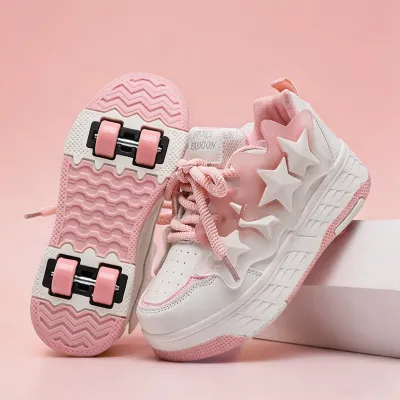
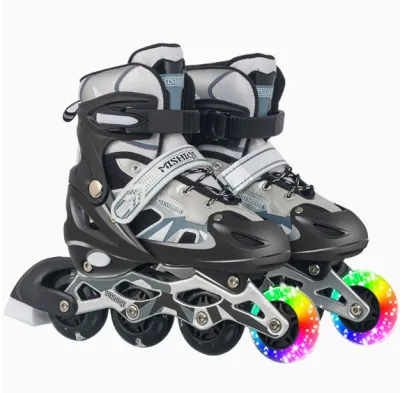
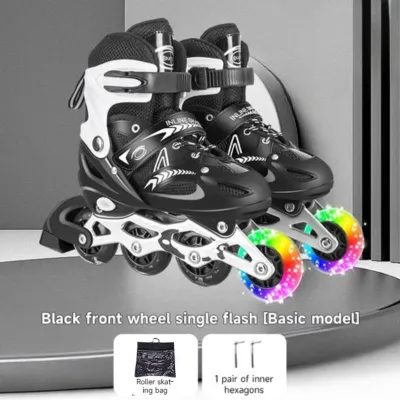
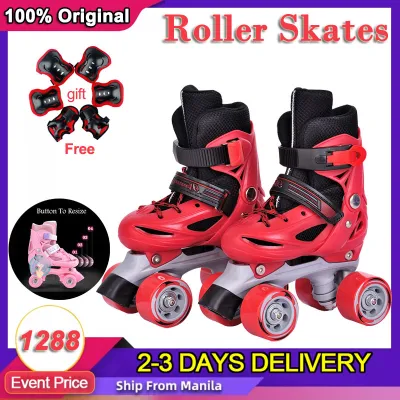
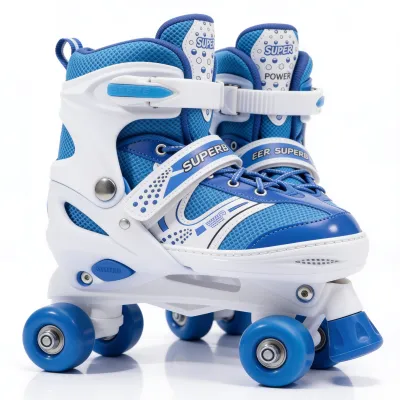
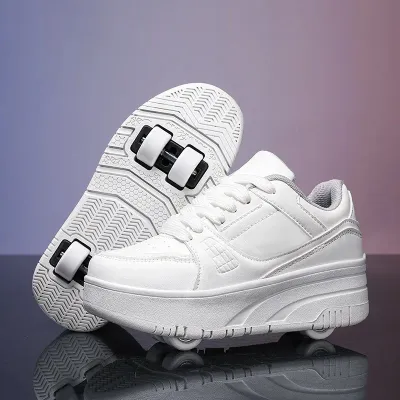
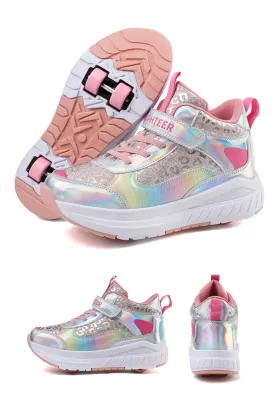
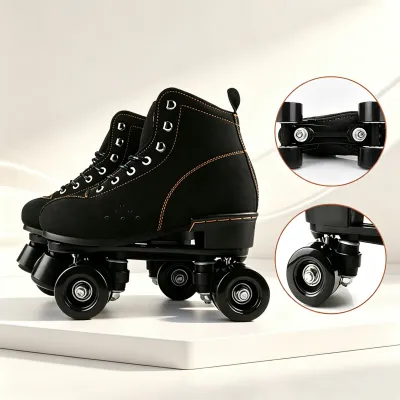
Prices are valid at publication and may change. Please refer to the product page for the latest price.
Skill level dictates the boot’s construction and stiffness. Beginners benefit from a slightly softer boot that offers comfort and forgiveness as they learn basic balance, stopping techniques, and edge control. However, as skills progress to intermediate or advanced levels—such as executing jumps, tight transitions, or skatepark tricks—a stiffer boot becomes essential. Stiffer boots provide the necessary ankle support to handle high-impact landings and transfer energy efficiently from the foot to the frame.
Evaluate your teen’s commitment level before investing. If they are just testing the waters, an entry-level model with composite frames and standard bearings is a practical starting point. For highly committed teens, look for skates with upgradeable components, such as removable liners, replaceable wheels, and adjustable toe stops, allowing the skate to evolve alongside their growing skills.
Determine the Correct Skate Size and Fit
An ill-fitting skate is more than just uncomfortable; it is a safety hazard that can compromise ankle stability and lead to falls. Never guess your teen’s skate size based on their current school shoes or sneakers. Street shoe sizes vary wildly between brands, and skates require a much more precise, snug fit to prevent friction blisters and loss of control.

To get an accurate measurement at home, use the wall-and-paper method. Have your teen stand barefoot on a sheet of paper with their heel flat against a wall. Mark the longest part of their foot—usually the big toe or second toe—and measure the distance to the edge of the paper in centimeters. Repeat this process for both feet, as it is common for one foot to be slightly larger; always size your skates to the larger foot.
Once you have the measurement in centimeters, compare it directly to the manufacturer’s specific size chart. Different brands use different sizing standards, and some skate models run narrow or wide. A proper skate should fit snugly around the entire foot without pinching.
Perform a physical fit check once the skates arrive. Have your teen put on the skates with the socks they plan to wear while skating, lace them up fully, and stand up. Their toes should just feather the front of the toe box when standing straight, but when they bend their knees into a skating stance, their toes should slide back slightly, leaving a small amount of wiggle room. Ensure the heel remains locked firmly in the back of the boot when they lift their heel; a lifting heel causes friction, blisters, and a severe loss of steering control.
Adjustable vs. Fixed-Size Skates: Which is Right?
Teenagers go through rapid growth spurts, making the choice between adjustable and fixed-size skates a major financial and practical decision. Adjustable skates are highly practical for younger teens whose feet are changing sizes every few months. These models typically feature a push-button mechanism that allows the toe box to slide forward, expanding across three to four standard shoe sizes. This adaptability makes them an excellent, budget-friendly option for casual weekend skating.
However, adjustable skates come with distinct performance trade-offs. The sliding mechanisms and multi-piece shell designs add extra weight to the skate, which can tire out a teen’s legs more quickly. Additionally, the moving parts can introduce slight play or flexing in the frame over time, reducing overall durability and making them less suitable for aggressive skatepark tricks or high-speed maneuvers.
Fixed-size skates are the preferred choice once your teen’s foot growth begins to stabilize or if they are pursuing skating as a serious sport. A single-piece, fixed-size boot offers superior structural integrity, resulting in direct energy transfer from the foot to the wheels. This rigidity provides the precise control, edge response, and reliable ankle support needed for advanced maneuvers, jumps, and long-distance fitness skating.
Quad Skates vs. Inline Skates: Comparing the Options
Choosing between quad skates (the classic four-wheel setup in a rectangular pattern) and inline skates (wheels arranged in a single line) depends heavily on where and how your teen plans to ride. Quad skates offer a wide, stable base of support when standing still, making them highly approachable for absolute beginners. They excel in indoor roller rinks, smooth concrete surfaces, and are the standard for roller derby, artistic skating, and rhythm or dance routines due to their agile, dance-friendly maneuverability.
Inline skates, often referred to as rollerblades, are designed for forward momentum, speed, and handling uneven outdoor terrain. The narrow wheel profile cuts through outdoor debris, cracks in the pavement, and rough asphalt much more smoothly than wide quad wheels. This makes inline skates the ideal option for fitness skating along coastal boardwalks, commuting, or participating in aggressive inline park riding where speed and grinding capability are key.
If your teen is undecided, encourage them to try renting or borrowing both styles before making a final purchase. Transitioning from one style to another is entirely possible, but the balance points are fundamentally different. Quads rely on a front toe stop for braking and require lateral ankle movement for steering, while inlines use a heel brake or specialized stopping patterns (like the T-stop) and steer by tilting the wheels on their edges.
Essential Safety Gear and Final Purchase Checks
No skate purchase is complete without a full set of protective gear. Roller skating carries inherent risks of falls, especially during the learning phase or when attempting new tricks. A properly fitted helmet is non-negotiable; ensure it sits level on the head, covering the forehead, and does not rock back and forth. Pair the helmet with high-quality wrist guards, knee pads, and elbow pads. Wrist guards are particularly critical for teens, as falling forward on outstretched hands is the most common cause of skating injuries.
Before finalizing your purchase, verify the retailer’s return and exchange policy. Because a proper fit is essential for safety, you need the flexibility to exchange the skates if they pinch or slip during an indoor try-on session. When the skates arrive, have your teen try them on indoors on a clean, carpeted surface to avoid scratching the wheels or frames, which could void the return policy. Ensure they wear the exact thickness of socks they plan to use while skating.
Finally, perform a thorough pre-ride inspection before your teen takes their first stride outdoors. Use a skate tool or Allen wrench to check that all axle bolts, frame mounting screws, and toe stops or heel brakes are securely tightened. Spin each wheel to verify that the bearings run smoothly without grinding noises, and check that the wheels are properly aligned. Taking these few minutes to inspect the hardware ensures a safe, smooth, and enjoyable introduction to the sport.
Frequently Asked Questions (FAQ)
Can my teen use regular sneakers for roller skating?
No, standard sneakers cannot be safely used for roller skating unless they are specifically designed to mount onto heavy-duty, specialized quad plates. Avoid strap-on or clip-on toy skates that attach to regular shoes, as they lack the structural ankle support, secure binding systems, and high-quality wheel bearings necessary to keep a teenager safe on paved surfaces or at high speeds.
How often should I check if my teen's skates still fit?
During active growth phases, check the fit of your teen’s skates every two to three months. Ask them if they feel any pinching, numbness, or pressure points, particularly around the toes and the sides of the feet. If they are using adjustable skates, inspect the expansion mechanism regularly to ensure it remains locked securely in the correct size slot.
Do roller skate shoes require a break-in period?
Yes, most high-quality roller skates require a break-in period, especially those with stiffer synthetic or leather boots. To prevent painful blisters, have your teen wear the skates around the house for 15 to 30 minutes at a time over a week before taking them out for long skating sessions. Wearing thick, moisture-wicking athletic socks can also help protect their feet during this initial stretching phase.
Community discussion
Share your experience or ask a question. Comments are reviewed before publication.