
To find a pair of snorkeling goggles for adults that fit your face shape properly, you must match your unique facial dimensions—such as face width, cheekbone height, and nose bridge structure—with the appropriate mask frame volume and skirt design, then verify the seal using a hands-free suction test. A mask that fits poorly will constantly leak, fog up, or cause painful pressure points, cutting your time in the water short.
While high-quality gear is essential for an enjoyable experience, remember that equipment cannot replace swimming ability, water safety training, or sound judgment. Snorkeling is an active water sport that takes place in dynamic marine environments. Before heading out into the ocean, always assess your physical limits, check local weather and tidal conditions, and ensure you are comfortable breathing through a snorkel in shallow water first.
Assess Your Face Shape and Bridge Structure
Achieving a reliable, watertight seal depends entirely on how well the mask’s frame and skirt align with your facial contours. The primary areas that dictate fit are the overall width of your face, the prominence of your cheekbones, and the height of your nose bridge. Because human faces vary wildly, a mask that fits one person perfectly may flood instantly on another.
Products mentioned in this guide
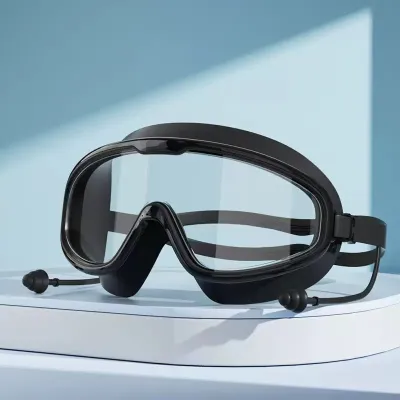
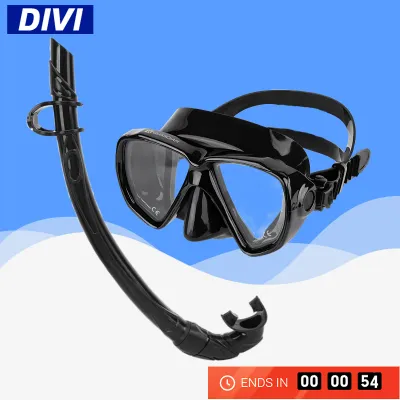
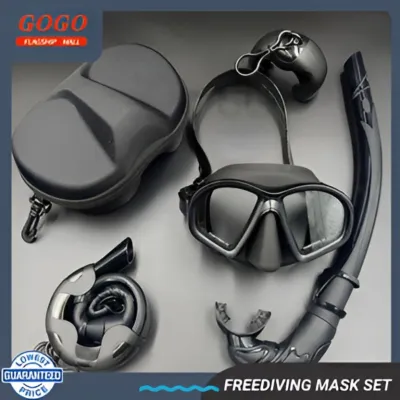
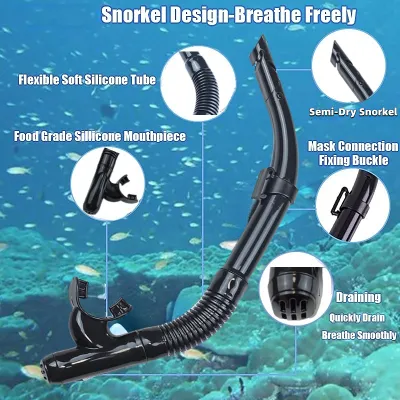
![[Ready Stock] Professional Diving Scuba Gear Swimming Mask Snorkel Diving Mask Goggles and Snorkel Set Hyperopia Myopia Mask Goggle](https://img.lazcdn.com/g/p/0f7e9edca68971f392421aa052bc34b2.jpg_400x400q80.jpg_.webp)
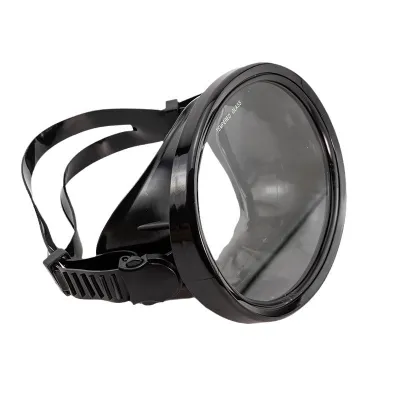
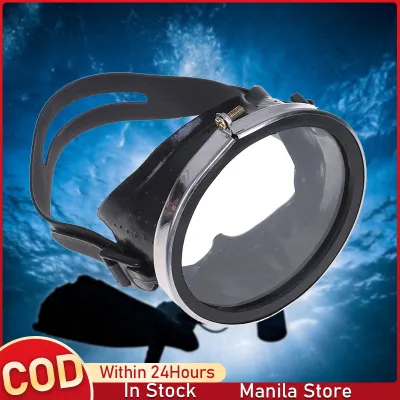
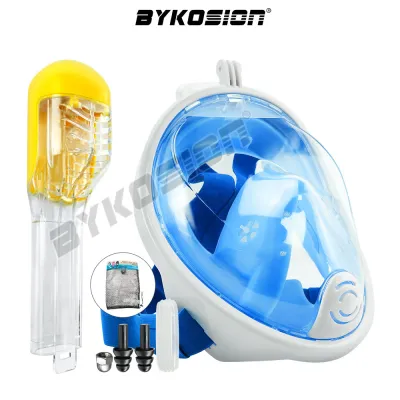
Prices are valid at publication and may change. Please refer to the product page for the latest price.
To determine your facial profile, stand in front of a mirror and observe your features. If your face is relatively slender and your temples sit close together, you have a narrow facial structure. If the distance between your temples is wide and you have broad cheekbones, you have a wide facial structure. Next, look at your profile to evaluate your nose bridge. A high nose bridge rises sharply between the eyes, while a low nose bridge has a shallower slope.
Standard adult snorkeling masks are designed to fit average facial dimensions, but many manufacturers offer specialized fits. For instance, narrow-fit masks are scaled down to prevent water from entering near the temples of slender faces. Conversely, “Asian-fit” or low-bridge models feature a flatter, wider nose pocket and a shallower skirt curve. These design variations prevent the hard plastic frame from pressing painfully against a lower nose bridge while minimizing gaps around the cheeks.
Facial hair is another critical factor that alters the sealing surface of snorkeling goggles for adult swimmers. Mustaches, beards, and even heavy stubble create micro-gaps between your skin and the mask’s silicone skirt, allowing water to seep in. If you have facial hair, you will need a mask with an exceptionally pliable skirt, or you must take steps to prep the hair—such as applying a thin layer of silicone grease or reef-safe petroleum jelly to the mustache area—to help block water paths.
Choose the Right Silicone Skirt for Your Contours
The skirt is the soft, flexible border of the mask that directly contacts your skin to create a dry seal. The material, design, and color of this skirt play a massive role in your overall comfort, visibility, and the longevity of your gear in tropical environments.

When choosing a mask, you will find options with either clear or dark (usually black) silicone skirts. Clear silicone allows ambient light to enter from the sides, which provides better peripheral awareness and can make beginners feel less claustrophobic. However, clear silicone can yellow over time when exposed to intense ultraviolet (UV) rays and can cause distracting internal reflections in bright sunlight. Black silicone blocks peripheral light completely, which reduces glare, sharpens forward vision, and prevents micro-algae from growing inside the skirt edges if the mask is stored damp.
Silicone firmness also dictates how well the mask conforms to your face. High-grade liquid silicone is processed to varying degrees of flexibility. Extremely soft, thin silicone conforms beautifully to irregular contours and sensitive skin, reducing the deep red impressions left on your face after a long session in the water. Firmer silicone is more rigid, preventing the mask from collapsing or distorting under pressure if you decide to dive a few meters below the surface to look at coral.
To ensure maximum protection against leaks, look for masks featuring a double-feathered or multi-layered skirt edge. This design uses an additional inner silicone flap that runs parallel to the outer edge. The double-flap system distributes pressure evenly across your forehead and cheekbones, creating a redundant seal that absorbs facial movements without letting water pass through.
Always check the product label to ensure the skirt is made of “100% hypoallergenic liquid silicone.” Avoid cheap, low-end masks made of PVC (polyvinyl chloride) or rubber. PVC is stiff, loses its shape quickly in warm tropical climates, and can cause skin irritation, rashes, or allergic reactions during extended use.
Match Frame Design and Volume to Your Features
Selecting the right lens configuration and internal volume is essential for matching the mask to your face width and nose size. The frame design directly impacts how close the glass sits to your eyes and how much air is trapped inside the mask.
Internal volume refers to the amount of air space inside the goggles. Low-volume masks sit incredibly close to your face. Because they contain very little air, they are exceptionally easy to clear of water if a leak occurs—requiring only a gentle exhale through your nose. They are highly recommended for narrow faces and free-divers. High-volume masks sit further away from the face, offering a wider, more panoramic field of view that suits broader faces, though they require a larger volume of air to clear.
When comparing lens configurations, you will choose between single-lens and dual-lens designs:
- Single-Lens Masks: These feature a single, continuous pane of tempered glass. They provide an unobstructed view across the center of your field of vision. However, because there is no central frame divider, they may press painfully against a highly prominent nose bridge.
- Dual-Lens Masks: These have two separate glass panes divided by a rigid plastic nose bridge. This design accommodates larger or highly structured noses much better and allows for the installation of corrective prescription lenses if you wear glasses.
- Frameless Masks: In these models, the silicone skirt is molded directly onto the glass lens, eliminating the heavy plastic frame entirely. Frameless masks are lightweight, highly flexible, and fold flat. They adapt beautifully to varying cheekbone heights and offer a forgiving fit for many different face shapes.
To help you narrow down your choices, use this quick reference guide to match your facial features with the correct mask design:
- Wide Face + Large Nose: High-volume, dual-lens mask with a deep nose pocket.
- Narrow Face + Low Nose Bridge: Low-volume, frameless mask or a specialized narrow/Asian-fit dual-lens mask.
- High Cheekbones + Average Nose: Frameless mask with an ultra-soft, double-feathered silicone skirt.
Perform the No-Strap Suction Test to Verify the Seal
Before you ever take your new snorkeling goggles for adult swimmers into the water, you must perform a practical, dry-land fit test. The no-strap suction test is the industry-standard method to verify if a mask’s shape is truly compatible with your face.
- Step 1: Preparation: Pull your hair completely back from your forehead, temples, and ears. If you have long hair, tie it securely. Ensure your face is clean and free of thick sunscreens, sweat, or heavy skin oils, as these substances can artificially lubricate a poorly fitting skirt and mask a bad seal.
- Step 2: Positioning: Hold the mask gently against your face without putting the strap over your head. Let the strap hang loose in front of the lens. Center the nose pocket comfortably over your nose. Ensure the top edge of the silicone skirt rests flat on your forehead (above your eyebrows) and the bottom edge sits smoothly on your upper lip, just below your nose.
- Step 3: The Inhalation Test: Look slightly upward, press the mask gently against your face, and inhale slowly and steadily through your nose. This action draws a small amount of air out of the mask, creating a slight vacuum. Do not inhale too aggressively; a massive inhalation can force even a poorly fitting mask to stick temporarily.
- Step 4: Verification: Stop inhaling and hold your breath. Gently remove your hands from the mask. If the mask is a good fit for your face shape, the vacuum seal will hold it securely in place, and it will not slip or fall. If the mask drops immediately, or if you hear a faint hissing sound of air rushing in around your temples, forehead, or jawline, the frame shape is incompatible with your face.
- Step 5: Expression Check: While the mask is suctioned to your face (or while holding it lightly in place if the vacuum slowly dissipates), mimic the facial movements you will make in the water. Smile, squint, and move your jaw as if you were biting down on a snorkel mouthpiece. If the seal breaks instantly during these movements, the skirt material is too rigid, or the frame rests on a pressure point that shifts when your facial muscles contract.
Adjust the Strap and Troubleshoot Common Leaks
Once you find a mask that passes the suction test, proper adjustment is key to maintaining that watertight seal in the water. Many snorkelers mistakenly believe that tightening the head strap will stop leaks, but the exact opposite is true.
An over-tightened strap pulls the mask too hard against your face, causing the flexible silicone skirt to buckle, fold, and create channels that let water flood in. The strap’s only job is to keep the mask in position; the natural suction of the silicone and the ambient water pressure will do the actual sealing work. You should be able to wear the mask comfortably without feeling excess pressure on your nose bridge or forehead.
Proper strap placement is equally important. The strap should be split and positioned high on the back of your head, resting on the crown. If the strap sits too low near the nape of your neck, it will pull the mask downward, dragging the skirt away from your upper lip and causing persistent leaks right under your nose.
If you experience minor leaks while snorkeling, troubleshoot with these quick checks:
- Check for Stray Hair: A single strand of hair caught under the silicone skirt acts as a wick, slowly drawing water inside the mask.
- Clean Your Skin: Sunscreen, sweat, and natural skin oils can break down the surface tension of the silicone seal. Wash your face and wipe the mask skirt clean with fresh water.
- Loosen the Strap: If you feel pressure on your forehead or nose, loosen the strap slightly to let the silicone skirt bloom and seal naturally against your skin.
If your mask consistently passes the dry no-strap test but leaks continuously in the water despite correct strap adjustments, hair clearance, and skin prep, the frame’s structural rigidity is likely fighting against your dynamic facial movements. In this scenario, stop using the mask and exchange it for a highly flexible frameless model or a mask with a softer silicone durometer.
Frequently Asked Questions (FAQ)
Can I use regular swimming goggles for snorkeling?
No, regular swimming goggles are unsafe and highly uncomfortable for snorkeling. Swim goggles do not enclose your nose, which makes it impossible to equalize the air pressure inside the goggles as you dive below the surface. This can lead to painful eye squeeze. Furthermore, because swim goggles leave your nose exposed, you run a high risk of accidentally inhaling water through your nose if your snorkel floods.
How do I prevent my snorkeling goggles from fogging up?
New snorkeling goggles have a thin layer of protective silicone film left over from the manufacturing process on the inside of the tempered glass lenses. To prevent fogging, you must scrub this film off before your first swim. Apply a small dollop of non-gel, mildly abrasive white toothpaste to the dry inside lens, scrub it thoroughly with your clean finger, and rinse. Before every snorkel session, apply a few drops of commercial anti-fog solution, diluted baby shampoo, or saliva to the dry lens, rub it around, and give it a quick rinse in seawater. Avoid touching the inside of the lens with your fingers after rinsing.
Are full-face snorkel masks better for difficult face shapes?
Full-face snorkel masks seal around the outer edge of your face, which can bypass tricky nose bridge or cheekbone sealing issues. However, they carry strict safety limits. They are designed exclusively for casual, relaxed surface snorkeling and cannot be used for freediving or scuba diving because you cannot pinch your nose to equalize your ears. They also hold a large volume of air, making them highly buoyant and difficult to submerge. If you choose a full-face mask, ensure it comes from a reputable brand with verified safety certifications for physical CO2 clearance and proper airflow design to prevent dangerous carbon dioxide buildup.
Community discussion
Share your experience or ask a question. Comments are reviewed before publication.